

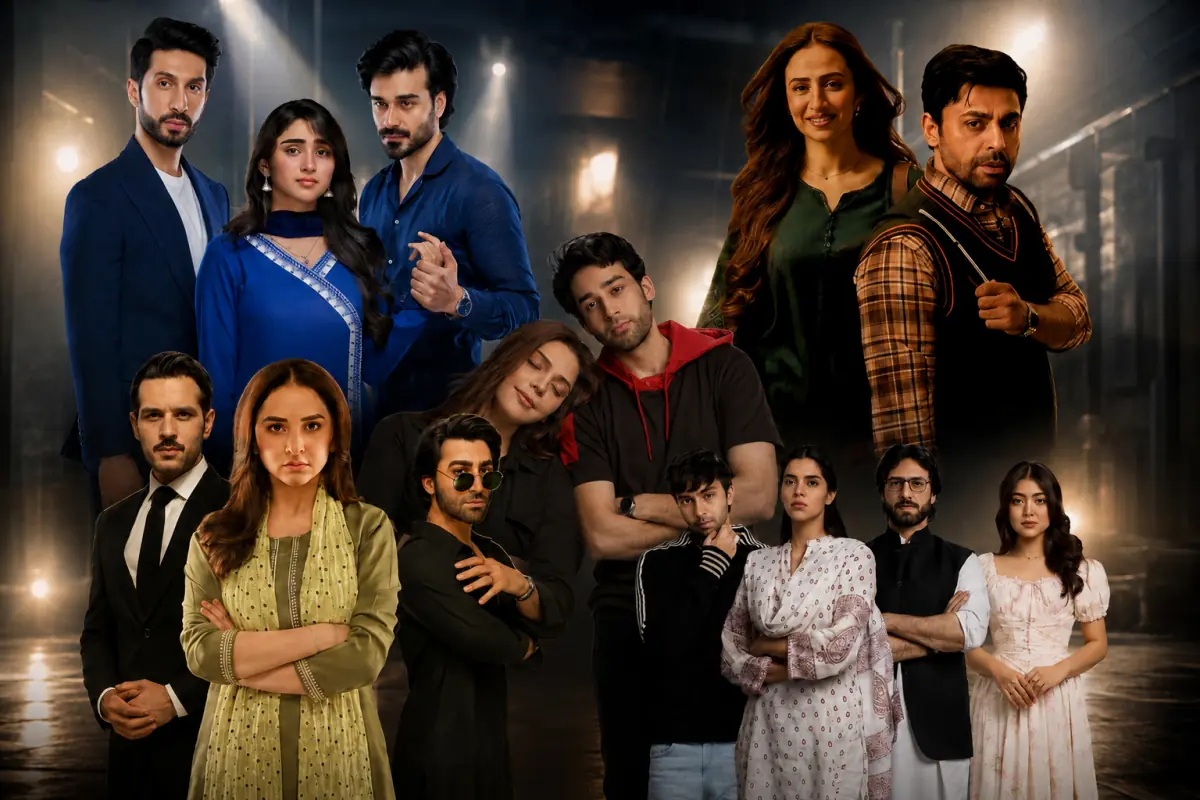
With therapy remaining elusive and stigmatised, dramas are an instrument of social change.
05 Sep, 2026
Some watch Pakistani dramas for escape — for the romance, the tears and the family feuds they depict and which we can relate to. However, something seems to have shifted in dramas over the last few years. Beneath the familiar tropes lies something far more radical: a systematic exploration of the human psyche that reflects our unconscious biases.
In fact, an increasing number of Pakistani dramas can no longer be classified as just entertainment.
You can even think of them as psycho-education disguised as storytelling, exposing intergenerational traumas, challenging rigid mindsets and depicting powerful characters who break decades-old cycles and choose reason over tradition. This is not just entertainment. This is social psychology in motion.
Here are five lessons from six dramas that have subtly been teaching us about self-care and trauma healing.
Lesson 1: A woman’s life does not end with marriage
In Islam, marrying a widow or divorcee is not just permitted, it is encouraged. Yet, the practice of women remarrying remains surrounded by bias, prejudice and stigma.
This patriarchal mindset is not limited to men. Women often become its fiercest defenders, enforcing the very rules that constrain them. Three dramas have taken on this taboo with remarkable courage.
With formal therapy still a luxury in Pakistan, television dramas are doing more than telling stories. They are confronting taboos around marriage, family, honour and motherhood, exposing the traumas we inherit and challenging how we see ourselves and others
Dobara gave us Mehru (Hadiya Kiyani), a widow who dares to marry a younger suitor, Mahir (Bilal Abbas Khan) — a man almost her son’s age. The backlash from her family is brutal. But Mehru refuses to be buried alive by societal expectations. Her second marriage is not a scandal for her. It is an act of survival and growth.
Qarz-i-Jaan went even further. Nashwa Behzad (Yumna Zaidi) takes it upon herself to arrange her widowed mother’s wedding to her lost love, Asim (Faisal Rehman). Her mother Bisma, played remarkably by Tazeen Hussain, has spent years in emotional exile. Therefore, her daughter’s act is not just filial devotion — it is an intervention.
Later, Nashwa herself is liberated when her husband, Ammar (Nameer Khan) — her cousin, whom she was forced to marry to retain control over the family’s property — grants her a divorce, freeing her to marry her soulmate, Burhaan (Usama Khan).
Kafeel perhaps offered the most hopeful portrayal of women remarrying. Zeba (Sanam Saeed), a survivor of a conflict-ridden, ‘empty shell’ marriage, finally secures a khulaa [a divorce initiated by the wife] from Jami (Emmad Irfani) and marries her former suitor Jamal (Hasan Khan), a widower, with grace and honour.
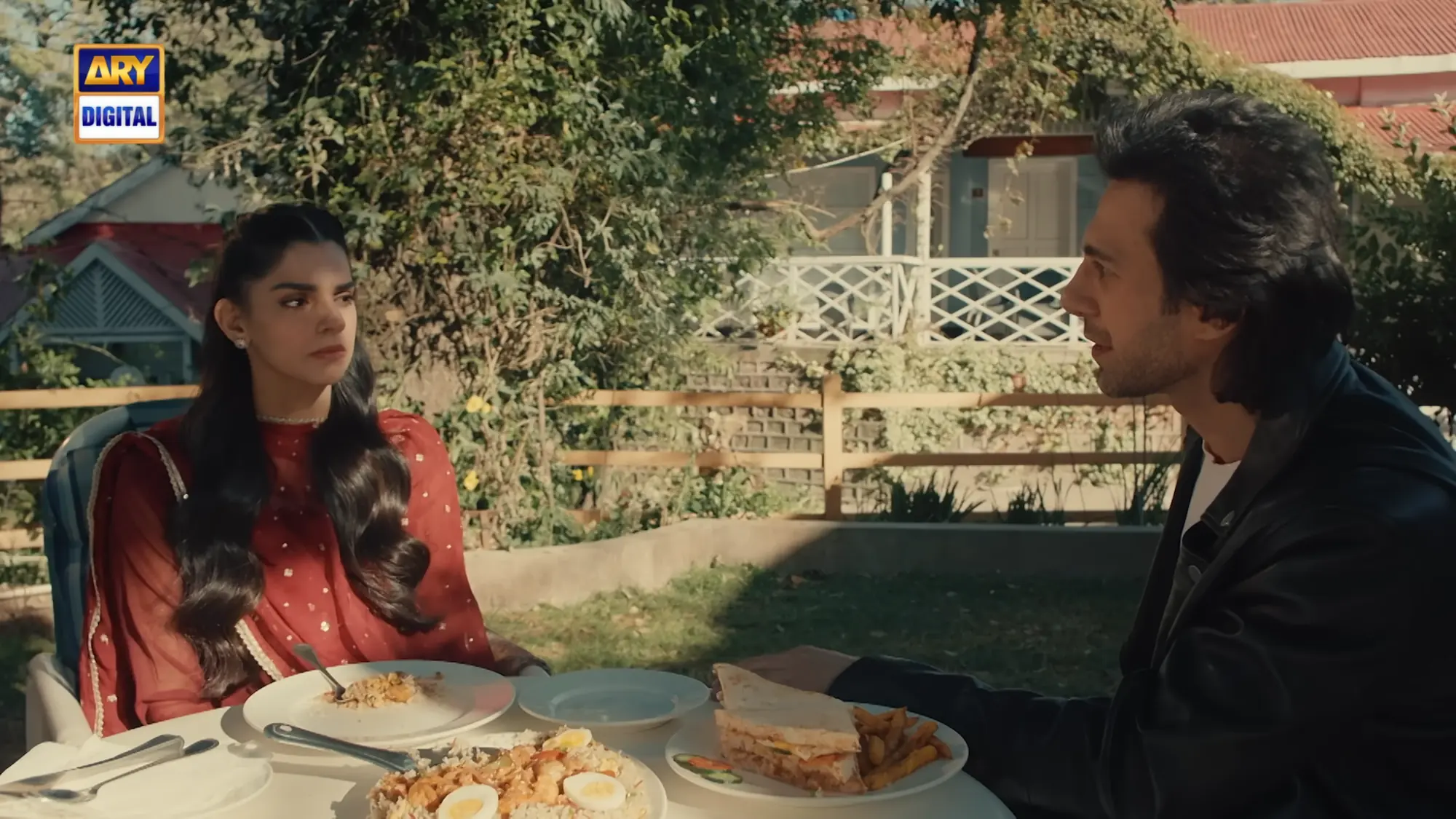
What makes this story extraordinary is her children’s response. They are young adults who their narcissistic father has also wounded and they fully support their mother’s decision. In healing her, they heal themselves.
The takeaway: Stigma around second marriage is not a religious issue. It is cultural. And culture can change for the better. When widows or divorcees are treated as ‘damaged goods’, shame replaces grief. A woman’s worth doesn’t end with her marriage — she should listen to her inner voice and cater to her emotional needs.
Lesson 2: Family is not an excuse for control
The joint family system is one of Pakistan’s most cherished institutions. But in recent years, it has come under scrutiny — not for what it represents, but for what it has become. Rigid, harsh decisions by elders, unyielding traditions and a refusal to adapt to changing times have made the system toxic for many.
One persistent myth perpetuated by conservative households is that love marriages are somehow inferior to arranged ones and that extramarital affairs usually follow them. But here is the truth that Jama Taqseem so beautifully shows: selecting someone of your choice and gracefully proposing through your family is a respectable way to approach marriage.
Jama Taqseem shows Laila (Mawra Hocane) approaching Qais (Talha Chahour) for marriage. She is the one who expresses her affection and intentions — a bold move that should be celebrated. But, instead, she faces the full weight of cultural bias. Qais’ conservative joint family sees her as someone devoid of values. After the couple’s marriage, Laila is constantly judged by her in-laws for her choice of clothing, her lack of skills in the kitchen and her decision to work. Nothing she does is ever good enough.
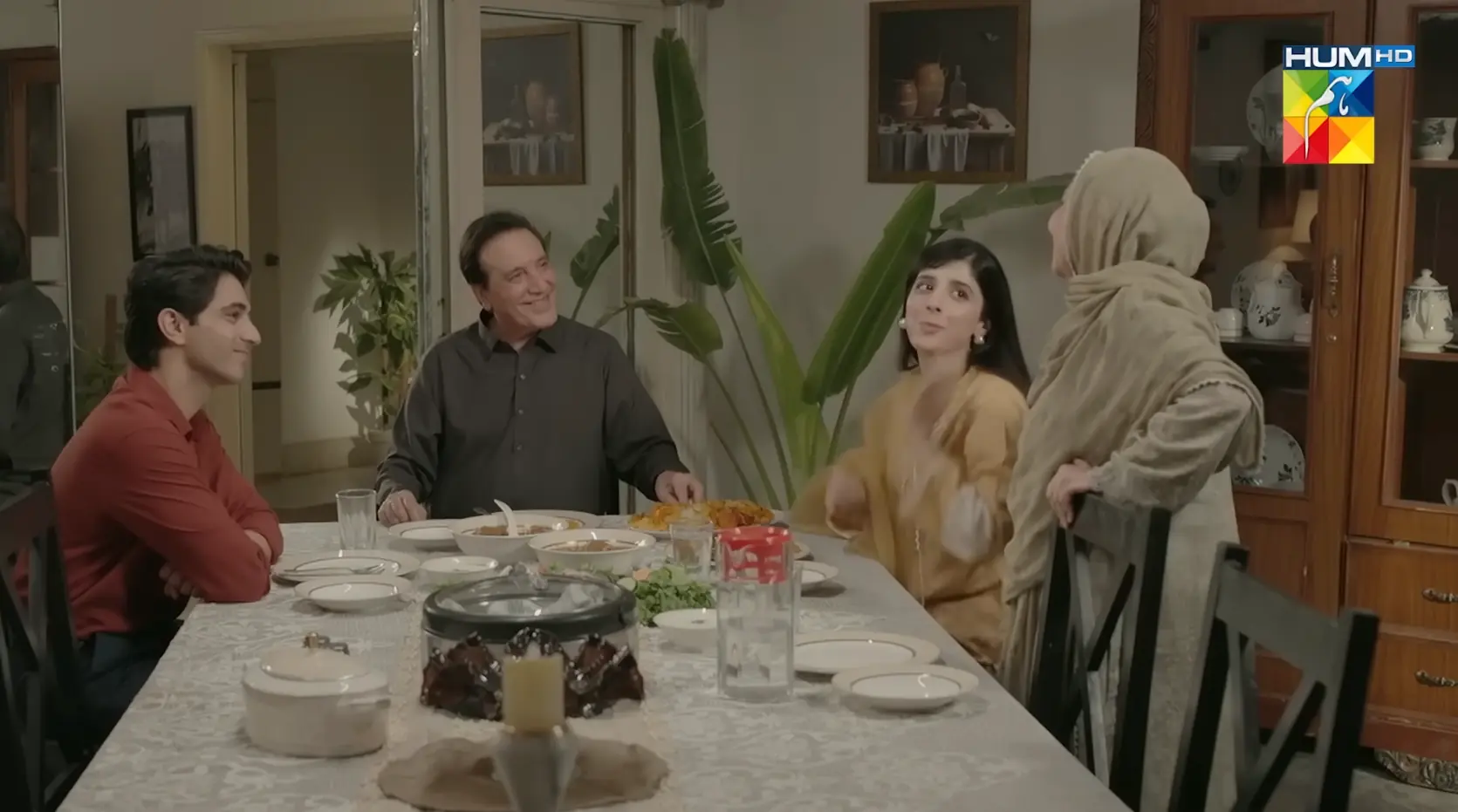
As Jama Taqseem progresses, it debunks one myth after another. It exposes the painful double standards that plague many joint families: the relentless evaluation of bahus [daughters-in-law], the impolite behaviour towards their families by their in-laws, the refusal of in-laws to treat their bahus in the same manner as their daughters, judging bahus for their need for privacy and equating moving out of the family home with rebellion.
The couple is educated. They love their family. They do not want to rebel, they want to belong. However, they navigate challenges that come their way with grace and patience. At the end, the family comes together beautifully.
Qais’ parents (Jawed Sheikh and Beo Raana Zafar) realise the inequalities and injustices committed in the name of culture and tradition and bring about change through their actions.
This is what healing looks like in a joint family. Not abandoning tradition, but examining it. Not rejecting elders, but inviting them to grow.
The takeaway: The joint family system is not the enemy. Control, double standards and the refusal to change are. When elders choose mentorship over domination, when bahus are seen as daughters, when a love marriage is honoured rather than shamed, the joint family becomes a place of belonging, not a cage.
Lesson 3: Every child deserves to belong
Discrimination against orphans or abandoned children in joint families is a wound that festers across generations. When a child is made to feel inferior, the damage done is not just to their self-esteem — it is to their sense of belonging.
Bas Tera Sath Ho tackles this with extraordinary sensitivity. Anas (Farhan Saeed) faces relentless bias from his paternal uncle’s family. Thankfully, his paternal grandfather (Salman Shahid) and aunt (Shagufta Ejaz) fiercely advocate for his rights, debunking myths about aaq karna [being disinherited or disowned], thereby teaching a powerful social lesson about legal and religious inheritance laws.
In Zabt, Aoun (Sachal Afzal) is abandoned by his parents after their divorce. He is raised lovingly by his maternal grandmother Bi Jaan (Samina Ahmed), in a household with two maternal uncles, aunts and cousins who discriminate against and oppress him.
The orphan’s or abandoned child’s experience in a joint family is a painful study in attachment trauma. Anas and Aoun are forced to prove their worth constantly — not through their achievements, but through submission. Their families treat them as burdens, not a blessing.
This is the psychological wound of conditional belonging. A child should never have to earn the right to be loved, lest a lifelong pattern of anxious attachment and chronic self-doubt be imprinted.
Both stories depict what happens when a child is made to feel like an outsider within the very family that should provide them with security. They show us that providing a roof over a child’s head is not enough — children need to know that they are wanted, valued and protected.
The takeaway: Standing up for an orphan is not charity. It is psychological justice. When a family treats an orphan as their own, they are not just being kind — they are preventing a lifetime of trauma. And when they fail, they create a blueprint for dysfunction that will carry into the next generation.
Lesson 4: Compassion matters more than honour
Honour is a loaded word in Pakistani households. It is often used to justify silence, control and cruelty. But three dramas have dared to ask: what if compassion came first?
Jama Taqseem exposed the silent plague of sexual harassment in joint families. When a teenage Sidra (Nazeeha Zainab) is harassed by a cousin, Zeeshan (Elahi Bux Khan), the family’s initial instinct is to ‘manage’ the scandal rather than protect the victim. Eventually, the drama’s boldest choice is its refusal to marry Sidra off to her persecutor — a common ‘solution’ in Pakistani households.
Instead, the grandparents stand firmly in support of the victim. They refuse to sacrifice her to save the family’s honour. This is radical because it challenges the deeply ingrained belief that a woman’s value is tied to her ‘purity’.
Zabt took this lesson further. Bi Jaan, the family matriarch, refuses to stigmatise her granddaughter Ayla (Zoha Tauqeer) for her scandalous pregnancy, which takes place after her nikaah but before the rukhsati [formal wedding].
Even after Ayla subsequently suffers traumatic calumny and divorce from her cousin Shami (Daniyal Khan) — whose fearful attachment to his mother Arfa (Laila Wasti) destroyed their marriage — Bi Jaan arranges a new match for her so she can settle in a new marriage and find peace.
Zabt emphasises that the role of elders is not to enforce shame but to offer sanctuary. Bi Jaan’s refusal to stigmatise Ayla is a powerful example of compassion. She understands that trauma does not diminish a person. It does not make them unworthy of love. And a second chance is not a favour — it is a right.
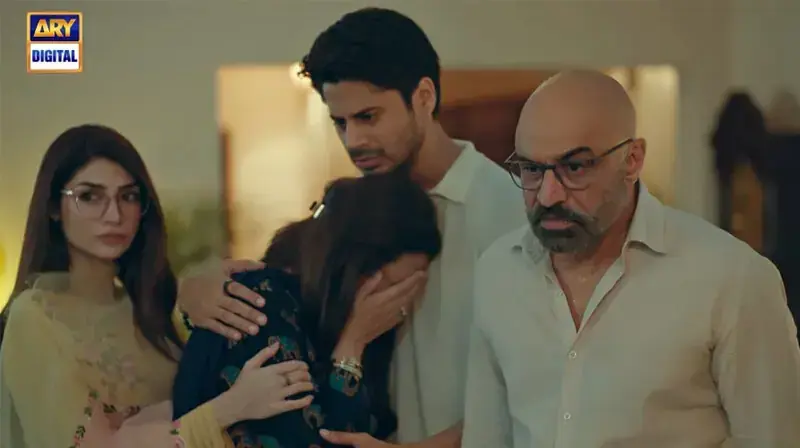
Bas Tera Sath Ho perhaps delivered the most modern and chilling version of the honour trap. Anas and Ansa (Sana Javed) are defamed by an AI-generated, inappropriate video created by Anas’ cousin, Shayan (Haris Waheed). The video may be fake, but the damage is real. Ansa faces major backlash.
Here is where the drama breaks the mould. Instead of letting the scandal destroy Ansa, Anas’ aunt and grandfather propose that he marry Ansa with honour and dignity. They do not ask Ansa to prove her innocence. They simply offer her protection. In a world where rumours destroy women, this is an act of profound compassion.
The takeaway: Honour is not about reputation. It is about how we treat the most vulnerable among us, protecting the victim, offering second chances and choosing compassion over control. When a family refuses to sacrifice its women to save its reputation, it does not lose honour. It gains it.
Lesson 5: A son is not a mother’s property
Here is a truth that Pakistani dramas are finally admitting to: a mother’s insecure attachment to her son is a damaging dynamic.
In Zabt, Shami is the only son of Arfa, a controlling, domineering mother who conditioned him from childhood to submit to her orders. His marriage to Ayla is doomed from the start. He is perpetually torn between his mother and his wife. He cannot protect his wife because he has never been allowed to protect himself. His mother’s love is not love, it is ownership.
This is not just cultural. It is psychological. And it is a cycle that destroys generation after generation. The son grows up with an invisible umbilical cord attached to his mother. She constantly reminds him that she raised him with great sacrifices — and that his purpose for the rest of his life is to repay that debt. His marriage suffers. His wife is traumatised. He cannot be a husband because he was never allowed to be an individual.
Why does this happen? Often, the mother’s attachment to her son is a replacement for an emotionally absent husband. She pours all her emotional needs into her son. He becomes her confidant, her reason for living. But this comes at a terrible cost: he never learns to form a healthy relationship with anyone else. And his wife is forever cast as the rival, not the partner.
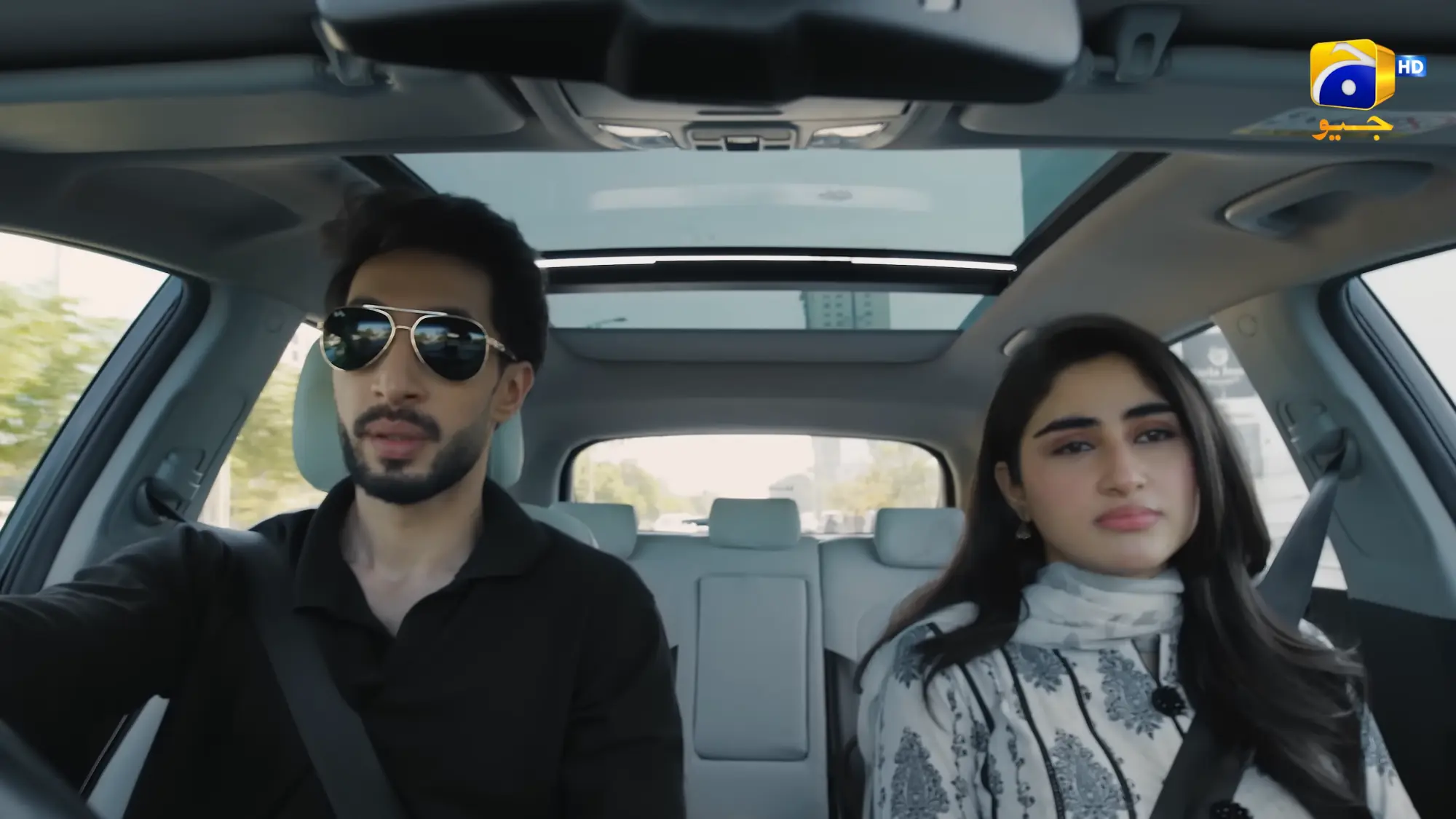
The solution is not to blame the mother. It is to understand her. She is often a victim of the same system — a woman who was never allowed to develop a life of her own. But understanding is not the same as enabling. Healing requires the mother to step back, to find meaning outside her son, and to allow him to become his own person.
This is where the drama’s lesson becomes a roadmap for real change. What does healing look like in these families? It starts with the mother recognising that her son is not her emotional spouse. It continues with the son learning to say ‘no’ — not with anger, but with love. And it culminates in the daughter-in-law being seen as a partner rather than a rival.
The takeaway: A mother who cannot let go is not a villain. She is a wounded woman. But the cycle can break — when she finds the courage to release her son, and when the son finds the courage to say, “I love you, but I am not yours to keep and control.”
The impact of trauma
Children learn from what they see.
When they see parents prioritising ‘honour’ over justice, they learn that speaking up is dangerous.
When they see bahus competing for approval, they learn that love is conditional.
When they see a cousin being harassed without consequence, they learn that some people are untouchable.
When they see a mother clinging to her son, they learn that marriage is a battlefield, not a partnership.
When they see a woman destroyed by rumours, they learn that reputation matters more than truth.
But there is hope: these cycles can be broken.
The quiet revolution
What is happening in Pakistani dramas is not a trend. It is a quiet revolution, as mainstream media is increasingly giving voice to the psychological wounds that families have carried for generations.
This is especially important since therapy is still a luxury in Pakistan. Mental health literacy is still a privilege. But dramas are accessible. Dramas are the medium through which millions of Pakistanis are learning to see themselves in a new light.
Viewers are no longer passive consumers — they engage with content on social media, and comment sections have become informal therapy spaces for reflection and discussion.
Ultimately, Pakistani dramas are not just reflecting change. They are creating it, bit by bit. The emotional and behavioural revolution does not happen in streets or parliaments. It happens in the spaces between episodes, in the moments when a daughter looks at her mother differently, when a husband notices the weight his wife has been carrying, when an elder wonders if they might be the problem, when a woman watches a character like Ansa and realises: I deserved better too.
The question is increasingly becoming “What will we learn from dramas?” rather than “Which drama should we watch?”
And the answer to the former is: everything.
Originally published in Dawn, ICON, August 30th, 2026

2 Comments
Pingback: The Bull Case For Sphere Entertainment (SPHR) Could Change Following New 4D Wizard of Oz Launch - Comic Vibe
Pingback: Ashneer Grover out of Rise and Fall Season 2? Makers look for new host - Comic Vibe