

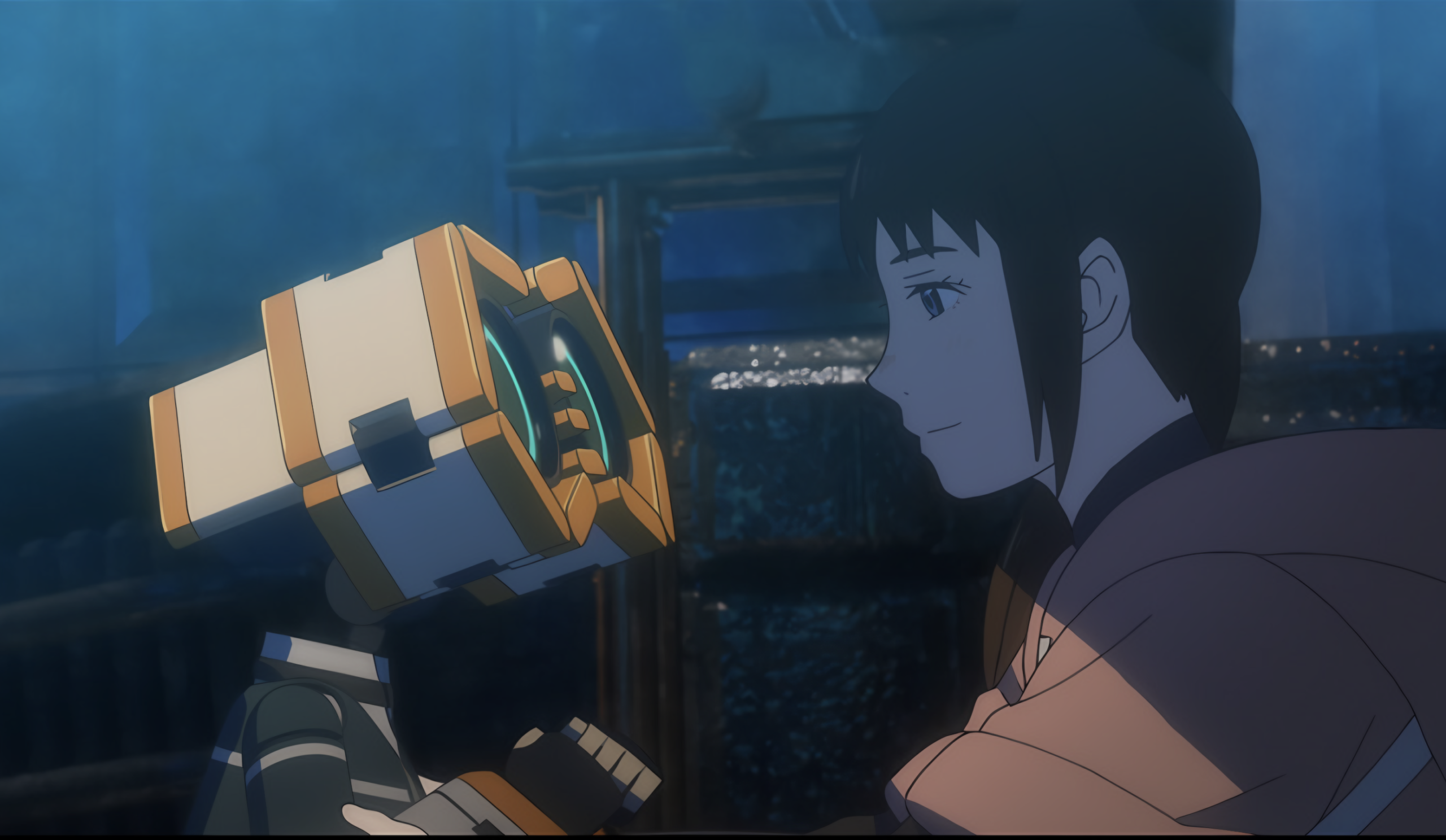
Star Wars: Visions Presents — The Ninth Jedi, the first long-form series under Lucasfilm’s new Visions Presents banner, released all eight episodes simultaneously on Disney+ and Hulu on August 5, 2026 — and within hours, every published review was positive. The series debuted with a perfect 100% approval rating across 16 reviews on Rotten Tomatoes, making it the highest-rated Star Wars project to debut on Disney+ since the platform launched.
That number is not an anomaly. It is the latest data point in a seven-year pattern that the Star Wars franchise has not yet fully reckoned with: every entry in the non-canonical Star Wars: Visions franchise has received near-unanimous critical praise, while the canonical Disney+ slate has produced results ranging from excellent to catastrophically reviewed. Visions Season 1 earned 96%, while Seasons 2 and 3 earned 100% each, giving the franchise a 98% average overall. The Ninth Jedi continues that record — not because it is a polished entertainment product, but because its supervising director, Kenji Kamiyama, was given the specific creative condition that makes ambitious Star Wars possible: freedom from the franchise’s own continuity obligations.
The series is set roughly 1,035 years after The Rise of Skywalker — well beyond the reach of any character, event, or canonical commitment the main saga has made. In that future, Jedi are myths. Lightsabers are artifacts. The galaxy’s sole sabersmith, Lah Zhima, has been captured by a warlord named Nawaam, and Zhima’s daughter Kara — voiced by Kimiko Glenn in the English dub, alongside Andrew Kishino as Margrave Juro and Simu Liu as Zhima — leads a makeshift band of Force-sensitives in a mission to rescue him and reconstitute the Jedi Order from nothing.
Why Non-Canon Star Wars Keeps Outperforming the Canonical Universe
The structural explanation for the Visions franchise’s critical record is not mysterious. Lucasfilm executive James Waugh, who oversees the Visions initiative, has described the mandate in unambiguous terms: the goal was for the series to come from the hearts of its creators rather than to answer questions within Star Wars continuity, treating the franchise as a palette for original storytelling rather than as a continuity obligation. That freedom is not cosmetic. It is structural. A director working inside the canonical timeline must reconcile their story with every prior film, series, and comic that has addressed the same period, characters, and technology. A director working in the Visions universe is accountable to nothing except whether the story is good.
Kamiyama’s The Ninth Jedi demonstrates what that freedom produces in practice. Lightsabers in his series do not behave the way canonical lightsabers behave. Rather than a fixed color determined by a single bonding event between a Jedi and a crystal, Zhima’s forged blades read their wielder’s Force alignment in real time — dynamically, continuously, without the fixed state the main saga has always assumed. A wavering Sith produces a purple blade. A nascent Force user with no formal training produces a colorless stub that lengthens as her connection grows. A smith who killed his own master, justifiably, carries a silver blade ever after. The prior TechTimes analysis of this system demonstrated that the underlying mechanism — piezoelectric crystal transduction of bioelectric skin response into variable plasma emission — is physically coherent; what Zhima builds is a moral compass that works through materials science, not metaphysics.
IGN’s Jesse Schedeen awarded the series 8 out of 10, noting that its non-canonical status gives it the freedom to function as a blank slate for creators free from Star Wars continuity, and praising the superior quality of the franchise’s animated work relative to its live-action. Collider’s Aidan Kelley gave it 9 out of 10, calling it a showcase of infinite possibilities when different creative minds are given access to the material. Rendy Jones, reviewing for RogerEbert.com, described the series as the right course for Star Wars — building on animated storytelling rather than trying to recapture a live-action formula that has produced diminishing critical returns.
Empire Magazine’s Kambole Campbell identified the key editorial principle: the series at its best minimizes its references to the main saga and uses the Star Wars setting as raw material rather than as a continuity obligation. ScreenAnarchy’s Andrew Mack noted that the series strips away franchise baggage and returns to the samurai roots that started it all. That observation is the most analytically precise: Kamiyama has not simply borrowed from the Star Wars universe. He has returned something to it.
Tōken: The Japanese Craft Tradition at the Center of the Story
George Lucas built the Jedi around a structure he borrowed from Akira Kurosawa — the wandering swordsman whose skill carries its own moral weight, whose blade is more than a weapon, whose code of conduct is inseparable from his art. Lucas cited Kurosawa’s Hidden Fortress as his model for A New Hope. The samurai’s code of bushido became the Force’s philosophy of disciplined awareness. The wandering rōnin — a samurai without a lord, adrift outside the feudal system that gave his training meaning — became the template for every displaced Jedi the franchise has ever depicted.
Kamiyama completes a circle Lucas opened. Production I.G is a Japanese studio whose Ghost in the Shell: Stand Alone Complex — a landmark of philosophical anime from 2002-2005 — stands as the most philosophically developed science fiction anime of its era. Where Lucas borrowed the samurai archetype through a Western filmmaker’s lens, Kamiyama brings the actual craft tradition that produced the sword the samurai carried. The character of Lah Zhima is modeled on the katanakaji — the master swordsmith of the tōken tradition — whose work is inseparable from Shinto ritual, whose knowledge passes from master to apprentice in person rather than through text, whose forge is a sacred space and whose blade encodes its maker’s character.
Japanese swordsmithing’s tamahagane process — “jewel steel,” produced by smelting iron sand with charcoal in a clay furnace called a tatara over 72 hours — consumes roughly 9.1 metric tons (10 short tons) of iron sand and 11 metric tons (12 short tons) of charcoal to yield 2.3 metric tons (2.5 short tons) of raw steel from which less than a metric ton (2,200 lbs) of usable material is extracted. The Society for Preservation of Japanese Art Swords revived tatara steelmaking in Japan in 1977 after Meiji and Taisho-era industrialization interrupted the tradition. Today, the material is only produced three or four times a year and sold exclusively to licensed master smiths. The knowledge of how to use it — the differential hardening, the clay-coating technique that produces the hamon (hardening pattern), the reading of the steel’s fracture pattern to determine carbon content — cannot be fully encoded in a manual. It lives in the hands of the practitioner.
This is precisely what makes Zhima’s capture a civilizational catastrophe in The Ninth Jedi’s universe. The lightsaber-making knowledge he carries cannot be recovered from texts. It requires Zhima — his hands, his judgment, his capacity to read the crystal the way a Japanese swordsmith reads a steel bloom. Nawaam captures rather than kills him for exactly this reason: a monopoly over the galaxy’s sole practitioner of irreplaceable craft is a more powerful geopolitical asset than a corpse.
What Nawaam’s Weapon Has in Common With Real Military Laser Programs
The physics of Nawaam’s weapon are not arbitrary. The closest real-world analogue is the neodymium-doped yttrium aluminum garnet laser — Nd:YAG — a synthetic crystal used as the gain medium in high-powered solid-state laser systems ranging from industrial cutting tools to military directed-energy programs. The Nd:YAG laser is classified as a solid-state laser; it operates at 1,064.5 nanometers and can be pulsed or continuous-wave, with wavelength and pulse duration that can be varied considerably depending on application. The crystal is the gain medium: it amplifies stimulated emission by trapping and re-releasing photons in a coherent beam. Real military programs — including the U.S. Navy’s Laser Weapon System (LaWS) and its successors, and the JHPSSL program reaching 100 kilowatts in testing — have demonstrated directed energy at ship scale using exactly this principle.
Nawaam’s cannon scales this concept to fleet-killer range, which requires confronting three physics problems the series correctly sidesteps rather than solving: thermal loading (even efficient crystals absorb pump energy as heat, and at extreme power levels, active cooling requirements become engineering-dominant), beam divergence (all laser beams spread with distance due to diffraction, requiring aperture sizes that scale with range), and energy sourcing (no power source in any current engineering roadmap approaches the energy density required for capital-ship engagement at long range). The series frames the weapon as nearly complete rather than operational, which is honest: a weapon of this specification is an engineering problem measured in centuries, not decades.
Kara’s Network Analysis Is Better Military Doctrine Than Nawaam’s Tactics
The series opens not with a sword fight but with a tactical insight. In Episode 1, Kara identifies that the enemy droid army threatening her group is controlled through a central command module on a single ship. Destroy the hub, and every droid in the field becomes inert simultaneously. The strategy works. It is also, structurally, a demonstration of a principle that the U.S. Department of Defense has understood since the 1960s: centralized command architectures are catastrophically fragile under adversarial conditions.
ARPANET’s founding design principle — survivability under nuclear attack — required that no single node’s destruction could disable the network. The solution was a distributed mesh architecture: every node could route traffic around a failed neighbor. What Kara identifies in Gennoh’s droid army is the opposite architecture — a star topology, where every node connects to a single central hub with no redundant pathways. Star topologies are efficient in peacetime (low management overhead, easy to override any unit) and catastrophic under adversarial pressure. Nawaam’s decision to centralize droid command is the same structural choice he makes in his political organization: he governs through demonstrated personal power (“I do not request your loyalty — if any of you can kill me, you may become general in my stead”), with every subordinate networked to his personal authority. Remove the center, and the whole collapses. Kara’s eventual assault on his kyber cannon power unit is this principle applied at campaign scale.
Can Kamiyama’s Misreading of Lightsaber Physics Survive Its Own Explanation?
The Ninth Jedi’s central scientific proposition — that a forged crystal can read its wielder’s moral alignment and express it as a changing blade color — originated in a productive mistake. Kamiyama has stated in interviews that as a child watching the original Star Wars trilogy, he believed lightsaber blades changed color naturally, reading the emotional state of the person wielding them. This turned out to be wrong about the films. It turned out to be right as the premise of a series.
The prior TechTimes analysis demonstrated that the proposed mechanism — a piezoelectric crystal transducing galvanic signals pre-stressed during forging to transduce galvanic skin response variation into variable voltage output, routed to a plasma emitter whose color shifts according to which elements are preferentially excited — is coherent at every step. The crystal proposed is analogous to tourmaline’s piezoelectric properties, which occurs in every color in the lightsaber spectrum (blue, green, red, pink, yellow, colorless) depending on elemental composition, is piezoelectric (generating voltage from mechanical pressure), and is pyroelectric (generating charge from temperature change). What does not exist is a crystal sensitive enough to distinguish between the skin conductance signature of Jedi conviction and Sith resolve — the difference between autonomic patterns generated by emotional states that are measurably distinct in galvanic skin response research but contextually noisy and individually variable in their raw bioelectric expression.
The gap is in sensitivity engineering, not in physics. Zhima’s “tempering” process — described in the series as a conditioning of the crystal to a dynamic rather than fixed state — would, in real materials-science terms, be analogous to what watchmakers do when precision-calibrating a quartz oscillator: controlled thermal cycling and mechanical pre-stressing during crystal growth to set the response function. The crystal is calibrated to the wielder’s specific bioelectric range. The science is speculative in its precision, not in its mechanism. Kamiyama’s childhood misreading, held for thirty years and developed with enough rigor, has produced something that stands up to interrogation.
Is Star Wars: Visions Presents Worth Eight Episodes of Your Time?
Yes — and the reason is not the lightsaber color theory, the directed-energy weapon physics, or the network topology argument, though all three reward attention during viewing. The reason is that The Ninth Jedi is, structurally, the first proof that the Visions Presents format works as long-form storytelling. The original 2021 short established Kamiyama’s premise. The 2025 Volume 3 follow-up “The Ninth Jedi: Child of Hope” extended it. The eight-episode series completes it — integrating back into the short in ways that Cinelinx described as seamless and retrospectively enriching, making the initial outing even better on rewatch.
The series requires no prior Star Wars knowledge to be fully satisfying. It is set so far beyond the Skywalker Saga’s timeline that the films and canonical series are, in-universe, ancient myth. The emotional architecture — a daughter looking for her father, a ragtag group discovering they may not be on the same side, a warlord whose own lightsaber suggests a history more complicated than his current allegiance — is self-contained. What it benefits from is a viewer who has spent time with the prior TechTimes analysis of its STEM layers: the blade physics, the tacit knowledge premise, the network-topology argument embedded in its tactical setpieces. The series is more interesting to watch if you understand what Zhima is doing when he forges a crystal, and why that activity makes him more dangerous as a prisoner than as a corpse.
The Visions Presents format is, as of this series, the most critically successful structural innovation in Star Wars since Dave Filoni’s Clone Wars demonstrated that animation could carry narrative and moral weight the films themselves could not always sustain. Whether the format produces a second series as strong as the first depends on which studio and which director Lucasfilm selects for the next entry. The Village Bride — based on the acclaimed Volume 1 short — has been announced as the second Visions Presents project, with no release date yet confirmed. If Production I.G’s The Ninth Jedi is the standard it is being measured against, the bar is high.
Frequently Asked Questions
Is The Ninth Jedi worth watching if I stopped caring about Star Wars after the sequel trilogy?
Yes — and the series was specifically designed with that viewer in mind. It is explicitly non-canonical: the events, characters, and technology depicted have no obligation to be consistent with the films or any other Disney+ series. The setting (approximately 1,000 years after The Rise of Skywalker) ensures no familiar characters, no continuity references to navigate, and no need to have watched anything else. The 100% critical approval rating across 16 reviews reflects this: critics consistently note that the series succeeds precisely because it is not trying to be the Star Wars you already know.
Is Star Wars: Visions Presents The Ninth Jedi available on Hulu and Disney+?
Yes. Unlike many Disney+ Star Wars releases, The Ninth Jedi is available on Disney+ and Hulu simultaneously — an unusual dual-platform arrangement that reflects Lucasfilm’s intent to reach anime audiences who may subscribe to Hulu without Disney+. All eight episodes were released at once on August 5, 2026, in a binge-drop format rather than a weekly schedule.
What is actually happening when a lightsaber blade changes color in The Ninth Jedi?
The series proposes that the kyber crystals Lah Zhima forges are conditioned through a “tempering” process that makes them continuously sensitive to their wielder’s bioelectric signature — specifically, the galvanic skin response, a measurable change in skin electrical conductance driven by the sympathetic nervous system and correlated with emotional states including fear, conviction, and doubt. When the wielder grips the hilt, the crystal transduces that skin-conductance variation into a voltage that routes to the plasma emitter, shifting which elemental wavelengths are preferentially excited. A high-arousal, Sith-aligned grip profile drives emission toward red; a calm, Jedi-aligned profile drives it toward green or blue. A wavering conviction produces a purple blend. A wielder with no trained Force connection produces minimal voltage — a colorless stub that lengthens only as their bioelectric coherence grows. The mechanism is physically coherent at every step; the engineering gap (a crystal sensitive enough to distinguish individual autonomic profiles) is large but not a violation of physics. For the full mechanism, see the complete lightsaber physics analysis.
Does The Ninth Jedi establish that non-canonical creative freedom is the key to better Star Wars?
The evidence suggests this is no longer merely an observation about a single series. Across the Visions franchise — four entries (Volumes 1, 2, 3, and now Visions Presents) — every entry has earned between 96% and 100% on Rotten Tomatoes, producing a franchise average of 98%. The structural reason, as James Waugh has articulated, is that non-canonical freedom allows directors to treat the Star Wars setting as a storytelling palette rather than as a continuity obligation. The Ninth Jedi is the most direct proof of this effect yet — an eight-episode series whose supervising director, Kenji Kamiyama, explicitly built his conceptual premise around a childhood misreading of Star Wars physics that canonical Star Wars would have required him to correct. Non-canonical Star Wars let him keep the misreading and turn it into art.
ⓒ 2026 TECHTIMES.com All rights reserved. Do not reproduce without permission.
