

Estonia-based startup Modash has raised $12 million in a Series A led by henQ, a Dutch VC firm that prides itself on “funding the weird.” And the strange thing about Modash, according to CEO Avery Schrader, is that its team has “very strong opinions in areas that no one really trusts anymore.”
The problem area is influencer marketing. Like competitors CreatorIQ and Upfluence, Modash helps brands like Farfetch discover talent who can promote their message. But rather than focusing on content creators with large followings, Modash collects open data to help clients (unless they opt out) find matches among the long tail of 250 million creators they list.
This means brands are connecting with relatively niche content creators through Modash’s platform. But according to the founder’s theory, these are the people who can have a powerful marketing effect because their small following base is likely to be more interested in what they have to say and value their cause.
Essentially, this flips the usual influencer marketing script and could help avoid some of the cynicism that arises about offering Schilling products to highly paid influencers. Not requiring creators to sign in also makes it easier to scale in areas where pure marketplaces have struggled.
This is why Modash remains bullish on the creator economy, even though Schroeder understands why others don’t. “The entire VC class has already made one or two bets, but they’re already wasted in that area,” he told TechCrunch.
“[But]people miss the point that creators are the atomic unit of the internet, and[creators]will just keep making stuff,” he said, explaining why he and his team believe in the marketing power of content creators and the market opportunity to help them monetize.
“Whatever comes to mind immediately when you hear the word ‘influencer’… I think it has a really negative connotation… Anything that you don’t consume is what you think of as an influencer, and then what you consume, what’s in your own YouTube search history, that’s who we support,” he added. “It’s like little creators talking about what they really like and doing the weirdest things.”
tech crunch event
San Francisco, CA | October 13-15, 2026
The 26-year-old Canadian fits the bill himself. Originally from Nova Scotia, he had been playing around with videos and forums there until he read that Estonia was becoming the “Silicon Valley of Europe” and headed there. There, he soon found himself recording podcast episodes at Technorati in the Baltic state, while trying his hand at influencer marketing for clients like Estonian scale-up Bolt.
For Modash, client-side issues are key. The startup’s vision is to have an end-to-end platform where brands can not only source creators, but also analyze campaigns, manage payments, and more. That’s the revenue stream, and plans range from $199 per month to a custom enterprise tier.
Tallinn proved to be a great starting point for Modash, with first clients including Bolt and the Estonian agency. Whether the comparison to Silicon Valley is accurate or not, there is clearly a network effect at work, with several Estonian founders becoming Modash’s first mentors and angels, and some of them returning to participate in the latest round.
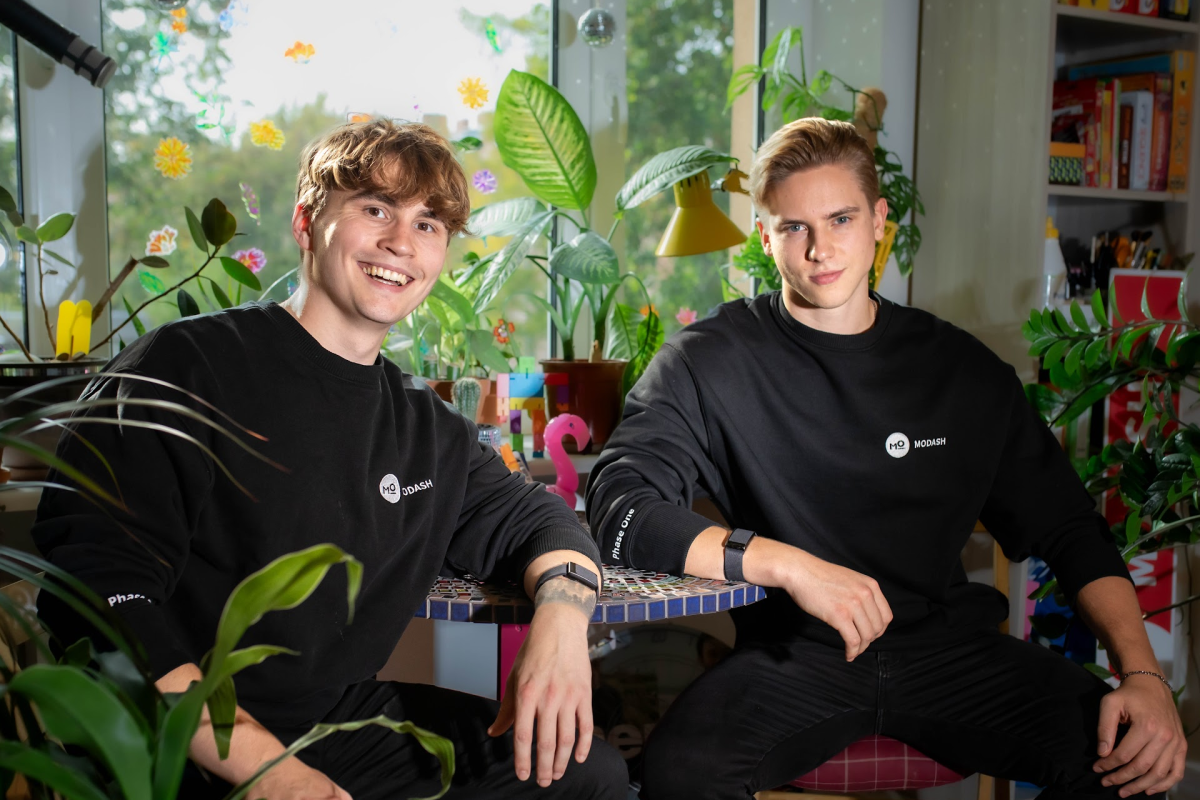
The capital is also where Schröder met co-founder and chief technology officer (CTO) Estonian software engineer Hendry Sadrak (pictured above, right) and the rest of the founding team. “Today, 40 or 50 percent of the company is still in Estonia,” Schröder said. “Many of them come from Bolt, Pipedrive, Transferwise… the Estonian mafia.”
Even if Schroeder doesn’t sound confident about the exact percentage of local staff, it’s a reflection of how much the team has grown over the past few months. “At the beginning of the year we had about 25 people, now we have 60 people. Next year we have set a cap of no more than 99 people, because it’s really important to keep the team as small as possible.”
Many of Modash’s new hires will focus on data engineering, as AI-powered discovery capabilities are a big part of the product roadmap.
In addition, the startup plans to hire people for customer-facing roles to get closer to customers in North America.
Schroeder himself was back in Canada when he spoke to TechCrunch, and said he plans to spend at least half his time there from now on. He said the startup’s priorities for the Series B round will be international expansion and increased focus on e-commerce.
