

Mebius Dust, the anime seven years in the making from a public story competition winner, is now streaming on Crunchyroll — and Episode Two arrived Thursday at 1:30 AM ET, just hours from now. Before that happens, the show deserves a closer look than its premise summary suggests: underneath the superpowers and the territory games, Doga Kobo’s first serious foray into dark sci-fi is running on a mathematical concept that most science fiction only gestures toward. The confinement at the heart of Mebius Dust is not a rule. It is a topology.
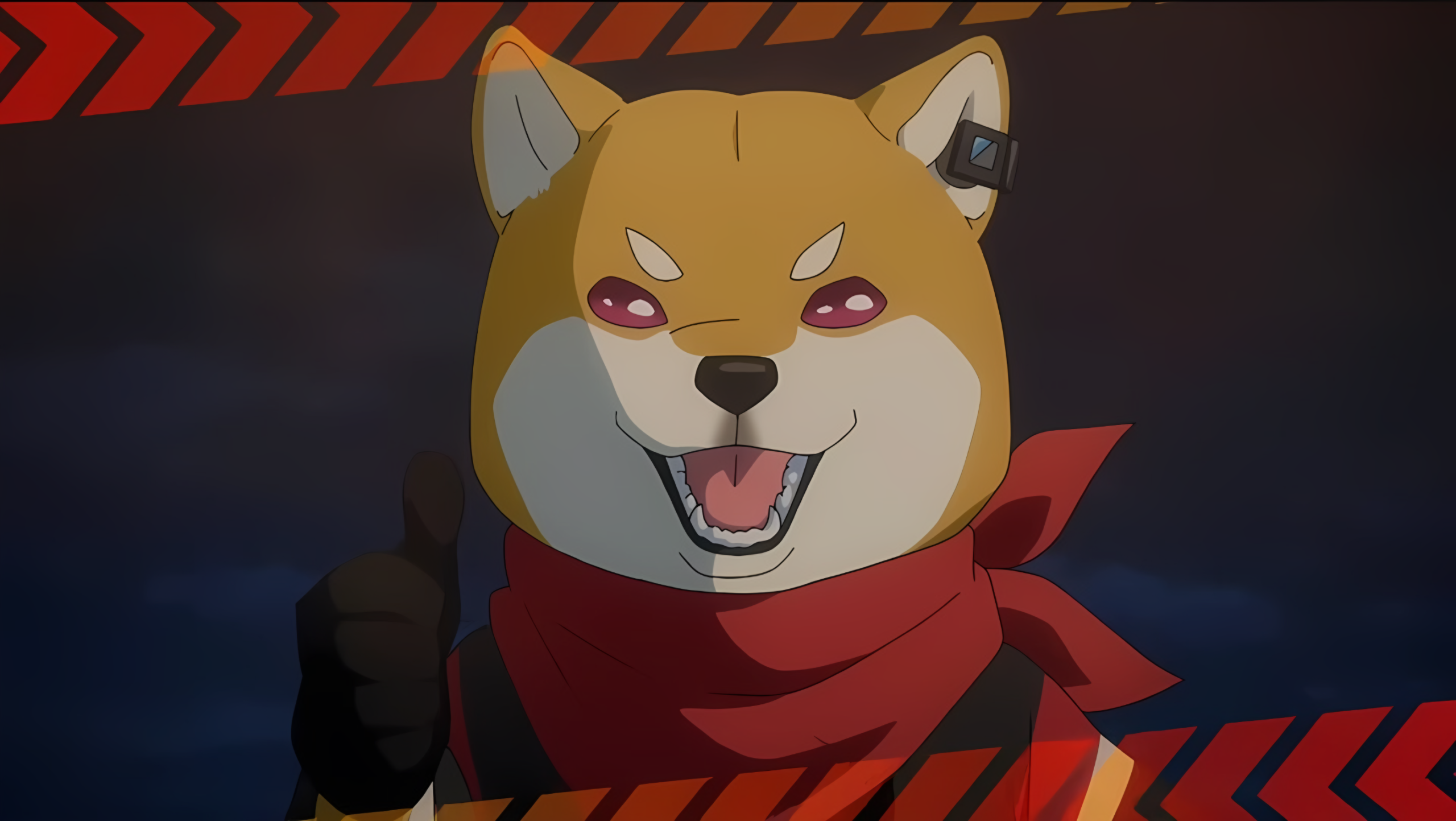
The series, which <a href="https://www.animenewsnetwork.com/news/2026-06-04/mebius-dust-anime-1st-main-trailer-unveils-more-cast-and-staff-members-ending-song-july-9-debut/.238122″ rel=”nofollow noopener” target=”_blank”>announced its July 9 debut on Crunchyroll on Tokyo MX alongside a global simulcast, released five new voice actors for Diabolic Ghost ahead of launch, confirming the show’s expanding cast as it moves into its second episode. Kanon Amane, Kensho Uesugi, Shōta Hayama, Kō Bonkobara, and Genta Nakamura join the previously announced ensemble, filling out the dangerous group that will complicate the lives of protagonists Araki (Yuto Takenaka), Stella (Nene Hieda), and Olga (Haruka Satō).
What Mebius Dust Actually Is
The premise: ten years after a mysterious meteorite struck Earth on February 29, 2000, a subset of the population — children exposed to the fallout — developed superhuman abilities called Rams. These “Rams Carriers” now live in the city of Shinkatsushika, a district perpetually bathed in particulate matter emitted by a giant crystal at the city’s center. The dust is not merely an atmospheric condition. It is a physiological requirement. Rams Carriers who leave the dust’s effective radius die.
That biological confinement is the show’s engine. The teenagers of Shinkatsushika have responded by channeling their abilities into a structured territory-control game — Polis Hopper — that occupies the same social role as competitive sports in the real world, with the critical difference that none of the players can opt out of the arena. When a Rams researcher named Dr. Yuda (Maki Kawase) recruits the central trio for an unspecified “experiment,” the show signals that the premise’s central question — whether the dust dependency is a natural consequence of the mutation or an engineered mechanism of control — is about to become the plot.
What the synopsis does not say is that this question has a precise scientific analogue. And that the show’s title contains a mathematical argument.
What the Möbius in Mebius Dust Actually Means
Mebius is a phonetic transliteration of the Japanese “メビウス” — itself a rendering of Möbius, as in August Ferdinand Möbius, the German mathematician who co-discovered in 1858 alongside Johann Benedict Listing the strip that bears his name. The strip is a surface formed by joining the ends of a rectangular band after giving it a single half-twist. The result has only one side and one boundary — you can trace a continuous line along every part of its non-orientable surface with one side and return to your starting point without ever crossing an edge.
The strip is the canonical example of a non-orientable surface in mathematics, which means it lacks a consistent distinction between clockwise and counterclockwise — or, more consequentially for this show, between inside and outside. The discovery of the Möbius strip launched the field of mathematical topology, the study of properties preserved under continuous deformation rather than rigid measurement.
The title Mebius Dust is not incidental branding. It is a structural argument about the world the show depicts. The Rams Carriers are simultaneously the most powerful residents of Shinkatsushika and its most trapped inhabitants. Their power and their imprisonment occupy the same continuous surface. Walk far enough in any direction and you return to where you started — not because the city has walls, but because the geometry of their biological situation has no true exit. The Möbius strip is the shape of their lives.
This maps onto a precise topological property: Möbius structures in mathematics collapse the distinction between interior and exterior. In physics, Möbius-like behavior appears in spinors — quantum particles that require 720° of rotation, not the standard 360°, to return to their original state — and has been proposed in models of cosmic string topology. In chemistry, researchers have synthesized Möbius conjugated nanohoops with distinct electronic properties unavailable in ordinary ring structures. The show’s fictional crystal, at the city’s center, functions as the topological singularity around which the Carriers’ world bends back on itself.
Does the Biology Hold?
The dust dependency is the more challenging speculative-science claim, and it is also the one that connects the show to real evolutionary biology with the most precision.
The mechanism the show implies — a meteorite impact that produces heritable physiological changes in exposed children, leaving them unable to survive without a specific atmospheric compound — maps almost exactly onto obligate endosymbiosis, the biological relationship in which one organism cannot survive without permanent presence of another. The textbook case is the mitochondrion: once a free-living alpha-proteobacterium, now an organelle without which no eukaryotic cell can produce the ATP it needs to function. The relationship is not optional, voluntary, or reversible — it is structural. The biology has been rewritten around the dependency.
The Mebius Dust scenario asks: what if that kind of dependency was imposed from outside, in a single generation, by a meteorite-delivered agent? Carbonaceous chondrite meteorites — the class most associated with the origin-of-life field — carry amino acids, nucleobases, and complex organic molecules that can influence biological systems on contact. The Murchison meteorite, which fell in Australia in 1969, was found to contain more than 70 amino acids, many not found on Earth, which strengthened the scientific case that meteorites can deliver biologically relevant chemistry to planetary surfaces.
A plausible fictional mechanism, extrapolating from known science: a retroviral agent delivered by the meteorite integrates into the genomes of exposed children during a critical developmental window, rewiring cellular ATP synthesis to depend on an exotic co-factor present only in the crystal’s particulate output. Endogenous retroviruses — viral sequences that integrated into the human genome millions of years ago — already constitute roughly 8% of the human genome. That heritage exists. The show is asking whether something like it could happen deliberately, and in a single generation.
The specific constraint that makes this science fiction rather than science: a retroviral integration that produces discrete, trainable, stackable abilities rather than oncogenic cascades would require targeting precision far beyond anything in current virology. Real endogenous retroviral insertions produce phenotypic effects across generations, not within a single lifespan’s post-impact window. The show requires faster and more targeted machinery than any known real-world vector.
That gap is the honest boundary of the science — and it is also where the show’s central unanswered question becomes most interesting. If the dust dependency is not a natural biological consequence but an engineered one — maintained by the crystal, possibly controlled by whoever controls the crystal — then the question is not “can Rams Carriers survive outside Shinkatsushika?” but “does someone want them to believe they cannot?”
What Is it Like to Watch?
The critical response to Episode 1 has been mixed. <a href="https://www.animenewsnetwork.com/preview-guide/2026/summer/mebius-dust/.237670″ rel=”nofollow noopener” target=”_blank”>ANN’s Preview Guide called it “half-baked in both concept and execution,” faulting the premiere for introducing too many named characters simultaneously. The criticism is substantiated: the episode throws more than a dozen named individuals at the viewer within its first act, which undercuts the intimacy the show seems to be aiming for with its central trio.
The counter-case is structural rather than impressionistic. Reviewers who compared the show positively to Darker than Black (contractor system, ability-at-a-cost) and World Trigger (methodical team-based combat) are pointing at something real: the show’s genre DNA is more game-theory than action-spectacle, and the territory-game mechanic of Polis Hopper is doing the same work that arena combat does in shows like that — it is a pressure valve that contains the drama until it cannot be contained anymore.
Doga Kobo is an interesting studio to be making this show. The company, founded in 1973 and acquired by Kadokawa in July 2024, is known primarily for intimate character-driven comedies and romances. Watching them tackle dark speculative fiction — with Tarou Iwasaki (Baki the Grappler) in the director’s chair rather than the studio’s usual roster of slice-of-life specialists — is itself a genuine question worth tracking over the cours.
Where Mebius Dust Came From: Seven Years and One Competition
The show exists because of a 2018 public story competition. Project ANIMA’s 2018 story competition — a collaboration between mobile company DeNA, advertising firm Sotsu, radio station Nippon Cultural Broadcasting, and broadcaster MBS — solicited original story submissions across three genre categories with the promise of anime adaptation for each winner. The submission platform accepted novels, scripts, manga drafts, illustrations, and proposals from professionals and amateurs alike. The project received thousands of entries.
Hajime Shinagawa’s Möbius Dust won the Kids/Game category, with the announcement coming at AnimeJapan 2019 in March of that year, along with a 1 million yen prize and a Doga Kobo adaptation that was “tentatively slated for after 2020.” The operative word in that timeline was “tentatively.” The anime was originally targeted for a 2021 debut, then 2022, before production extended the runway to 2026. Episode 1 finally reached screens on July 9.
Mebius Dust is the third and final Project ANIMA anime to air. The Science-Fiction/Robot winner, Sakugan premiered in October 2021. The Isekai/Fantasy winner, The Story of the Girl Who Couldn’t Become a Wizard, premiered October 2024. The competition’s full cycle is now complete.
The seven-year journey from award to broadcast is worth naming plainly, because it shapes how the show should be evaluated. This is not a studio-generated IP being produced on a commercial timetable. It is an original story that survived five years of delays to reach screens in a competitive streaming landscape where Crunchyroll, as of the end of 2025, converted to an entirely paid subscription model. Every viewer watching Mebius Dust on Crunchyroll is a paying subscriber — which is either pressure or validation, depending on what the remaining episodes deliver.
Frequently Asked Questions
What is Mebius Dust about, and is it on Crunchyroll?
Mebius Dust is an original sci-fi anime produced by Doga Kobo, streaming on Crunchyroll as part of the Summer 2026 simulcast lineup. It is set ten years after a mysterious meteorite impact, in a city where children who developed superhuman abilities — called Rams Carriers — are confined by a physiological dependency on the particulate dust emitted by a giant crystal. They cannot leave the city and survive. The show follows three high-schoolers who are recruited by a Rams researcher for an unspecified experiment, which sets the central dramatic question in motion.
What does the Möbius strip have to do with the show?
The title “Mebius” is a phonetic rendering of “Möbius” — as in the Möbius strip, the mathematical surface with only one side and one boundary, where the distinction between inside and outside collapses. The show uses this as a structural metaphor: the Rams Carriers are simultaneously the most powerful people in Shinkatsushika and its most trapped inhabitants. Power and imprisonment occupy the same continuous surface. The topology is not decorative — it describes the precise nature of the confinement the characters cannot escape regardless of how strong they become.
Is the dust dependency real science, or just a plot device?
It is real science extrapolated beyond its current boundary. The biological mechanism closest to what the show depicts is obligate endosymbiosis — the relationship by which mitochondria became permanently integrated into eukaryotic cells, making it impossible for those cells to survive without them. The Rams Carriers’ dependency on the crystal’s output maps onto this model precisely. A plausible fictional mechanism would involve a meteorite-delivered retroviral agent rewiring cellular energy metabolism to require an exotic co-factor present only in the dust — a mechanism grounded in the documented fact that endogenous retroviruses already constitute roughly 8% of the human genome. The science-fiction element is the required targeting precision: real retroviral integration does not produce discrete, trainable abilities in a single generation. But the show knows where the real science ends, and that gap is also where its central dramatic question lives.
When does Episode Two air, and what should viewers expect?
Episode Two of Mebius Dust is scheduled to air in Japan on Thursday, July 16, 2026 at 2:30 PM JST — 1:30 AM ET — with Crunchyroll’s simulcast following shortly after. Based on the Episode 1 setup, Episode 2 is likely to expand the Polis Hopper mechanics, develop the Dr. Yuda experiment arc, and introduce the five newly-announced Diabolic Ghost characters. The question of whether the dust dependency is natural or manufactured has been positioned as the series’ central dramatic engine — viewers who want to watch it unfold from the beginning will want to start before Thursday.
ⓒ 2026 TECHTIMES.com All rights reserved. Do not reproduce without permission.
