

La Mesías review – this utterly bizarre TV show is unforgettable
Finally landing on Mubi, this Spanish mega-hit about six sisters drilled into becoming viral Christian pop stars is wildly ambitious, blackly funny and a true triumph. Oh, and there are UFOs too
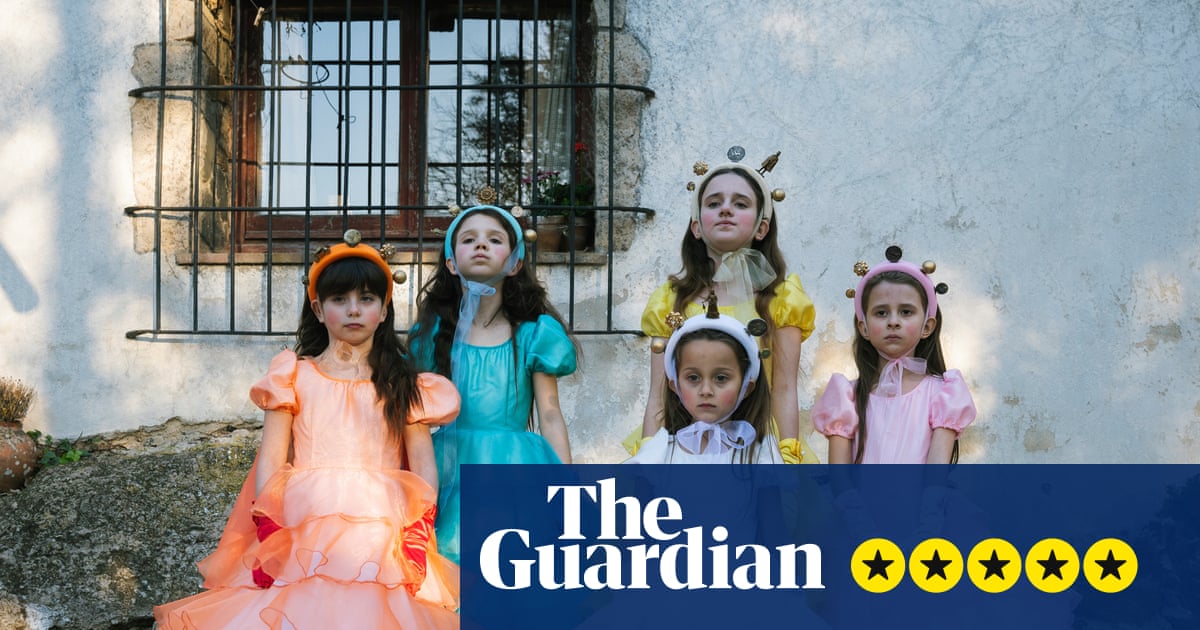
At Primavera Sound festival in Barcelona in 2024, nestled alongside the likes of Pulp and Charli xcx was an unusual addition to the bill. Stella Maris arrived on stage as haunting home movies, religious iconography and glittery gifs popped up on the screen behind them. Part-Haim, part-Heaven’s Gate, the six sisters performed their hits: “Christian electronic dance music” that their late mother, apparently, believed would help them to save the world.
The performance was very real, but the band was not. It was a stunt for the Spanish TV mega-hit La Mesías or The Messiah, which was released there in 2023. Its seven episodes centre on an estranged brother and sister, Enric and Irene, who discover that their siblings have become a viral pop band. Cue a soft-focus, flashback-heavy trip into the family’s past, thick with emotional neglect, parental narcissism and religious fanaticism. Oh, and there are UFOs, too.
La Mesías is nothing if not singular in its vision, and was masterminded by Los Javis, the Spanish duo who won best director at Cannes film festival earlier this year for their upcoming queer drama film La Bola Negra. Certainly, this isn’t a series you will forget in a hurry. As well as being incredibly long (some episodes clock in at close to an hour and 20 minutes, making it less of an outlier on the usually cinema-focused streamer Mubi), it is – and I mean this lovingly – truly bizarre. Sometimes, it feels like two or three different series have been smooshed together, with timelines that jostle for your attention. There are the early years, with a young Enric and Irene played with poise and maturity by child actors Bruno Núñez Arjona and Carla Moral, plus Ana Rujas as Montserrat – part Cher in Mermaids, part Mommie Dearest who drunkenly tells her kids that “mamá tiene que vivir” (“mum needs a life, too”). Then there are the sheltered adolescent years, with the siblings now played by Biel Rossell and Irene Balmes and known by the names Isaías and Resurrección. They’re coerced by their mother into performing religious music in the 90s, while wearing clothes that look as if they’re from the 1920s. Finally, we have Enric and Irene in the present (Roger Casamajor and Macarena García), traumatised by their childhood but also determined to save their younger sisters.
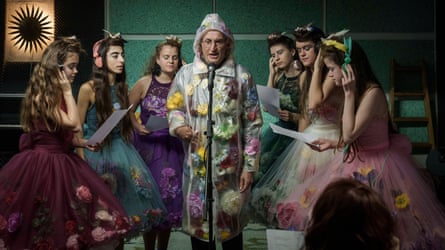
If this wasn’t already clear, it is a rather ambitious feat. And if you thought Pedro Almodóvar had a lot to say about mothers, then just wait to see what Los Javis have in store here as Montserrat (also played by Lola Dueñas and Carmen Machi) inflicts all of her own psychic chaos and religious mania on to her children. The pairing of Dueñas as the middle Montserrat and Albert Pla as her super-conservative husband, Pep, is a casting coup, as they play some of the most horrendous (but also often the most farcical) parents imaginable. For all its horrors, La Mesías is blackly funny, finding its humour in unexpected places, like a visit from social services, or the aforementioned performance by the two teenage siblings, who are met with a horrible mixture of indifference and laughter on stage. The Stella Maris tunes are funny, too, but they’re also rather catchy thanks to some canny writing from the Catalan pop band Hidrogenesse.
There are some aspects of La Mesías that don’t quite work. The apparent internet ubiquity of Stella Maris is never quite squared with just how sheltered the sisters apparently are (although, in fairness, they were heavily inspired by the real-life group Flos Mariae). There are about 10 plotlines too many, and some of the episodes drag. And while the music budget was clearly high, some of the needle-drops – among them Hozier’s Take Me to Church and Everytime You Go Away by Paul Young – can feel rather on-the-nose (an exception should probably be made for Pink Floyd’s Mother (“mama’s gonna make all your nightmares come true”) which is spot-on but also chilling here). But as a work of art, this series is a triumph – a nightmare-inducing thriller with the kind of ambition that shows exactly why Los Javis would go on to win at Cannes. Enric and Irene’s aunt tells them that “your mum met many men, but the worst of them was God”, which feels too simplistic an explanation for what we see here. This isn’t a show that critiques religion, so much as the dogma, destruction – and sometimes even the poppy indoctrination – that mere mortals bring to it.
Explore more on these topicsShare
Reuse this content
