

Related reads:Nier Creator Yoko Taro Mourns Death of Physical Media as PlayStation Plans to End Production of Game Discs
Amid the backlash to Sony’s decision to end production of discs for new PlayStation games from 2028, data for game sales in the U.S. show the dominance of digital in stark terms.
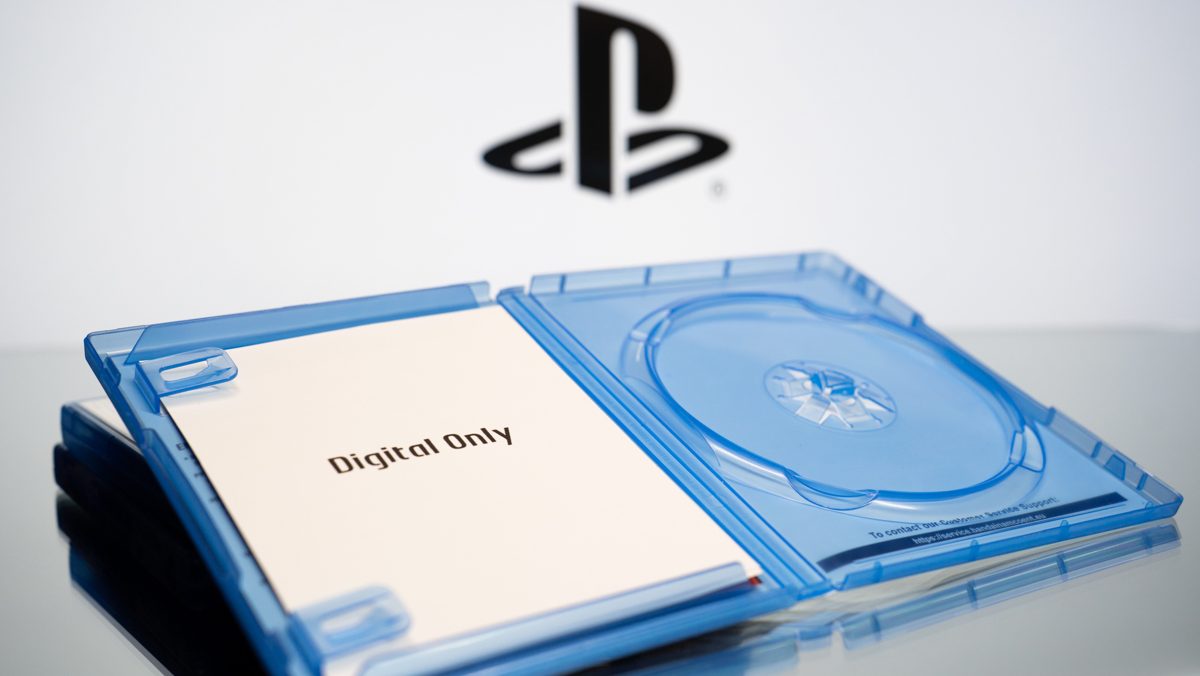
On July 1, Sony shocked the video game world when it confirmed plans to discontinue physical disc production for new PlayStation games from the start of 2028.
“In response to shifting trends in consumer preference, new games will be released on PlayStation Store and at retailers in digital formats only,” Sid Shuman, Senior Director, Sony Interactive Entertainment Content Communications, said in a post on PlayStation Blog.
“As consumer preferences and the broader entertainment industry continue to shift away from physical discs to digital, physical game disc production for all new games releasing on PlayStation consoles will be discontinued starting January 2028. Following this date, new games will be available on PlayStation Store and at retailers in digital formats only. This transition has no impact on games that already released, or will be releasing, prior to January 2028 in disc format.
“This is a natural direction for Sony Interactive Entertainment to adapt to consumer trends as the general preference for digital media significantly outpaces physical discs. This transition will enable us to align more closely with how most of our community prefers to access and play games today.
“We’ll continue to prioritize our reovide choices as to where players prefer to purchase new games, whether that’s at retailers or PlayStation Store. We remain committed to delivering a world-class gaming experience to our fans and we thank you for your continued support.”
Since the announcement, gamers have called on Sony to U-turn on its decision, signing online petitions and swarming over PlayStation social media posts to express concern about video game preservation and ownership — even overshadowing the release of new games that have nothing to do with what’s going on at Sony.
But through it all, analysts have insisted that there is zero chance that Sony will change its mind. And while there is plenty of debate about the motivation behind Sony’s decision, one analyst has laid out the stats that may underpin it.
In a social media post, Mat Piscatella, Senior Director and Video Game Industry Advisor at Circana, confirmed that just seven PlayStation video games sold more than 100,000 physical units so far this year. Only two PlayStation video games sold more than 10,000 physical units in the U.S. during the week ending July 11.
It’s a shockingly low volume of physical PlayStation game sales that hammers home the point that digital overwhelmingly dominates the market. But it’s worth pointing out that this is U.S. data only, and does not include sales information from other markets, such as Europe.
The UK’s Digital Entertainment and Retail Association (ERA), for example, called Sony’s decision “a triumph of corporate convenience over consumer choice.”
In a statement published online, Kim Bayley, CEO of ERA, said its data shows that 25% of under 25s use discs for gaming, and that discs should remain as a choice on top of digital.
“Playstation’s announcement that major games will no longer be available on disc is a triumph of corporate convenience over consumer choice,” Bayley said.
“Every year, millions of gamers still choose to buy physical copies because they value true ownership. A disc can be shared with family, traded in, collected, preserved and, crucially, still played years from now. A download licence often offers none of those freedoms.
“ERA consumer data shows that 25% of under 25’s use discs for gaming and the total disc based games market was valued at over £300million in 2025, demonstrating that there remains a substantial and committed audience for boxed games.
“Retailers see this demand every day. Physical games continue to bring people into shops and give consumers real value through gifting, collecting and resale.
“The industry should be embracing every legitimate way consumers want to buy games, not narrowing their choices. Digital distribution has transformed gaming and is hugely popular, but it should complement physical formats, not replace them.
“Consumers deserve the freedom to choose how they buy their entertainment. Removing discs doesn’t represent progress – it simply removes choice. That’s bad for gamers, bad for retailers and ultimately bad for the long-term health and preservation of our games industry.”
Last month, Piscatella said that the “overwhelming majority” of volume is done digitally now. More than half of all Xbox <a href="https://comicvibe.com/the-best-horror-series-ever-made-is-now-streaming-for-free/” title=”The Best Horror Series Ever Made Is Now Streaming For Free”>Series consoles in the U.S. don’t have a physical drive, he added, while over a quarter of PS5s are the same.
It remains unlikely that Sony will U-turn on this, analysts have told IGN. Dr. Serkan Toto, CEO of Japanese game industry consultancy firm Kantan Games, suggested that even if half a million people cancelled their PlayStation Plus subscription in protest, it would be just a drop in the ocean for Sony.
“I sympathize with physical media fans, but Sony will not reverse this decision,” Toto told IGN. “They of course knew what the online reaction would look like, and they now wait for this storm to pass.
“Sony has over 120 million active PlayStation users,” he continued. “Around 50 million people subscribe to PlayStation Plus. As a thought experiment, let’s say 500,000 cancel in protest, that would be just 1% of that business gone — of course not enough for Sony to start rethinking. Digital is just too lucrative.”
For Sony, going all-digital for new game releases will earn it more money from every sale at a time when console sales are expected to plummet due to their rising cost. For a first-party PlayStation game such as The Last of Us, Sony will only keep around 65% of the money from a physical copy, with around 30% going to the retailer and roughly another 5% on manufacturing costs. Meanwhile, for a physical copy of a third-party game such as the Activision-published Call of Duty, Sony will get a licensing fee, likely around 15%.
For downloads, however, the margins are much higher. For a first-party game sold0% of the revenue. For third-party games such as Call of Duty, meanwhile, Sony keeps a 30% cut (so, roughly $21 for a $70 game)
Piers Harding-Rolls, games industry analyst at Ampere, has said a lot has changed over the course of the last two generations. “Console gaming is the last hold-out for physical media in the gaming sector, but physical product has been declining in importance,” he said in a post on the Ampere website. “Back in 2013 when the PS4 launched, Ampere data shows that only 13% of total full games unit sales for Sony consoles were digital (including digital-only games). Fast forward to 2025, and this digital share of full game purchases stood at almost 80% of the total.
“Inevitably there will be concerns from PlayStation gamers around various aspects of this announcement including choice, accessing older physical games on new consoles, the ability to collect physical games, and game preservation, however the purchasing trends of gamers are clear.”
One analyst said fans of physical media had their chance and blew it, so there’s no going back. “If gamers and preservationists had bought more physical games, Sony wouldn’t have seen the digital sales ratios that justify this decision,” Robin Zhu, a games analyst at Bernstein, told the Financial Times.
“Digital game sales carry essentially 100% incremental margin… the cost of the physical package, shipping and retailer margins can be more than 20% per cent of sticker price.”
Meanwhile, government authorities seem unlikely to be able to do much to prevent Sony going through with its decision. Over the weekend the EU said it was powerless to stop Sony — and indeed any company — from killing discs.
Wesley is Director, News at IGN. Find him on Twitter at @wyp100. You can reach Wesley at wesley_yinpoole@ign.com or confidentially at wyp100@proton.me.
Related reads:PlayStation’s FlexStrike Wireless Fight Stick Postponed Due to “Unexpected Production Delays”
