

Key Points
-
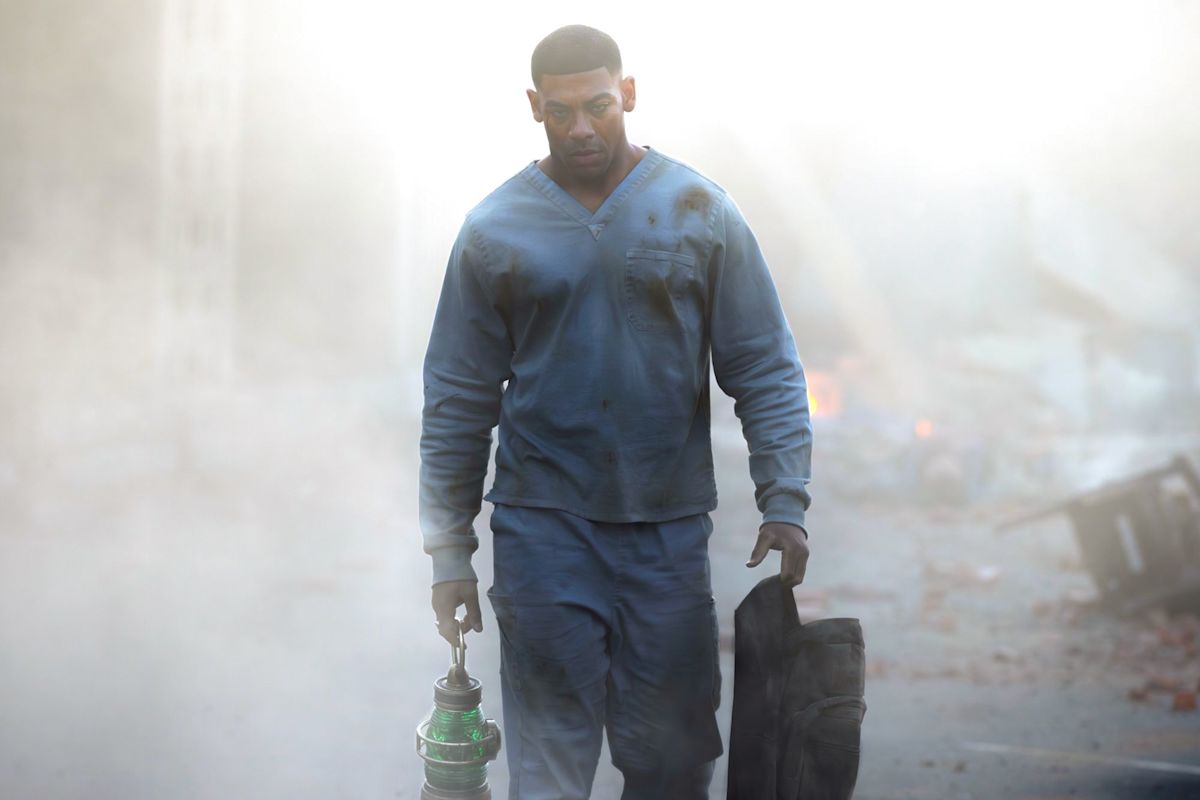
The Lanterns creative team discuss how they finally gave the fans the first live-action John Stewart.
-
Executive producer Damon Lindelof explains how “daunting” the task was and why it was important.
-
Star Aaron Pierre talks about becoming hyper-focused on John’s humanity and all the things “not directly related to his superhero-ness.”
The 1971 release of Green Lantern issue #87 marks the first-ever appearance of John Stewart in the DC Comics canon.
Hal Jordan is the chief Green Lantern of planet Earth at this time, part of an intergalactic policing organization that guards sectors of the cosmos. The former test pilot’s signature weapon is the power ring, an artifact forged by the Guardians of the Universe — the founders of the Corps. — that allows a Lantern to create just about anything they can think of.
With his fellow hero, the hothead with a bowl cut Guy Gardner, out of commission, Hal follows a lead from the Guardians to find John, a Black man standing his ground before cops. The exchange between the two fundamentally distinct men speaks to why John continues to resonate decades later.
The character makes a joke in this ’70s comic about how he should be called “Black Lantern,” and instead of wearing the domino mask, as was traditional for Hal, he declares, “This Black man lets it all hang out! I’ve got nothing to hide!”
John remains one of the most recognizable Black superheroes in all of comics canon. As the third human to ever wield a Green Lantern ring, his experience as a U.S. Marine Corps veteran makes him a formidable combatant and regimented leader, while his past career in architecture seeps into all the detailed constructs he conjures into existence.
In that first comic issue, he was initially meant to serve as Hal’s backup in the event he was ever incapacitated, but after years of storytelling across DC Comics, Mr. Stewart now overshadows Hal in many respects.
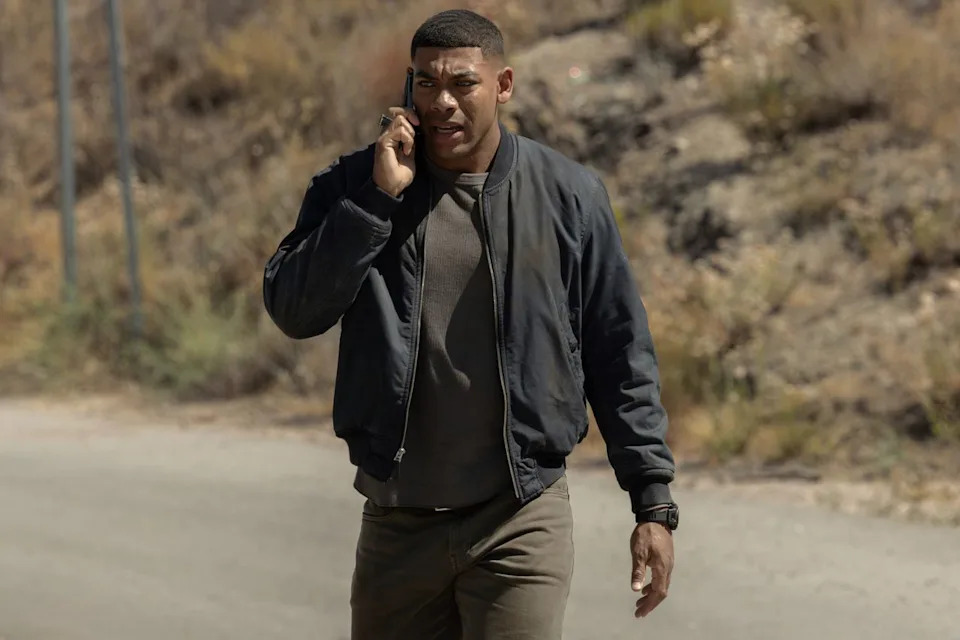
The years have been good to this character, through various comic book arcs and becoming a staple of multiple animated projects — including the Justice League and Justice League Unlimited cartoons of the early aughts. But now with Lanterns, a new HBO drama from DC Studios premiering this Sunday, his loyal fans will finally get the payoff of seeing a live-action version of the character for the first time, by way of rising star Aaron Pierre (Rebel Ridge, Mufasa: The Lion King, Star Wars: Starfighter).
Damon Lindelof, an executive producer of Lanterns with comic book scribe Tom King and showrunner Chris Mundy, calls the responsibility of that “really daunting.”
“Just to talk about the elephant in the room, you’re asking three white guys this question,” he tells Entertainment Weekly in conversation with his creative leads. “There’s a real shortage of non-white guy superheroes, and so you have to get it right that much more. We had an incredible writers’ room.”
“Which is a lot of pressure on Aaron then,” Mundy adds, “He took that responsibility super, super seriously.”
When James Gunn and Peter Safran took the reins of DC Studios to launch a new interconnected superhero universe, they assembled a group of their writer friends at Safran’s house. King was among them.
“It was an insane meeting,” he recalls, describing everyone sitting around couches in front of a giant whiteboard. “I literally brought with me my college copy of DC Superheroes, a big, old decaying book. And he was like, ‘Sky’s the limit! What works? What doesn’t? What can we make beautiful?”
The name John Stewart was baked into the idea of what would become Lanterns before any other creatives came aboard. King threw out the concept of a space cops story with a True Detective, Training Day bent.
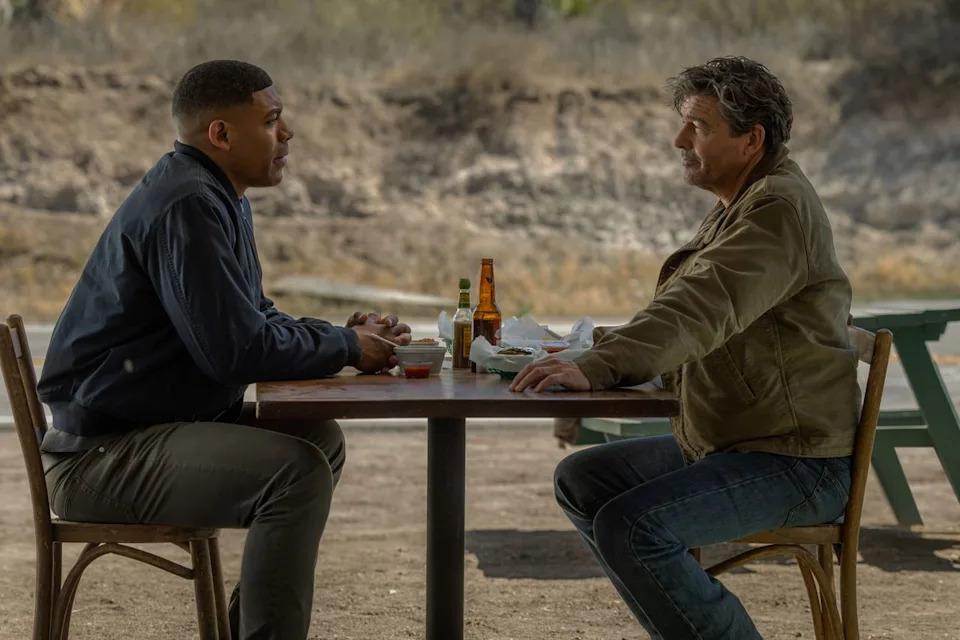
Lanterns now introduces live-action John Stewart as the new Earth-based trainee of the Green Lantern Corps. Instead of the traditional means of “the ring chooses the wearer,” the Guardians of the Universe recruited him themselves. After Hal’s (Kyle Chandler) former mentor, Sinestro (Ulrich Thomsen), is thrown in space jail for staging a coup, the founders of the Corps. fear they might now need a replacement for his protege should the time come.
It leads to a tense relationship between Hal, who’s clinging to his fading hero status, and John, who’s only two months into his training and chomping at the bit for some action.
Get your daily dose of entertainment news, celebrity updates, and what to watch with ourEW Dispatch newsletter.
Pierre looked at just about everything John Stewart-related in anticipation of the role.
“I definitely did extensive research…but something that’s really important to me, in addition, [was] this character within myself,” the actor says. “I wouldn’t even say it’s similar; I’d say it’s exactly the same in this context for me as it is in any context in regards to a character that I have the privilege to portray. I do extensive research. I cross my Is, I dot my Ts, I leave no stone unturned. I do all my due diligence.”
One of Lindelof’s primary references for John were those Justice League animated shows, which he says emphasized the figure’s “paradoxical” nature. (“I don’t want to be a part of a team, but how can I help?” as he puts it.) Phil LaMarr voiced the role on those series and in the larger DC animation slate.
“I went up to him and was like, ‘I can’t tell you what an inspiration you are to the whole show,'” King remarks of LaMarr, a regular of the voice-acting space.
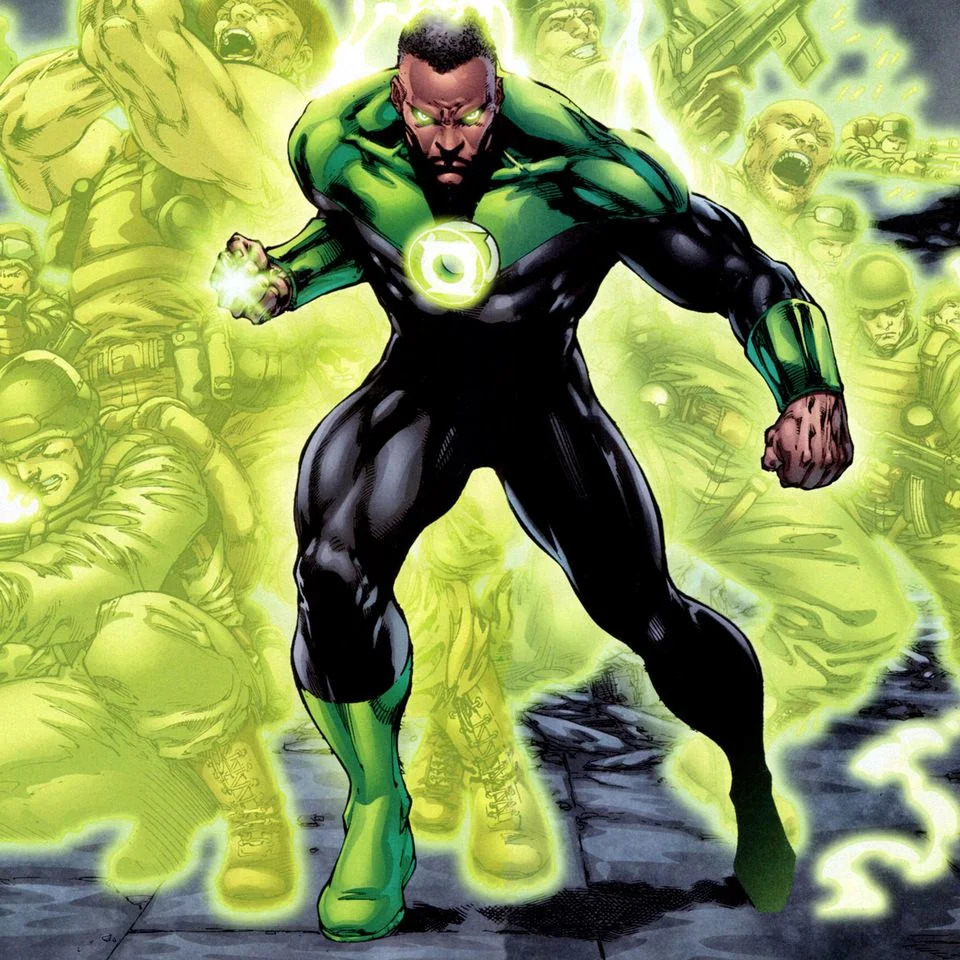
King himself, who wrote many a hit comic book run for DC, provided the team with “the 101” on the character from the comics, Lindelof continues. “But then also, you’re sort of like, ‘So what is the canon exactly and how can we honor it but also go our own way?'” the EP says. “You need someone who is a star, who can hold the screen and basically own the character — and it’s Aaron Pierre.”
King also credits comic artist Neal Adams, who worked on that ’70s Lanterns issue with John’s introduction. Adams helped define this figure’s “outsider attitude…this idea that I’m not accepting the world the way it is,” King explains.
As for Pierre, he chose to hyperfocus on John’s humanity.
“I really dived into his family history,” he says. “The first places that I dived into were the parts of him that are arguably not directly related to his superhero-ness and more. Who was the boy who turned into the adolescent, who turned into the young man and then the more mature man that we get to know later in the series? I felt like that was the most powerful and clearest path into really discovering the truth of who this man was within the context of being a hero and outside of being a hero.”
Lanternspremieres on HBO and HBO Max at 9 p.m. ET/PT on Sunday, Aug. 16.
Read the original article on Entertainment Weekly
