

(Photo courtesy of i-dle’s SOYEON and MIYEON’s Instagram accounts)
[Hanteo News = Reporter KIM YEONWOO] Virtual characters sing and dance on stage, deliver performances that would be difficult to achieve in the real world, and build relationships with fans. Some even achieve success comparable to that of real-life idols. Once considered a niche culture for dedicated enthusiasts, virtual idols have now emerged as a new force in the K-POP industry.
On October 19, virtual group K/DA returned with its new single ‘FIRESTARTER’. Created around characters from League of Legends, K/DA has blurred the boundaries between gaming and music through collaborations with real-life artists, including i-dle’s MIYEON and SOYEON. The release of its first new song in nearly six years since ‘MORE’ in 2020 demonstrates how virtual idols can operate differently from conventional idol groups.
Yet being virtual alone is not enough to build a fandom. Sophisticated character modeling, musical talent, performances that turn the limitations of virtual characters into strengths, and the human qualities fans discover beyond their digital appearances all play a role. K/DA, PLAVE, ISEGYE IDOL, and OWIS are each expanding the possibilities of virtual idols in their own ways.
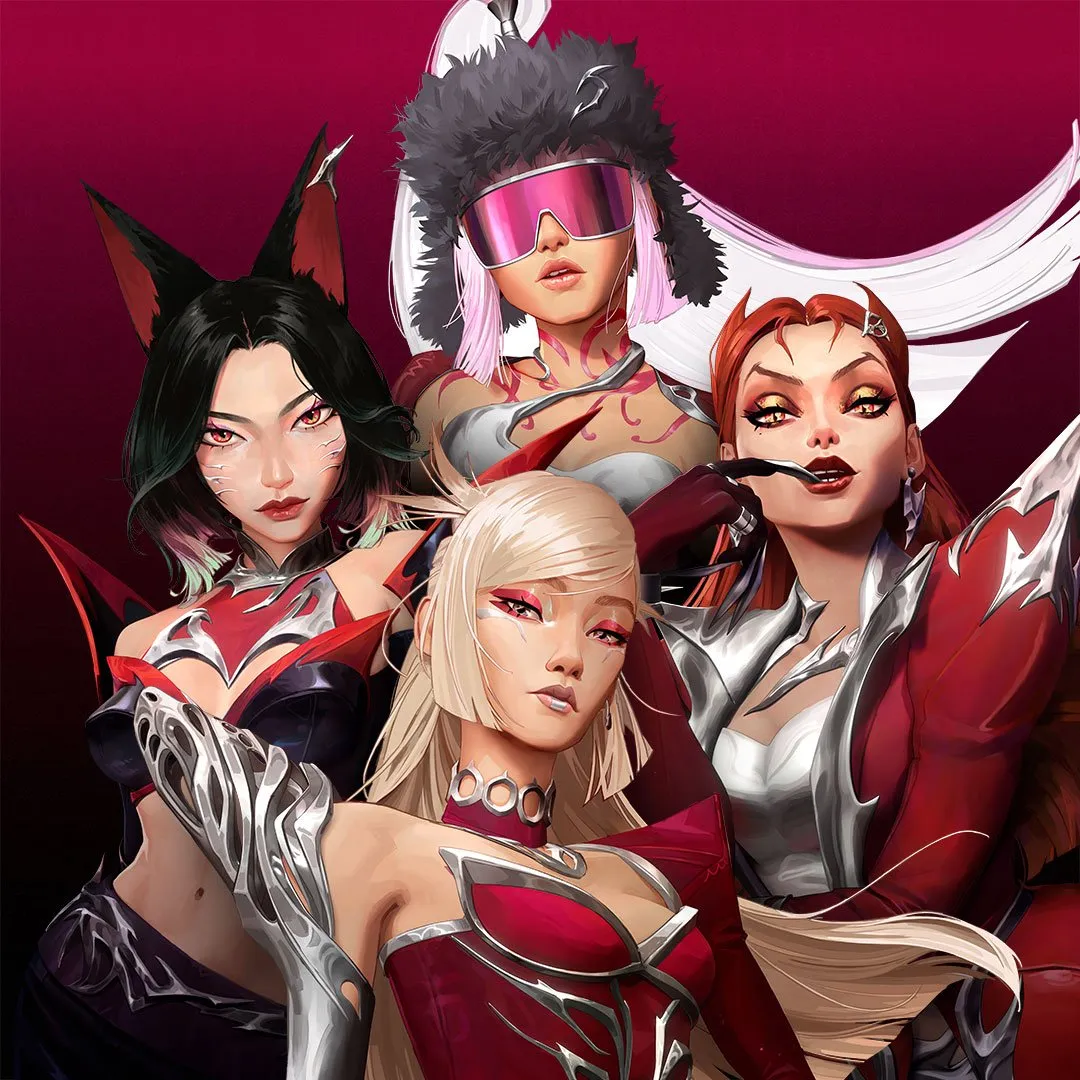
(Photo courtesy of Riot Games)
From Game Characters to a Music Group: The Possibilities Pioneered by K/DA
K/DA is a prime example of gaming intellectual property (IP) merging with the music industry. Debuting in 2018 with ‘POP/STARS’, the group reimagined League of Legends characters Ahri, Akali, Evelynn, and Kai’Sa as members of a virtual music group. By combining these characters with the voices of real-life artists, K/DA established an identity as an independent musical act through music videos, songs, and fashion.
i-dle’s MIYEON and SOYEON have helped shape K/DA’s musical identity by providing the voices for Ahri and Akali, respectively. Both returned for the new single ‘FIRESTARTER’, joined by Sophie Powers and Mimi Webb, who brought fresh musical influences to the project.
What sets K/DA apart is how its game characters have taken on a new identity as a music group. Drawing on the game’s established universe, the project can expand into music, visuals, and fashion while allowing its characters and creative projects to continue independently of the real-life artists’ other activities. In doing so, K/DA has extended an existing IP into new forms of content, attracting both gamers and music fans.
Unlike conventional idol groups, however, K/DA does not follow a regular cycle of album releases and promotional activities. Instead, it operates more like a project-based group that makes occasional appearances around specific releases and events. Nevertheless, each comeback generates attention through new music and visuals. Rather than relying on continuous activity, K/DA maintains its presence through the symbolic significance and production quality of each project.
But how do virtual idols without the backing of an established gaming franchise build their own fandoms? The contrasting journeys of PLAVE and ISEGYE IDOL offer some answers.
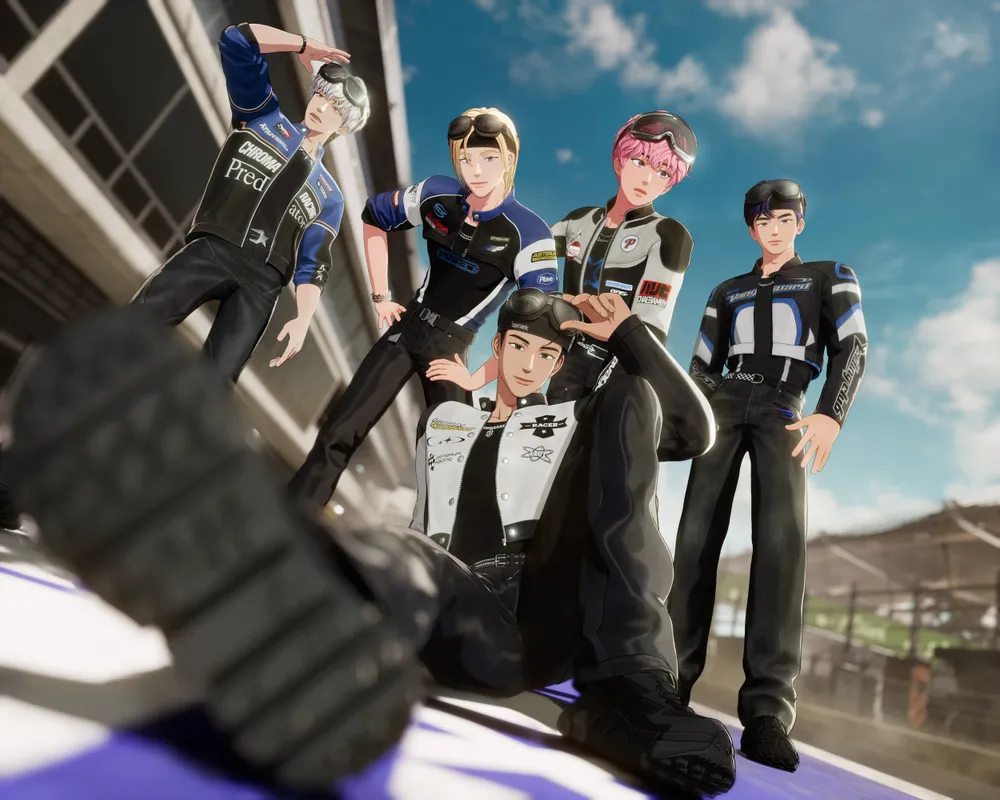
(Photo courtesy of VLAST Entertainment)
Turning the Limits of Reality into Strengths: PLAVE’s Unique Competitive Edge
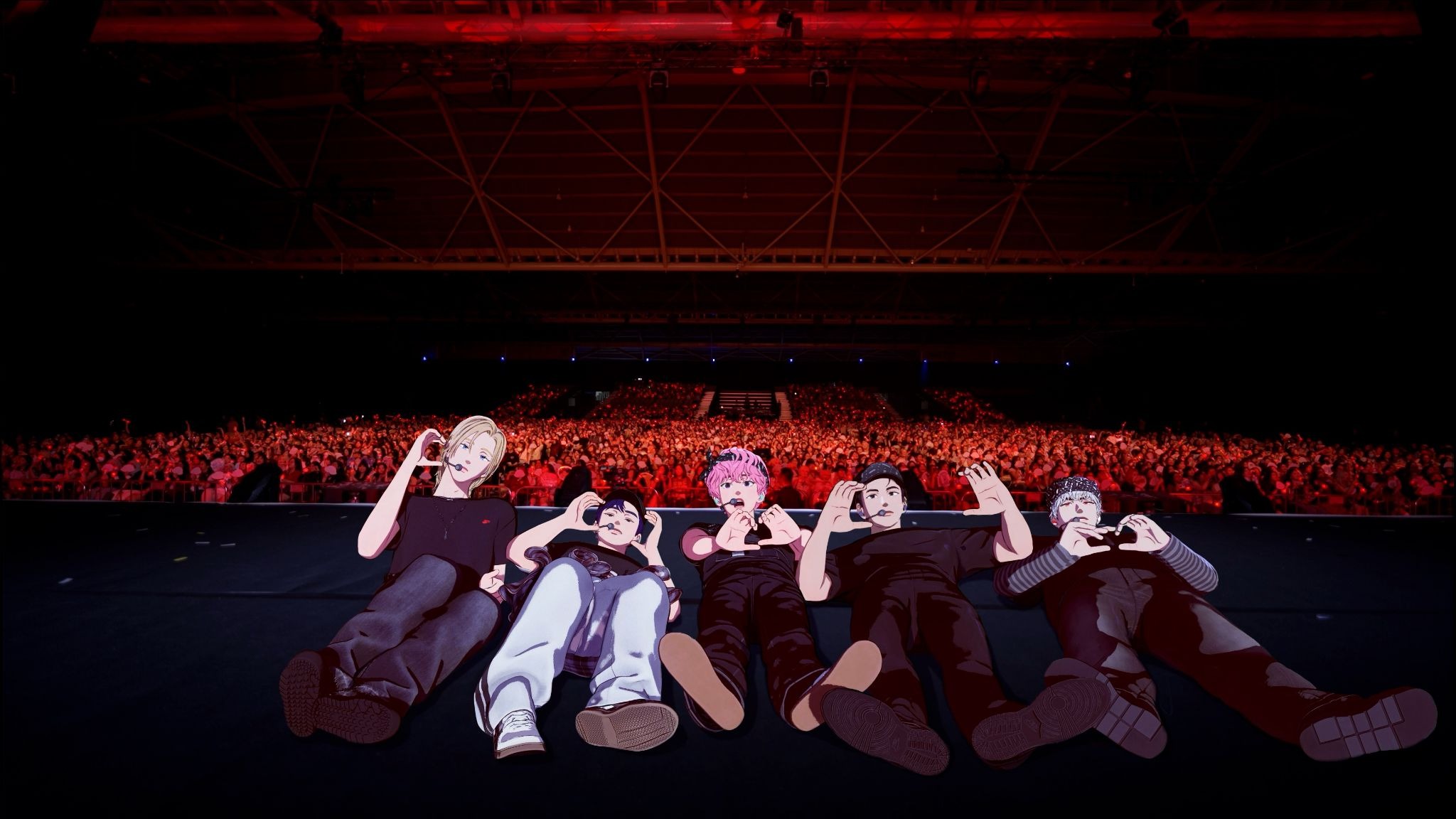
PLAVE demonstrates that virtual idols can achieve mainstream success. The group’s sophisticated character modeling, which captures natural facial expressions and movements, combines with strong vocals, performances, and in-house production capabilities to create a polished musical act. The members’ direct involvement in music production is particularly important in shaping the group’s artistic identity.
PLAVE does not view its virtual nature simply as a limitation. Instead, the group incorporates scenes and movements that would be difficult to recreate on a physical stage into its performances and videos, transforming the virtual format itself into a creative advantage. Rather than merely translating real-life idols into digital characters, PLAVE creates performances that are only possible in a virtual environment.
These strengths have translated into tangible achievements. Since debuting in 2023, PLAVE has secured first-place wins on music shows, helping challenge existing perceptions of virtual idols. The group has demonstrated that artists performing through virtual characters can also earn recognition for their musical quality and mainstream appeal.
Yet technical sophistication and musical talent alone cannot fully explain PLAVE’s appeal. Equally important are the human qualities fans discover in its members. Despite their virtual appearances, the members’ distinct personalities, emotions, and relationships shine through, allowing fans to connect with the people behind the characters. PLAVE’s competitive edge lies in combining advanced technology with musical ability and genuine human charm.
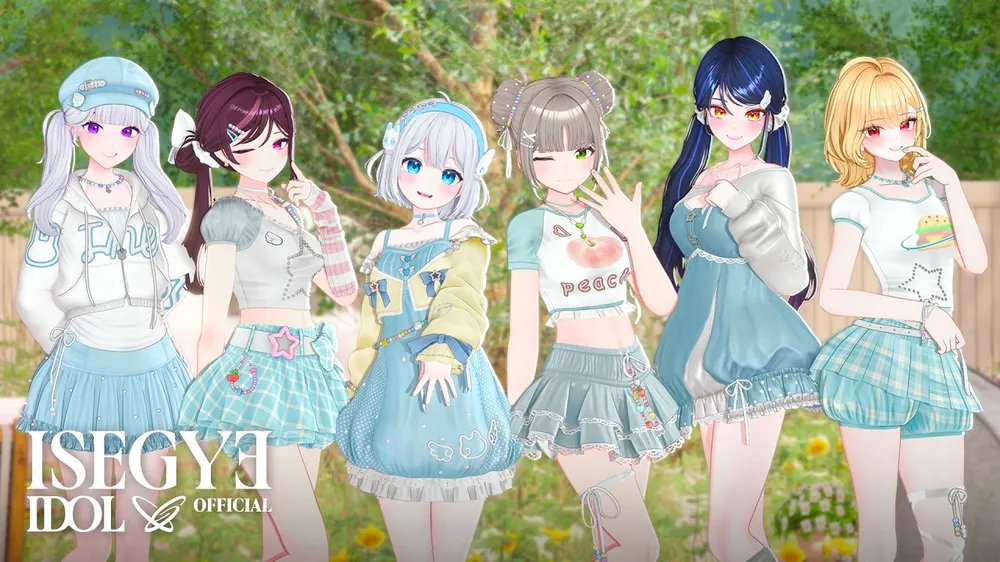
(Photo courtesy of Parable Entertainment)
Stars Who Feel Like Friends: The Connection Built by ISEGYE IDOL
While PLAVE has demonstrated the potential of virtual idols through sophisticated modeling, musical quality, and creative performances, ISEGYE IDOL has taken a different approach by redefining the relationship between artists and their fans.
ISEGYE IDOL grew its following through online streaming and digital communities. For the group, livestreaming is more than a way to promote music. It serves as a central space where fans can discover the members’ personalities and daily lives, interact with them in real time, and experience the group’s activities up close.
In conventional idol fandoms, stars are often figures of admiration and aspiration. For ISEGYE IDOL’s fans, however, that admiration is accompanied by a sense of familiarity. Rather than seeing the members only as stars on stage, fans experience them as familiar presences they encounter regularly through livestreams. The feeling of having “my favorite star” is complemented by a closeness that makes the members feel almost like friends.
The connections formed through livestreaming carry over into the group’s musical activities, while its music generates new content and experiences for fans. ISEGYE IDOL’s growth demonstrates that virtual idols can emerge not only from the traditional idol industry but also from online streaming platforms and digital communities.
This trend extends beyond ISEGYE IDOL. Female virtual groups such as STELLIVE have also emerged through online streaming and virtual characters, further blurring the boundaries between streaming culture and the idol industry.
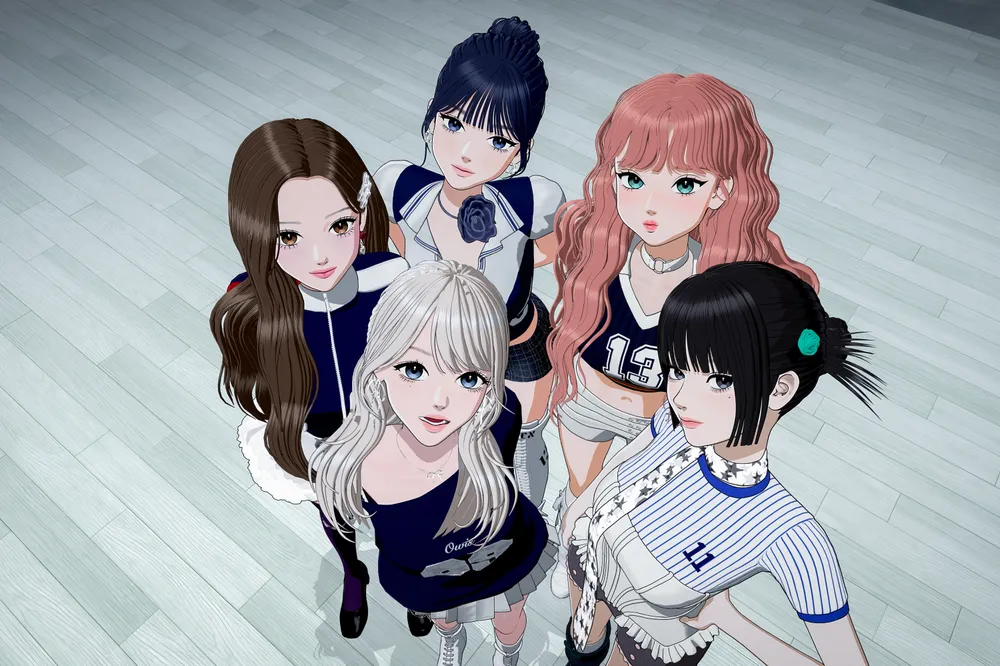
(Photo courtesy of AMA Entertainment)
Could Virtual Idols Open New Paths for Artists? The Case of OWIS
The potential of virtual idols goes beyond how they build fandoms. The format also offers possibilities for addressing some of the limitations artists face within the conventional idol industry. Virtual girl group OWIS, which debuted this year, provides an interesting case study. Short for “Only When I Sleep,” OWIS operates within a fictional universe that moves between dreams and reality.
OWIS has also attracted attention through speculation about the real identities of its members. Names including Lee Haein, Lee Luri, ADORA, Ryu Sujeong, and JINI have circulated online in connection with the members’ possible identities. However, these claims remain unconfirmed speculation, and no definitive conclusions can be drawn about who the members are.
More significant than the curiosity surrounding their identities are the new career paths that the virtual format could create. The idol industry can be a challenging environment in which to sustain a career, given its rapid generational turnover and scrutiny over age and appearance. Virtual idols may offer a way to maintain a character’s appearance and fictional universe while reducing the impact that changes in a performer’s physical appearance can have on their career.
This could allow artists who have concluded previous chapters of their careers to continue pursuing their passion for music and performing, or to take on new challenges under different identities. Of course, adopting a virtual format does not automatically guarantee career longevity. The labor and health of the people behind the characters, production costs, and technological limitations all remain important considerations.
For OWIS to demonstrate its potential as a virtual idol group, it must also turn the attention surrounding its debut into a lasting fandom. With its character modeling, movements, and overall visual quality continuing to draw scrutiny, the group will need to bring its characters convincingly to life while improving the quality of its music and performances. A new format may initially attract attention, but transforming that interest into long-term fan loyalty requires a consistent stream of engaging content and experiences worth looking forward to.
(Photo courtesy of VLAST Entertainment)
Beyond Virtual Characters: Creating New Experiences for Fans
The history of virtual idols also shows that the format alone cannot guarantee success. As more projects emerge, including virtual girl group RapidEye, which debuted in 2025, sophisticated modeling, natural movements, and musical quality are increasingly seen as essential to drawing fans into the experience. Yet even a technically flawless character is not enough to sustain a dedicated fandom.
Just as PLAVE combines musical talent and innovative performances with human charm, and ISEGYE IDOL builds its fandom through close relationships with fans, virtual idols need to give audiences reasons to form emotional attachments and maintain connections beyond the characters themselves. Fandom is not simply about consuming a finished character. It deepens as fans get to know the characters through content and communication, share experiences with them, and build their own emotional connections and memories.
Looking ahead, the competitiveness of virtual idols is unlikely to depend solely on how closely they can replicate real-life idols. Performances and visual effects that only virtual characters can achieve, narratives built around fictional universes, and content that encourages fan participation and lasting connections are expected to become increasingly important. As technology advances, expectations for visual quality will also rise. Ultimately, however, the longevity of a fandom will depend on the experiences that these characters offer their fans.
When virtual idols embrace their unique characteristics rather than remain confined by the limits of their format, their characters can evolve beyond simple digital images into multidimensional personalities. As fans explore these worlds and create memories together, virtual idols can develop their own distinct fandom cultures in ways that differ from those of real-life idols.
The future of virtual idols may lie not in erasing the boundary between the virtual and the real, but in using that boundary to create experiences that fans cannot find anywhere else.
Share:
#소연#미연#아이들(IDLE)#플레이브##KDA##idle##아이들##플레이브#Focus
Popular Now

