


Wed, July 22, 2026 at 12:23 AM UTC
I have been a WWE fan for years, and one of the things professional wrestling understands better than almost any form of entertainment is the value of a clearly defined villain.
WWE does not present itself as an unscripted competitive sport. It is sports entertainment. The outcomes and storylines are planned, even if the men and women performing them are unquestionably athletes. Their strength, conditioning, timing and willingness to absorb punishment are real.
The characters are constructed. The conflict is part of the production.
The heel gives the audience someone to boo. The hero gives them someone to believe in. Both roles help move the story forward, and everyone understands that the person walking behind the curtain is not necessarily the character who just stood inside the ring.
Real sports have borrowed that language without preserving the separation.
We sort athletes into easy categories. Hero. Villain. Good for the game. Bad for the game. The labels make fandom simpler. A hero gives us someone to embrace. A villain gives our loyalty a target.
The trouble begins when the role becomes more important than the person.
I have spent most of my life around golf, and I still believe the game can ask something different of its audience. Not silence. Not bland applause. Certainly not a version of courtesy that requires everyone to pretend they like every player.
I do not like every player.
I am not a Patrick Reed fan. I am not a Sergio Garcia fan. Their past actions have shaped how I view them, and I am not obligated to ignore that history.
But I can still respect them when they play well. I can recognize a great shot, an impressive round or a deserved victory. I can criticize what they do without deciding everything they ever do must be viewed through contempt.
Respect is not admiration. Fairness is not fandom.
Golf should be capable of understanding the difference.
The Standard Golf Claims
Rule 1 makes behavior part of the game’s competitive foundation, not an optional layer of etiquette.
Act With IntegrityFollow the Rules, apply penalties honestly and accept responsibility for personal conduct.
Consider Other PeopleAvoid distracting competitors and respect everyone sharing the course.
Care for the CourseProtect the playing surface and leave the course in proper condition for others.
A higher standard does not require perfect people. It requires honest consequences when the standard is missed.
The Villain Gives Fandom an Easy Target
Sports have always been built around sides. The home team needs a visitor. The favorite needs a challenger. The champion’s dominance becomes more compelling when someone appears capable of ending it.
The villain offers something beyond ordinary opposition. That athlete gives fans permission to define themselves through rejection. Tom Brady could represent excellence and belonging in New England while becoming the person everyone else wanted to see lose. LeBron James has been celebrated, resented, defended and blamed, sometimes for the same decisions.
The uniform, city or circumstance can change the role long before anything changes about the person.
That friction can be entertaining. It can make regular-season games feel important and turn championships into cultural events. Rivalries produce memories because people care about both the outcome and who delivers it.
The problem is that villainy rarely stays confined to performance anymore. Fans do not simply hope the opposing quarterback throws an interception or that a rival misses a free throw. Social media has created a marketplace for humiliation, where the failure of someone we dislike is treated as a personal victory.
Hero worship carries its own problems. We build athletes into symbols of everything we admire, then act personally betrayed when they display the ordinary flaws we ignored. The hero must remain spotless. The villain is not permitted to change.
Neither label leaves much room for a human being.
Judgment, Context and Perspective
Four Players, Four Different Kinds of Judgment
Golfers can deserve criticism without every controversy becoming a permanent verdict on everything they do afterward.
Sergio Garcia
Garcia damaged the turf and broke his driver during the 2026 Masters. He received a conduct warning and later apologized.
The standard: Condemn the outburst without making it his permanent identity.
Patrick Reed
Reed received a two-stroke penalty for improving his line of play in 2019. In 2021, however, PGA Tour officials ruled that his embedded-ball procedure was proper.
The standard: Past violations justify scrutiny, not automatic guilt in every future ruling.
Bryson DeChambeau
During his feud with Brooks Koepka, repeated “Brooksie” taunts became so persistent that the PGA Tour warned spectators they could be removed for directing them at DeChambeau.
The standard: Being polarizing does not give crowds unlimited permission to harass a player.
Jon Rahm
Rahm’s 2023 move to LIV Golf drew criticism because he had previously supported the PGA Tour and questioned LIV’s format.
The standard: Fans can call the decision inconsistent while still recognizing his achievement and great play.
Disliking a player is part of fandom. Refusing to judge any future action or performance fairly is something else.
Golf Puts Character on Display
Golf makes this tension more personal because there is no team to absorb the attention.
A golfer stands alone after every shot. There is no substitution, no defensive unit to blame and no bench offering temporary shelter. A difficult day can last five hours, with cameras recording the swings, facial expressions, conversations with a caddie and every poorly contained reaction along the way.
That exposure creates familiarity. It can also create entitlement. After watching someone compete for years, fans begin to believe they know the person rather than the public fragments that have been available to them.
Golf also makes conduct part of its competitive identity. Rule 1 does not deal only with playing the course as it is found and the ball as it lies. It asks golfers to act with integrity, show consideration for others and care for the course.
Those principles are not decorative language added to make the rulebook sound noble. They help explain why golfers are expected to apply penalties to themselves and why the game has traditionally treated personal responsibility as part of the test.
That gives golf legitimate grounds to expect better behavior. It does not give the sport permission to pretend its players are better people than athletes in other games.
Golfers lose their tempers. They make selfish decisions. Some handle rules situations poorly. Others say things they later regret. The existence of a higher standard does not mean everyone will reach it.
A standard matters because people sometimes fail.
The question is what happens after they do.
Dislike Is Not the Same as Disrespect
There is a danger in discussing civility in sports because the argument can sound like a demand for emotional neutrality.
That is not what I am suggesting.
Fans are allowed to dislike players. They are allowed to remember what someone did. They are allowed to believe a pattern of behavior says something meaningful about a competitor’s character.
Nobody has to cheer for Patrick Reed. Nobody has to excuse Sergio Garcia. Nobody has to manufacture affection in the name of sportsmanship.
I do not.
But disliking a player does not require denying what is plainly in front of us. When Reed plays brilliant golf, I can say so. When Garcia produces the kind of ball-striking that helped make him one of the most accomplished players of his generation, I can acknowledge it.
Their success does not obligate me to become a supporter. Their failures do not give me permission to celebrate their humiliation.
There are golfers I would rather see win. There are players whose behavior has made them difficult for me to embrace. That is part of being a fan.
What should not be part of fandom is deciding that one player’s mistake, or even several mistakes, removes the obligation to judge future moments honestly.
If someone acts poorly, criticize the behavior. If a player breaks a rule, apply the penalty. If the conduct forms a pattern, allow that pattern to inform your opinion.
But do not confuse a negative opinion with a lifetime sentence.
Passionate Support Does Not Require Personal Contempt
-
Cheering loudly for a favorite
-
Supporting a home team or Ryder Cup side
-
Questioning a player’s decisions or conduct
-
Remembering documented rules violations
-
Personal or discriminatory abuse
-
Targeting families or private lives
-
Treating every disputed moment as proven guilt
-
Celebrating humiliation rather than competition
Accountability Does Not Require Venom
Sergio Garcia’s conduct during the final round of the 2026 Masters was indefensible. After a poor tee shot on the second hole, he struck the turf and later broke his driver against a cooling stand. He received a code of conduct warning, then issued a public apology two days later.
Garcia deserved the warning. He deserved criticism. An apology did not erase the behavior.
The behavior did not erase everything else about him, either.
A serious standard must be able to hold all of those facts at once. It should not excuse an outburst because a player is popular, nor use one ugly scene as permission to direct unlimited contempt at him for the remainder of his career.
Patrick Reed presents a more difficult version of the same question because the public judgment surrounding him has accumulated over time. Reed received a two-stroke penalty at the 2019 Hero World Challenge after moving sand from behind his ball in a waste area. That incident remains part of his competitive record, and fans are not obligated to forget it.
His history makes scrutiny reasonable. It does not make evidence optional.
At the 2021 Farmers Insurance Open, Reed was heavily criticized after taking relief for an embedded ball before an official arrived. PGA Tour officials reviewed the situation, called the procedure textbook and determined Reed had been entitled to relief. Rory McIlroy received the same official conclusion after a similar situation during that tournament.
That is not accountability. It is confirmation.
Fans are allowed to distrust a competitor. Trust is earned slowly and can be lost in seconds. A golfer whose actions have repeatedly invited questions should expect greater scrutiny than someone whose record has not.
There remains a difference between skepticism and venom.
Condemning an action without hating the person responsible is not weakness. It requires more precision than outrage. We have to explain exactly what was wrong, what consequence fits and what evidence might cause us to reconsider.
That is harder than deciding someone will always be the villain.
A Higher Standard Still Leaves Room to Roar
Golf does not need to become quieter to become more respectful.
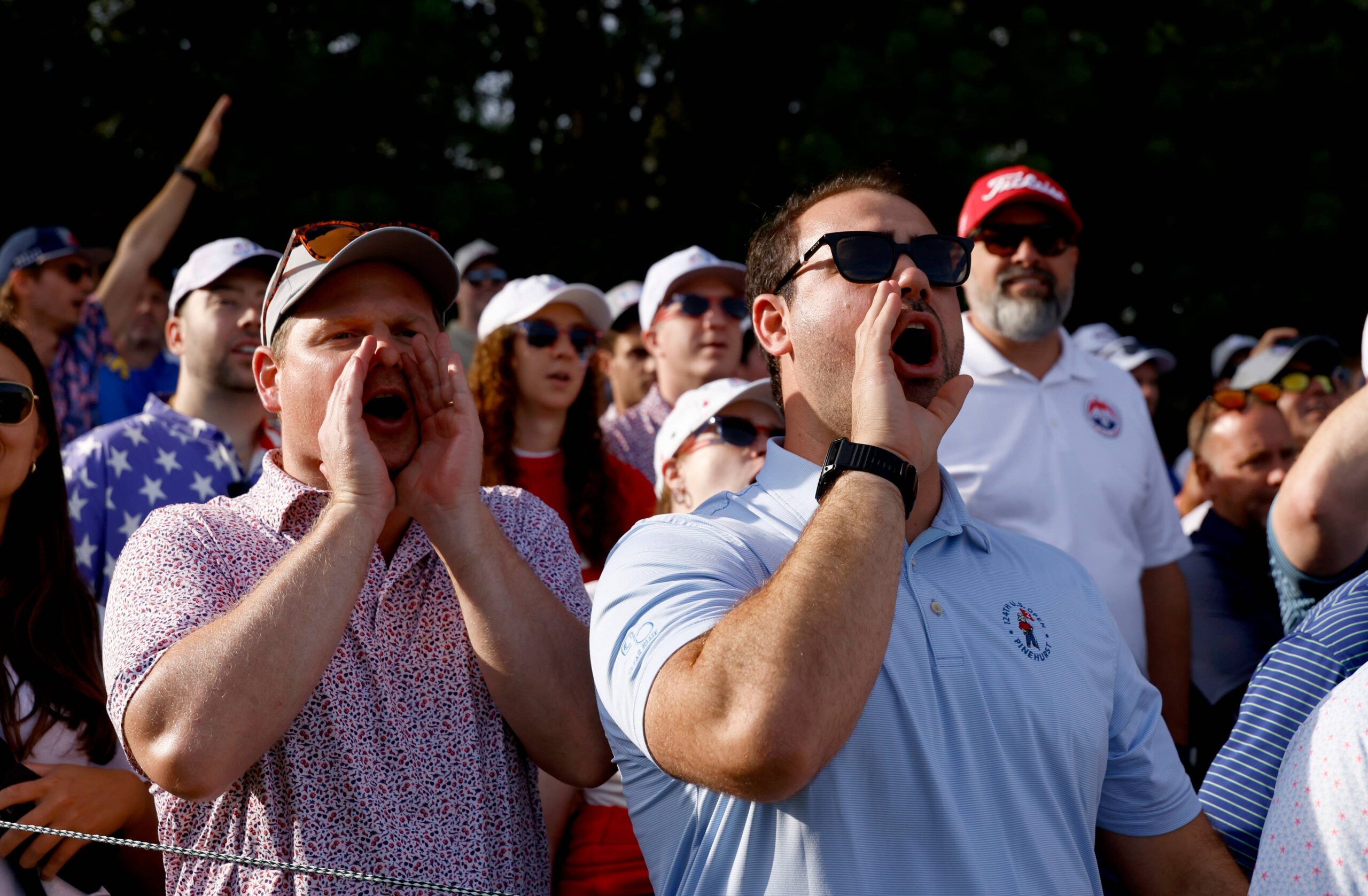
The atmosphere at the 2025 Ryder Cup showed how quickly passionate support can curdle when heckling becomes personal. There is a point where home-course energy stops helping the competition and begins diminishing it. That line was crossed at Bethpage Black when abuse directed toward European players became a larger part of the story than any Ryder Cup crowd should ever be.
Before the 2026 Open Championship, The R&A introduced a spectator code called “The Open Commitment.” Its central principle was uncomplicated: Respect the players, the links and the people sharing the experience.
That was not a request for emotional neutrality. It was recognition that enthusiasm and abuse are not the same thing.
A fan can desperately want Rory McIlroy to win without treating Scottie Scheffler as an enemy. Someone can admire Nelly Korda without enjoying another player’s embarrassment. Ryder Cup supporters can sing, wave flags and celebrate every won hole without attacking a player’s family, nationality, appearance or private life.
Respect does not require equal affection. It requires remembering where competition ends.
Golf has sometimes been too precious about decorum. A game that wants younger audiences and louder environments cannot recoil every time someone celebrates with genuine emotion. Players should be able to pump their fists. Fans should be able to roar. Personalities should not be polished until every competitor appears interchangeable.
There should be friction. There should be rivals. There will always be players whose decisions make them difficult to support.
Golf has already shown how unstable those roles can be. Bryson DeChambeau has moved from oddball antagonist to fan favorite and back into controversy. Wyndham Clark has become a target for crowds after allowing his own mistakes and emotions to shape public perception. Jon Rahm’s temper and decision to join LIV Golf have made him a lightning rod. Rory McIlroy can be viewed as either the conscience of the game or an entitled scold, depending on who is judging him. Tiger Woods has occupied nearly every role available: prodigy, hero, fallen icon and beloved survivor. Some of those labels were rooted in real conduct, but none told the entire story of the golfer or the person.
What golf does not need is the permanent villain, because permanent villains free the audience from the responsibility to judge fairly. Everything they do becomes suspicious, every failure becomes deserved and every moment of vulnerability becomes entertainment.
Maybe golf still needs heroes, although it would be better served by examples than idols. The game needs players whose actions remind us what competitive excellence, honesty and resilience can look like. It also needs enough maturity to understand that admirable people will occasionally disappoint us.
Golf will not occupy higher ground because its crowds are quieter or its traditions are older. That standing must be earned repeatedly through the behavior of players, officials, media and those watching from outside the ropes.
Cheer the birdie. Roar when the putt falls. Hope your favorite wins and feel the disappointment when someone else does. Dislike a player if his behavior has given you reason. Call out the broken club, the reckless comment and the rules violation. Demand consequences when consequences are justified.
Then stop before criticism becomes appetite.
WWE can create a heel, write the conflict and eventually send the performer behind the curtain. Real athletes receive no such separation from the roles fans assign them.
That should make all of us more careful about who we condemn, how long we condemn them and whether we have left any room for the next honest judgment.
PGA of America Golf Professional Brendon Elliott is an award-winning coach and golf writer who serves as Athlon Sports Senior Golf Writer. Read his recent “The Starter” on R.org, where he is their Lead Golf Writer. To stay updated on all of his latest work, sign up for his newsletter or visit his MuckRack Profile.
This story was originally published byAthlon Sportson Jul 22, 2026, where it first appeared in theGolfsection. Add Athlon Sports as aPreferred
