

The 2023 Godzilla Minus One was the first Japanese film to win an Oscar for best visual effects. Three years later, Godzilla Minus Zero follows up with even more thrilling action in the form of a kaijū battle certain to thrill monster movie fans.


In the seven decades since Godzilla’s first appearance in 1954, the towering beast has become the king of Japan’s kaijū. At the same time, it has transformed from a personification of the terror of war and atomic weapons into a heroic figure finding allies to battle more vicious monsters. The change has been extreme both in shape and role, with Hollywood taking its own stabs along the way.
In the upcoming Godzilla Minus Zero, styled Godzilla –0.0in Japan, Director Yamazaki Takashi brings a new vision of one of the franchise’s most historic clashes. In Yamazaki’s previous outing, Godzilla Minus One, he rebooted the whole franchise’s story, placing Godzilla’s first appearance in Tokyo of 1947, just after World War II. This time, the action occurs two years later, when Japan is attacked by the three-headed kaijū, King Ghidorah.

“Godzilla Minus One”: Exceeding Expectations with Efficient Effects | Nippon.com
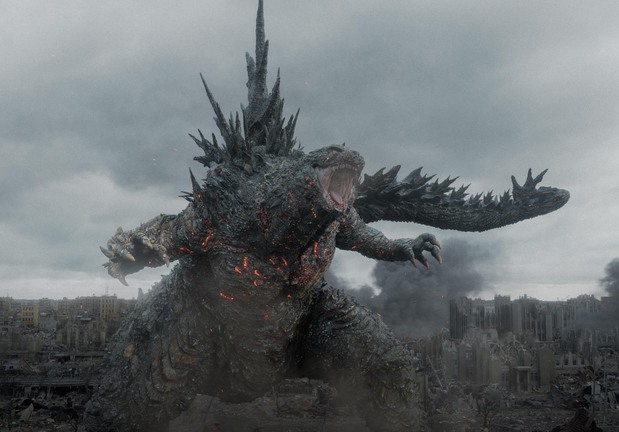
King Ghidorah in the Skies of a Japan on the Mend
Just four years after the end of the war, Japan is still reeling from the damage of both war and Godzilla’s attack. Recovery has slowly advanced, but suddenly a new kaijū attacks Matsumoto, Nagano Prefecture, with terrifying destructive power. It levels the city and takes a terrible toll in lives.
Noda Kenji (played by Yoshioka Hidetaka), who devised the strategy that defeated Godzilla two years before, has been named head of a governmental bureau tasked with large-scale disaster response. Now, he must face the new threat of King Ghidorah. He gathers a team including the brilliant meteorologist Aoyama Makoto (Nagasawa Masami), the biologist Murakami Kanji (Tanaka Min), who reported on Ghidorah’s attack, and a squad of war pilots.
Former kamikaze pilot and Godzilla survivor Shikishima Kōichi (Kamiki Ryūnosuke) now lives a simple, happy life with his wife Noriko (Hamabe Minami) and Akiko, the young war orphan they are raising as their daughter. Despite Noda’s worry for him, Shikishima insists on joining the fight against King Ghidorah.
But the monster’s power proves too much for humans to resist. The team is frustrated at every turn, until they develop a last, desperate plan.
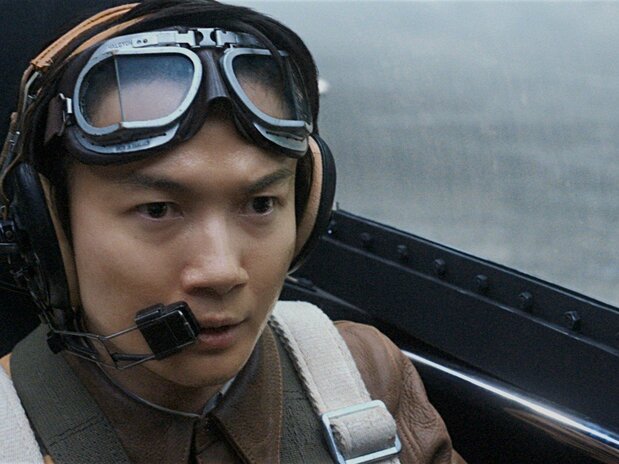
Former kamikaze pilot Shikishima Kōichi places his life on the line once more. (
Kaijū as Metaphor
From the second Godzilla movie, 1955’s Godzilla Raids Again, massive battles between kaijū became standard part of the series. The “Shōwa series” part of the franchise, named after the imperial reign of 1926–89, came to paint Godzilla as a heroic figure. The films from 1989’s Godzilla vs. Biollantethrough 1995’s Godzilla vs. Destoroyahmake up the “Heisei versus series,” when the series was all about fights between these gargantuan beasts. These versions of Godzilla dropped his role as personification of the terrors of war and the atom to emphasize pure entertainment.
However, with Godzilla Minus One, Yamazaki returned to showing Godzilla as a being of pure terror. A hulking figure casting baleful eyes on fleeing crowds of people. Black rain falling on a Ginza burned by radioactive beams. The images were like the spirits of wartime dead, warning Japan not to forget the conflict of that era.
In this new installment, Yamazaki shows Godzilla not as a hero, but as a force beyond human understanding, giving it overwhelming weight and presence. The beast’s roars also seem more powerful, making you want to pull away from the screen.
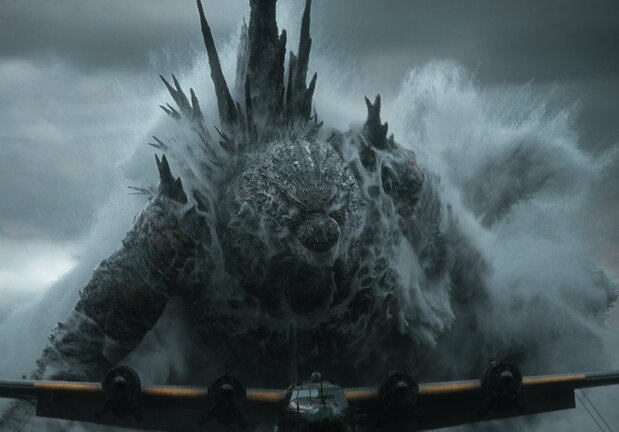
Yamazaki’s Godzilla is truly terrifying. (
Rampaging King Ghidorah has the power to destroy the recovering cities with ease. It appears from nowhere, levels blocks of buildings, and vanishes. If Godzilla embodied war and the atom, perhaps King Ghidorah is a personification of natural disaster, like a great wind that blows away all that stands before it. This may also be what the resistance team’s inclusion of Aoyama, who specializes in predicting typhoons, is meant to signify.
The plan to use Godzilla to drive off King Ghidorah is nothing other than an attempt to use a weapon beyond human control to stave off a disaster beyond human prediction. The team is desperately hoping that science can find a way to achieve the nearly impossible task of subjugating kaijū.
Yamazaki, who paid homage to films like Jurassic Park (1993) and Jaws (1975) in the previous work, seems to be presenting the new film both as a disaster/horror work through the devastating kaijū battles and as a “mission piece” featuring skilled experts placing their lives on the line in a scheme to control the monsters. While Godzilla Minus Oneput a heavier emphasis on the human drama of the story, the latest outing seems to veer closer in approach to Anno Hideaki’s 2016 Shin Godzilla.
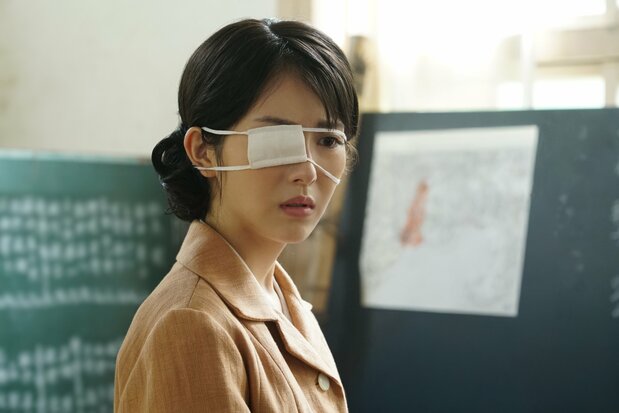
Shikishima’s wife Noriko gets drawn into the fight in an unexpected way. (
Surviving both the Atomic Bombing and Godzilla
Above all, though, Yamazaki seems to be honoring the origins of the Godzilla franchise.
The core of this film is the same memory of war found in Godzilla Minus One. In the earlier film, that heavy thematic burden was shouldered by Shikishima. This time, it is Tanaka Min’s Professor Murakami who is the central figure evoking the theme. He survived the atomic bombing in Hiroshima, which took his whole family from him, and then lived through Godzilla’s first attack.
Shikishima, who had been a kamikaze pilot destined for death, felt deep guilt for his survival. But Murakami, another survivor who saw first-hand the loss of life that Godzilla can cause, now finds himself desperate for survival, using the monster as a weapon to escape an even greater disaster.
In the role of Murakami, Tanaka seems to embody the rage, sadness, and tenacity of war survivors. There is great irony in the figure of a man who knows better than anyone the terrible power of violence now being driven to use that power. The layering of Murakami with Godzilla in the movie is so powerful it seems to overwhelm the painstaking artistry and visual effects with which the film re-creates the scenery of postwar Japan.
The Contradictions of Godzilla
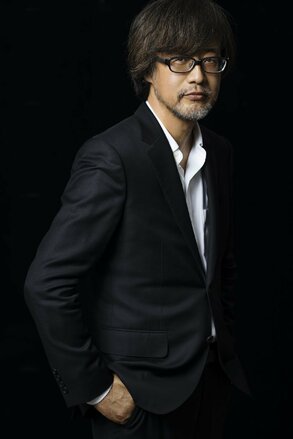
Yamazaki Takashi: director, screenwriter, and visual effects artist. (
Godzilla Minus Zerois a film that deals with weapons and violence; indeed, the long-standing appeal of Godzilla movies has been their action-packed scenes of destruction and fighting. The global praise Godzilla Minus One earned was due both to how its titular beast was designed and the visual effects used to embody that design.
The newer film once more uses cutting-edge technology to offer up the essential flavor of a Godzilla movie. The battle between the kaijū is more frightening, more magnificent, and cooler than even Hollywood has managed to achieve. And the climax is sure to bring goosebumps to true fans.
But this time, the work seems even more conscious of being a Godzilla movie. The plot’s foundation of humanity needing Godzilla as a counter to other kaijū, is simply an update of earlier works like King Kong vs. Godzilla (1962), Godzilla vs. Destoroyah (1995), or Godzilla: Final Wars (2004). The depiction of Godzilla’s cells was set in Godzilla vs. Biollante (1989) and Godzilla 2000: Millennium (1999), with some scenes nodding to the 1984 Godzilla, as well.
Even given the fearsome way that Godzilla takes the stage, the sight of him facing off against King Ghidorah is thrilling. You find yourself hoping for him to show off more of the awesome power that the humans in the film are trying so hard to restrain. The contradiction between fearing that destructive power and being irresistibly drawn to it is not Murakami’s alone. We, the audience, are enchanted by that overwhelming force.
Godzilla is both an embodiment of wartime atomic power and an action movie star beloved by moviegoers. The experience that Yamazaki brings to audiences in this film shares all the twists that Godzilla has endured through his history. The figures of people who still bear the scars of war now surrounded by the horrible violence of the kaijū battle seem to express that contradiction in miniature.
That is precisely what makes Godzilla Minus Zeroa miraculous movie, a Godzilla film unlike any other. It is a work of extraordinary fear, beauty, and entertainment.
Trailer (Japanese)
(Originally published in Japanese. Banner photo: Scene fromGodzilla Minus Zero. All photos

This series introduces Japanese and Japan-related movies worth watching. Read on to discover film details, critical responses, and behind-the-scenes information.

“Mr. Nelson, Did You Kill People?”: Filmmaker Tsukamoto Shin’ya Uses Vietnam to Deliver a Visceral WarningCULTURE | Oct 18, 2026

“Look Back”: Film Director Koreeda’s Live-Action Take on Girlhood DreamsCULTURE | Oct 12, 2026

Fugu Film: Documentary “Gun Fish” Explores Secrets of a Risky Food CultureCULTURE | Oct 2, 2026

Director Hamaguchi Ryūsuke Explores Boundaries, Connections in “All of a Sudden”CULTURE | Aug 1, 2026
Related Articles

Rewriting the King of Monsters’ History in “Godzilla Minus One”CULTURE | Dec 5, 2023
“Godzilla Minus One”: Exceeding Expectations with Efficient EffectsCULTURE | Jul 8, 2024
Resurgent Godzilla Back to Trample TokyoCULTURE | Jul 29, 2016

Being Godzilla: An Interview with Nakajima Haruo, the Man Inside the SuitCULTURE | Jul 30, 2014“Mr. Nelson, Did You Kill People?”: Filmmaker Tsukamoto Shin’ya Uses Vietnam to Deliver a Visceral WarningCULTURE | Oct 18, 2026“Look Back”: Film Director Koreeda’s Live-Action Take on Girlhood DreamsCULTURE | Oct 12, 2026
Still Dreaming: Kon Satoshi’s “Paprika” and Other VisionsCULTURE | Aug 2, 2026Director Hamaguchi Ryūsuke Explores Boundaries, Connections in “All of a Sudden”CULTURE | Aug 1, 2026
