

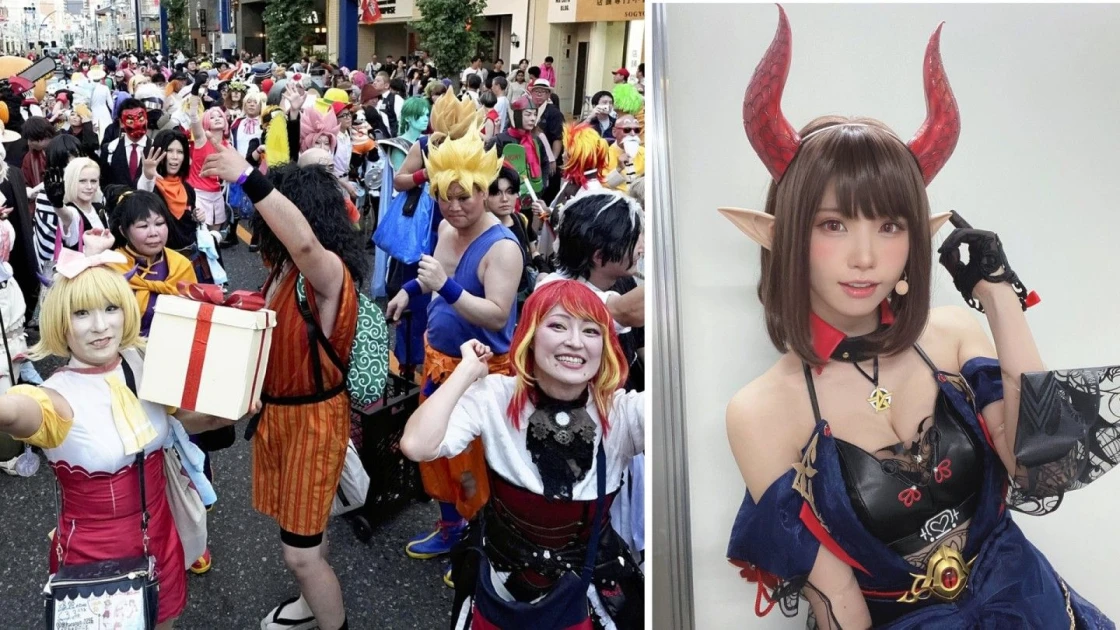
The global cultural landscape has undergone a monumental shift, transforming what was once considered niche subculture into a dominant force in mainstream entertainment – Japanese culture and their chief export; animations, most commonly referred to as “anime”.
Asian pop culture – spearheaded by Japanese animation, video games, cosplaying traditions, and distinct musical movements alongside regional powerhouses like Korean pop and Chinese interactive media – has dismantled geographic and language barriers to build a multi-billion-dollar global phenomenon.
Central to this movement is the physical and digital gathering space of fan conventions, where millions of enthusiasts assemble to celebrate their shared passions, forming vibrant international communities that transcend traditional entertainment consumption.
To understand this modern global movement, one must trace its roots back to mid-twentieth-century Japan.
The foundations of modern anime and manga were largely forged in the post-World War II era by pioneering creators like Osamu Tezuka, often dubbed the Godfather of Manga.
Tezuka revolutionized storytelling with cinematic panel layouts and stylized character designs featuring expressive, oversized eyes.
His work laid the groundwork for television animation in the 1960s with iconic series like Astro Boy.
Over the following decades, animation evolved from low-budget children’s programming into a complex artistic medium spanning every conceivable genre, from historical dramas and psychological thrillers to sweeping futuristic space operas.
Therefore, Japanese animation, or anime, has a legacy that stretches back to the early 20th Century, and a creative scope that spans seemingly endless stories and styles, from pirate sagas to sci-fi warfare; sorcery to sports action; martial arts mythology to star-crossed romance.
In this digital age, vividly evocative, insistently snappy themes are key to the viral impact of iconic Japanese animated series/films/manga comic adaptations – One Piece, Demon Slayer, Jujutsu Kaisen, Dragon Ball Z, Cowboy Bebop, Attack On Titan and Naruto.
Simultaneously, Japan’s interactive gaming industry was taking shape.
Companies like Nintendo, Sega, and Sony redefined global home entertainment through legendary franchises such as Super Mario, The Legend of Zelda, Final Fantasy, and Pokémon.
These games did not merely sell hardware; they exported rich narrative worlds, unforgettable soundtracks, and character designs that ingrained themselves into global youth culture.
Alongside visual stories and games emerged the physical embodiment of fandom: cosplay, a portmanteau of “costume play.”
While fans in Western science-fiction circles had long worn costumes to conventions, the specific term and art form of cosplay were coined and popularized in Japan in the mid-1980s by studio founder Nobuyuki Takahashi after attending Worldcon in Los Angeles.
Over time, cosplay transformed from a simple hobby into a sophisticated visual art form and profession.
Participants meticulously design, craft, and tailor outfits to embody their favorite characters from anime, manga, and video games.
It encompasses advanced textile work, wig styling, prop fabrication using foam and 3D printing, and performance art as cosplayers adopt the poses and mannerisms of their chosen subjects on convention floors and competitive stages.
The cosplay culture has flourished among international anime enthusiasts with the development of the internet, as analysts explained that adolescents express character identification through cosplay, while developing social skills through role immersion.
Nowadays, cosplay has evolved into a full-fledged commercial sector of nearly HK$100 billion (Ksh. 1.6 trillion) spanning costumes, makeup, wigs, and props, while reports indicate that about 10 million global cosplayers spend thousands per outfit.
Notably, reports showed that the cosplay apparel market alone reached HK$40 billion (Ksh. 660 billion) last year, which is estimated to grow to HK$60 billion (Ksh. 990 billion) by 2030.
Music has also served as another critical catalyst in this cross-cultural expansion.
Japanese popular music, comprising J-Pop and J-Rock, gained international traction through its deep integration with anime soundtracks.
Distinct subgenres like Visual Kei – a rock movement characterized by flamboyant theatrical aesthetics, dramatic hair, and elaborate costumes – captivated global audiences in the 1990s and 2000s through iconic acts like X Japan and L’Arc-en-Ciel.
In the modern era, Japanese artists frequently perform sold-out arena tours across Europe and the Americas, while virtual stars like Hatsune Miku, a synthetic voice synthesizer persona who performs live as a hologram, showcase the innovative synthesis of technology and music culture native to the region.
This musical wave has been further amplified by the global explosion of K-Pop, creating a broader Asian pop culture renaissance that dominates streaming platforms and radio airwaves worldwide.
The true heart of this global fandom beats within fan conventions and festivals.
What began in Japan as Comiket, the world’s largest self-published comic fair founded in 1975, has expanded into a massive global circuit of international expos.
Mega-events such as Anime Expo in Los Angeles, Japan Expo in Paris, Comic Con Experience in Brazil, gamescom in Germany and even Otamatsuri in Kenya draw hundreds of thousands of attendees annually.
Other major events and conventions include: Taiwan’s Fancy Frontier, Malaysia’s Comic Fiesta, Spain’s Manga Barcelona, Anime NYC, Otakon in Washington, D.C., Anime Central in Chicago, Australia’s Madman Anime Festival and the World Cosplay Summit in Nagoya.
These gatherings are expansive cultural summits featuring industry announcements, voice actor panels, musical performances, art markets, gaming and elaborate cosplay competitions.
Within these sprawling exhibition halls, diehard fans find a welcoming space to express their creativity, forge lifelong friendships, and celebrate stories that resonate across cultural boundaries.
Organised by Movie Jabber, and held at the Carnivore Grounds on August 22, the Otamatsuri 2026, the annual Kenyan anime and manga convention drew a crowd of roughly 5,000 attendees, filled with vibrant cosplayers, gamers, and J-pop enthusiasts, transforming the Carnivore Grounds into a vibrant hub of global pop culture and eclectic anime showstoppers.
The highlight of the festival was the performance by rock-punk idol Yurapico, a prominent Japanese independent singer and underground performer in the Tokyo music scene who rocked thousands, put on a spirited show and left a lasting impression in the minds of Kenya’s fast-growing J-pop enthusiasts.
Explaining the reasons why Kenyans and the rest of the world are gravitating to anime, Jotham Micah, co-founder of Movie Jabber, the outfit that owns and organizes Otamatsuri every year said: “Entertainment is important to everybody. Western entertainment is going down due to ideology. Everyone subconsciously looks for core thematic aspects they can relate to. Anime gets that. The West seems to be placing ideology ahead of that and that’s the cause of their decline.”
Also, the democratization of the internet and the rise of digital streaming platforms have accelerated this global integration, making content instantly accessible to an international audience without the delays of physical distribution.
Once reliant on unauthorized fan translations, global audiences now consume new releases simultaneously with their home countries.
What was once a localized artistic expression has become a shared global language, proving that compelling storytelling, creative fashion, captivating music, and interactive art possess a universal appeal capable of uniting fans across every continent.
