

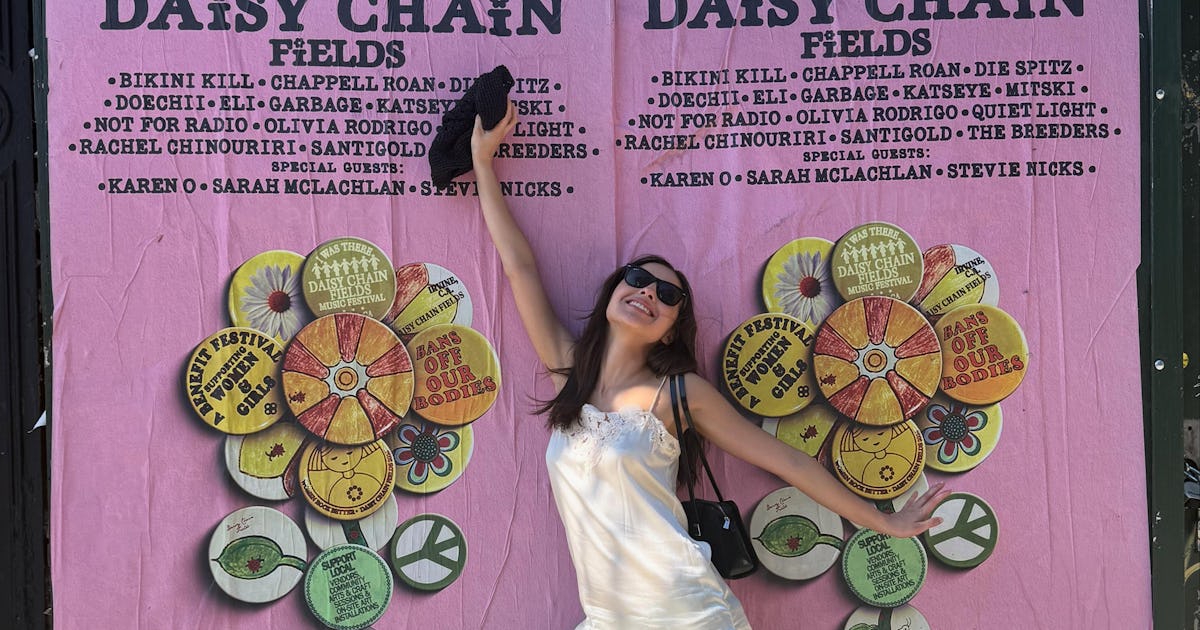
Fandom is back where it all started: outside.
NYLON Field Notes is our recurring series decoding the trends, aesthetics, and conversations shaping the zeitgeist. For the latest installment, we explore the return of IRL fandom and the artists pushing to bring their fans offline.
Since the dawn of the dot com, being part of a fandom has meant finding your people online. Hashtags create communities, comment sections become gathering places, and stan accounts turn obscure references into a shared language. But in a post-Brat world, where everything from special guest concert gimmicks to dance routines have become fodder for the algorithm, artists are ironically taking their fans back to where it all started…offline.
For years, the mission behind any great act’s promotion was simple (though, easier said than done): go viral. Now, artists are eschewing virality in favor of getting more personal with their promotion. Take a look at the latest wave of IRL fanfare: Charli XCX hosted a closed-list roundtable about her creative process, Phoebe Bridgers is playing phone-free concerts, and Beabadoobee is handing out iPods loaded with unreleased tracks. Similarly, musicians Olivia Rodrigo, Audrey Hobert, and Dua Lipa are bringing fans into the fold, using festivals, book fairs, and pre-concert Q&As to create an actual place for fans to congregate.
Bridgers, in particular, is making the absence of a phone part of the experience. Her 2026 Lost Tour is explicitly device-free, with fans’ phones secured in Yondr pouches during the show. But she had already been experimenting with the formula through a string of surprise pop-up shows, where fans lined up the old-fashioned way (in person) to buy physical tickets and recording devices were banned. It was a decidedly analog move that reminded us what concerts used to feel like. And this scarcity only added to the concert’s mystique; without videos to circulate online, just being in the room was the experience.
Lipa has taken a similarly communal experience between albums. Her Service95 Book Club has evolved from a digital reading list into a real world community, with a Paris book-club gathering earlier this year that invited fans to swap books and participate in a ceramics workshop. In June, she took the idea even further with the opening of the permanent Manifesto Library in Porto, a physical extension of her book club housed inside the historic Livraria Lello. What started as a way for fans to follow along with what their favorite pop star was reading has become an actual place to gather around those shared interests.
This marks a shift in the way that fandom is packaged. Instead of asking fans to consume an artist from behind a screen, these experiences make them feel like they’re part of a club, complete with the major tenets of any great guild like shared history, inside jokes, and, most importantly, a physical place to meet. As AI slop floods our feeds and algorithms increasingly dictate what we see, hear, and even where we spend our attention, the appeal of getting together IRL becomes all the more obvious.
It’s said the average internet user now spends 6 hours and 51 minutes online every day — roughly 40 percent of one’s waking life — scrolling through an effectively infinite feed of information, entertainment, and advertising. An artist offering fans something that can’t be scrolled past, reposted, or replicated feels increasingly valuable. AI and soaring costs can take a lot from the music industry, but what it can’t replace is human effort.
Though don’t get it twisted: the appeal goes beyond nostalgia. Fans are not just looking at the past through rose-colored glasses en masse, but reflecting the zeitgeist’s growing desire for third spaces. That is, places to slow down, put the phone away, and connect with other people over a shared love. The algorithm could never.
