

Everything you need to know about the new psychological horror from the producers of A24’s ‘undertone’
ByKhal
September 15, 2026
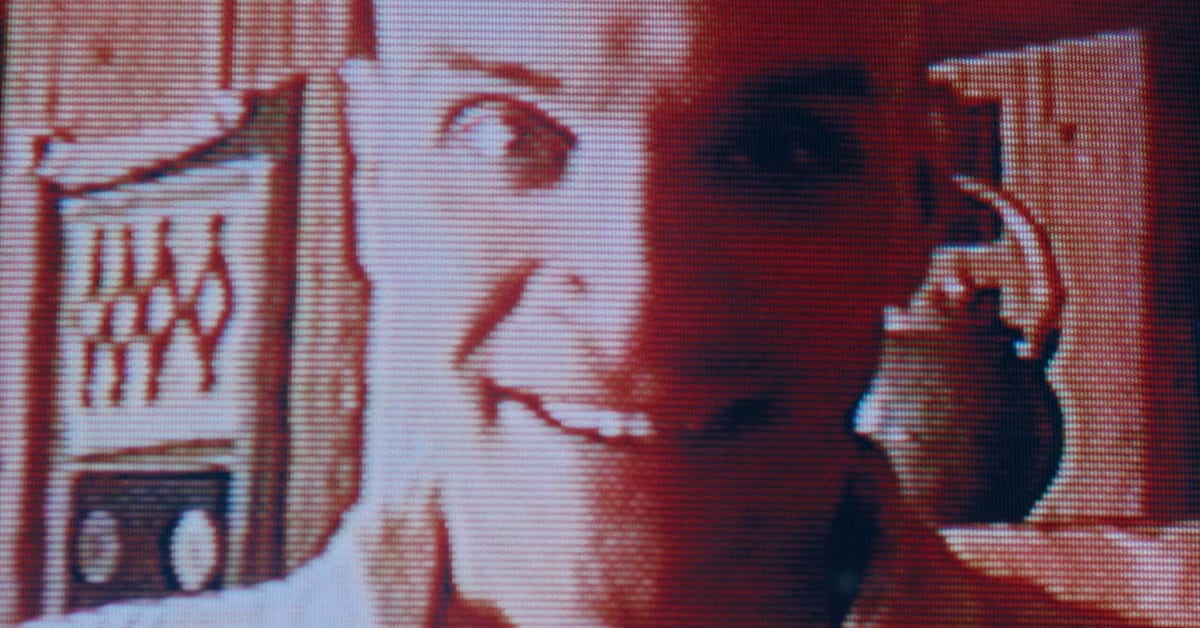
Debuting at Fantastic Fest this week, Death of a Yellow Bird may be the deepest psychological horror you’ll see this year. That may sound hyperbolic, given the visceral reaction to one of 2026’s horror hits, Obsession, but Death of a Yellow Bird weaves a personal, intricate tale about a terminally ill man who returns to his childhood home and discovers a ghost he can communicate with through a VHS camcorder.
For most horror fans, that’s really all you need; much of the early buzz was hooked off of that alone, as well as the connections to another horror hit of 2026, A24’s undertone, which is was produced in part by Death of a Yellow Bird writer-director Cody Calahan and Black Fawn Films’ Chad Archibald. Death of a Yellow Bird stars Ari Millen, whom you may remember from Netflix’s Orphan Black or as the Ice Cream Man in Eli Roth’s Ice Cream Man; Millen and Calahan grew up exploring filmmaking together, and this project was their chance to finally work on a feature film together. Then, the unexpected happens: Millen learns of his own cancer diagnosis, undergoing treatment and trying to figure out what to do. Surprisingly, the lifelong friends decide to press on, creating a film drawn from what’s happening in their real lives.
This isn’t life imitating art; more catharsis through the artistic process.
In conjunction with the exclusive release of the Death of a Yellow Bird trailer, Millen, Calahan, Archibald, and producer/director of photography Jeff Maher spoke candidly to Complex about many aspects of this project, from facing real life head-on to the difficulties in bringing a VHS-driven tale to life.
This conversation has been edited for length and clarity.
I don’t think I can start this interview out without first asking, Ari, how are you doing? How have you been?
Ari Millen: We’re in remission. We’re all good. Awesome. We’re all good. We’re about coming up on, oh geez, I think I got the all-clear maybe nine months ago, so obviously we’re checking in. It’s like a five-year journey until it’s done, done, but we’re good. Thanks for asking.
What was the timeframe that you guys actually shot and all the photography took place?
Cody Calahan: We went to camera November 2024, and then after that, we went right into undertone. So our post was in between doing that movie as well. And there’s some audio reasons why we had to experiment a lot with some stuff. So we took a year to figure it out.
Ari and Cody, I love that hearing that this is a thing you’ve been doing for a while. Correct me if I’m wrong, it sounds like you guys were trying to get a project done at some point. Can you break down how we got to Death of a Yellow Bird?
Calahan: Me and Ari, “we were in the same crib” kind of thing. His mother’s my godmother, so we’ve known each other forever. My mom was an art teacher, and Ari’s mom was extremely creative, and they did a lot of art projects together. My mom introduced me to VHS cameras back in the day; Ari was always on camera, and I was always behind the camera. And honestly, since making stuff together way back, both of us had our own journeys into the industry, and we worked on stuff together. Ari’s played roles in some movies that I’ve produced, played a role in a couple movies I’ve directed, but we always in the back of our minds were like, “We should do something someday where he’s the lead, I’m going to write and direct something.” And we toyed with it, and we’ve written some stuff together, and it never got off the ground or situational stuff. We always were busy. Ari was on a big show here, Orphan Black, so we were going to do something around then, and then he was too busy.
When Ari called me in 2024 and let me know that he was sick, I started to go to his chemo sessions, and there we were just talking about our past and stuff like that. And I had two ideas, two different movies, and I was just talking about those, and Ari had made a decision while in those sessions that he really wanted to explore what he was going through. And suddenly I realized that both of those stories I had didn’t have a character to follow. I wasn’t sure who I was going to follow. And so he brought that to both of those ideas, and I mashed it all together, and we started writing during his sessions.
Ari, that’s a lot to put out there, you know what I mean? That’s a very personal, private thing that people wouldn’t normally share, especially getting into some of the heavy stuff. Was there something in particular during those sessions where you made that decision to say, or was it just on a whim, “I should incorporate myself into one of these kind of ideas”?
Millen: Well, I mean, you were saying what Cody was saying was heavy. I’ll get heavier. Essentially, it was this could be the last thing. And I think it was just sort of that. To a certain extent, it’s a distraction in a certain way. It’s if not now, when?
I think certainly we were all in transitional places in our lives, all four of us here. I was dealing with mortality; it was just sort of a motivator. And I think to a certain extent it was more of processing what was happening; it was never really about the end goal. It was just like, “let’s just go do this.” We got a finite amount of time,” both with scheduling, with life events, and what I was dealing with. So it was just sort of one of those things like, “let’s just go do it.” And there was the quickest pre-pro I think anyone’s ever been involved in. Cody wrote the main part of the script in about a week. It just flowed out of him. It’s just one of those perfect storms of just go, just go.
Calahan: Weirdly, at least me, I didn’t feel the pressure of a usual production. It was like, “Well, we have to shoot now, so it’s just going to happen.” And the script felt like, I don’t know; it was the easiest thing I’ve written, and I don’t know if it was because subconsciously I was like, “Well, we have to shoot, so there is no out to be like, ‘Oh, I need more time,’ or ‘this isn’t good enough,’ or whatever. But even writing it, when I would hit a block or whatever, originally in the story, Ari’s character was going to be talking to this ghost through a cassette player, like a tape cassette. And when I got to that point, I was really liking it, and it was like, whatever, page 30, but I was like, the visual of the cassette player, I was like, “Man, is that going to get dry after a while? Always going back to a tape cassette.” And then the owners of the house, the new owners—[the house that we shot in] was actually the house me and Ari were raised in. My dad had just sold it.
They reached out because they knew I was going to come there and we were going to shoot there for 15, 20 days. They were open to it, and they were amazing; they gave us the place for free and stuff. But they emailed me and said, “We were cleaning out a few things that were left behind, and we were cleaning out an old shed” and they found the VHS camera.
That was your old camera in the film?
Calahan: So that was a replica of it, but we had the actual original one that was not trustworthy, we’ll say. It was still kind of duct-taped together. There’s a lot of use out of it. It was the original camera that me and Ari shot everything on for years.
Wow.
Calahan: So at that point in time, I was like, “Okay, I’m going to remove the tape cassette player, and I’m going to use the VHS camera.” I started writing and realizing that maybe in past projects I had avoided getting too meta and putting too much of myself in. But this one, I took off the roadblocks of that and I just started writing situational stuff. And it went as deep as me and Ari choosing stuff from the VHS, our old VHS tapes, because we’re actually in the movie as kids, too, to mix with the actors.
I was wondering how much of that was old footage and how much new stuff you guys got. That’s awesome.
Calahan: It was actually Jeff’s idea. Maybe you want to talk about how we hid that.
Jeff Maher: Yeah, yeah. Even as far as Ari would wait in the car, Cody and I would head into the house, and I don’t think [Ari] had seen the house for 20, 25 years. So we went in, got the camera set up, mic’d Ari, “close your eyes.” We brought him close to the house, turned him around, then we went inside, got everything set, screamed out “Action!,’“ and he came in and everything was authentic, the first reactions. Finding the video camera, watching those old tapes, looking at the photos of them as children—we kept it in the dark until the moment. We always went with the first take.
Ari, I do want to get to this, but it makes me wonder: you mentioned working on this project as a distraction, but I have to imagine because of the subject matter and what you were going through at that time, I don’t know how easy it is to remove yourself, and hearing about these personal photos and videos, what was that like for you?
Millen: Okay, so let me clarify a bit. I mean, certainly it was a distraction, but at least for me, it was coming off the heels of a sort of very dry time in my career. It had been a couple of years since I did anything of significance or anything more than a day or two. So when I say distraction, I mean…there was a lot of career frustration, but more importantly, I think we’re lucky in the sense that sometimes our subconscious will only allow us to know and understand what we need to know at certain times. There’s no way that the doctors weren’t telling me certain things, but I was not processing them in real time. It was only after my surgery that I would ask questions like, “Oh yeah, we told you that,” and I was hearing it for the first time then. So I think part of the distraction was that, deep down, I knew a certain reality. Cody knew the reality; my mom knew the reality. Jeff, I don’t know if Cody and Jeff talked about it, but without trying to make it too much about me, the odds were not in my favor to put it at a high level.
We all knew that, and so the distraction that we were trying to overcome was just focusing on that and more of just focusing on our childhood, focusing on our creative journey, and just being together in the place where we were raised, in the place where we built our formative years and built so much of who we are. So I think it was just sort of a necessity. It was sort of beating something in us that we had gotten away from, returning to a place where we grew up, where it all started. And maybe in a weird way of like, “well, this is where we started, maybe this is where we’re trying to bookend it.” A lot of deep stuff.
But realistically, again, it was all part of the process. It was the authenticity of seeing the pictures, seeing the videos, seeing the house for the first time, and trying to work that into the movie. I read the script once prior. Normally I would be more familiar with the role, but for whatever reason, my instinct on this one was to just be in the moment and be nowhere near rehearsed and just work off of instinct, work off of Cody’s direction, work off of the feeling of the day. And it was probably the most freeing experience because there was a lot of letting go. There was a lot of shedding of things that I had been holding onto; I think Cody had been holding onto, Jeff as well.
Calahan: That was the design; at least this was our idea of how to accomplish something authentic and as honest as we could be as filmmakers and being creative in the setting of making a movie. We realized that the only way to do that was to eliminate all of the noise of a large film set. Sometimes there’s so much noise, it’s hard to cut through. And with the way we shot this, it was only me, Jeff, and Ari on set. And then basically every other job, Chad did from home. So the three of us just decided that we all know each other so well, we all know each other’s insecurities and stuff, so there was no blockage, there was no noise. And so, in order to get a direction across or an idea of how Jeff wanted to shoot something or how Ari wanted to perform, our focus was very quick so we could move really quickly. And so if Ari went off the page, we had time to follow that, and I could even tweak a scene in order to incorporate it. It was an incredible way to work. It was my favorite experience on set by far.
Maher: It was a really “best idea wins” as well. We would sit around, we’d make sandwiches for lunch, talk for an hour, have coffee, and discuss the shots. “What did we do this morning? What do you want to do next?” And it was just very sort of casual, no creative handcuffs, no egos, just “that’s a cool idea, let’s do it.” And we would just do it. And if it didn’t work, we’d be like, “OK, that wasn’t great. Let’s try something else.” It had that vibe for the whole shoot.
Chad, I think it’s interesting to hear that they were creating the stuff and then you were somewhere else working on the nuts and bolts on the other side of it. Can you talk about how you were introduced to this project?
Chad Archibald: Like Cody mentioned, we’ve worked with Ari many times, and he’s become such a good friend and important part of our lives that when I heard about all of this, obviously outside of film stuff, it’s hard to take in. I lost both my parents to cancer, so anytime you hear about it, especially with someone close to you, it’s very difficult not to think of all aspects of that and what it could lead to. Then the approach with this movie as well, one, right off the top, it was like, “Absolutely, we just have to do this, whatever it is.” And really speaking with Cody too, so much of it wasn’t about going out and making a movie. We’ve been in the rat race of climbing the ladder in the industry and the next project and budgets and all the stuff around filmmaking, the business of filmmaking as well.
I think we were all kind of shifting our mentality even before this happened. When this project came up, it actually seemed like all the things that hadn’t happened recently for us didn’t happen for a reason. It opened up this time for us and we were able to go into it. And like I mentioned, it was a project that really was about the process. It was about doing something with Ari, and really, we had talked many times about the fact that maybe this movie doesn’t ever even get done. It’s like we don’t want to go out and get financing from studios. We don’t want to do any of that. We never showed the script to anyone. We brought the people that we cared about in together and basically financed it ourselves and started this process that was a journey that was, one, it’s just so special, and I think just to speak as well to a conversation I remember having with Cody after I read the script was that me and Cody have been writing stuff for a long, long time, and it’s always a challenge.
Writing is very, very difficult, and I think one of the hardest parts about writing something is figuring out a character and figuring out why you love them and why you care about them and why they’re important and why they’re unique. And it makes sense. Cody is about Ari more than anyone, and you could read it in the script, not that this character is Ari, but obviously so much of Ari is in this character, and then so much of Cody’s in it as well. I think knowing who your character is is so important to the creative process. And walking into this, there’s just so much love, and it was so special. And I think it was an important journey for the entire team.
I remember hearing just hothe w days went on set. There’s days where, obviously, it’s like everything Ari’s going through, the fact that he’s sick, and if they need to shut down, they need to shut down. And I think those moments, when it was a discussion, when Ari was sitting there pouring out things that he’s really going through in life, and on the other side of it is just his best friend. It was more of something that was almost like a conversation than it was making a movie. And I just think it’s so mind-blowing that after we had done this for a long, long time and gone through the entire journey with Ari, we’re so grateful that things have come together the way they have. But then on top of that, which is really, we say this all the time, it’s like the movie’s already done what it’s supposed to do. It’s already a success. It’s already brought us all together. We love it. We love the process. It’s changed the way we look at film, the way we look at each other; it’s changed our friendship. We’re so much closer, and now the fact that, on top of all that, it turned out so strong and it’s such an amazing piece that has been created by so few people, and it’s bringing us to Fantastic Fest and we’re about to share it with the world. It’s so special, and it just speaks so much to just, as filmmakers, speaking from the heart and being honest, and how that can resonate.
Millen: Something that Chad said just sparked something in me that circles back to your question before. Just, Cody wrote a script; he incorporated our history; he incorporated what he was going through; he incorporated what I was going through. Me being kind of removed from my own reality, because I was a character, I was able to, I think, process.
I think maybe I was too afraid to deal with my own reality, so by putting an extra layer of a character on top of it, in essentially [Ed Note: Ari gestures to the empty space next to him] just right here, I’m here, the character’s right here, we’re doing the exact same thing, but because I had that slight separation, it somehow made it manageable.
It somehow allowed me to have the conversations with myself, with my kids that I was procrastinating on, that I was pushing away, not wanting to do. So, in a sense, this was me; I was able to talk to them. I was able to talk to myself. I was able to figure it out as I talked to my family with the buffer. I think that was incredibly important.
Indeed; it sounds like your work as an actor and the need to understand who you’re portraying helped immensely there. We only have so much time, and I do want to ask about one thing. Cody, you mentioned earlier it was initially an audio cassette tape that became a VHS in the camcorder in the film. Being somebody who worked in video production classes in high school, I know how much of a bitch those things can be to fast-forward. [Laughs] Working with that medium in particular, were there any challenges with trying to make sure you’re pulling off what you were trying to display?
Calahan: No, it was a nightmare. So originally, I had written a story in the script that happened around a movie that me and Ari made when we were 10 called Birdman, which was where the yellow wings came from. That’s all from photos I had. And my dad was like, “Yeah, I have the VHS tape.” And then he sent it to me, and I watched it, and it was blank. So I had to steal things from our childhood. We basically transferred all the VHS. I stole stuff of me and Ari, and then we had these brilliant actors, Ben and Chance, come out, and basically they played the bits in between so that we could stitch the story together. But when it came to shooting with VHS, I think we had four of them on set, and you’d shoot with one for a bit, and then it would go down. It just wouldn’t turn on. Jeff spent half the time opening VHS cameras, wiring them together. We had duct tape just so they’d perform. And then there were times when we had our hero camera on set, which held together. The funny thing is that it wasn’t until we went back to do pickups that the VHS wouldn’t let us. The VHS camera that we shot everything on for 90 percent of the movie held out until we went back to shoot, and it wouldn’t let us; it kept dying, and it kind of forced me to rethink what we had to shoot and work around it.
It was really cool. We had times where we would shoot stuff on VHS; we would rewind, and it was gone. And even to that point, things would disappear, or I’d find stuff that wasn’t there. There was stuff bleeding through. So all of the VHS noise and the chaos you see in the movie, none of that is done in post. All of that is stuff that happened in the camera.
One of the coolest things that I think it did is when Ari’s giving the performance for the first time, he talks to his son after finding the VHS camera; he says, “Time is something that I don’t have.” And it kinda goes “[bloop BLOOP].” So that’s in there. That gave us the idea; when it did that, we’re like, “OK, let’s put the voice there.” And then I had to rewrite some stuff so that the rest of it would work. But it was as scary as the VHS cameras were because they would do crazy stuff; we just kind of went with it. There was a lot of magic on set with that VHS camera. There was a lot of good juju. It gave an amazing performance.
Have you thought about what it’s going to be like when it debuts at Fantastic Fest? Will there be some big sense of relief, or more of release?
Calahan: I think so. I mean, the project was so cathartic and every time I talk about it, I feel a way, so I think so. I think I’m going to be a mess. And just because of the idea, when we were editing it, when we were shooting it mostly, as Ari said, whether he was aware of the seriousness of his condition or he was blocking it, I knew about it. So there were days where we would get these performances, and I was like, “Man, am I going to be introducing this film somewhere alone?”
I think that’s why it’s important to note that it will be all of you together having that debut, having that conversation this week. It’s a beautiful thing, there’s a sense of healing at the end of it.
Millen: I think what was important again for all of us as we were processing ourselves through this movie, it was really just to point a mirror at ourselves to try to work through what we were working through. And I think, if the audience can see something of themselves in whatever sense, and that can help them process, if it could help them shine a light on something that they might be hiding from, I mean, I really hope that that is the takeaway. And if it does help them heal, amazing. But if it’s the beginning of the process, it’s the end of the process for them. I mean, I think that’s really the intention is just, hopefully, people can be brought to their own awareness of something that they’ve been dealing with, and they can start a conversation with themselves.
Death of a Yellow Bird makes its debut at Fantastic Fest later this week.
