

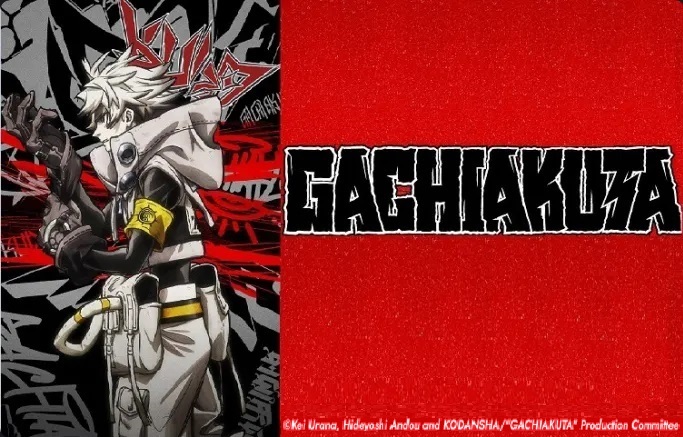
“Let’s change this mountain of shit and make it worth living!”
Based on a Japanese manga series written and illustrated by Urana Kei, Gachiakuta follows Ludo, a bullied child who lives in the slums of a floating city where wealthy people throw away trash and people without a second thought. Framed for murder and thrown into the Pit, a toxic wasteland inhabited by giant creatures born from discarded junk, Roode is forced to fight to survive in a world designed to erase him. Rescued by the villainous Cleaners and awakened to strange new powers through a weapon known as the Vital Instrument, Ludo turns his attention to the corrupt society that brought him to hell, and turns his struggle into a mission of escape and revenge.
Technically, this animated work was produced by Studio Bones, directed by Fumihiko Suganuma, Hiroshi Seko in charge of series composition and episode scripts, Satoshi Ishino in charge of general animation director and character design, and Taku Iwasaki in charge of music composer. The opening theme for the first season is “Hugs” by Paledusk, and the ending theme is “Tomoshibi” by Dust Cell. The opening theme for the second season will be “Let’s Just Crash” by Mori Calliope, and the ending theme will be “Ban” by Kalanoa.
Gachiakuta immediately stands out for its grungy, striking aesthetic and its sharply divided world, where the privileged rise to the top and those discarded below rot. Produced by Bones Film and based on the manga by Kei Urana, the series blends dark juvenile action with biting social commentary, exploring class disparity, environmental decay, and psychological trauma. Rude’s journey from criminalized garbage collector to empowered sweeper grounds the story in injustice and survival, while dense, imaginative world-building and a society shaped by neglect reinforce the show’s central themes of disposability and social decay. By turning the Pit and the Discarded Sphere into a vivid metaphor for elitism and organized brutality, Gachiacta combines emotional stakes, philosophical depth, and a mysterious, tension-filled backdrop that keeps viewers hooked from the first episode.
One of Gachiacta’s most appealing strengths is its power system. Key tools/weapons are forged from emotional attachments that tie combat directly to the character’s psychology, making combat feel personal rather than mechanical. Meanwhile, Ludo’s ability to repurpose trash into power reinforces the show’s thematic focus on value and reuse. This world-building would be great if viewers could piece together the Grounds as both a literal wilderness and a metaphor for social neglect, but this promise is undermined by the uneven pacing across the 24 episodes. There, arcs often end just when they’re about to become important, and exposition dominates over payoff. Despite toying with bold themes like class oppression, wasteful culture, and inherited guilt, the series repeatedly falls back on familiar shonen beats like sudden leaders, factional conflicts, faked defeats, and drawn-out battles, leaving major revelations undeveloped and story progression frustratingly thin to the point where you wonder if any of it has a proper payoff.
The way the letters are written is similarly uneven. Roode shines as an emotionally raw, revenge-driven protagonist whose sadness and anger feel justified, and whose bond with a father figure provides the series’ strongest emotional pulse. However, much of the supporting cast relies on familiar shonen archetypes, with a few exceptions such as Engine, Zanka, and Amo, but show fleeting depth. The expanding roster and dialogue-heavy episodes dilute focus, and the forced humor, tone whiplash, and reliance on over-showing story weaken the emotional resonance when the action pauses. Even narrative revelations like Ludo’s significant lineage risk undermining the thematic core of the series, shifting the story from one in which discarded people find value to one in which the protagonist is always exceptional.
Where this show really shines the most is in its presentation. Studio Bones elevates the dystopian world of Kei Urana with fluid animation, dynamic fight choreography, and standout Sakuga moments that make even the most familiar story beats feel impactful. The design, inspired by Hideyoshi Ando’s graffiti, gives the series a raw punk identity, with thick outlines, bold colors, and a grungy urban backdrop that gives the world a living, oppressive feel. The soundtrack complements this aesthetic, blending industrial grit and emotional atmosphere, with stylistic changes that add drama and action sequences. While the audio mixing can be uneven at times, the overall strength of the visuals and music supports the series and often makes up for any shortcomings in story or pacing.
Overall, Gachiacta is a bold, visually striking series that thrives on raw energy, inventive world-building, and a punk-infused aesthetic even as it struggles with pacing and uneven character development. Graffiti-filled environments, flowing animations, and dynamic fight choreography are a feast for the eyes, while Rude’s journey and thematic focus on disposability and value lend conceptual depth to the story. But with a second season confirmed and a video game adaptation announced, this new series is well-positioned to fully realize its ambitious ideas and deliver an even more thrilling and memorable experience.

