

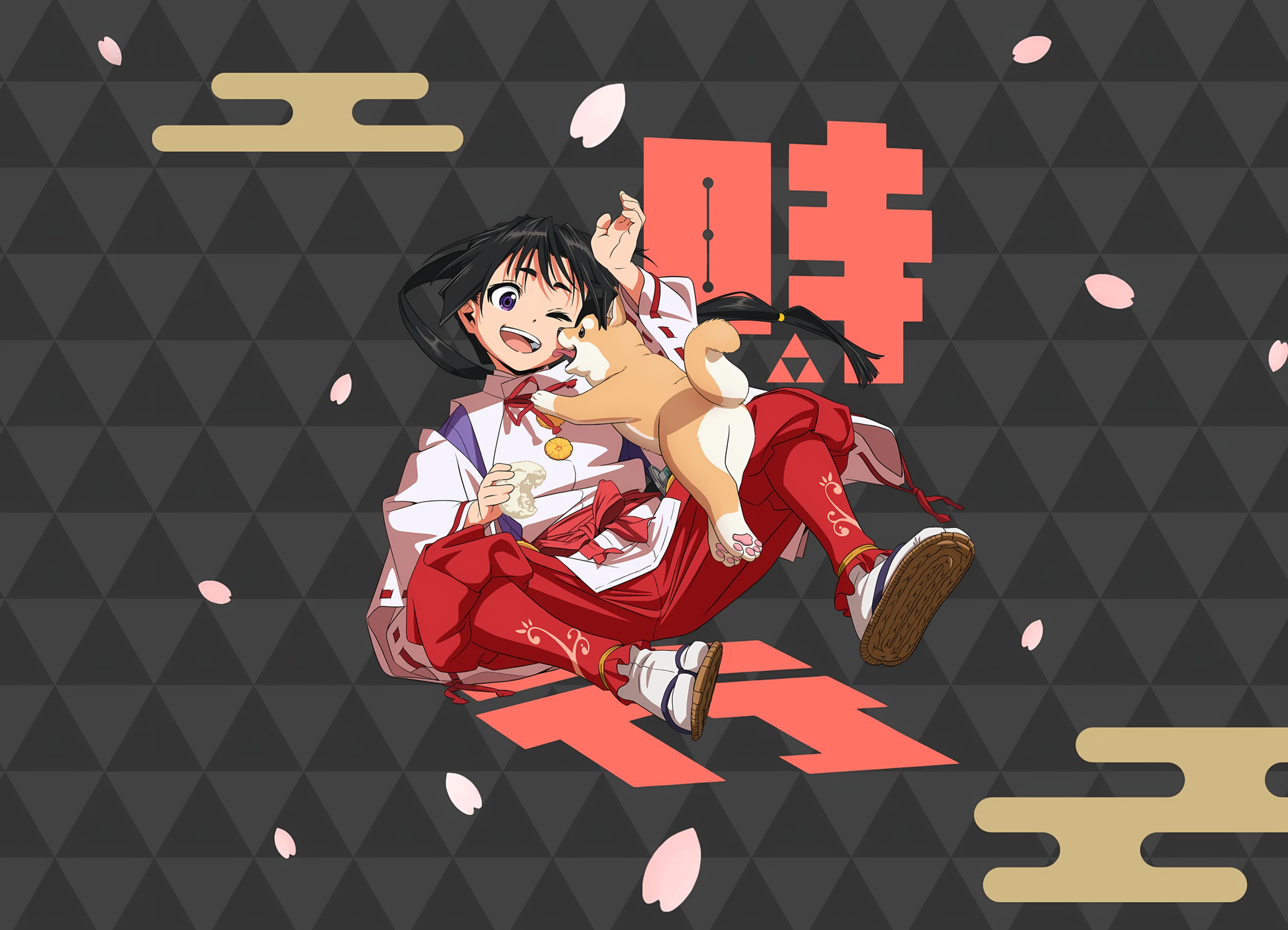
Three years after the manga ended a five-year run in Weekly Shōnen Jump, the anime adaptation of Yūsei Matsui’s The Elusive Samurai (Nige Jōzu no Wakagimi) returns for Season 2 on Thursday, July 17, with a global simulcast on Crunchyroll and Prime Video beginning at approximately 11:00 AM ET. CloverWorks and director Yuta Yamazaki return with the same core creative team that made Season 1 among 2024’s most praised shōnen anime, and they arrive with a show that has visibly outgrown its first act.
Season 1 was, structurally, a survival story: Hojo Tokiyuki, last surviving heir of the Kamakura shogunate’s Hojo clan, flees a coup staged by the warlord Ashikaga Takauji and spends twelve episodes learning how not to die. Season 2 changes the question. With his allies assembled, the Suwa shrine at his back, and the Southern Court’s blessing giving him political legitimacy, Tokiyuki stops running and starts building an insurgency — a campaign to retake Kamakura that the real Tokiyuki launched in 1335. The trailer confirms the shift directly: teams split across different regions of Japan, coordinated strikes, and Tokiyuki declaring his refusal to be dismissed as a Hojo heir any longer.
What Makes This Premiere Worth Your Thursday Morning
The Elusive Samurai has never been a typical shōnen action series, and Season 2 arrives with more manga source material behind it than most seasonal anime can claim. Matsui concluded the manga in February 2026 after 25 collected volumes, with a 26th volume releasing August 4, 2026 — meaning CloverWorks is adapting a complete story with a definitive ending rather than navigating a still-running serialization. That structural advantage matters: the adaptation’s pacing decisions can reflect the whole shape of the story, not just the chapters available at production time.
The returning staff is the clearest production signal available before Episode 1 airs. Yuta Yamazaki directs again, with Yusuke Kawakami (Bocchi the Rock! live performance director) joining as assistant director. Yasushi Nishiya returns as character designer and assumes the new role of chief animation director. Yoriko Tomita continues as series composer. GEMBI and Akiyuki Tateyama compose the score. Opening theme “Onigoto” (Demon Occurrences) is performed by Kento Nakajima. The ending theme artist was announced four days before the premiere — suggesting the production is still rolling out promotional material close to the wire.
Evasion as a Physical Science: What the Show Actually Gets Right
The central mechanic of Season 1 — Tokiyuki’s seemingly supernatural ability to not be caught — is not pure fantasy. It maps directly onto what biomechanics researchers call movement entropy: the mathematical measure of how difficult a moving target’s next position is to predict. Studies of predator-prey escape dynamics have shown that targets with high-entropy locomotion profiles — frequent, unpredictable direction changes — are disproportionately difficult to intercept even when they are slower in a straight line.
The anime exaggerates this into action-comedy physics, but the underlying logic is sound. Medieval pursuit relied on horses and projectile weapons, both of which are optimized to intercept targets moving in predictable trajectories. A warrior who trained specifically to move unpredictably across cover-rich terrain — forested mountain paths, shrine complexes — would defeat both interception methods even without superior speed or strength. Tokiyuki’s depiction as someone who reads a pursuer’s committed movement before it executes is not magic; it is a cognitively mediated escape circuit that, in the language of jerboa locomotion research, produces less stereotyped and therefore less interceptable movement patterns.
Season 2’s narrative shift from evasion to insurgency is not a betrayal of this premise — it is its logical extension. The survivor who has mastered the art of not being caught now applies the same principle at a strategic scale: the Fabian Strategy, named after Roman dictator Quintus Fabius Maximus, who used terrain, harassment, and patience to exhaust Hannibal’s superior Carthaginian force in the Second Punic War. The strategy requires three structural conditions — a secure sanctuary, a loyal population base, and a political authority that can survive without territorial control — and Tokiyuki’s historical campaign had all three: the Suwa Grand Shrine provided the first, Hōjō clan loyalists across the Kantō region provided the second, and his alliance with Emperor Go-Daigo’s Southern Court provided the third.
Ashikaga’s Kamakura and the Dual-Court Crisis Season 2 Inhabits
Season 2 opens in what the trailer calls “Ashikaga’s Kamakura” — the shogunate capital under Takauji’s new Muromachi regime. Viewers coming cold to Season 2 need one piece of historical context to understand the stakes: Japan at this moment had two simultaneously valid imperial courts, and Tokiyuki’s cause depended on choosing the right one to align with
The Nanboku-chō period (1336–1392), which the anime now inhabits, was defined by a Northern Court backed by Ashikaga Takauji in Kyoto and a Southern Court established by Emperor Go-Daigo in Yoshino. Both claimed legitimacy; the Northern emperors controlled the military heartland, while the Southern court held the imperial regalia — the sacred artifacts that in Japanese tradition confirmed an emperor’s authentic claim. In 1911, Emperor Meiji settled the historical dispute by decree: the Southern Court emperors were the legitimate ones. Tokiyuki aligned with the Southern Court after his 1335 uprising was initially defeated, a historically verified political decision that transformed him from a fugitive into a commissioned commander.
This political infrastructure is what makes the Fabian insurgency structurallys sanction, Tokiyuki’s military campaigns were banditry. With it, they were legitimate warfare on behalf of a recognized sovereign — a distinction that affected who would shelter him, supply him, and fight under his banner across different provinces
How Suwa Yorishige’s “Prophecy” Actually Worked
Suwa Yorishige, Tokiyuki’s eccentric advisor and the anime’s second-most-prominent character, is voiced again by Yūichi Nakamura. His prophetic abilities in the show are rendered as anime-physics foreknowledge. The historical reality is stranger and more interesting
The Suwa clan controlled the Suwa Grand Shrine (Suwa Taisha) in Shinano Province, one of Japan’s oldest continuously operating Shinto institutions. The clan chief served simultaneously as a samurai lord and as the Ōhōri — a figure believed to be the living embodiment of the deity Takeminakata-no-Mikoto after an investiture ceremony. This dual identity (warrior and vessel-of-a-god) gave the Suwa clan a form of political protection that no purely military force could replicate: attacking the Suwa was, in the cultural logic of 14th-century Japan, making war on a divine being.
What appeared to outsiders as prophetic foresight was, more plausibly, deep environmental literacy. The Suwa clan’s multi-generational knowledge of Lake Suwa’s water movements, the Shinano highlands’ seasonal patterns, and the region’s ecological behavior would have produced reliable early-warning information that could legitimately look like precognition to anyone not from that territory. The shrine also occupied what medieval Japanese legal tradition called a muen (sanctuary zone) — a space outside secular obligation where fugitives could shelter. The Suwa shrine’s extraordinary military strength converted this passive sanctuary into an active stronghold.
What Yūsei Matsui Has Been Building Across Three Series
The Elusive Samurai took the 69th Shogakukan Award in 2024, sharing it with Frieren: Beyond Journey’s End. The pairing is meaningful beyond coincidence. Both series reward patience, longevity, and the accumulation of small survivals over heroic sacrifice — a structurally unusual proposition for shōnen manga, which has traditionally celebrated glorious death
Matsui has been working this territory across all three of his major series. In Neuro: Supernatural Detective, a demon solves crimes by consuming mysteries rather than resolving them through conventional deduction. In Assassination Classroom, students are taught survival skills by the being they are supposed to kill. In The Elusive Samurai, a warrior becomes powerful by refusing to fight on his opponent’s terms. All three series define mastery not as the conventional performance of competence but as its inversion: what does genuine capability look like when the standard demonstration is unavailable or counterproductive?
This is not a minor aesthetic preference. Matsui deliberately chose Tokiyuki because the historical record portrayed a warrior whose greatness lay in refusal to die, not in any individual act of valor. Importantly, the fully articulated Bushido code — with its explicit death-over-surrender ethic — did not yet exist in the 14th century. Matsui is historically accurate in depicting a world before that code had calcified into obligation, and the series gains its philosophical weight from that accuracy.
Season 2’s trailer frames the coming arc as Tokiyuki’s transition from “running away” to “running toward something.” That is not a betrayal of the series’ thesis; it is its completion. The survivor who refused to die on others’ terms is now the only remaining person capable of fighting back — precisely because everyone who followed the conventional warrior’s code did not survive to do so
Where and When to Watch
The Elusive Samurai Season 2 airs Thursdays at 23:30 JST on Fuji TV’s Noitamina programming block and on AT-X in Japan. The global simulcast on Crunchyroll and Prime Video launches at approximately 11:00 AM ET on Thursdays — 10:30 AM ET for the Fuji TV broadcast feed. Season 1 (12 episodes) is fully available on Crunchyroll including an English dub, and Fuji TV and TOKYO MX are currently airing a Season 1 rerun that began July 13, directly leading into Season 2, per recent anime coverage
A Crunchyroll subscription is required. A same-day English dub streams simultaneously with subtitles, as confirmed at Anime Expo 2026
Frequently Asked Questions
What time does The Elusive Samurai Season 2 premiere on Crunchyroll?
Season 2 premieres on Thursday, July 17, at approximately 11:00 AM ET on Crunchyroll and Prime Video globally, following the 23:30 JST Fuji TV broadcast. The English dub streams simultaneously with subtitles. A Crunchyroll subscription is required. Full broadcast details are available from Anime News Network’s premiere coverage
Is The Elusive Samurai based on a real historical figure?
Yes. Hojo Tokiyuki was a real 14th-century figure whose Nakasendai Rebellion of 1335 is documented in multiple historical records, including the Wikipedia article on the Nanboku-chō period, which names him directly. The series blends this historical record with anime-style exaggeration — the core events (the fall of Kamakura, the dual-court period, Tokiyuki’s alliance with the Suwa clan and the Southern Court) are accurate. The show’s central claim, that Tokiyuki survived by refusing conventional samurai engagement, is also historically grounded: the Bushido code requiring death-over-retreat was not fully formalized until centuries after Tokiyuki’s era.
How many episodes will The Elusive Samurai Season 2 have?
An official episode count had not been confirmed as of this writing. Season 1 ran 12 episodes. With the manga now complete at 25 volumes (plus a 26th releasing August 4, 2026), and significant story remaining after Season 1’s coverage of approximately the first 31 chapters, speculation points to a longer run — possibly up to 24 episodes — though no count has been officially announced
Why does The Elusive Samurai air on Noitamina instead of a standard shōnen slot?
Noitamina is Fuji TV’s programming block specifically designed to bring anime to audiences beyond the typical young male demographic — it has aired series including AnoHana, Psycho-Pass, and Wonder Egg Priority since its 2005 launch. That The Elusive Samurai airs there is a curatorial signal: Fuji TV and Aniplex are positioning a shōnen manga adaptation as anime for adults with a broader analytical appetite. It also explains why the series has the kind of historical and strategic depth that makes it unusual for its genre classification — the Noitamina mandate specifically favors series that operate outside conventional genre expectations.
ⓒ 2026 TECHTIMES.com All rights reserved. Do not reproduce without permission
Tags:Crunchyroll
