

DC Comics has developed a reputation with readers, one that started decades ago in the 1950s. The publisher created the first superheroes in the late ’30s and ’40s, but things would take a turn and eventually, everyone but Superman, Batman, and Wonder Woman would go the way of dodo, as comics were blamed for everything bad thing you can imagine (and not, say, all of the lead in the atmosphere from the leaded gasoline). Eventually, sales were good enough they they were ready to try again, leading to Showcase #4 and the premiere of a new Flash. Soon, there would be new versions of the Green Lantern, Hawkman, and the Atom, with Green Arrow showing up as well. None had a connection to DC’s past.
Videos by ComicBook.com
DC was rebooting their superhero universe before we even had a word for it, leading to the successes of the Silver Age, which in turn would bring Marvel back into the superhero game as well. This ’50s reboot would lead to the next one 30 years later, when Crisis on Infinite Earths relaunched the DC Universe. It was a turning point in the history of the company and it’s one that very easily could have backfired. At this point in the publisher’s history, they had been publishing comics for 50 years, having spent 47 of those years building up the greatest superhero multiverse of all time. Fans had questions and luckily, DC had answers, leading to a series that would help set the standard for superhero comics in the years to come – The History of the DC Universe.
Crisis Needed TheHistory of the DC Universe to Really Shine
Crisis on Infinite Earths is quite an accomplishment, when it comes down to it. DC began planning the 12-issue series years before the first issue dropped in 1985; Marv Wolfman, George Perez, Dick Giordano, and Jerry Ordway worked for years behind the scenes, with DC hiring a researcher to read every DC comic ever (God, if there was ever a job I was born for and completely missed out on). There are lots of reasons Crisis has become such a massive legend and planning was the foundation of the whole thing.
It makes a lot of sense; over the decades, DC had introduced numerous alternate Earths, peopled by thousands of heroes and villains. Fans loved the DC Multiverse and if they were going to prune that down, they had to figure out a way to not only make everyone happy but they also had to figure out exactly what events were canon to this new universe. They were folding together the histories of Earths-One, Two, S, X, and Four and readers would definitely appreciate a roadmap to the now singular DC Universe.
In 1982, Marvel Comics had started to publish The Official Encyclopedia of the Marvel Universe, a monthly book filled with character bios. It was a perfect reference material for new fans and DC would follow suit in 1985, while Crisis was being printed, with Who’s Who: The Definitive Directory of the DC Universe. These two books gave readers everything they needed to know and it was decided that after Crisis, the publisher would create something similar, but also completely different.
Wolfman and Perez, having already spent years living with this story, gave readers the two-issue Prestige Format series The History of the DC Universe. At the end of Crisis, the two creators set up Harbinger, Lady Quark, and Pariah, three new characters created for the story, leaving on a trip across the universe, with Harbinger speaking into a recording about the new Earth and its history. This became the narrative conceit of the miniseries, with Harbinger’s tapes (another idea introduced earlier in Crisis) telling readers the history of the DC Universe.
Wolfman and Perez were one of the greatest teams you could ever imagine when it came to sequential storytelling, but they decided to not just go the standard comic direction with the book. Instead of the two books being a series of panels telling a story, each page or double-page spread was a piece of gorgeous art by Perez, with a caption by Wolfman describing the event in DC history. It began with the creation of all things, taking readers through the history of humanity up until the present day.
It established the new World War II of the DC Universe, with the Justice Society, the Freedom Fighters, the Blackhawks, the Losers, the original Suicide Squad, Sgt. Rock and Easy Company, and the other heroes and villains of the Golden Age all together on one Earth. It set up the skeleton of the new canon, establishing what events from the Earth-One years were canon, how the old multiversal crossovers worked, and set out the rudiments that creators would build the new DC Universe around.
The History of the DC Universe was the best thing that DC could have done in the days after Crisis. Looking at the publisher’s actions over the early ’80s, you can see that they were preparing everything for the upcoming reboot, with Who’s Who being the beginning of reacquainting readers with DC’s characters. Crisis gave everything a new beginning and History answered many of the questions that readers had, setting a new standard for the mainstream comic industry.
A big part of Crisis was getting Marvel fans to pick up DC books and giving them a handy-dandy road map was the perfect idea. DC would put out another volume of Who’s Who starting in 1990, this one made up of removable pin-up pages (one of my old LCS’s gave me a bunch of issues and I used them to decorate one of my old rooms with proto-Vertigo DC horror character pin-ups). In the mid ’90s, when DC put out Zero Hour: Crisis in Time to fix some of the problems left from Crisis and included a timeline of events at the end. In 2025, DC put out New History of the DC Universe, giving new fans a chance to see the new canon. The History of the DC Universe showed that when you respect your fans, they reward you.
History of the DC Universe Set a New Standard
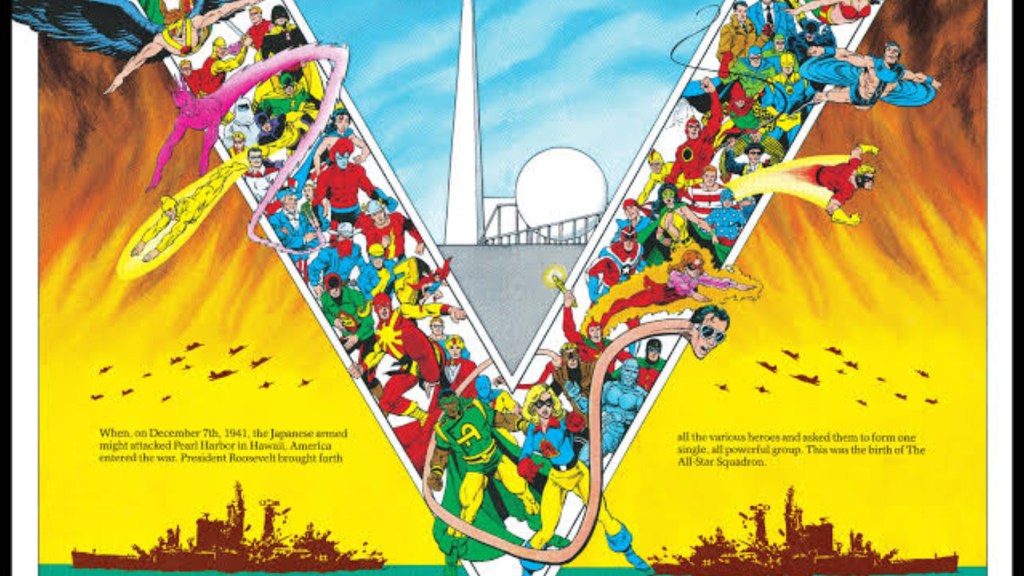
I’ve loved Crisis on Infinite Earths for decades now. I own two copies of issues #7 and #9-12 and am constantly on the lookout for better quality copies. It’s not only one of the most important comics ever, it’s one of my favorites and the more I’ve learned about it, the more it impresses me. The sheer amount of planning that went into it, in order to not only pay homage to the classics of the past but also to launch a whole new DC Universe, is insane and The History of the DC Universe is perfect example of all of that paying off.
Wolfman and Perez broke the DC Multiverse and then built the DC Universe, leaving everyone a road map to the present with History. It’s not the common comic and it’s also not The Official Encyclopedia of the Marvel Universe/Who’s Who either. It’s like a coffee table book you’d expect to find at some upscale apartment in Metropolis, a piece of DC come to life, a history book for a universe that doesn’t exist. You don’t need to read it anymore, but if you’re a fan of DC history, definitely hunt a copy down. It’s some of the coolest DC apocrypha ever, an example of the company not only respecting its past but also its readers.
What do you think of The History of the DC Universe? Sound off in the comment section below.
5 DC Heroes Readers Love to Hate (and One of Them Is the Most Popular Superhero in Pop Culture)
More Comics
-
Image Courtesy of Marvel Comics Comics
17 hours agoSpider-Man Just Achieved His Most Dangerous Form Yet, and It’s all Thanks to the Hulk
-
Image Courtesy of Marvel Comics Comics
1 day agoMarvel Comics Just Brought Back a Long-Dead Villain and He’s Making The Punisher Look Soft
-
Image Courtesy of Marvel Comics Comics
1 day agoMarvel’s Zaniest Earth Was a Game-Changer in Comics, And It Made a Wild Comeback in the Spider-Verse Movies
-
Comics
1 day agoWonder Woman’s Image Was Once in Someone Else’s Hands and It Made for One of Her Best Stories
-

Image Courtesy of Image Comics Comics
1 day agoPower Fantasy #17 Is Making the Argument for Being the Modern Day Watchmen (Exclusive Early Review)
