

Fishing arrived in Anime Expeditions as part of the Summer Fish Fest Event, and it’s a surprisingly deep minigame sitting right next to the tower-defense gameplay that Roblox players already know. You start with a basic rod, cast into any pool in the lobby, and work your way toward Mythic-guaranteed drops and a Flamingo cosmetic at the top of the milestone ladder. This guide covers every rod, every fish across all five locations, the full 25-level milestone reward list, and the Event Rank passives that make grinding the event significantly faster.
How does fishing work in Anime Expeditions?
Every player starts with the Normal Rod already in their inventory, so there’s no unlock step before your first cast. Press the Toggle Fishing Rod icon on the bottom-left of the screen to equip it, then walk to any body of water in the lobby. Fishing near the Carrot Summer NPC is a reliable starting spot. Left-click and hold to cast, then release to throw the line.
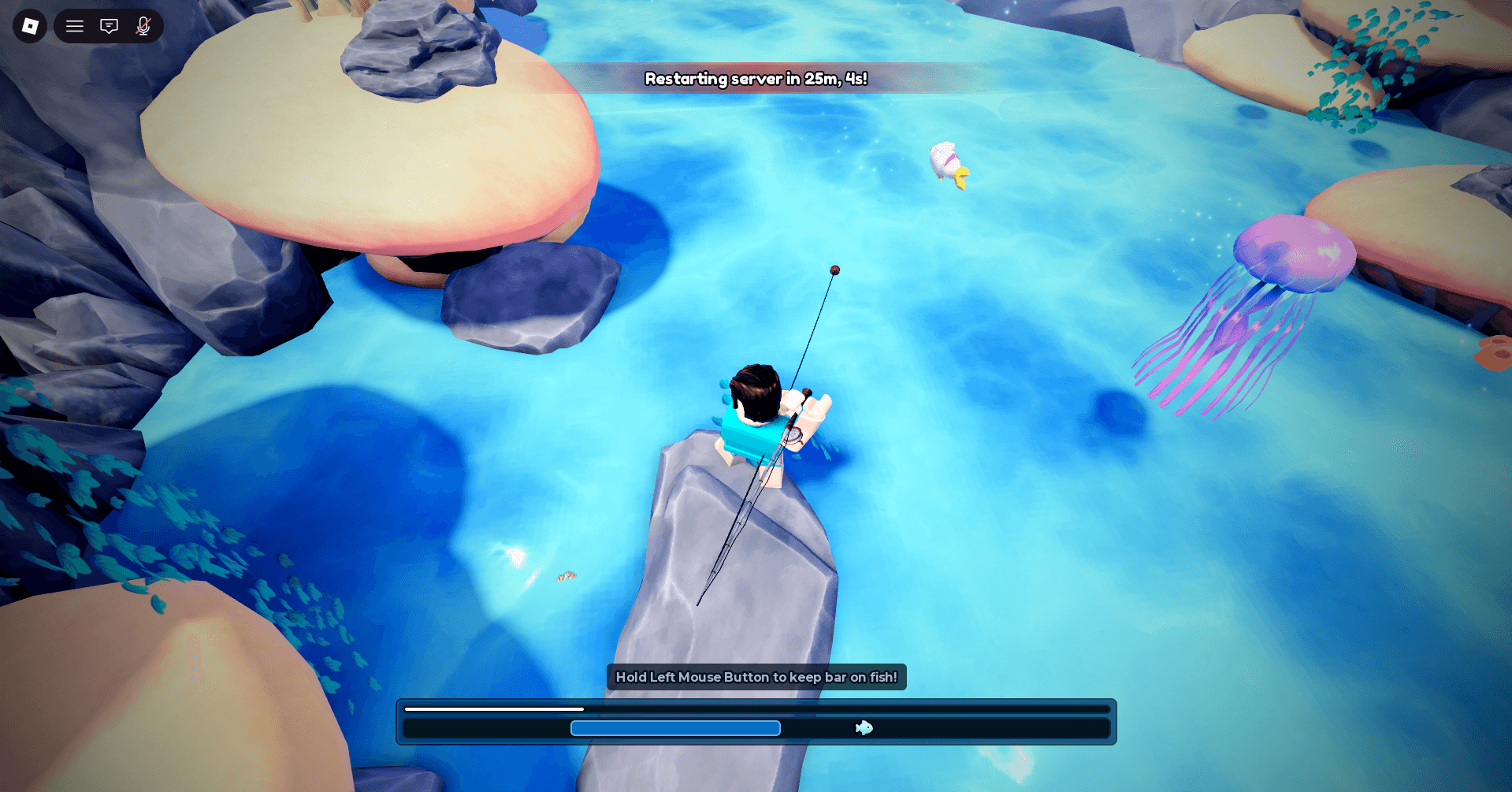
Once a fish bites, a mini-game bar appears at the bottom of the screen. Hold the left mouse button to push the blue block to the right; release it to let the block drift left. Your goal is to keep the block aligned beneath the moving fish icon until the white progress bar fills completely. The fish is yours once that bar maxes out.
tip
If your casts aren’t registering, you may be standing on land rather than at the water’s edge. Drop directly into a pool area and cast from there to guarantee the mini-game triggers.
Anime Expeditions Fishing Guide: All Rods & Rewards
What are all the fishing rods in Anime Expeditions?
There are 5 rods total, each with different stats and unlock methods. The key numbers to understand are Lure Speed (how fast the lure moves, with two values representing base and boosted speed), Control (how responsive the block is to your input), and Control Zone (the size of the block’s active area).
Loading table…
The Recycling Rod has the highest Control stat at 0.9, making it the most forgiving rod for the mini-game. The Lucky Rod is the one to chase if you’re hunting rare fish for the Bestiary, since that guaranteed Mythic every 8 catches adds up fast. The Auto Rod is a pure efficiency tool once you’ve cleared wave 150 in Tidal Siege, but note its Control Zone is 0, meaning the mini-game is bypassed entirely rather than improved.
warning
The Auto Rod provides random fish with no targeting. If you’re trying to complete the Bestiary by catching specific fish, stick to the rods listed in the fish tables below.
How to catch all 22 fish across every location
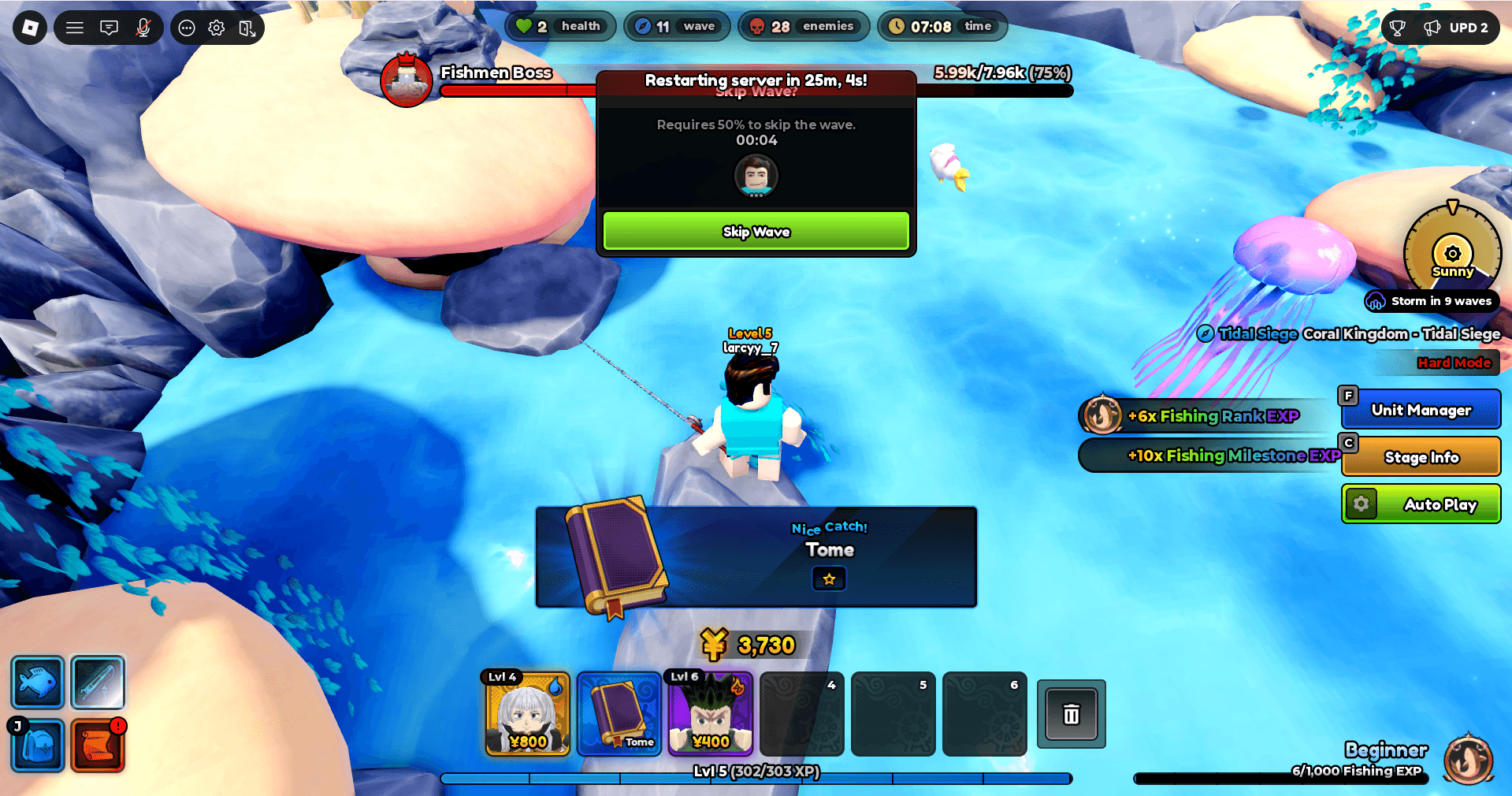
Fish in Anime Expeditions don’t require specific bait or weather conditions. The only variable that affects your catch rate for particular fish is which rod you’re using. Below is every fish broken down by location.
Anime Expeditions Fishing Guide: All Rods & Rewards
Lobby
Loading table…
Coral Kingdom
Loading table…
School Grounds
Loading table…
Flower Forest
Loading table…
East Town
Loading table…
tip
The Shellphone Snail, Coopfin, Butterfly Fish, and Puffer Fish all require either the Lucky Rod or Advanced Rod. If you’re stuck on Bestiary completion, buying the Advanced Rod from the Summer Shop for 750 Sand Dollars is the most direct path to unlocking those entries.
For a broader look at where these maps fit into the game’s progression, check out the Anime Expeditions maps and rewards guide.
What are the Event Ranks and what do they do?
Every cast earns XP that feeds into the Event Rank system. These ranks aren’t just cosmetic titles. From Novice onward, they provide stacking currency bonuses that speed up your entire Summer Fest grind.
Loading table…
Reaching Grandmaster doubles your currency gain and opens up a 10,000 Sand Dollar daily cap from standard game modes. That means playing regular maps counts toward your summer economy even when you’re not actively fishing. Getting to Veteran or higher as early as possible is worth prioritizing before you start heavy Summer Shop spending.
For help building out your roster to run those standard game modes more efficiently, the Anime Expeditions equipment guide covers every gear piece and how to farm it.
What are all the milestone rewards from fishing?
Fishing XP also fills a separate milestone progress bar with 25 levels of rewards. The mix of Gems, Trait Crystals, Equipment Rerolls, and Equipment Locks makes this one of the better passive progression systems in the current event.
- Level 1: 250x Sand Dollars
- Level 2: 15x Equipment Rerolls
- Level 3: 5x Trait Crystals
- Level 4: 250x Gems
- Level 5: 15x Equipment Locks
- Level 6: 300x Gems
- Level 7: 8x Trait Crystals
- Level 8: 20x Equipment Rerolls
- Level 9: 350x Gems
- Level 10: 1x Sunshine Unit Indicator Color
- Level 11: 10x Trait Crystals
- Level 12: 400x Gems
- Level 13: 20x Equipment Locks
- Level 14: 12x Trait Crystals
- Level 15: 1x Tidal Siege Banner
- Level 16: 25x Stat Rerolls
- Level 17: 25x Equipment Rerolls
- Level 18: 450x Gems
- Level 19: 14x Trait Crystals
- Level 20: 25x Equipment Locks
- Level 21: 500x Gems
- Level 22: 30x Stat Rerolls
- Level 23: 550x Gems
- Level 24: 16x Trait Crystals
- Level 25: 1x Flamingo
The Flamingo at level 25 is the headline reward, but the Trait Crystals and Equipment Rerolls stacked across the earlier levels are arguably more immediately useful for strengthening your active units. Levels 2 through 20 alone yield 60 Equipment Rerolls, 50 Trait Crystals, and 60 Equipment Locks if you count every relevant tier.
tip
Combine fishing sessions with Tidal Siege runs. Fishing fills both the milestone bar and your Sand Dollar wallet, while Tidal Siege progress unlocks the Auto Rod at wave 150 and counts toward your Event Rank daily currency cap once you hit Veteran.
Making the most of the Summer Fish Fest
The most efficient loop during the Summer Fish Fest is to fish consistently in the lobby until you can afford the Advanced Rod (750 Sand Dollars), then use that to chase the harder fish in Coral Kingdom and East Town for Bestiary completion. Run Tidal Siege alongside fishing to push toward wave 150 for the Auto Rod, and keep an eye on your Event Rank since hitting Veteran unlocks that daily currency bonus from standard modes.
If you want to go deeper on the broader Anime Expeditions systems while you’re grinding the event, the Anime Expeditions beginner’s guide covers units, evolution, traits, and everything else that feeds into your long-term roster. Our full Roblox guides collection has more on current events and progression systems across the game.
