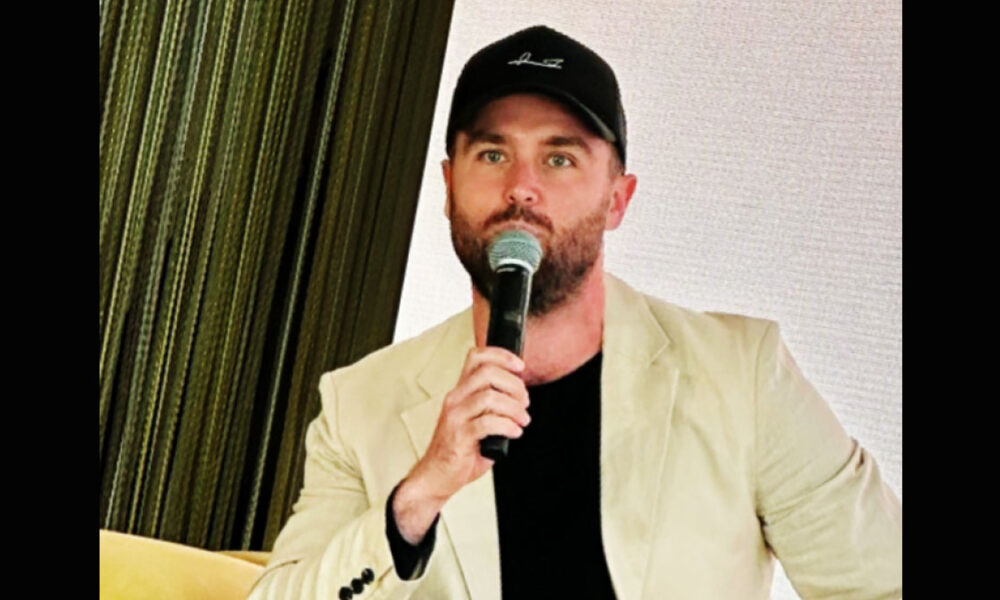
CALIFORNIA: Sixteen years of grinding through visual effects trenches, from DreamWorks to Disney to a Beijing production house, and Christopher Sinnott has landed somewhere few in his field would have predicted a decade ago: inside Google, selling generative AI to the very studios he once helped run pipelines for. His new title is head of generative media go-to-market for media and entertainment at Google Cloud, and the appointment says as much about where Hollywood is headed as it does about Sinnott himself.
The résumé is unusually well suited to the job. Sinnott has spent his career on the production side of entertainment, not the sales side, coordinating visual effects at Technicolor and DreamWorks Animation, producing on a Hollywood feature shot in Mumbai, then running VFX for a fast-growing studio in China. From there he moved into technology, spending three and a half years at Autodesk scaling Shotgun, the production tracking software that became a backbone of digital filmmaking, before a stint as vice president of platform at InfiniteWorld building cloud-based 3D creation tools.
Then came Amazon Web Services, where Sinnott spent just over four years working his way from creative tools and 3D rendering into spatial computing and, most recently, the collision of 3D tools, immersive technology and physical AI, a brief that put him in front of media, games and sports companies grappling with how robotics and spatial computing intersect with content production. That is precisely the sort of frontier experience Google needs as it tries to convince a battered, cautious industry that generative AI belongs in its workflows rather than at its throat.
Sinnott himself was candid about the backdrop. The past three years have been brutal for entertainment, he noted, with plenty of talented people still out of work as strikes, streaming contraction and budget cuts reshaped the business. His stated aim at Google is to work closely with filmmakers, studios, venues, artists and craftspeople so that storytelling becomes both easier to make and more sustainable to fund, a framing that positions generative AI as a lifeline for creatives rather than a replacement for them.
That framing matters enormously. Generative AI remains a fraught subject in Hollywood, a flashpoint in the 2023 strikes and still a source of deep unease among artists worried about jobs and credit. Hiring someone who has spent his career inside production pipelines, rather than a career technologist parachuted in from outside, is a deliberate signal from Google Cloud’s GenMedia team that it wants credibility with creatives, not just enterprise contracts with studio finance departments. Evan Hanlon, who brought Sinnott aboard, and the wider GenMedia team appear to be betting that pedigree in the trenches will open doors that a pure sales pitch cannot.
For Google, the hire is another marker in its broader contest with Amazon, Microsoft and Adobe over who controls the cloud infrastructure and AI tooling beneath the next generation of film, television and games production. Poaching a well-regarded AWS veteran with deep entertainment relationships is as much a competitive jab as it is a talent acquisition, and it suggests Google Cloud is serious about winning this fight on the ground, studio by studio, rather than through advertising alone.