

ARTS / CULTURE & LEISURE
China vows to crush toxic ‘fan circle’ culture in sports while aiming for over $1 trillion industry by 2030: General Administration of Sport of China
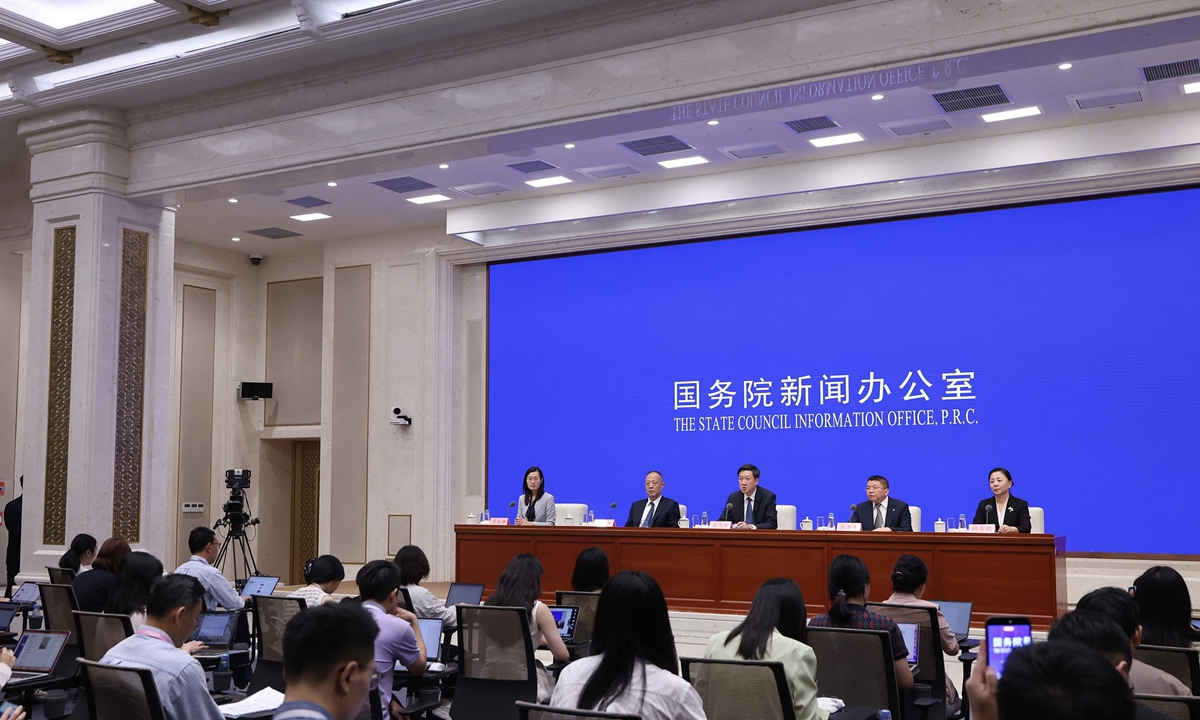
A press conference on building a leading sports nation during the 15th Five-Year Plan period Photo: VCG
China will further crack down on toxic fan culture in sports and promote healthier behavior during the 15th Five-Year Plan period (2026-30), while expanding sports consumption and aiming to increase the total size of the sports industry to more than 7 trillion yuan ($1 trillion) by 2030, Gao Zhidan, director of the General Administration of Sport (GAS) of China said at a State Council Information Office press conference on Thursday.
At the press conference, Gao said China would strengthen civil conduct within sports venues, improve standards for spectator behavior and further clean up the sports public opinion environment over the next five years.
The renewed focus on the issue comes as such behavior has increasingly spilled over from online disputes into sporting events and athletes’ personal lives.
In recent years, disruptive fan culture has spread across sports ranging from diving to table tennis, with fans pitting athletes against one another, engaging in malicious hypes, obsessively following athletes, and launching online attacks, according to the Xinhua News Agency. Such behavior has drawn athletes and sporting events into a cycle driven by online traffic rather than competition itself.
As the problem has spread beyond online disputes, authorities have called for measures to tackle the misconduct of fans throughout the processes of athlete selection, training and placement, as well as across the organization and oversight of sports events, said a relevant official with the GAS. The official also called for stronger education to identify and address problems earlier and strengthen cultural development within sports teams and schools.
Luo Le, a Beijing-based sports commentator, told the Global Times that the core of addressing “fan circle” issues in sports is not restricting normal fan culture, but guiding fan participation back toward a more rational and healthier path.
“Sports stars have significant public influence. A healthy fan culture can help promote sports events and boost sports consumption. However, when fan behavior turns into excessive idolization of athletes, attacks on other competitors, or even interference with athletes’ training and competitions, it can undermine the foundation of sports development,” he said.
According to Luo, addressing such issues requires joint efforts from multiple stakeholders, including platforms, event organizers, clubs, and athletes.
The push to clean up the sports environment is part of a broader plan to strengthen the sector. During the 15th Five-Year Plan period, the GAS will further tap the potential of sports consumption and improve the modern sports industry system, with the goal of increasing the industry’s total size to more than 7 trillion yuan by 2030.
Achieving that goal will require more than expanding sports goods consumption. Under the plan, China will promote the development of the fitness, leisure, and competitive sports industries, while encouraging deeper integration of sports with commerce, tourism, culture, and health to create new sports consumption scenarios.
Gao Ningjing, a Beijing-based economist with a doctorate in economics, told the Global Times that China’s sports industry in recent years is shifting from relying on individual consumption growth toward building a more comprehensive industrial ecosystem.
“In the past, sports consumption was often associated mainly with sports equipment purchasing and competitions watching. Going forward, new growth opportunities will increasingly come from diverse scenarios such as event experiences, fitness services, outdoor activities and sports tourism,” she told the Global Times.
“As national fitness initiatives and the integration of sports with culture and tourism continue to advance, I believe sports will become increasingly embedded in people’s daily lives and serve as a driver of consumption upgrading,” she said.
This expansion of the sports industry also depends on the development of competitive sports, which remains a key part of China’s broader sports strategy. During the 15th Five-Year Plan period, China will reform and improve the management system and operating mechanisms for competitive sports, while continuing to strengthen its overall competitiveness and international standing. It will strive to maintain its position among the world leaders in the number of world champions and achieve strong results at major international events, including the Los Angeles Olympics and the Winter Olympics in the Alps.
To achieve these goals, the GAS will seek more balanced development across competitive sports, shifting its strategy from “breakthroughs in key areas” to “all-round development” centered on the “6-3-3” program: six traditionally strong sports, three basic disciplines and the three major ball sports. The plan also calls for accelerating the revitalization and development of football, basketball and volleyball
