

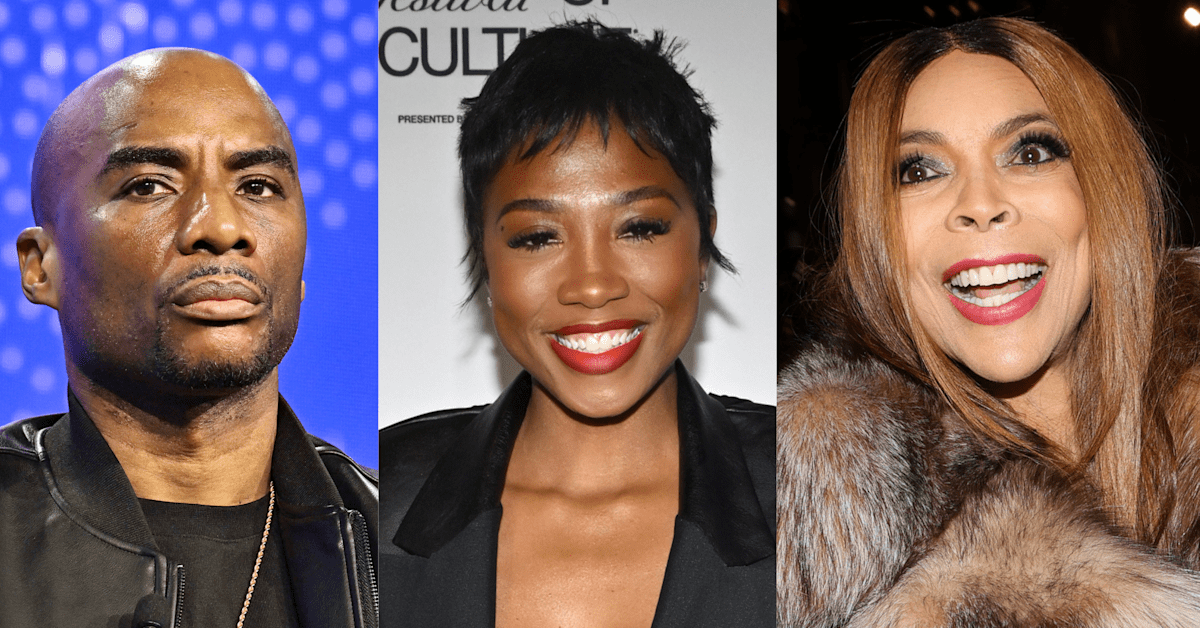
Williams reportedly made the candid confession during a private dinner about a year and a half ago.
ByMark Elibert
August 17, 2026
Charlamagne Tha God and Loren LoRosa are sharing a private confession Wendy Williams made about whether her past approach to celebrity commentary has come back around on her.
During a recent episode of Brilliant Idiots, Charlamagne and LoRosa were discussing Williams’ history as one of radio’s most provocative personalities and the number of rappers who responded to her over the years.
“Wendy got mentioned in a lot of the shit too,” Charlamagne said. “Tupac mentioned Wendy, Will Smith mentioned Wendy, Jay-Z mentioned [her].”
He specifically remembered Williams embracing a Will Smith diss directed at her and turning part of it into a drop for her own radio show.
“She had it as a drop and she would play it all the time,” Charlamagne recalled, quoting the line, “Wendy Williams, you don’t know me. I’m not your punching [bag].”
Despite Williams’ reputation for stirring controversy, Charlamagne also praised her abilities as a broadcaster. He pointed to her ability to command hours of radio without needing a co-host as one of her greatest strengths.
“She can sit in that studio by herself and put on a whole 4-hour show and, you know, wouldn’t miss a beat,” he said. “That’s a very rare skill set.”
The discussion eventually turned to a private dinner Charlamagne and LoRosa had with Williams approximately a year and a half ago. According to LoRosa, Williams offered a much different perspective on the provocative commentary that helped define her career.
“She feels like everything she’s going through right now is God getting her back for all of the things that she said, you know, about people,” LoRosa recalled.
Charlamagne said Williams’ admission resonated with him because he had reached a similar place when reconsidering his own approach to media.
“That shit that Wendy Williams said to us at dinner is exactly where my energy was,” he said.
Charlamagne explained that doing things “just for clicks and views” eventually “never felt good” to him. The conversation became part of a broader discussion about media personalities needing to evolve beyond the tactics that initially made them successful.
For Charlamagne, that meant moving away from the shock-jock approach that defined portions of his earlier career and focusing more on whether his platform could offer something meaningful.
“Do you want to go viral or do you want to have a voice that actually has value?” he asked.
He argued that media personalities can eventually hit a “glass ceiling” when they refuse to grow personally and professionally, particularly if they remain committed to the same provocative methods they used to initially build an audience.
Williams’ private admission appears to have reinforced that philosophy for Charlamagne. Rather than viewing her reflection simply as a confession about her own career, he connected it to his belief that longevity in media requires accountability, evolution and knowing when it’s time to change.
