

| Born | 1995 Netherlands |
|---|---|
| Occupation | VR filmmaker and director |
| Awards | Venice Immersive Grand Prize · Reflet d’Or · Silver Yusr |
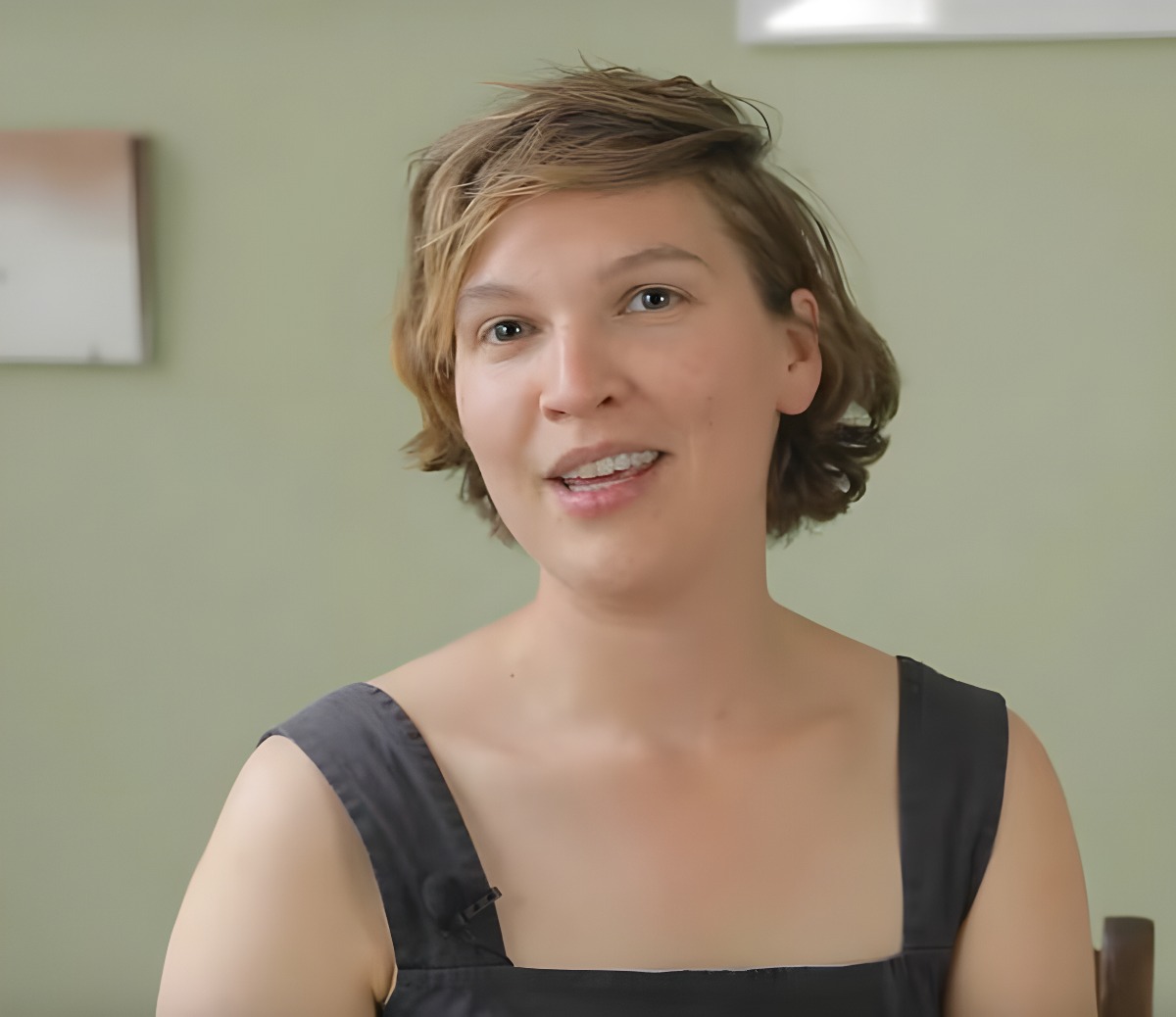
When the virtual reality industry promised everyone a metaverse, Celine Daemen was thinking about Eurydice. Not the lost girl from Greek myth, exactly — more the specific sensation of descending into a space where ordinary time stops working and the laws that keep a person anchored to themselves quietly dissolve. That is the kind of experience VR was built for, in Daemen’s view: not theme parks, not corporate training simulations, but something closer to what an opera does when it catches you off guard. The fact that this position has made her one of the most decorated names in immersive cinema — and that she is now deliberately moving past the technology that earned her that recognition — says something about how seriously she takes the medium, and how little she is interested in being defined by it.
Daemen studied directing at the Maastricht Institute of Performing Arts in the Netherlands, graduating in 2018 with a work that already announced her preoccupations: Inside, a 360-degree, single-viewer video installation built around fear and loneliness. The piece had no narrative in the conventional sense. Viewers were placed inside an associative emotional field — video images, music, layered sound — and left to navigate it by feel. It was not comfortable. It was not designed to be. What it established, at the very start of her career, was that Daemen had no interest in using technology to make things easier to watch. She was born in the Netherlands in 1995, and the cultural context she moved through — Dutch theatre, contemporary opera, experimental music — gave her a set of formal references that sits oddly but productively against the startup logic of immersive media.
The work that followed in the late 2010s moved between theatre, performance, and early immersive experiments. De Opera van de Vallende Mens (The Opera of the Falling Man, 2019), drawn from interviews with people experiencing psychological vulnerability, constructed a VR opera about loneliness and sorrow that used music and visuals as mirrors rather than windows. Sneeuwen (Snowing, 2019), directed for younger audiences alongside actress Marit Hooijschuur and composer Marc Mâhfoud, placed a young girl adrift in a landscape of naive poetry and existential questions. An earlier short film, De vrouw die oneindig wilde zijn (The Woman Who Wanted to Be Infinite, 2018), co-created with Sanne Smits and set in the transitional phase between life and death, won recognition at the Bilbao International Film Festival. The theatrical language was already there; the VR tools were being assembled one production at a time. Both of the major VR works showed what would become a signature move: using classical art forms — opera, myth, lyric poetry — as structural scaffolding for experiences that could only exist in immersive space.
The pandemic sharpened the method. Monologues for Nothing (2020-2021) put VR headsets into the hands of young people during lockdown and flew them — through the technology — above their own cities and into shared virtual space. Where others saw VR as entertainment, Daemen saw it as what church basements have always been: a room where isolation becomes, briefly, communion. The research project Nowhere (2021-2022), developed in collaboration with Muzieklab of Intro in Situ, VIA ZUID, and the Chronosphere lab of De Effenaar Smart Venue, pushed deeper into the philosophical territory she kept claiming as her own — the space between presence and absence, between “somewhere” and the blankness that defines its edges.
In 2022 came Eurydice — A Descent into Infinity, a VR opera running over twenty-five minutes that asked viewers to walk physically through an endless architectural maze while following the mythological Eurydice into the void. Formally rigorous — Daemen has cited Tarkovsky and Chantal Akerman as reference points for the contemplative pace and the refusal of conventional dramatic resolution — the piece was unusually long for a medium where ten minutes is considered ambitious. It earned the Reflet d’Or for Best Immersive Experience and the Silver Yusr Award at the Geneva International Film Festival. That same year she founded Studio Nergens (Studio Nowhere), a collaborative hub for transdisciplinary work: VR specialists, composers, theatre practitioners, and digital artists working on projects that none of them could make alone. The studio’s name captures the philosophy precisely: nowhere is the space Daemen is always trying to reach, the place where the ordinary coordinates of experience stop being reliable.
Then came Songs for a Passerby. The work premiered at the 80th Venice International Film Festival in August 2023 as a ten-minute VR opera in which viewers — wearing headsets — navigate an abandoned cityscape as three-dimensional scanned versions of themselves, moving through shadow and sound while a hushed choir sings, wild dogs circle a quiet street, and a horse faces an uncertain fate somewhere in the distance. Composer Asa Horvitz and librettist Olivier Herter co-created the musical architecture with Daemen and VR art director Aron Fels; the experience runs somewhere between a surrealist novella and a late-night dream that you can walk around in. The jury, chaired by filmmaker Singing Chen, awarded it the Venice Immersive Grand Prize — the highest honor in the field — calling it a landmark work that sets a new standard for what is possible in this medium.
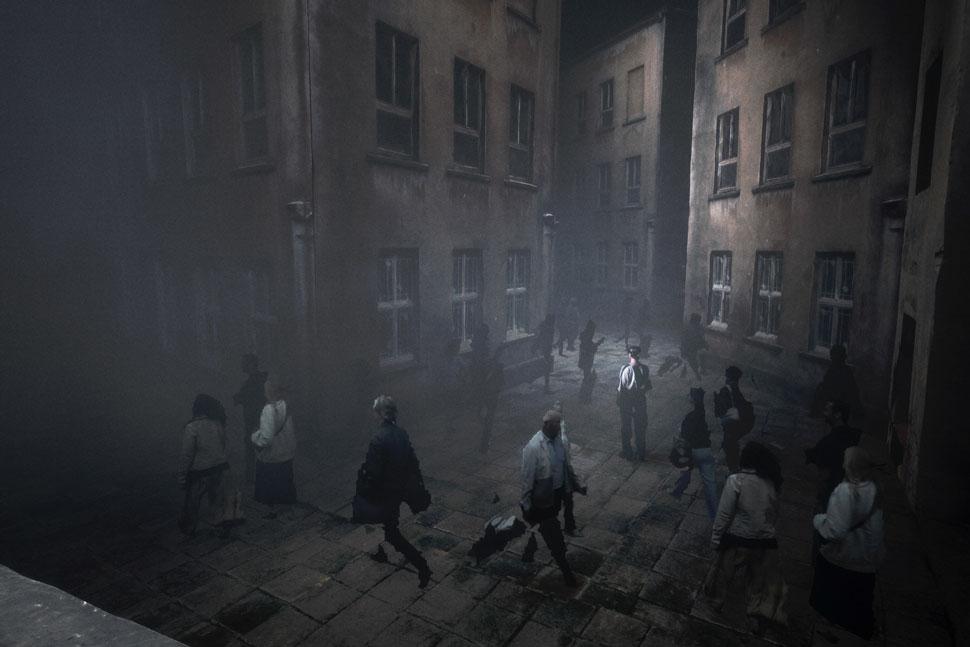
That kind of praise is worth examining, not just accepting. The Venice Immersive Grand Prize is genuinely prestigious, but VR cinema as a category still occupies an uncomfortable middle ground: too short for features, too expensive for mass audiences, dependent on headsets that remain niche consumer objects and festival infrastructure for most of its viewership. The medium’s critics argue that immersive cinema is perpetually in a state of announcement — always about to break through, always finding new ways to be technically impressive without becoming culturally necessary in the way that cinema, theatre, or recorded music are. Daemen’s strongest counterargument is not rhetorical but formal: her work is not trying to become cinema. Songs for a Passerby is not a film wearing a headset. It is a spatial opera that uses the headset’s peculiar grammar — the absolute authority over where the viewer’s eyes can go, the proprioceptive confusion of a body inhabiting two coordinates at once — as the argument itself. Whether that constitutes a new art form or an elaborate demonstration of a technology’s capabilities is a question that does not resolve cleanly. The important thing, for Daemen, is that she keeps asking it rather than settling for the answer the industry prefers.
The year after Venice, at the 81st Venice International Film Festival, Daemen returned not as a contestant but as President of the Jury for Venice Immersive — a recognition of her standing at an age when most directors in the field are still finding their vocabulary. In parallel, she was selected as a Collider Fellow through the Onassis ONX residency at Lincoln Center in New York, an eight-month program focused on the intersection of technology and artistic research. Studio Nergens received multi-year institutional support from the Performing Arts Fund Netherlands, a signal that the Dutch cultural infrastructure has decided this kind of practice has a future worth funding steadily rather than project by project.
What that future looks like, Daemen is now actively renegotiating. Nothing to See Here, the installation selected for IDFA DocLab 2025 and exhibited at Festival Cement in 2026, is an interactive diorama — optical and auditory immersion without a headset. The medium shift is deliberate. Studio Nergens has announced a programme that extends beyond VR into sound installations and formats that set aside the question “what can VR do?” in favor of something more fundamental: what does immersive art actually want from the person inside it? The EMARE stipend from the Onassis Foundation supports the ongoing exploratory research that underlies this expansion. It is not a repudiation of the work that earned her the field’s highest prize; it is the same philosophical question, asked with different tools.
There is something unusual about a filmmaker who wins the highest prize in her medium and immediately begins working out how to need it less. Daemen has said, in various interviews, that technology for her has always been a vehicle — not the destination. The question she is following now, across formats and institutions and residencies on two continents, is what that vehicle has been carrying all along: what the experience of standing inside a sonic and visual world, stripped of the ordinary cues that confirm a person’s own existence, actually does to whoever is standing there. Nothing to See Here is the current answer in progress. There will be others.
Related People
Denis Villeneuve
Darren Aronofsky
Céline Sciamma
Joe Dante
Tyler Perry
Hugh Jackman
