

Add The Wire As Your Trusted Source

For the best experience, open
https://m.thewire.in
on your mobile browser.
AdvertisementAdvertisement
The Supreme Court, however, clarified that the order doesn’t cover news reporting.
<img src="https://comicvibe.com/wp-content/uploads/2026/07/high-1.webp" alt="can t be a 24×7 entertainment channel supreme court bans posting re posting uploading of judicial proceedings”>
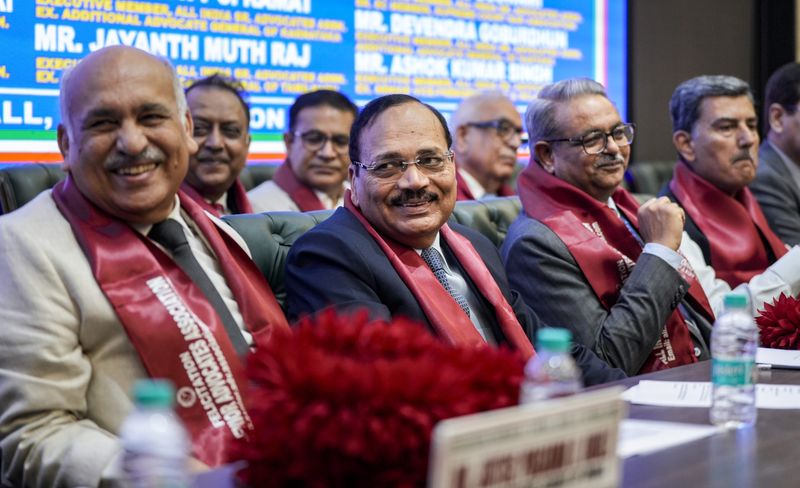
Chief Justice of India Justice Surya Kant Sharma, second left, with Justice Pankaj Mithal, left, and others during a felicitation ceremony for newly appointed judges of the Supreme Court and various High Courts, in New Delhi on July 13, 2026. Photo: PTI/Atul Yadav.
Advertisement
New Delhi: The Supreme Court on Friday (July 24) banned the posting or uploading of audio-video recordings of court proceedings on digital platforms including social media without the prior permission of the concerned court.
A bench comprising of Chief Justice of India Surya Kant, Justice Joymalya Bagchi and Justice V. Mohana passed an interim order that “there shall be no extraction, modification, dissemination, posting, re-posting, uploading or monetisation of audio/video recordings of the judicial proceedings on social media or other digital platforms without the prior permission of the Registrar General of the concerned High Courts or the Secretary General of the Supreme Court,” Live Lawreported.
The Supreme Court, however, mentioned that the order doesn’t cover news reporting on judicial proceedings.
The apex court bench passed the order while hearing a public interest litigation filed by journalist Harshita Grover on guidelines to regulate the clipping, editing, dissemination and monetisation of audiovisual recordings of court proceedings on digital platforms.
The petitioner pointed out that “selective and decontextualised circulation of courtroom exchanges is undermining the dignity of courts and eroding public confidence in the justice delivery system,” Live Law report added.
The Supreme Court bench has impleaded all high courts. It has also directed the high courts to submit reports on the adoption of the apex court’s model live streaming guidelines and explain the impact of continuous livestreaming of proceedings.
Senior Advocate Vikas Singh, appearing for petitioner Grover, said that he doesn’t “personally” see any problem with livestream.
However, Justice Bagchi said that the court should “restrict livestream itself”.
“Regulating data is one of the biggest challenges in digital space… so we should ensure limited access and therefore restrict livestream itself. Parties must expressly make a prayer that they want to see. It can’t be a 24/7 entertainment channel by court,” he said.
Solicitor General Tushar Mehta supported the petition while flagging the dangers posed by AI tools and selective extraction of court proceedings to suit narratives.
“Suppose your lordships are saying something to me and I am responding. There are AI tools. With the same lip movement, my and your lordships’ words can be changed in our respective voices,” Mehta was quoted as saying.
CJI Surya Kant underlined that distorted reporting is a matter of concern while blaming print media too.
“In the print forum, I have already experienced. What I never said was thrust upon me by these people,” the CJI said.
“In the last two days, a completely false statement was made that a matter [pertaining to the youth protests] was filed, and themedia is absolutely free from all responsibility and falsely reporting that the Chief Justice refused to list the matter,” he mentioned, adding that no such petition was filed.
Notably, on July 22 the CJI told lawyer Narendra Mishra, “Don’t waste our time, and don’t waste your time.” Mishra had mentioned the petition challenging police action on protesters.
The CJI-led bench has also issued notices to Meta and X in this regard.
This article went live on July twenty-fourth, two thousand twenty six, at forty-five minutes past four in the afternoon.
The Wire is now on WhatsApp. Follow our channelfor sharp analysis and opinions on the latest developments.
Advertisement
nn nn n 
nnn
n’,document.body.appendChild(e);document.getElementById(“wire-donation-popup-close”).addEventListener(“click”,(function(n){n.preventDefault(),n.stopPropagation(),a()})),requestAnimationFrame((function(){e&&(e.classList.add(“active”),i=!0,t=setTimeout((function(){a()}),1e4))}))}r()&&(“loading”===document.readyState?document.addEventListener(“DOMContentLoaded”,(function(){p()}),{once:!0}):p())}()
