


With more people reading manga and webtoons (aka vertical scroll comics) than ever before, Beat’s Bizarre Adventure gives three writers an opportunity each week to recommend some of their favorite books and series from Japan, Korea, and elsewhere. This week we have the Omegaverse, annoying aliens, and, of course, movies.
The Second Alpha
Writer & Artist: Yofune Shibue
Translator: Jacqueline Fung
Adaptation: Casper Kazor
Lettering: Toppy
Original Cover Design: Tomohiro Kusume (arcoinc)
Cover Design: Karis Page
Copy Editor: Leighanna DeRouen
Proofreader: Tori Bowler
Production Designer: Christina McKenzie
Editor: McKenzie Carnahan
Publisher: Seven Seas
Morita deposits all the luck he amassed throughout his life in one go. While he’s waiting to be picked up by his uncle, the director of the branch office where he’ll be working from this day on, someone frantically running slams into him. At that moment when all the sounds and scenery fades, Morita knows: this man is his fated mate.
In a world where alphas and omegas feel instant attraction towards each other through pheromones, fated mates share the most intense connection. That said, it’s a rare experience to actually meet your fated mate. One would expect Morita to rejoice upon finding his mate, especially when this man turns out to be Matsumoto, his new coworker. But the sight of the wedding ring on his finger hits Morita like a splash of cold water.
Did that ever stop a man in a Boys’ Love manga? Never.
Morita and Matsumoto being in such close proximity at work was bound to cause trouble, more so when Matsumoto is tasked to teach Morita the ropes. Morita, maybe due to his age or being an alpha, lays his feelings thick on Matsumoto right from the get-go. Matsumoto being secretive about his husband doesn’t help with the feelings running rampant inside him either. This whole volume is an emotional roller coaster, possibly because I’m usually averse to melodrama in my romance.
This volume gave me a strange sense of nostalgia. Strange because The Second Alpha was released in 2020, not an old work by any means. Yet Yofune Shibue’s character designs are interestingly reminiscent of Don’t Be Cruel’s Nekota Yonezou with their elongated bodies and hair styles. Add the fact that The Second Alpha stays very close to a narrative arc that I would call “classic“ in its melodramatic highs and lows, and this series feels older than it actually is. Of course, no ongoing BL is as unhinged as past works, but still.
I’d recommend The Second Alpha to readers who love Omegaverse (obviously), enjoy stories where emotions run high, and prefer relationships with an instant, strong connection rather than feelings developing over time. The first three pages are dedicated to the ins and outs of Omegaverse as an alternative universe setting, so even if this is your first time, these informative pages will help you through the basics like suppressants or population distribution. Recommended!
Urusei Yatsura
Writer/Artist: Rumiko Takahashi
Translation & Adaptation: Camellia Nieh
Letterer: Erika Terriquez
Design: Yukiko Whitley
Publisher: VIZ
It’s a familiar story. Boy meets girl. Girl rejects boy. Aliens invade Earth and choose this boy as Earth’s representative in a contest of skill. Boy decides to win the contest to prove himself to said girl. Then boy competes against an Alien Princess and accidentally wins her heart.
Thus starts Urusei Yatsura, the first great masterpiece of Rumiko Takahashi’s career. It is truly a startling thing watching the “Queen of Manga” hit the ground running on her first series. Anyone who reads the first chapter can tell that Takahashi would be a massive talent. A writer and artist who knew her characters inside and out. Someone with a natural talent for comedy, who could draw in an engaging and instantly recognizable style.
From the beginning, Takahashi seizes any and all possibilities to make a joke. Science fiction, folklore, and school life are all game for her sense of humor. There’s also a deep bench of great characters including Ataru’s schoolmates, Lum’s alien friends and family, and even spirits. Takahashi of course knows how to use them to put Ataru and Lum through the comedic ringer.
The will they/won’t they, push and pull romance that became a hallmark of Takahashi’s career all starts here, with the love triangle between Ataru, Lum, and Shinobu. Ataru only has eyes for Shinobu (and seemingly every other woman). Lum wants Ataru’s attention and will punish him for leering at other women.Shinobu just wants Ataru to stop being a perv.
Lum is the star, even from the beginning. It’s hard to imagine that she was originally supposed to only show up in that first chapter. She’s mischievous, mercurial, and magical. Possessive of Ataru but also a woman who truly loves him. Lum remains a distinct and dynamic personality in Takahashi’s bibliography with one of the all time great character designs and silhouettes. It’s hard to not fall in love with her or this series
The Credits Roll Into the Sea
Writer/Artist: John Tarachine
Translation: Jocelyne Allen
Lettering and Touchup: John Clark
Editor: Carl Gustav Horn
Publisher: Dark Horse
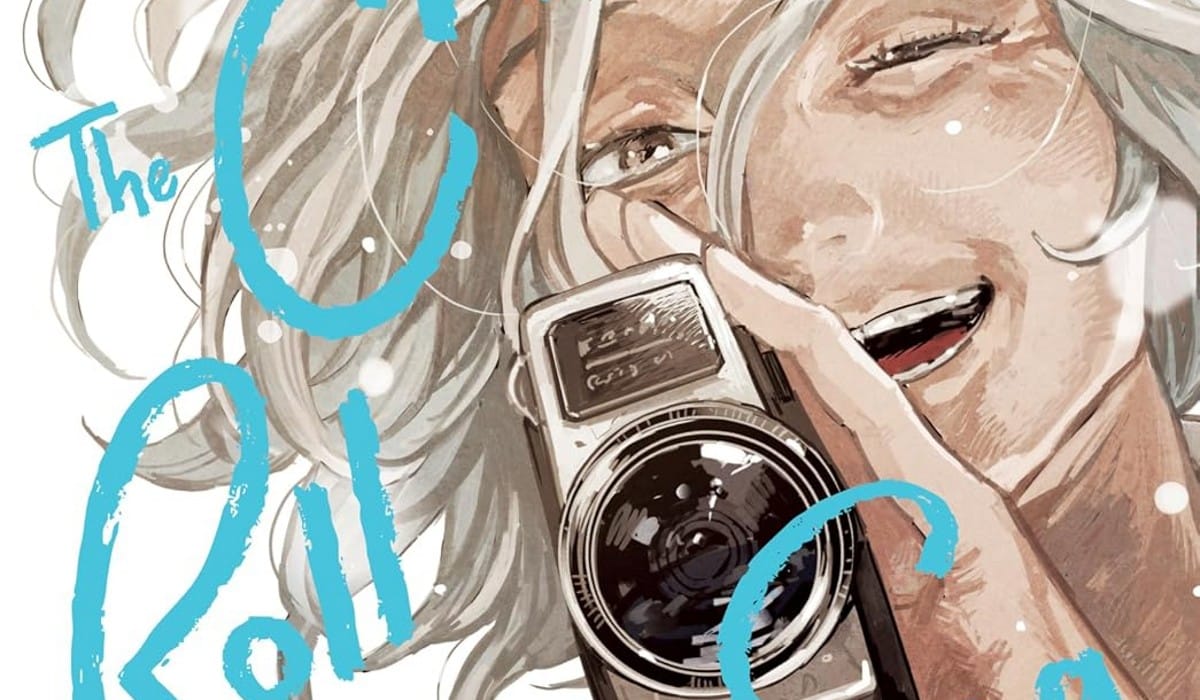
From BL Metamorphosis to And There Were No More Heroines, there’s been a slow-rolling wave of manga being published that star older women. The Credits Roll Into the Sea is no exception: its story follows Umiko Chino, a widower and cinephile who one day decides to pursue her dream of going to film school and making movies. Unlike most other manga heroines, Umiko isn’t in her teens, 20s or even 30s. She’s in her 60s, and from the moment she’s hit by arrhythmia in a busy movie theater filled with young people, artist John Tarachine doesn’t let you forget it.
Despite Umiko’s age, though, she still feels the pull of art-making, visualized as waves crashing under her feet. As Kai, a film student she meets at the theater, says: “However good the movie is, you keep watching the audience. You wonder how those people would look at a movie you made. And you feel this thrill run through you, right?” Whether or not Umiko can become a great filmmaker is never in doubt. What matters is that she begins walking down the path in front of her so that she can do what she wants to do.
As a 30-something year old human, the question of “when is it too late?” has been on my mind recently. Our culture glorifies exceptions, rewarding children or older folks who find commercial success as artists. Yet it routinely punishes and diminishes anybody else who desires to learn an artistic practice. Of what use is art compared to your job or your family? Couldn’t you just make a painting with generative AI instead of learning to paint one yourself?
Tarachine is aware of the costs of art-making. Umiko is able to go to film school because of the money her dead husband left her in his will. Kai defies his dad to become a film major, but his best friend in school has a sick father to take care of. Yet Tarachine insists on the importance of following your dreams, anyway. “The type of ship might not be the same depending on your age and circumstances,” Umiko says. “But regardless, anyone can set sail.”
The fantasy aspect of The Credits Roll Into the Sea is that, as far as we know, Umiko Chino could be an amazing filmmaker. Your art doesn’t have to be great! Making “bad” art is our right as human beings. Still, Tarachine nails the feeling of the art-making impulse crawling under your skin, isolating you from your peers, demanding to be let out. I’m excited to see this series move beyond dreams to the reality of film creation
Follow Beat’s Bizarre Adventure to get weekly manga and webtoon recommendations!

