

Art Spiegelman: ‘The US needs a counter-revolution’
More than four decades after his Holocaust story Maus transformed the graphic novel genre, Art Spiegelman discusses Trump, the shadow of 9/11 and the rise of fascism in America
When the cartoonist Art Spiegelman began dating his future wife, Françoise Mouly, in the mid 70s, she would tell him not to worry about walking her home, because even the New York muggers didn’t bother venturing to where she lived in Soho. He moved in with her quite suddenly not long after, when his apartment in Greenwich Village burned down. His landlord, who lived on the ground floor, was a hoarder – once, when he came to collect Spiegelman’s rent, a cockroach crawled up from under his shirt collar – and eventually his accumulated junk caught alight.
This feels like a quintessential New York story, but then much of Spiegelman’s life does, or at least fits with the kind of stories we like to tell ourselves about the city. The Soho apartment Spiegelman and Mouly have lived in for five decades is worth millions now and is surrounded by high-end designers; his studio, down the road, is above a branch of Tiffany’s. “It’s just kind of an embarrassment, I mean Tiffany’s is not my class,” says Spiegelman, who refers to these flash new arrivals, dismissively, as “very fancy airport mall stores”.
The couple used to print their own “oddball” comics from a printing press that Mouly, who had dropped out of architecture school in France, installed in their house. Today, they are a New York art establishment power couple. Mouly is the art editor of the New Yorker, having been recruited by Tina Brown in the 90s, when she was looking to make the highbrow magazine “hot”. Spiegelman, who in 1992 became the first cartoonist to win a Pulitzer prize for Maus, a graphic novel about his father’s memories of the Holocaust, has done more than anyone to establish comics as a serious art form, capable of tackling difficult political and personal subjects. The couple’s trajectory had “its own weird logic, although it wouldn’t be anyone else’s. It’s not a ‘recipe for success’,” Spiegelman jokes. “We were wilfully just doing what we wanted to do.”
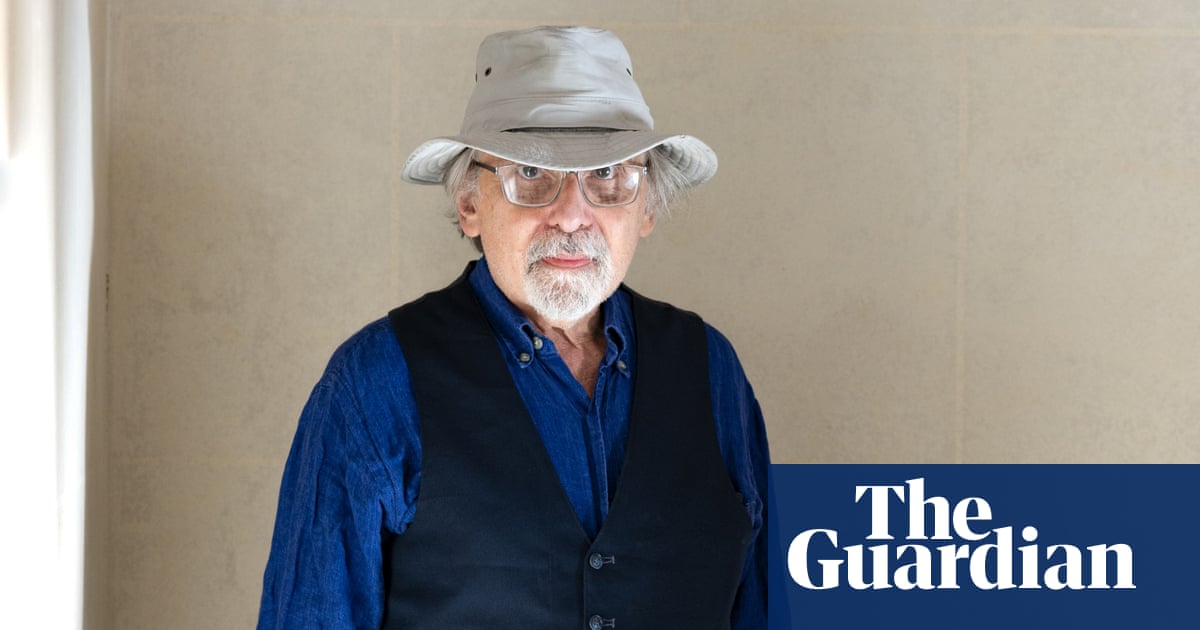
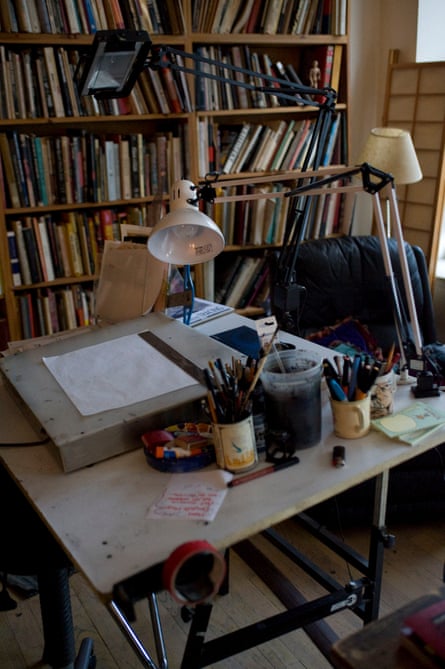
He is 78 years old, slight and scruffy-looking, with a grizzled goatee and wispy grey hair, and he can still talk faster than most people can think. He offers me a coffee when I arrive at his home on a sweltering June day, but then keeps getting distracted from making it by his own anecdotes. He takes me on an impromptu tour, showing me the living room that held Mouly’s huge, 1,000lb Multilith printing press, until they had a toddler and it became too dangerous to keep. There is a mural painted by the cartoonist Gary Panter on the living room wall, and another just above their bed, painted to replace a set of bookshelves that collapsed on to the couple when they were asleep, breaking Mouly’s nose and prompting a big book clear out. “Is this book worth dying for?” Spiegelman says they asked of themselves, a more hardcore alternative to Swedish death cleaning, but even so there are full bookshelves in every room, and pieces of art and curios everywhere.
As a young man, Spiegelman earned a living designing collectible parody cards for Topps bubblegum, while cutting his teeth in San Francisco’s underground comics scene. After moving to New York, he started Raw magazine with Mouly. Raw published experimental work by comic artists from all over the world, and “it created its own Potemkin village of, yes, all these artists have one thing in common, which is they ain’t like each other,” he recalls. Maus was initially serialised as an insert in Raw – new issues came out sporadically, whenever Spiegelman had finished a chapter.
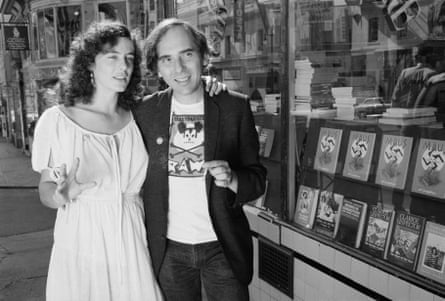
He struggled to find a publisher for the book, because no one knew what to do with such an unusual work, an autobiographical history of the Holocaust that depicted Jews as mice and Nazis as cats. The responses were “pretty universal that whatever this is, is interesting. But it’s not publishable,” he says. Eventually, Pantheon published it, and Maus became a bestseller. Spiegelman has said he struggled to emerge from the shadow of his best-known creation, but when I ask if he still feels ambivalent about Maus’s success he replies, “I’m ambivalent about absolutely everything … I knew that I wanted it to be read, but it just didn’t occur to me that it would become a phenomenon, it was such an outlier.”
Maus took 13 years to make. For Spiegelman, making comics is often a tortuous process. If many artists complain of creative blocks, then what he experiences is more like a “blockade: there’s no way in or out. I think it’s like a version of impostor syndrome,” he says. “I know I’ve done comics before and they work, but I have no idea how to do it when I start a new one … I have to rethink what it might be to make a comic.” He feels acutely aware of his limitations – “I always understood that I wasn’t the best drawer on the block” – and every square must be painstakingly reworked, dozens of times. “It seems like I don’t function well. I mean, I don’t go: ‘OK, I finished this graphic novel, I’ll do another one – by God!’ – and then off to the races. Something has to make me go through what is such a difficult process for me,” he says.
Spiegelman had virtually stopped making comics and was focused on writing essays and designing covers for the New Yorker when the 9/11 attacks took place. The ground shook, and from his Soho apartment he could see the north tower burning. His first thought was to run to collect his daughter Nadja, who had just started high school at the foot of the towers. Then, fearing that the United Nations might be targeted next, they rushed uptown to collect his son Dash, who was at the UN School. This was the kind of catastrophe his parents, both Auschwitz survivors, had always warned him about, when world history and personal history collide. “I’m not going to get past this unless I start drawing about it,” he realised afterwards, and he vowed to make comics again.
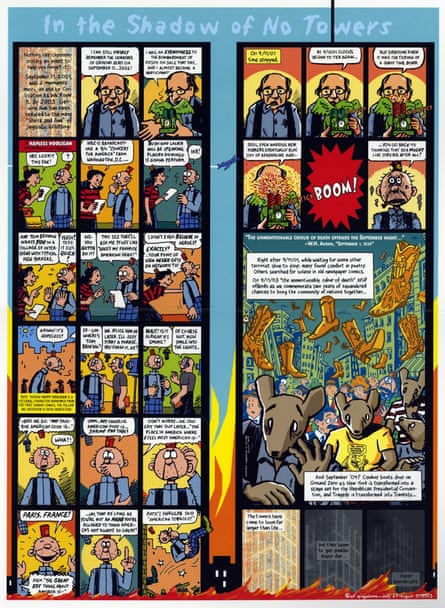
He produced a series about 9/11 for the German magazine Die Zeit, which was later run by other European magazines and American Jewish weekly the Forward. On one page he describes himself as “equally terrorised by al-Qaida and by my own government”. He felt that other American publications were too quiescent in the aftermath of the attacks, and not yet receptive to his fear that the US government was using 9/11 as cover for a massive crackdown on civil liberties and to launch xenophobic wars. “Sigh! It’s hard to be an artist who is consistently Seconds Ahead of His Time,” he writes in the foreword to In the Shadow of No Towers, a book that compiled these comics and is being reissued to mark the 25th anniversary of 9/11. (Although, he says, it may come out late – a shipment has been held up in the strait of Hormuz.)
Why was he so alert to the implications for US civil liberties? “Well, my tendency is not to trust the government, so that came easily,” he says. “But it also seems so obvious, like all of a sudden there were police cars and military trucks on Canal Street. We were being told where we could walk, where we couldn’t walk, what we could say, what we couldn’t say. It’s visceral. It’s not like: ‘OK, I’ve read this book on propaganda and here’s how it works.’” Spiegelman notes the direct link between the post-9/11 security crackdowns and some of the excesses of the Trump administration: Immigration and Customs Enforcement, Ice, was created in the aftermath of the terror attacks.
A theme running through Spiegelman’s work is trauma, and its long and toxic aftermath. His parents were Polish Jews who survived the camps but lost most of their family, including their first-born son, Richieu, during the Holocaust. They resettled in Rego Park, Queens, where Spiegelman was born in 1948. In 1968, his mother, Anja, killed herself. Spiegelman was living with his parents at the time, having been hospitalised after suffering a psychotic episode while studying at Harpur College, New York, where he had been experimenting with every drug he could find. Maus is partly about Spiegelman’s fraught relationship with his father Vladek, who is depicted as mean, difficult and racist – a man who complicates the comforting lie we tell ourselves that suffering must make a person kinder or nobler. In one comic, published in Breakdowns (2008), Spiegelman hands a treasure chest to his young son, a family heirloom that was given to him by his own father. Excited, Dash opens the box, only to reveal a terrifying monster. “It’s magical! It makes you feel so worthless you don’t believe you even have the right to breathe,” Spiegelman tells his son, a cigarette hanging from his mouth.
When it comes to 9/11, however, Spiegelman’s perspective has shifted. He no longer views the day as an “end of the world moment”. “It was a big deal. But it was a small big deal compared to the big deals that are going on now,” he tells me. “I’d much rather be in New York than in Iran, for example.”
Around 50 minutes after Spiegelman fires up his Nespresso machine, he finishes making two coffees, and we carry them up to his sunny roof terrace, which as he promised has beautiful views of downtown Manhattan. Spiegelman muses that the US’s volatile politics might reflect humankind’s natural tendency to self-destruction. “I guess, after a while, you get restless, so if you get too comfortable you create problems for yourself, even in more mundane, small-time life, never mind as a nation. At this point, we just had the bad luck of having a megalomaniac walking on to the scene,” he says, of the Trump presidency. American politics is, after all, “entertaining if you don’t give a shit, if you’re nihilistic”.
Spiegelman’s mood is sombre as he discusses how Trump has “very effectively dismantled” the country’s democratic ideals: “Whatever the ideals were, we never lived up to them, but at least we had them. Now it’s all so cynical and sordid and stupid.” The president “is cutting off civil liberties and using his powers to squelch dissent and enrich himself in such thoroughly illegal ways, it’s kind of mindblowing”, Spiegelman says, and he finds himself watching in alarm as the “plutocrat in chief” and his “few dozen toadies” get ever richer while ordinary Americans struggle and suffer a “new indignity every day”. He has no hesitation in describing the Trump administration as fascist. “It’s fascism,” he says. “It’s not nazism, per se, but it has a template that it’s following. And it does have to do with othering, which is the basis of what Maus is about, it’s: ‘OK, you guys are mice, we’re cats.’” Maus is among the many books to be banned by various Republican school boards in recent years, but Spiegelman says he has a “predilection” for producing the kind of art people will seek to ban. Sales of Maus spiked in response to the bans.
“I tend to be pessimistic, but this is worse than most things I know,” he says of American politics. “I just don’t see how we get out of this.” The media are struggling with how to convey the stakes in this post-truth era, he explains, the courts are packed with Trump appointees, democratic norms have been destroyed, and there is no effective opposition. The Republicans are “at this point the equivalent of made men in the mafia,” Spiegelman says, “they’ve committed a murder, they’re complicit in something and they have to keep moving as a complicit unit, so it’s very hard to get someone to blow the whistle and say ‘This is crazy.’” The US needs a “counter-revolution”, Spiegelman says. “But I don’t know where to look for it because the Democrats are so timid.”
An alert sounds on Spiegelman’s phone, and for a moment he is flustered, trying to figure out why on Earth this thing is producing noise. “In some ways I’m slowing down, in other ways I’m still doing what interests me, and sometimes I’m capable of being interested in something more challenging, sometimes less,” he says. He plans, after this interview, to work on a lithograph, his friend having dropped off some stone for him to carve. He hopes to keep living and working in Soho for the rest of his life – but his apartment is a walk-up, and he concedes fate might have other ideas for him. “Anyone can be a genius at 25; at 50 it takes some doing,” Spiegelman writes in one comic. What about at 78, I ask? “I feel like an idiot at this point!” he jokes. “I can’t think the way I thought when I was 25,” he says. He has become more forgetful, for instance, but takes consolation in knowing he can still produce challenging, original art. “There’s still enough wiring that makes it somewhat unorthodox, but I don’t think I’m as far off the grid as I had been.”
