

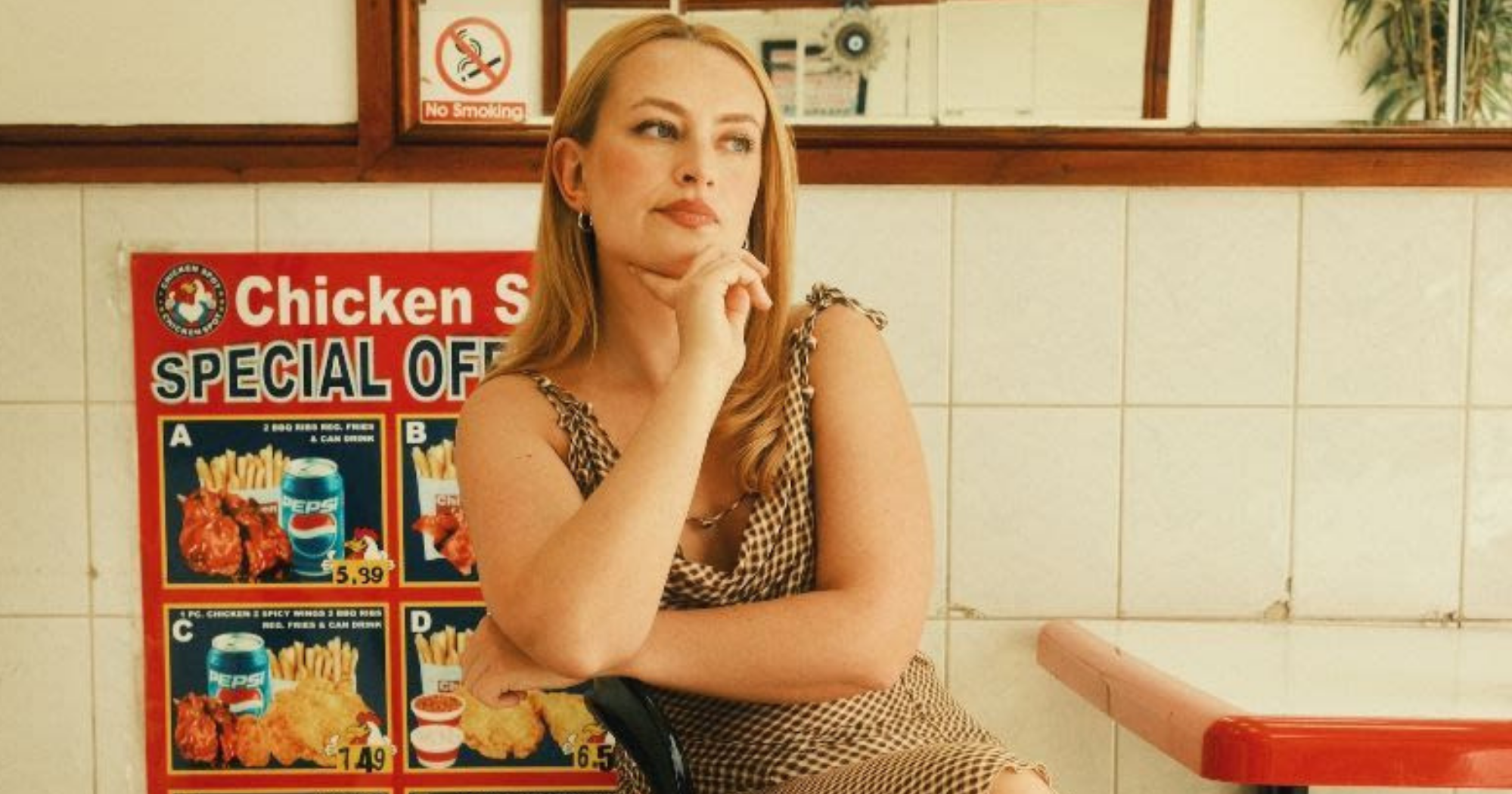
Image Courtesy Of Jono White
After 12 years and thousands of chicken nuggets, Amelia Dimoldenberg has called time on her successful YouTube series, Chicken Shop Date.
With 3.4 million subscribers, over 1 billion views on YouTube, and 2.1 million followers on Instagram, what began as a column for Amelia’s local youth club magazine grew into one of the most popular celebrity interview formats on the press circuit.
The self-created series turned Amelia’s charming yet awkward British flirting into a compelling viral sensation and put her show at the top of every celebrity publicist’s press list.
In 2025, the host was named in Time Magazine’sTIME100 Creators listas one of the most influential digital content creators and has hosted the Academy Awards red carpet for the past three years.
On paper, the 32-year-old was at the top of her game. That’s why an Instagram post announcing the end of Chicken Shop Date came as such a surprise.
On Thursday, 3 September, Amelia wrote, “I never thought I’d stop Chicken Shop Date, I thought maybe it would be a part of me forever, and in some way it always will, but I feel like it’s now time to move on from this adventure and onto a new one.”
Describing the show as her “very own romcom”, Amelia announced a slate of final dates before the beloved chicken shop closes forever.
While the news is sad (and we’ll all miss witnessing celebrities blush over Amelia’s signature deadpan charm), knowing when to say goodbye to a creative project is both a brave and strategic business move.
The millennial dream
As children, millennials were told they could be whatever they wanted to be. If we worked hard, applied ourselves and stayed on track, all of our dreams would come true. With elder millennials graduating into the 2008 Global Financial Crisis and zillenials graduating into a pandemic, it was also instilled in us that once you’re in the room — once you’ve “made it” — don’t ever let it go.
Exemplified by Emily Charlton’s “A million girls would kill for this job” line in Devil Wears Prada, if you were lucky enough to achieve your career dream in a climate of redundancies, cost of living pressures and stagnant wages, you should be grateful and grip onto it tightly.
But what happens when you’re ready for a new dream? For Amelia, the answer seems to be: you go for it. Through her own production company, Dimz Inc., Amelia has multiple creative opportunities in the works, including writing her own romcom film and a series in production for the BBC.
Chicken Shop Date isn’t the first example we’ve seen of a wildly successful creative project calling time while at its peak. In 2020, British pop culture podcast The High Low, hosted by writers Dolly Alderton and Pandora Sykes, called it quits after four years spent dominating the charts. The pair told Grazia UK that when they began the podcast they decided they’d be “all in” for four years.
“We wanted to go out on a high, and we feel like we’ve really honoured the show by ending it now,” they told journalist Anna Silverman. Since ending The High Low, Dolly has gone on to publish her novel Good Material in 2023, write a Pride and Prejudice Netflix adaptation, and turn her memoir, Everything I Know About Love, into a TV series.
Pandora has created the UK’s number one culture newsletter, Books+Bits,and hosted multiple podcasts, including The Missing and Unreal: A Critical History of Reality TV for the BBC.
While the pair have gone on to work on other exciting things, there’s no denying that walking away from a creative and commercially successful project is daunting.
In a capitalist society, where success is measured by wealth and, increasingly, social media views, “quitting” a successful venture rejects the sunk-cost fallacy. But perhaps our idea of success should be ever-changing. We’re constantly told to dream bigger, but maybe the bravest thing you can do is admit that you’ve already achieved the dream — and start a new one.
I’m reminded of this as I sit in my therapist’s office explaining that the people I once aspired to work with are now my creative peers. How it’s so normal. The therapist suggests that, despite having achieved exactly what 24-year-old me wanted, maybe six years on I’m a bit… bored. Maybe, for this chapter, I’ve “made it”. She asks what a new dream could look like. It feels like a revolutionary statement, but she’s right. What was The Dream in your early 20s doesn’t have to be the same at 30.
Our culture teaches us to always strive for more: more money, more followers, more opportunities. But as Amelia has shown, it can be even more satisfying to close a chapter on your own terms rather than continuing on until the format stales or, as the internet is wont to do, Amelia gets “woman’d” (a phrase coined by culture writer Rayne Fisher-Quann for the cultural phenomenon where the internet stops liking a woman at the same time).
In a recent interview with Rolling Stone, Canadian musician Sarah McLachlan explained why she ended her music festival Lilith Fair after just three years. Between directing a festival, touring, songwriting, and recording albums, similar to Amelia, Sarah made a call on when to step back from a successful project.
“I like ending things on a high note,” Sarah shared. “It was also a selfishly motivated thing too, of ‘I’m sort of losing myself’ in this too much.”
It’s a sentiment Amelia seems to understand. With a movie and TV series already in the works, we know that the Chicken Shop Date host will go on to achieve other markers of traditional Hollywood success. But there’s no denying that it’s refreshing to see a woman create her own bootstrapped series, turn it into a cultural phenomenon, and then decide that this particular dream has run its course — even while it’s still at the top.
Want more? Sign up for our newsletter to get the best of Refinery29 Australia straight to your inbox.

2 Comments
Pingback: Supergirl #17 Preview: Kryptonian Family Feud Gets Timey - Comic Vibe
Pingback: Next Week on XBOX: New Games for September 7 to 11 - Comic Vibe