

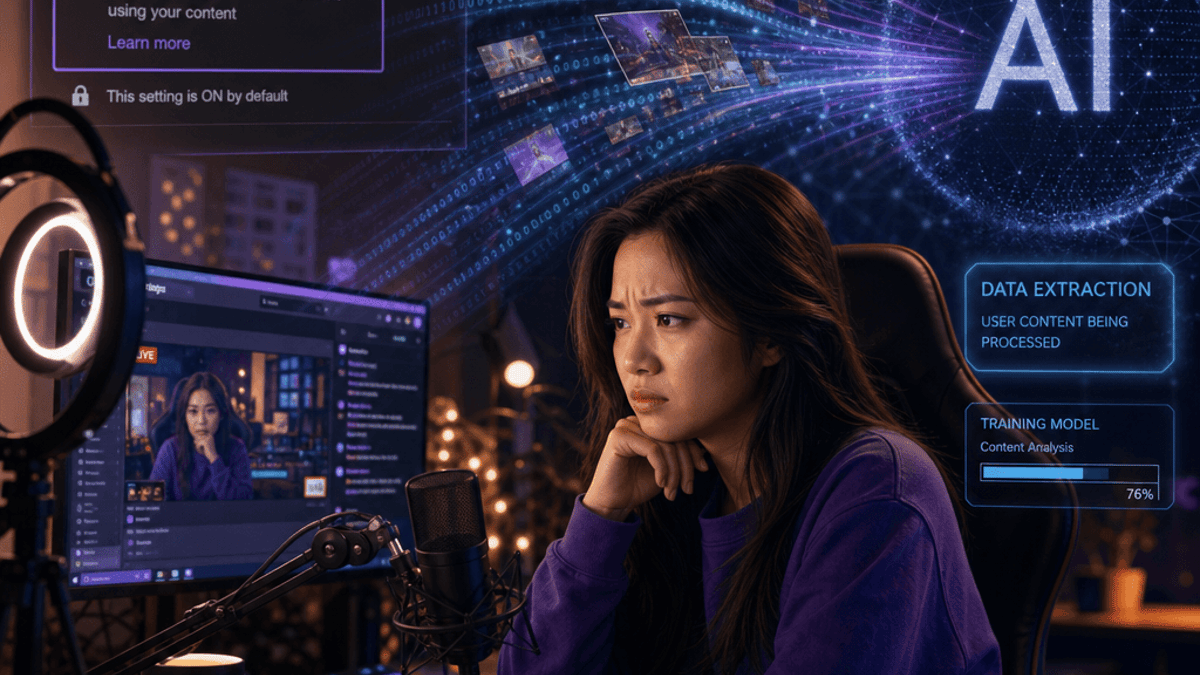
Amazon just dropped a bombshell on its creator community. The tech giant confirmed it will train AI models on Twitch streamers‘ content by default, forcing creators to manually opt out if they object. In a remarkably candid moment during a livestream addressing user backlash, Twitch Chief Product Officer Mike Minton admitted the quiet part out loud: “If this was opt-in, nobody would opt in. That’s honestly the answer.” The admission has ignited a firestorm across the creator economy, raising questions about consent, compensation, and whether platforms can unilaterally claim rights to user-generated content for AI development.
Amazon just made a unilateral decision that could reshape how millions of creators think about streaming. The company confirmed it will use Twitch content—everything from gameplay commentary to creative streams—to train AI models, and it’s making that the default setting. Creators who object have to find the opt-out toggle themselves.
The announcement came during what was supposed to be a damage control livestream. Instead, Twitch CPO Mike Minton delivered one of the most brutally honest admissions in recent tech platform history. When pressed on why Amazon chose opt-out over opt-in, Minton didn’t hide behind corporate speak. “If this was opt-in, nobody would opt in,” he told viewers “That’s honestly the answer.”
That candor is rare, but it reveals the calculation behind the policy. Amazon knows creators would resist if given a real choice, so it’s removing that choice by burying the option in settings. The approach mirrors tactics used by Meta and Google, both of which have faced criticism for training AI on user content without explicit consent.
The timing couldn’t be more charged. As the AI arms race intensifies, tech giants are desperate for training data—and platforms like Twitch represent goldmines of natural language, visual content, and real-time interaction. Amazon Web Services, the company’s cloud division, is already locked in fierce competition with Microsoft Azure and Google Cloud for AI infrastructure dominance. Access to proprietary Twitch data gives Amazon a potential edge in developing conversational AI, gaming assistants, or content moderation tools.
But there’s a problem: creators aren’t Amazon employees. They’re independent contractors who’ve built audiences and brands on the platform, often investing thousands of dollars in equipment, software, and time. Many see this move as Amazon claiming ownership over creative output it didn’t produce. Unlike traditional media companies that license content or pay royalties, Twitch is essentially declaring eminent domain over streams.
The backlash was immediate. Within hours of Minton’s livestream, hashtags like #TwitchAIBoycott and #OptOutTwitch started trending. Popular streamers publicly announced they’d switch to rivals like YouTube Gaming or kick.com, while others shared step-by-step guides on finding the hidden opt-out settings. The creator revolt highlights a tension that’s been building across social platforms: who owns the value created when users generate content on someone else’s infrastructure?
Amazon isn’t the first to face this reckoning. Meta drew fierce criticism for training AI on Instagram and Facebook posts without clear notification, leading to regulatory scrutiny in Europe. OpenAI has faced lawsuits from authors and publishers over alleged copyright violations in training data for ChatGPT. But Twitch presents a unique case because streams are live, unscripted performances—closer to standup comedy or improv theater than static text posts.
From Amazon’s perspective, the policy likely hinges on Twitch’s terms of service, which grant the platform broad rights to use uploaded content. But ToS agreements written years ago didn’t anticipate AI training becoming a multi-billion-dollar industry. Creators argue they agreed to let Twitch host and distribute their streams, not feed them into machine learning models that could eventually replace human streamers.
The controversy also raises questions about competitive dynamics. If Amazon trains AI on Twitch’s massive archive of gaming content, could it develop automated co-streaming tools or AI-generated highlight reels that undercut professional editors? Could it build virtual streamers that mimic popular personalities without compensation? Minton didn’t address these scenarios during the livestream, focusing instead on defending the opt-out approach as necessary for “platform innovation.”
What happens next could set precedent across the creator economy. If Twitch gets away with opt-out AI training, expect YouTube, TikTok, and other platforms to follow suit. If creators successfully organize and force a policy reversal, it could embolden similar movements on other platforms. Several digital rights organizations have already called for regulatory intervention, arguing that opt-out systems exploit power imbalances between platforms and users.
For now, Amazon is betting that creator dependence on Twitch’s audience and monetization tools will outweigh objections to AI training. That’s a calculated risk—one that assumes streamers have nowhere else to go. But the internet has a history of platform migrations when users feel disrespected. Ask MySpace or Vine how that assumption worked out.
Amazon’s decision to default Twitch creators into AI training reveals the uncomfortable truth about platform power in 2026. When a CPO openly admits they chose opt-out because opt-in wouldn’t work, it’s not transparency—it’s a confession that the policy exists despite knowing users would reject it. This isn’t just about Twitch or Amazon. It’s a test case for whether platforms can unilaterally claim creator content for AI development, or whether the backlash forces a reckoning over consent, compensation, and who actually owns the value of user-generated content. How creators respond over the next few weeks will ripple across every major platform grappling with the same question.
