

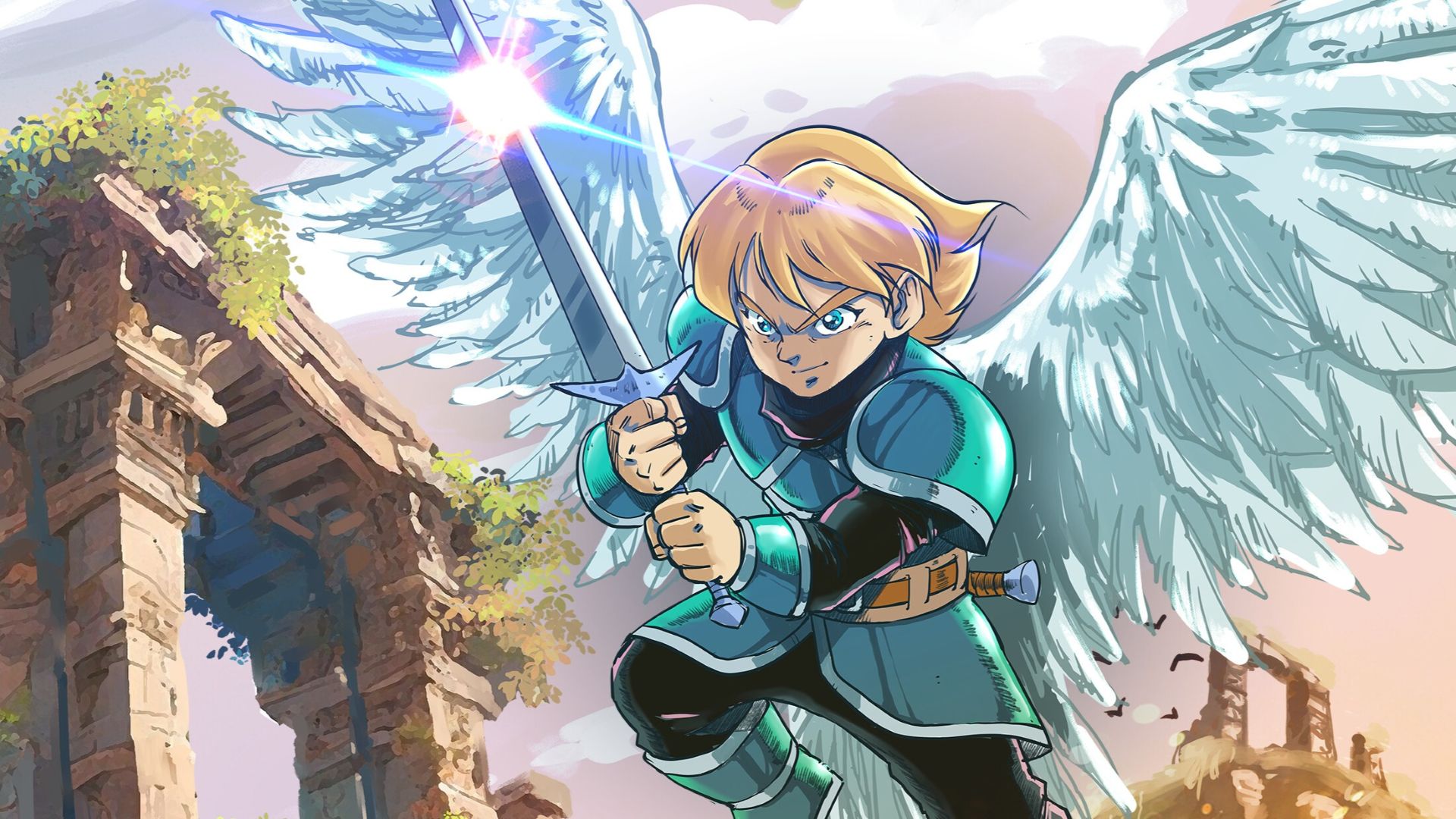
Following up on 2018’s Aggelos, Aggelos 2 is a metroidvania inspired by Wonder Boy that took some risks with a form-switching mechanic, two worlds that can be switched between, and a more complex map. The result is a much more ambitious game, for better or worse.
Visually, Aggelos 2 is appealing, with over a dozen biomes utilising a variety of colour palettes. In a sea of games trying to recreate that 1990s style, this is one of the stronger examples of that aesthetic done well. For such a short game at about 10-15 hours, there’s a surprising variety in enemy sprites. The backgrounds and foregrounds are simple, but they still effectively create inviting environments with a certain charm. The soundtrack is catchy with satisfying sound effects, especially after defeating enemies.
Aggelos was on the smaller side by metroidvania standards, to the extent that a map wasn’t even included. Aggelos 2 expands the scale significantly, but the larger world comes with some notable omissions and a lack of quality-of-life additions that could have helped with navigation. One of the most glaring issues is only being able to warp between a special type of save point, making for too many lengthy treks. Later on, this is remedied with the ability to warp between all save points, but it puts a damper on early game traversal. If Prince of Persia: The Lost Crown serves as the quintessential example of exploration in the genre, Aggelos 2 almost serves as the opposite. There are markers, but they blend in with the map too much and don’t give any useful information that aids in remembering why the spot was marked in the first place.
Another issue is that the map isn’t labeled or colour-coded by biome, which would have made progression more intuitive. The inability to zoom adds another unnecessary obstacle to advancing, especially for those with poor eyesight. This is unfortunate because, at its core, the level design is solid and there are enough movement upgrades that, though standard, are still rewarding and open up plenty of new routes; just be ready to zig-zag around and expect to run into plenty of dead ends in the process. Otherwise, each screen is fairly straightforward, with a few puzzles scattered throughout and relatively basic platforming with an occasional tough manoeuvre required.
Though there are no breakable walls to speak of, some objects remain hard to spot and, at times, require some ingenuity to reach. The best finds are the hearts that increase survivability, usually earned after a boss fight. The most common finds, though, are eggs scattered around, sometimes in plain sight and traded for rewards in town. Considering there are 100 to find, the rewards are few and far between and can be downright disappointing. There is a hard cap on currency, starting at just 100, and can be increased by 100 with each wallet upgrade, up to 3000. However, when the egg reward is just currency, it can feel like wasted potential if you’re already at the wallet cap. That said, it still has an occasional function to buy important sword, armour, ranged attack, and life upgrades, as well as magic and healing capacity.
The most interesting aspect of Aggelos 2 is the dual protagonist system to switch between Angel and Demon forms. Fundamentally, they operate very similarly; both can fly for short bursts and can slash with a sword, though Angel’s ranged shot covers a longer distance and feels like a more natural fit, even in the dark world. The hardest adjustment once obtaining the second form is inadvertently healing in the Demon form. For Angel, the A button heals, while for Demon it casts a speed-up spell. In the heat of the moment, it isn’t uncommon to accidentally cast speed up, which never really seems very useful, further highlighting Angel as the superior of the two.
Aggelos 2‘s challenge is moderate, with a slight difficulty spike when first entering the dark world. There are occasional screens overloaded with both flying monsters and stationary enemies with projectiles, and even hazards. Keeping up to date with upgrades, especially armour, eventually helps to largely mitigate these types of packed areas. Bosses, though impressive, are mostly easy to hybrid DPS from afar with ranged attacks, while throwing in a few timely dodges and heals. The hardest part of the game is, at times, simply finding your way forward. Clever use of these portals between the light and dark world is paramount to success, but they can also compound the confusion when trying to work out a possible path.
Players should be aware that there’s a bad ending, and to obtain the good one, several other tasks must be completed, mostly collecting dark shards. While the most important plot points are marked by an NPC in town, the very last and most important one to track down is not, so it feels like a wild goose chase to obtain it.
Performance-wise, there are a few graphical glitches where enemies will jump into walls or ceilings and remain stuck, and on one occasion, the main character was knocked back into a wall by an enemy hit. One other room appeared graphically corrupt; otherwise everything runs smoothly. Control-wise, by the end it can be a little confusing with all of the abilities and expanded move set. The most vexing is triggering a spell attack when the aim is to simply run and use a normal attack.
Cubed3 Rating
Aggelos 2 builds on its predecessor with a larger map, dual forms, and two interconnected worlds. The appealing retro visuals and rewarding movement upgrades make for an enjoyable adventure, but an unintuitive map and missing quality-of-life features make navigation more frustrating than it should be.
About this Score
Add a Comment
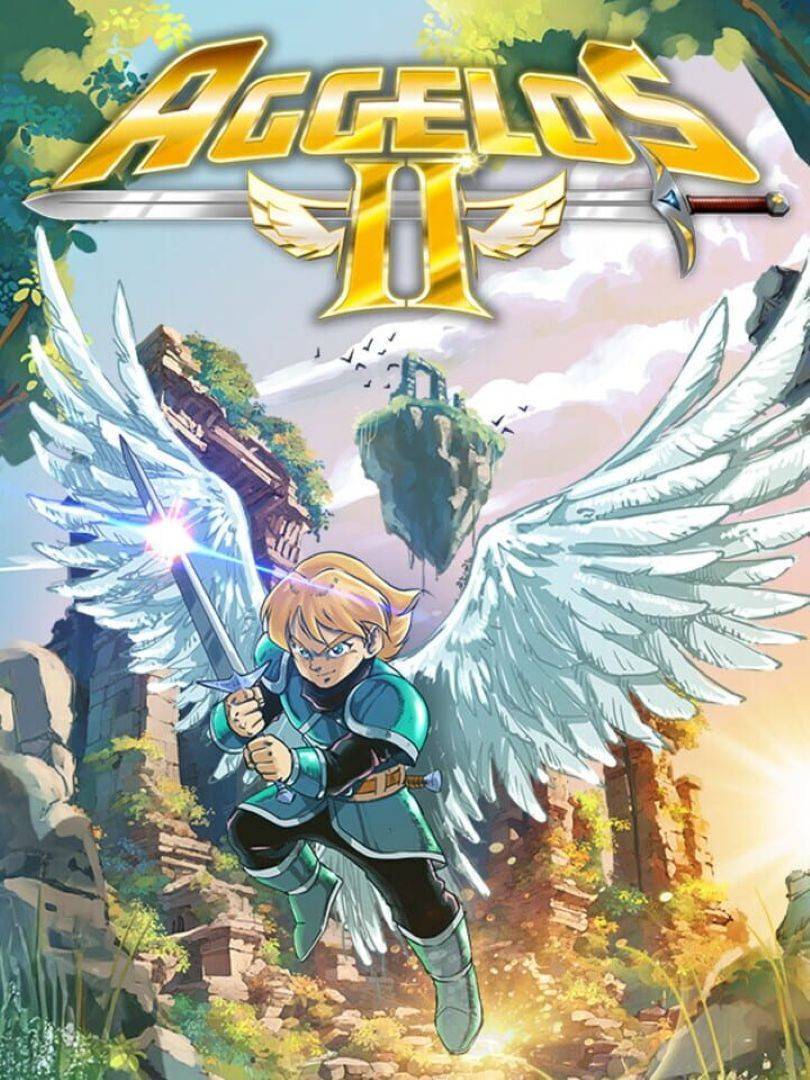
Aggelos 2
Genres: 2D platformer, Metroidvania

Cubed3 is reader-supported. If you buy through banners on our site, we may earn a commission. This does not influence our opinions/reviews.
Comments


Cubed3 is reader-supported. If you buy through banners on our site, we may earn a commission. This does not influence our opinions/reviews.

1 Comment
Pingback: I Wanted More From Netflix’s GTA VI Reveal - Comic Vibe