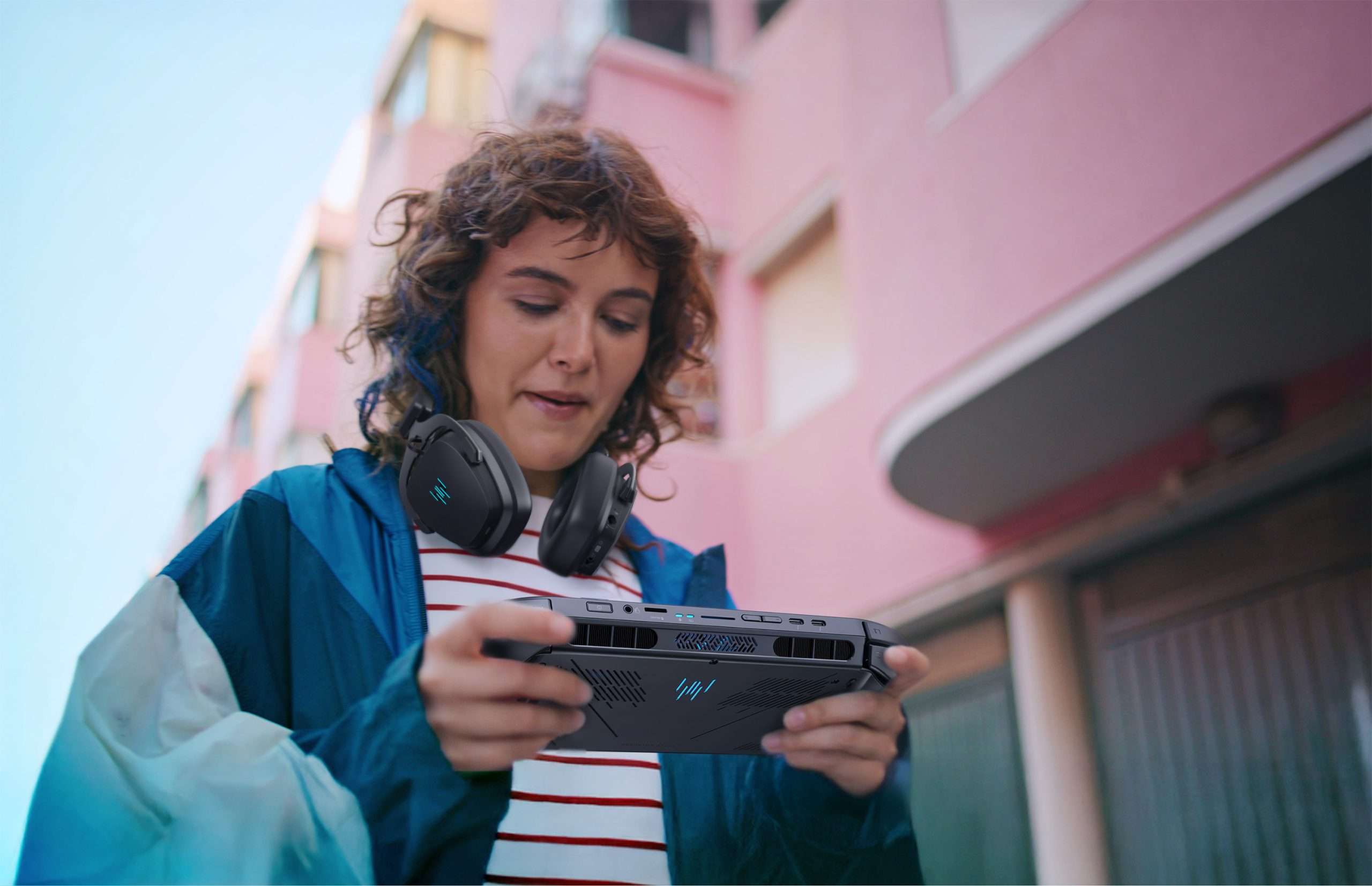
Plenty of options exist these days if you want to take your PC games off the desk, and Acer is throwing its hat in the ring with its first Predator-branded gaming handheld, the Acer Predator Atlas 8. Running Windows 11 and powered by Intel’s new Arc G-Series hardware, it’s essentially a portable gaming PC with a controller wrapped around it.
Opening the packaging revealed two separate boxes: one with the Acer Predator Atlas 8 and its charger, and the other with a protective carry case. Acer also supplied a 9H matte tempered glass screen protector with our review unit. Given that you’re likely to be throwing it into a backpack and taking it with you, I was pleased to see Acer included a couple of things to help keep it protected.
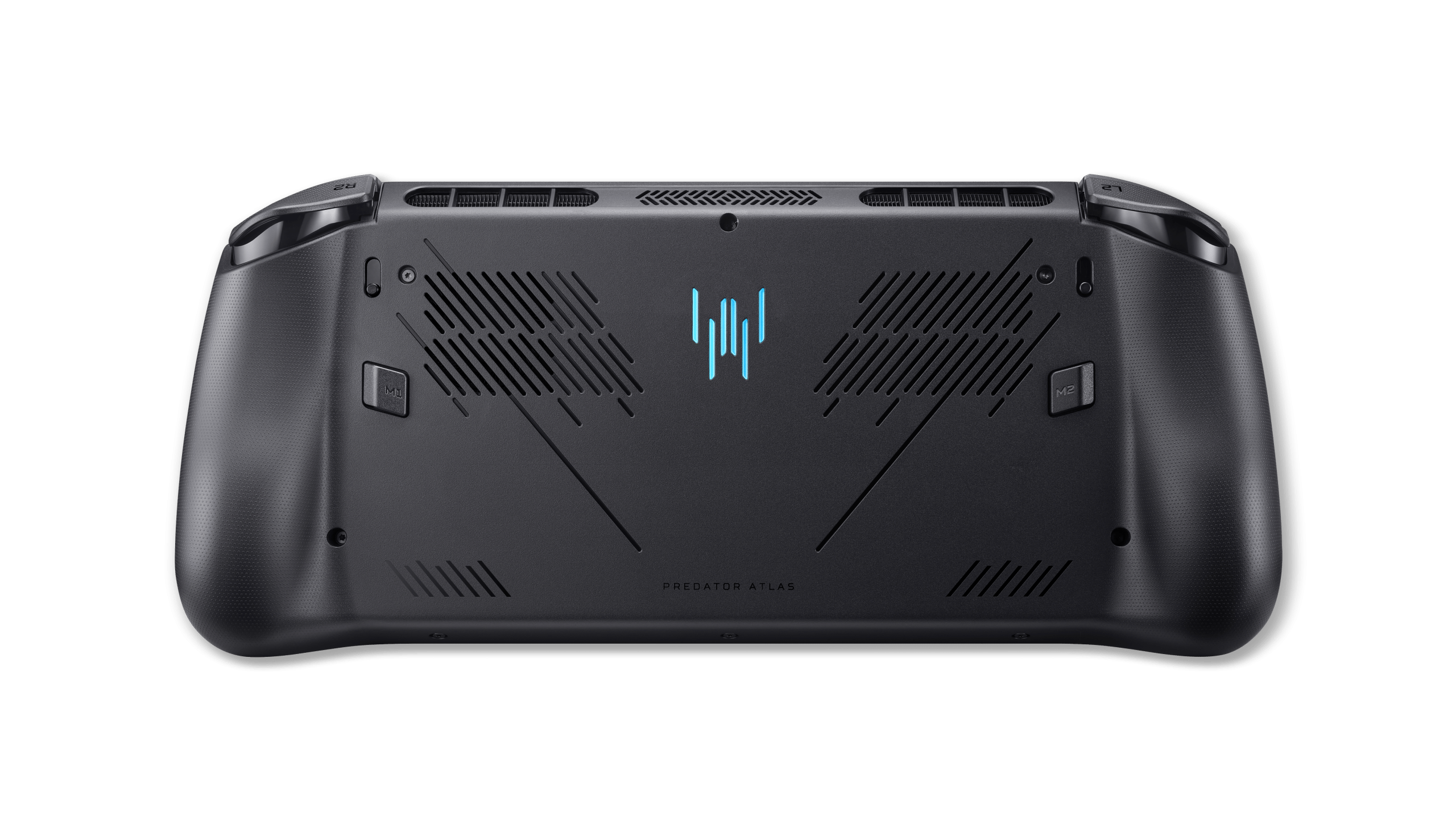
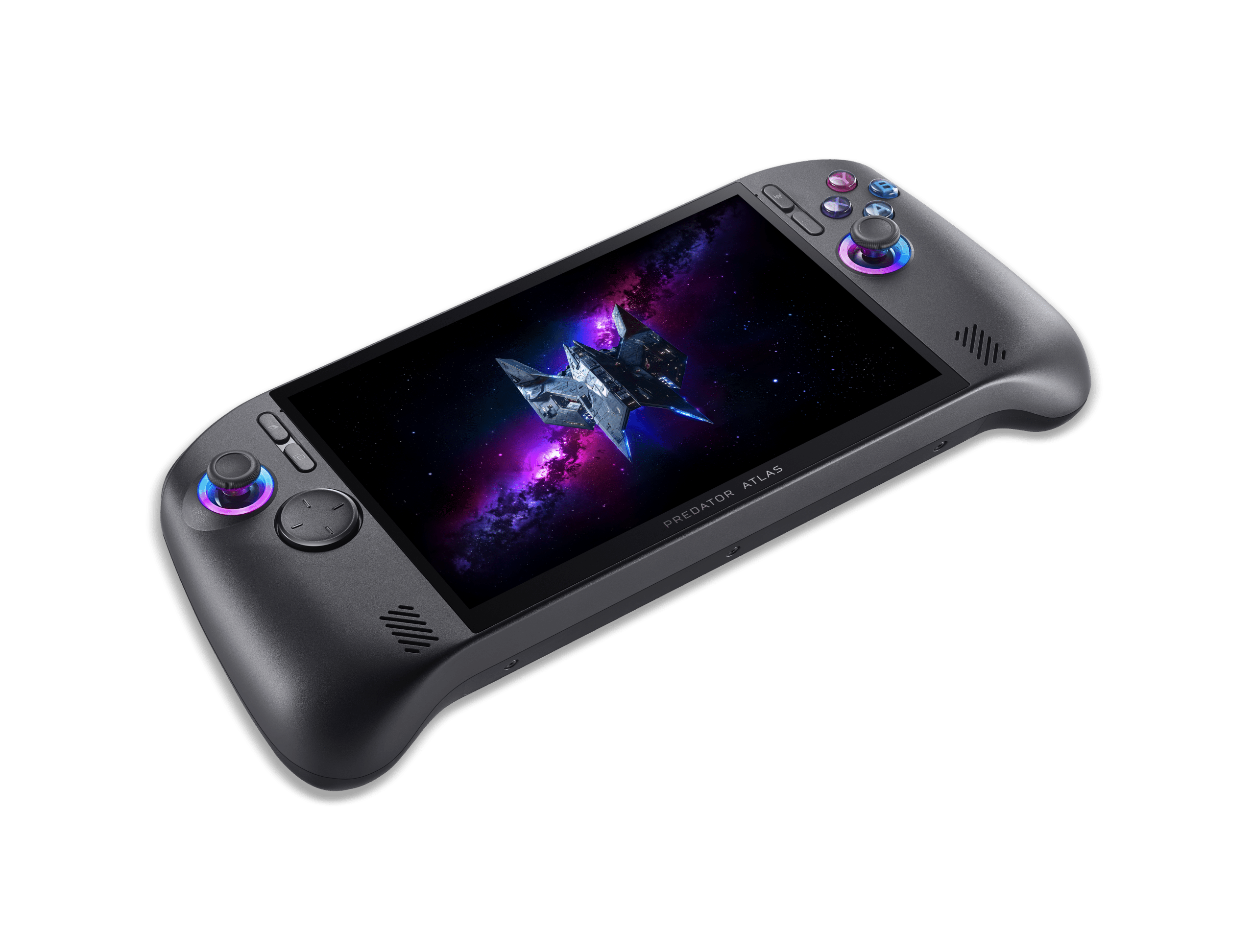
The Atlas 8 certainly looks like a Predator product, with its black plastic housing, aggressive body lines and RGB lighting around the thumbsticks and rear Predator logo. Measuring just shy of 30cm across and weighing around 800g, depending on the battery configuration, it’s a fairly substantial handheld. Despite the contoured grips, enlarged palm rests and textured surfaces, I found it a little cumbersome and awkward to hold.
Under the hood, our review model features an Intel Arc G3 Extreme processor, Intel Arc B390 integrated graphics and 24GB of LPDDR5X memory running at 7467 MT/s, with storage options of up to 1TB
Intel’s Xe3 graphics architecture supports XeSS 3, using AI-powered upscaling and multi-frame generation to improve frame rates in supported games, while Endurance Gaming mode helps balance performance and battery consumption.
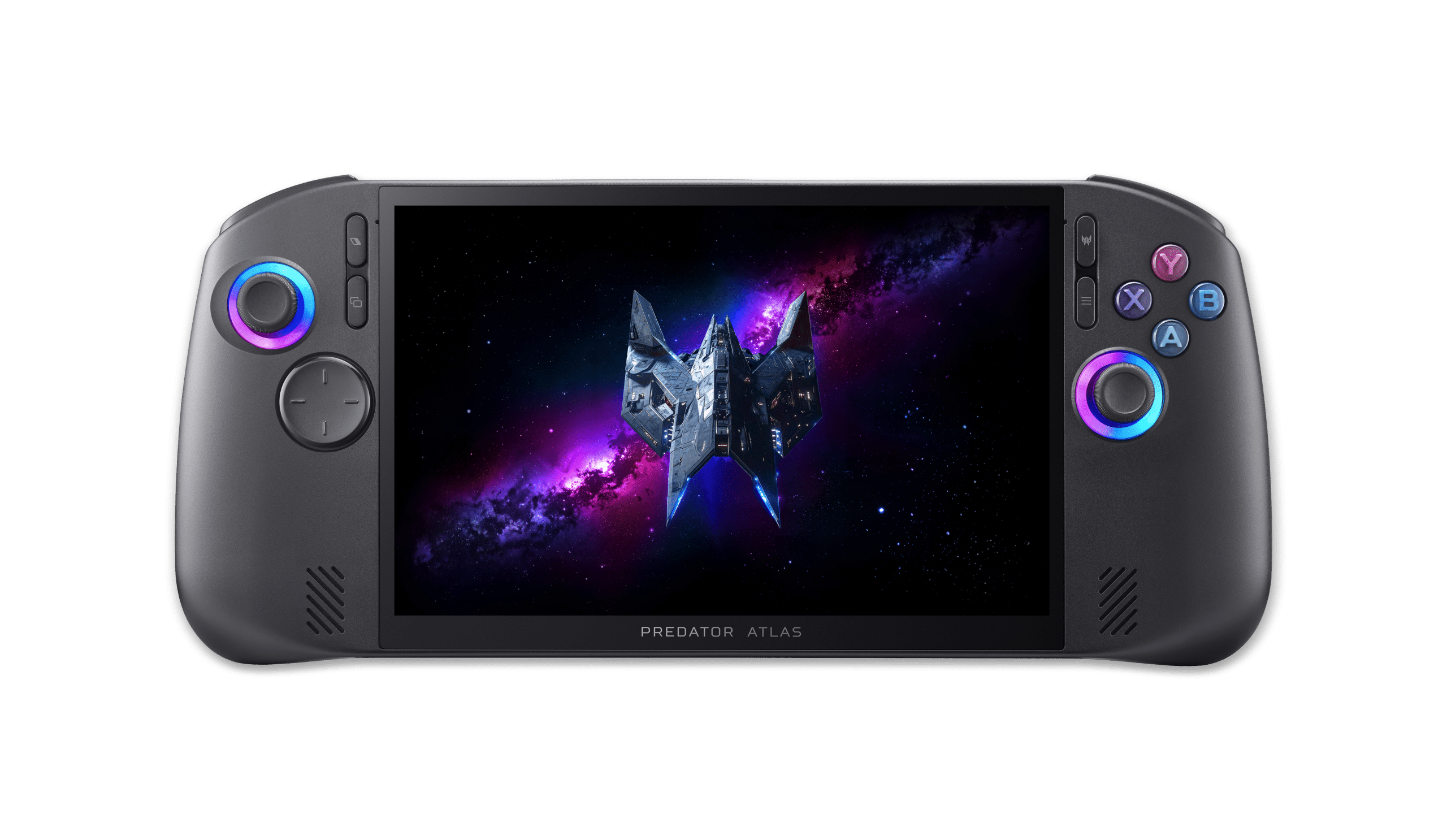
One thing I particularly liked is the 8-inch IPS touchscreen. With a 1920 x 1200 resolution, 120Hz refresh rate, VRR support and 100% sRGB colour coverage, it’s a lovely little display. It offers up to 500 nits of brightness and supports 10-point multi-touch, while Corning Gorilla Glass Victus with DXC technology helps protect the screen and reduce reflections.
Given how vibrant the screen is, I figured High on Life would be a great game to install and put it through its paces. The game’s ridiculously colourful environments, bizarre alien creatures and equally absurd weaponry looked spectacular on the Acer Predator Atlas 8, and aside from the occasional momentary freeze, I was particularly impressed by how smooth the animations and movement were.
Acer has done some interesting things with the controls. Physical switches on the back let you alternate between short, clicky micro-switch triggers for shooters and full-travel Hall-effect analogue triggers for racing games. The full-sized TMR thumbsticks use contactless magnetic sensing to reduce wear and the likelihood of stick drift, while two rear macro buttons provide additional inputs.
The Acer Predator Atlas 8 boots straight into the Xbox interface, giving it a traditional console feel. You can switch to the familiar Windows desktop to access other applications and game launchers, although switching back into Xbox mode comes with a rather persistent recommendation to restart the system.
A dedicated PredatorSense button provides quick access to performance modes, fan speeds, power limits and system monitoring, along with settings for RGB lighting and other device functions.
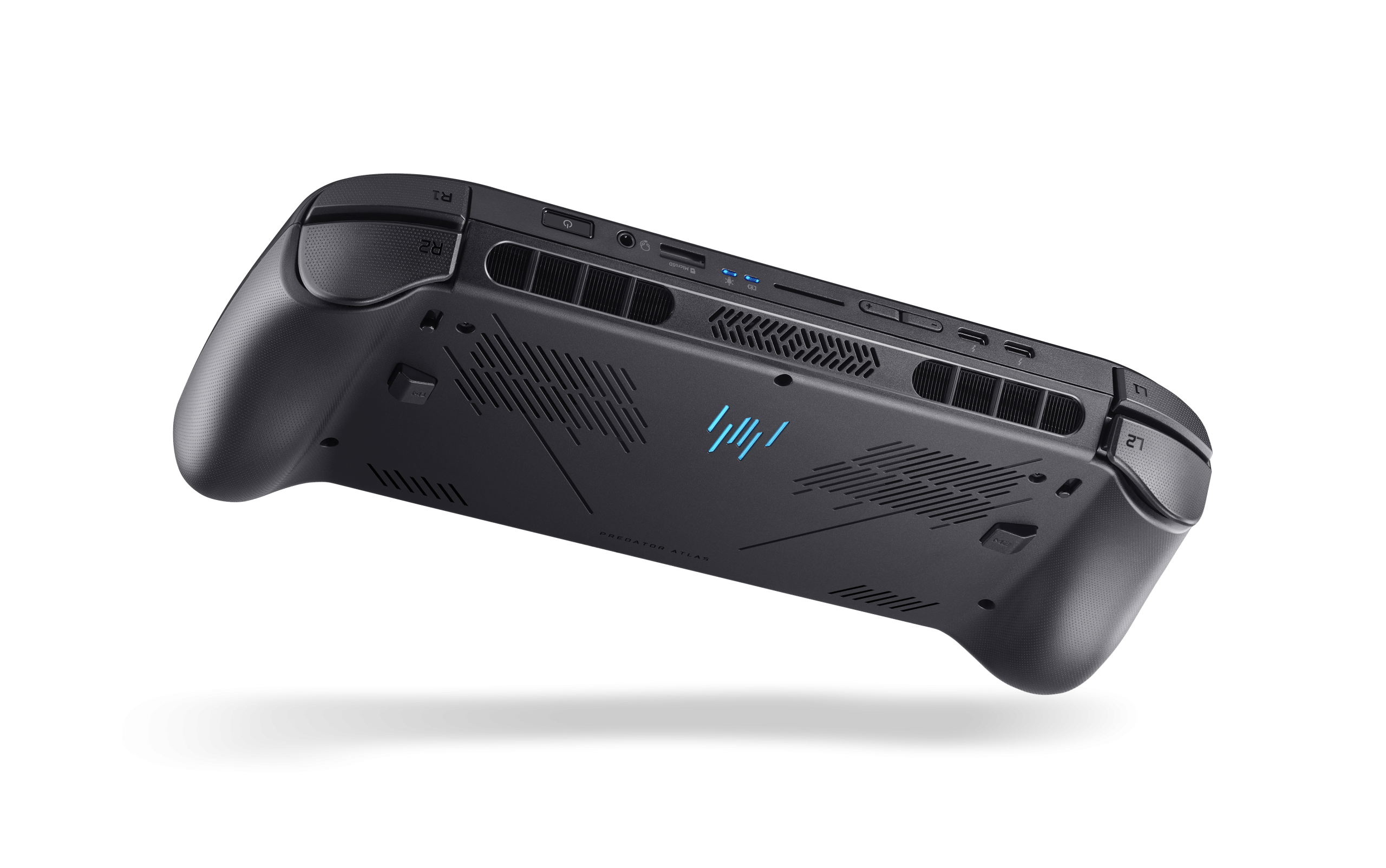
Keeping everything cool is Acer’s dual-fan AeroBlade cooling system. One fan is plastic, while the other features 89 metal blades measuring just 0.1mm thick, working alongside Acer’s Vortex Flow design to improve airflow through the chassis.
The Atlas 8 is available with either a 60Wh or 80Wh battery and comes with a 65W USB-C charger. Connectivity includes two Thunderbolt 4 ports for external displays, docks and accessories, a UHS-II microSD card reader, Wi-Fi 7 and Bluetooth 5.4.
I was genuinely surprised at how loud the two 2W speakers could get. They support DTS Virtual:X, while dual microphones feature Acer PurifiedVoice technology, and if you’d rather keep things to yourself, a 3.5mm headset jack has you covered.
There’s a lot to like about the Acer Predator Atlas 8, particularly the vibrant display, surprisingly loud speakers and versatility of the adjustable triggers. High on Life looked fantastic and, aside from a couple of minor hiccups, ran quite well.
While I wish it felt a little more natural in my hands, Acer has packed some impressive hardware into its first Predator-branded gaming handheld, and it’s a promising addition to the increasingly competitive handheld gaming market.