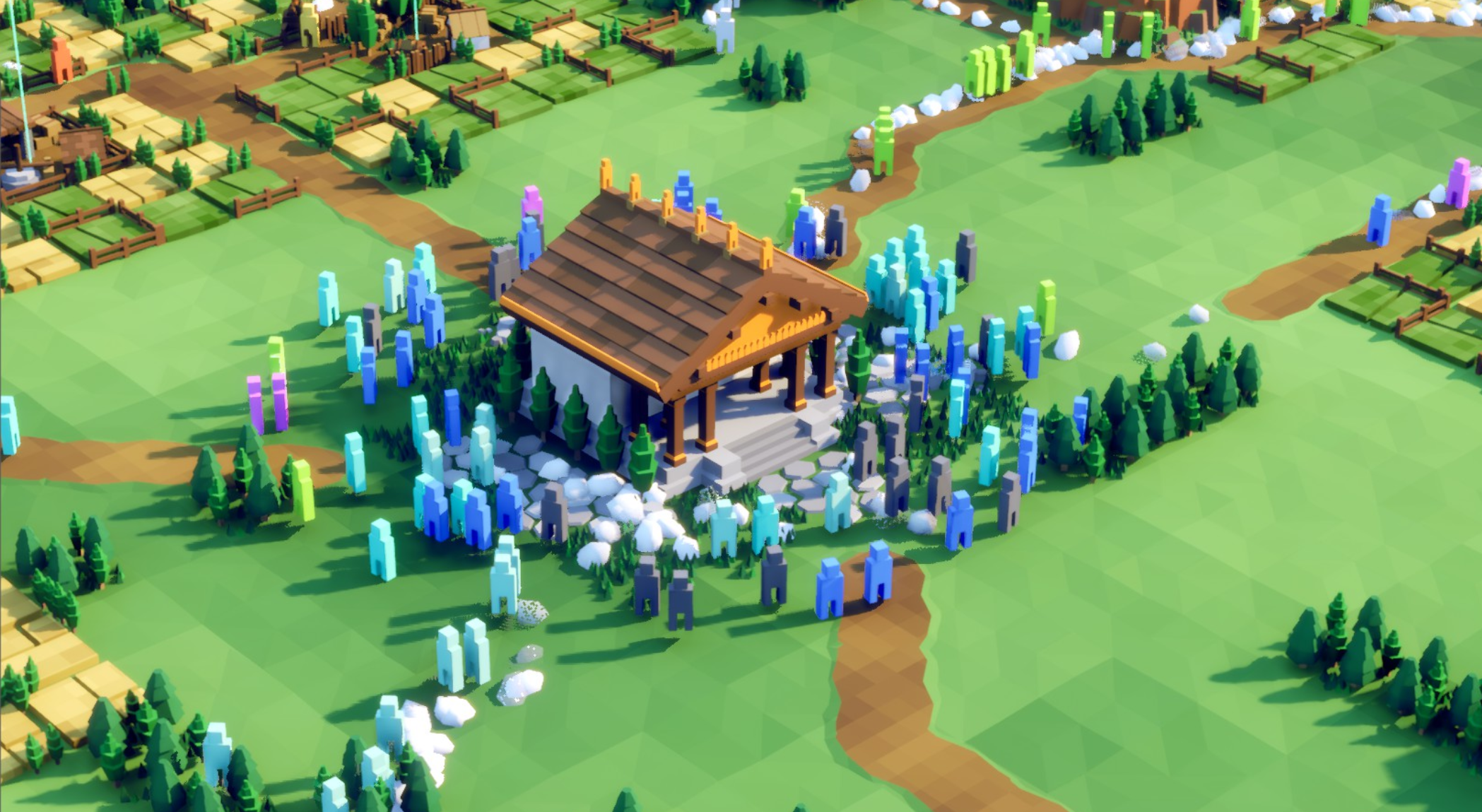
A Little Age is described as a “cozy minimalist settlement builder about growing a network of settlements, each with its own little economy”, so, needing time to breathe between adrenaline-fuelled landspeeder races last week, I decided to try it out.
Fair warning: for the price (AUD$15 where I live, something around USD$10-ish), there’s not much here that isn’t in the game’s free demo. But if you do want to support the developer by buying the whole thing, what’s here is a neat little take on city-building and re
You start A Little Age with a simple little hamlet, from which you can build a few farms, woodcutters and a handful of other basic buildings. Once you’ve expanded that into a village, the plan is to then set forth and build a new hamlet, level thatup and continue until your fledgling civilization has spread itself out across the game’s cute, isometric map.
Each hamlet is its own self-contained economy, so everything you build and collect around it will only affect its own bottom line. You can, however, interact with other settlements, initially by sending some rerecting every hamlet’s production towards the completion of a grand, civilization-defining temple
A Little Age is basically a twee engine-builder, then, as you rack up a succession of self-sustaining villages before focusing all those numbers on a single goal. What this lacks in strategy–the only major decisions you need to make all game are where, exactly, to found your hamlets, since some areas will be blessed with more res, as it feels more like a game I’m tending to, rather than one that’s really challenging me
Having your units build their own roads is a nice touch, and between construction, upgrades and expansion I always felt like I had something to tinker with, but A Little Age–which does not have an option to speed up its clock– could have done with a bit more going on. Some more buildings, maybe, or some religion, maybe some leisure pursuits for your tiny guys. It’s not cozy enough to coast by just on its relaxing vibes, and there’s not quite enough to challenge you to get by as a city-builder.
Which would be valid criticisms were this pitched as something you’d be expected to play for weeks or months at a time. To play it as I played it, settled in one night after dinner and just happy to watch some towns grow and relax with some happy little music (it costs less than a movie ticket, after all), I thought A Little Age was great.