

Gamescom experiences with T1 and ‘Crimson Desert’ showcase glasses-free technology for retail and exhibitions
Samsung Electronics showcased its glasses-free 3D display technology through interactive gaming experiences at Gamescom 2026, demonstrating its potential as a business-to-business retail and exhibition solution.
At its largest-ever booth at the gaming event in Cologne, Germany, Samsung used Spatial Signage to create fan experiences in partnership with esports team T1 and Pearl Abyss’ open-world action-adventure game “Crimson Desert.”
Spatial Signage is a glasses-free 3D display designed to give two-dimensional content a sense of depth and spatial realism. Samsung installed four units across its booth, using them for interactive photo opportunities, visitor guidance and digital cosplay.
The company said the installations were intended to show how the technology could move gaming content beyond passive viewing and encourage greater visitor participation.
T1 players brought to life in 3D
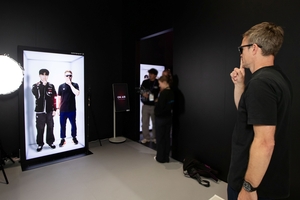
Three of the four Spatial Signage displays were installed in the T1 Photo Zone, including two used for photo experiences and one for visitor guidance.
Visitors selected a T1 player, including star player Lee “Faker” Sang-hyeok, and stood at a designated position in front of a camera.
Professional lighting, a player-selection screen and on-screen prompts guided participants through the process. The system then placed the selected player beside the visitor in a signature pose, with Spatial Signage presenting the player visual in glasses-free 3D.
Participants could scan a QR code to download a personalized digital “Photo Sign Card” featuring the player’s authentic digital autograph to their smartphones.
Samsung said the display’s depth effect made the selected player appear to stand alongside the visitor, creating a shareable commemorative image without requiring 3D glasses or other special equipment.
Digital cosplay with ‘Crimson Desert’
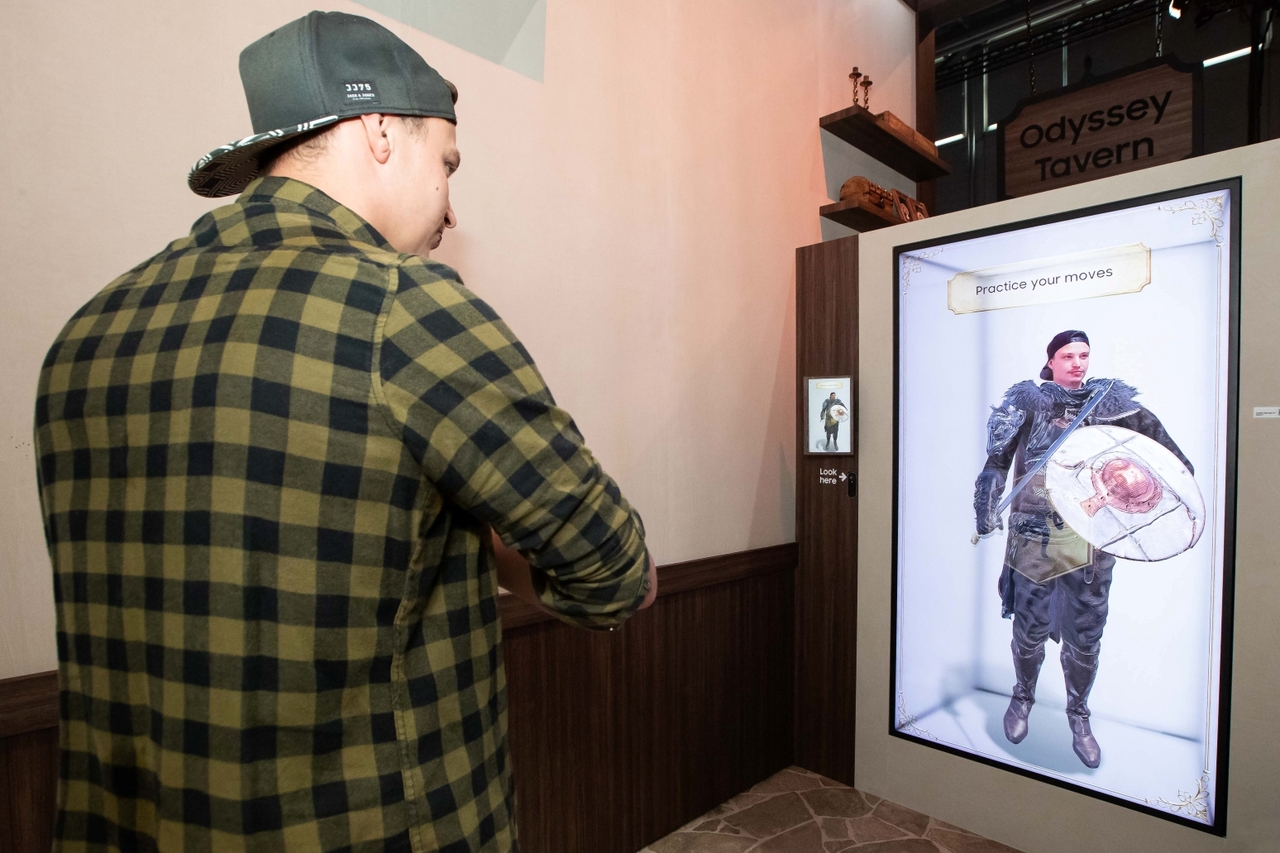
Samsung also deployed Spatial Signage in a dedicated “Crimson Desert” zone created with Korean game developer Pearl Abyss.
Designed to resemble a tavern from the game, the space featured stone-look walls, wooden details and game-themed props.
When participants stood in front of the display, a separate interactive system detected their body shape and movements in real time. It digitally dressed them in the armor and attire of a “Crimson Desert” character, with the personalized image shown through Spatial Signage in glasses-free 3D.
Samsung described the activation as “digital cosplay,” allowing visitors to see themselves transformed into game characters without the cost, equipment or preparation associated with traditional cosplay.
Samsung said the Gamescom installations demonstrated how Spatial Signage could be used beyond gaming exhibitions in retail stores, pop-up spaces, department stores, shopping malls and flagship locations.
The company is positioning the display as a B2B retail media product that can attract visitors, increase the time they spend at a location and generate content suitable for sharing on social media.
Spatial Signage has a depth of 52 millimeters, allowing it to be installed without the bulky enclosures often required by conventional 3D signage and holographic equipment.
“Spatial Signage adds glasses-free 3D depth to content in retail and exhibition environments,” a Samsung Electronics official said.
“At Gamescom, it supported fan experiences by presenting gaming content in a format that encouraged visitors to stop, watch and share the moment. Samsung will continue to explore opportunities for Spatial Signage across B2B retail and exhibition settings.”
