

The 913th sits at Little Rock Air Force Base in Arkansas, and its mission is to train and equip maintenance Airmen who will go on to work as crew chiefs, hydraulics technicians and avionics specialists. Doing that without a flight line to put them on is the problem the unit set out to solve. Tech. Sgt. Austin Malanowski, who coordinates the group’s Virtual Reality Training Center, summarized the outcome in one line: “Effectively, we went from zero aircraft to five virtual platforms.” His description of where the airframes come from suggests an existing catalog rather than content commissioned per unit. He says he can “load any aircraft that exist across the Department of War’s mass virtual system into this VR program.”
What the number is, and what it is not
Cost mitigation is not budget savings, and the distinction matters for anyone reading this release as a procurement signal. The release publishes no methodology. It states no baseline for what the equivalent flight-line and aircraft-availability hours would have cost, and it does not break the $18.5 million into training time versus avoided maintenance damage, though it attributes the total to both. No vendor is named. No headset is named. No contract value appears anywhere in the document. All of that is normal for a unit-level public affairs story, which exists to recognize the people involved rather than to support a business case, and it is a reason to treat the headline figure as directional.
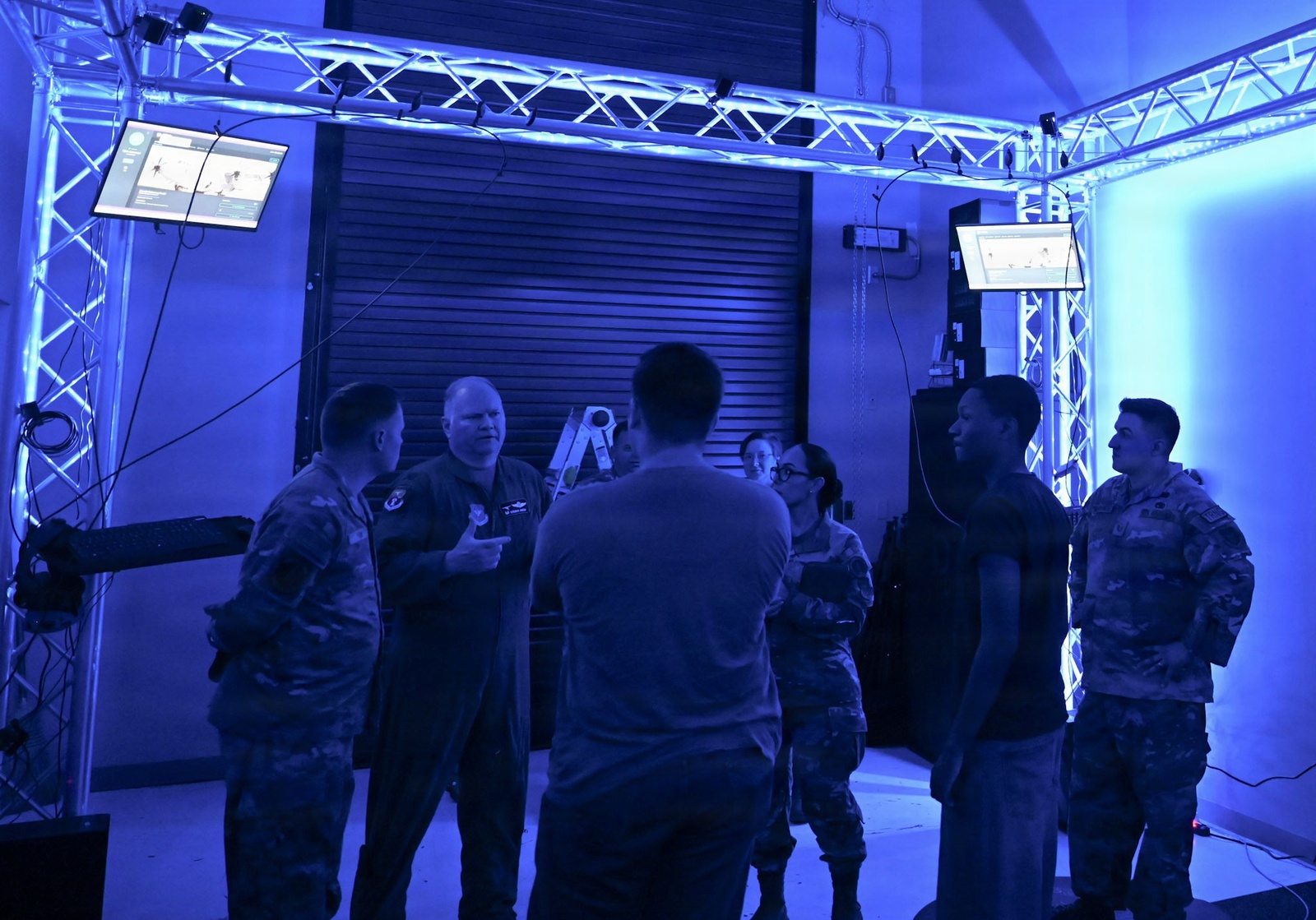
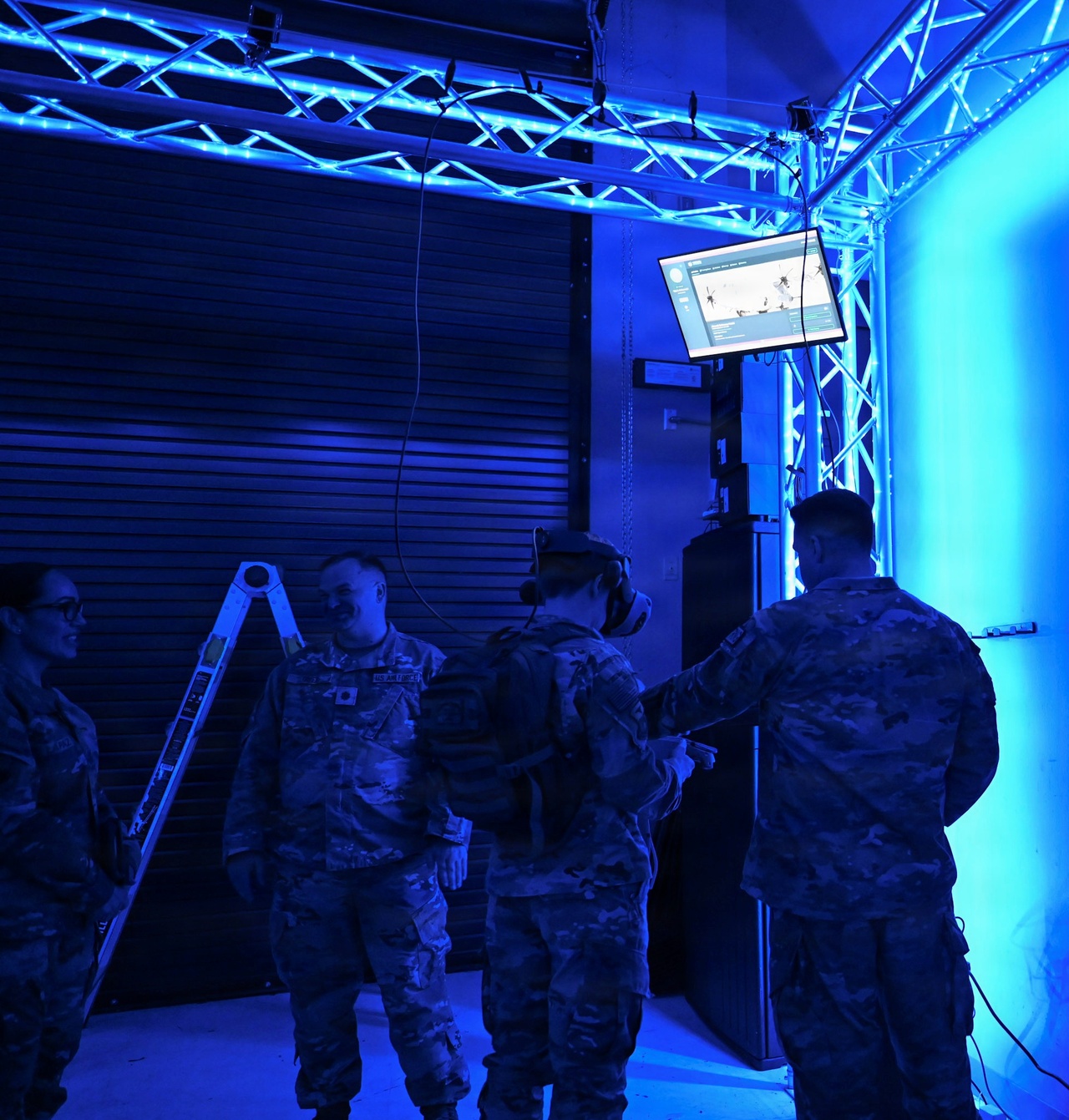
What the release does document with more precision is the delivery model, and that is the part with transferable value. The unit converted a decommissioned storage area into what it calls a virtual maintenance hangar. The photographs accompanying the story, taken during the May Unit Training Assembly on May 3, show a small bay with a lighting truss, wall-mounted monitors mirroring the headset view, and a group commander briefing eight or nine Airmen in a space where one trainee at a time wears the headset. This is not a simulation center procured at scale. It is a room.
The reproducible part is the handoff, not the hardware
The 913th did not build its center from scratch. Tech. Sgt. Joshua Hale runs training development at the Little Rock Air Force Base Virtual Reality Center in Building 350, and he said that larger facility served as the model for the scaled-down capability in the 913th Maintenance Squadron, with his team supplying technical guidance and lessons learned during implementation. Malanowski credited the handoff directly. “Our VR dodged all the bullets that their VR hit on the way up because they gave me that information,” he said.
Reading across the enterprise deployments VR.org has covered this year, that pattern is the one that keeps producing results. Kalitta Air’s FlightDeckToGo rollout earns its keep by moving familiarization out of the expensive full-flight simulator rather than by replacing it. The Marine Corps fireteam trainer due at Quantico this quarter is being fielded for operational assessment rather than as a program of record. In each case the immersive layer absorbs the low-stakes repetitions that were previously consuming scarce physical assets, and the claimed return scales with the scarcity of the thing displaced. Here that scarcity is total. It explains a number this large without requiring the number itself to be precise.
What happens next inside AFRC
Hale said immersive training at Little Rock is expanding past aircraft maintenance, with modules planned for aircrew, security forces and medical personnel. The 913th is separately developing requirements to bring loadmaster training into its own environment. Malanowski said he hopes the cross-unit collaboration becomes a standard for the rest of Air Force Reserve Command, which is the sentence in this release that a defense contractor should read most carefully. A capability that one unit assembled in a converted storage room, using content from an existing catalog and guidance from a neighbor on the same base, does not obviously create an addressable market. It creates an internal template.
For program managers evaluating immersive training this budget cycle, the useful takeaway from the 913th is not the $18.5 million. It is that the unit’s cost of entry was a room, an existing content library, and a peer willing to share what went wrong the first time. Buyers who have been waiting for a vendor to hand them a turnkey program may be waiting for something the Air Force is already learning to build without one.
