DPA
UpdatedMon, July 6, 2026 at 6:19 AM UTC
5 min read
Add Yahoo as a preferred source to see more of our stories on Google.
- Young people struggling with media addiction are receiving treatment at specialized clinics, with therapy programs focusing on regulating emotions and filling free time with other activities.
- The issue of media addiction primarily affects adolescents, with boys aged 14 to 15 being most at risk, often leading to neglect of personal hygiene and school responsibilities.
- Parents play a crucial role in recognizing and addressing media addiction in their children, with experts emphasizing the need for better youth protection measures and ongoing conversations about healthy media use.
These days, it is easier for Jonas, 17, to articulate just how he found himself slipping further and further into the digital world
It was during the pandemic, he says. “People just had a lot of free time – me too. That’s when I started playing.”
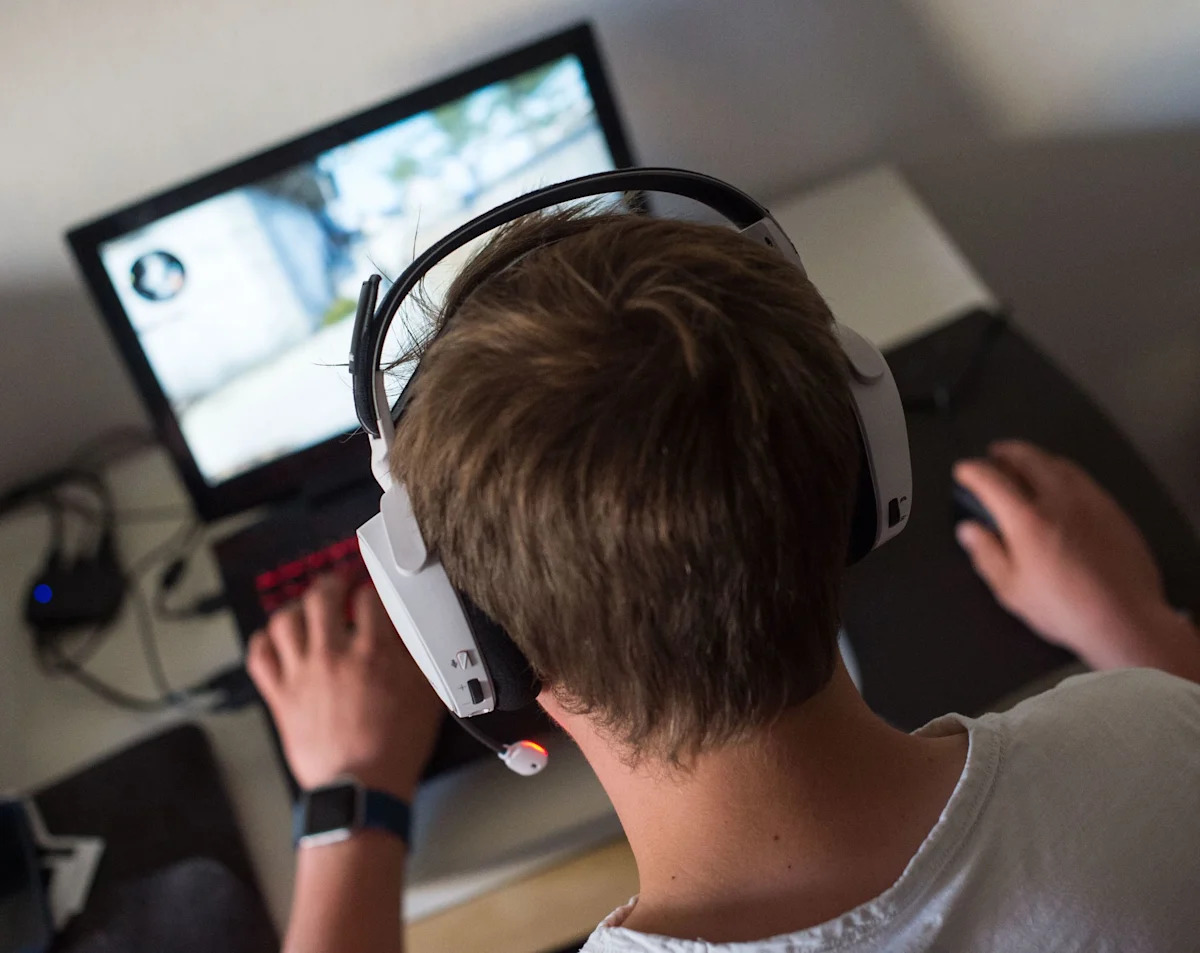
Video games became his whole life. Back then, he spent many hours each day gazing at the screen, often until late at night. He had no other hobbies, nor any social contacts beyond the online world. “I had no friends. My free time was on the computer.”
Advertisement
Now, Jonas is open about his excessive media use, but he did not get there alone. He was helped by therapists at Nuremberg Hospital about 18 months ago
The hospital began providing dedicated consultation hours for young people with media addiction in 2022, as many youngsters struggled, just as Jonas did, during the pandemic
Forgetting teeth brushing, showering
Those worst affected tend to be boys aged 14 to 15, says psychologist Philipp Martzog. Those at most risk of addiction are adolescents with attention deficit syndrome, depression, social anxiety or who are bullied or struggling with schoolwork
Advertisement
He and other specialists at the Clinic for Psychiatry, Psychosomatics, and Psychotherapy have so far treated 80 young people with risky media use behaviour, most, like Jonas, on an outpatient basis
Specialists define risky media use when someone loses control over how much time they spend on their smartphone, computer or game console. Media time dictates their life, and they accept the negative consequences of this. “Friends, school, and personal hygiene are neglected. They brush their teeth less often or shower less,” Martzog says
The problem is often the affected individuals’ lack of insight. It is when parents can no longer reach their children. Jonas, too, would never have gone to therapy if his mother hadn’t forced him to, he says. And even now, he isn’t wholly sure he really needed it
“I treated computer gaming more like a hobby, albeit an extreme one,” he says, looking back. But he knows people who haven’t been to school for a year and a half. It wasn’t that bad for him, he says. That he didn’t do much for school, however, is true. Though now, in 11th grade, that is no longer an option
Advertisement
Chief Physician Erik Kolfenbach of the Schönsicht Clinic in Berchtesgaden, a rehabilitation clinic for children and adolescents, also confirms that it is usually parents who bring their children to media addiction therapy
As a pilot project, the clinic offers a six-week inpatient program for 12- to 17-year-olds, which it developed in collaboration with Berlin’s Charité hospital and which Charité will evaluate upon completion
“So far, the children who come are mostly from the middle and upper classes, where parents seem to be more aware of the issue and also pay closer attention to their children’s education,” says Kolfenbach
About 50 adolescents have already completed the programme. Two-thirds of them were spotted as having a problem primarily because they skipped school to play video games, scroll through social media channels, or stream videos
Advertisement
“These young people often have intense conflicts at home,” says Kolfenbach, a specialist in child and adolescent psychiatry and psychotherapy
Despite the many downsides of uncontrolled media consumption, they were unable to stop on their own
The major problem with media addiction is that, unlike with alcohol addiction, for example, you cannot totally abstain after therapy. “Our society is completely digitized. This increases the risk of relapse even further.”
During rehab, the youngsters are taught skills such as how to regulate their emotions, resolve conflicts and control themselves, and above all, how to fill their newly-won free time with other activities. That’s why the programme includes plenty of sports, art therapy, and pottery
Advertisement
Jonas’s therapy lasted three months and consisted of individual sessions and, later, weekly group therapy. “Together, we set a goal that everyone wanted to achieve by the end of therapy,” he says. For him, it was going to the gym regularly
“I personally managed to spend less time in front of the screen, slowly and gradually. But I did it in the end, simply because my day gradually filled up with responsibilities,” says Jonas
It helped that he now simply has less time for computer games. He has to do more for school, has a part-time job, and a girlfriend. He still plays games, though. “Maybe one or two games, but no more eight-hour sessions.”
Despite his struggles, Jonas doesn’t think much of an age restriction for social media, as first introduced in Australia and weighed by many more countries. “Anyone who wants to get around it will find a technical way,” he says. “But politically, of course, it looks good. You can check the box on the issue.”
Advertisement
But Martzog and Kolfenbach see a clear need for societal responsibility. “I’m in favour of better youth protection,” says Martzog. “In terms of brain development, children and adolescents are not yet capable of fully regulating their own media consumption.”
But parents are important in this too, says Kolfenbach. They need to keep the conversation going with their children about media use, set boundaries, and lead by example. “Children also look to their moms and dads, who are staring at their mobile phones at the breakfast table.”
But Jonas says, “I think that for many people, the problem resolves itself with age.” Just as it did for him