

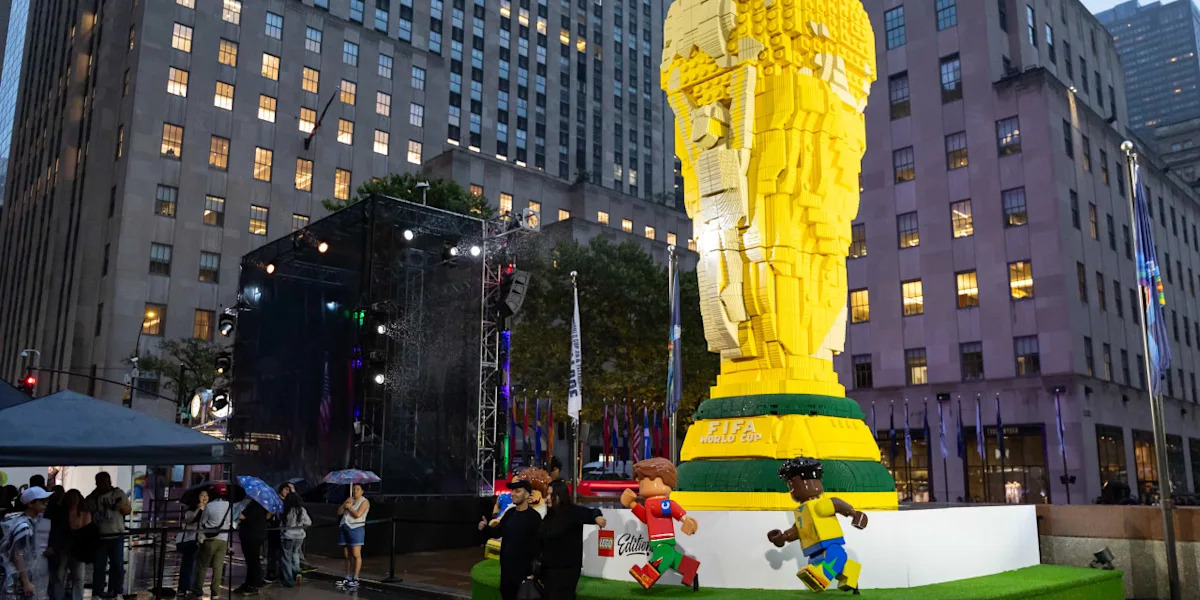
Lego reported record sales for the first half of the year as it launched hundreds of new products, with homegrown and licensed themes proving popular across all age groups.
The Danish toy-bricks maker said strong global growth was buoyed by its Speed Champions, Botanicals, Technic, Icons and Star Wars-themed toys, while sporting and entertainment partnerships including Formula 1, FIFA World Cup 2026 and KPop Demon Hunters also helped build strong engagement.
Most Read from The Wall Street Journal
-
Why Your Boss Wants to Make Sure AI Can Read Your Slack Messages
-
U.S. Says Oil Is Pouring Through Hormuz. Trackers Can’t Find It.
“Culturally relevant brand experiences continue to drive demand across the globe,” said Lego Chief Executive Niels B. Christiansen.
The company said it significantly outpaced the global toy market and gained market share as it reported a 22% rise in consumer sales in the first six months of the year.
The results come as the global toy industry is experiencing a strong resurgence a market research firm that tracks consumer goods
Rival Mattel reported strong sales growth in its most recent quarter with demand buoyed by sales to retailers and demand for action figures, building sets and games across both its North America and international operations. Hasbro, the owner of brands such as Play-Doh and Monopoly, also reported a strong rise in revenue in the second quarter on higher games demand.
Lego’s overall revenue grew 21% to 41.9 billion Danish kroner ($6.54 billion) in the first half, while expenses rose 21% as it continued to invest in strategic initiatives such as new products, retail channels, manufacturing capacity, offices and sustainability.
Net profit rose 32% to 8.6 billion kroner.
“Our success in the market means we can maintain high investment levels in growth and sustainability for both the short and long term,” Christiansen said.
The company launched over 330 new products in the period and has introduced a new interactive platform known as Lego Smart Play. The new range includes bricks and figures that can react to movement, play sound and light up.
It has also strengthened global collaborations with retail partners to expand its reach and introduced interactive in-store demos while opening new Lego branded stores. The company now has a total of 1,106 stores worldwide.
A new global innovation center was recently opened in Denmark and construction continues on a new factory and regional distribution centre in Virginia, U.S., as it works to expand manufacturing and supply chain capacity. Both projects remain on track to open in 2027, it said.
