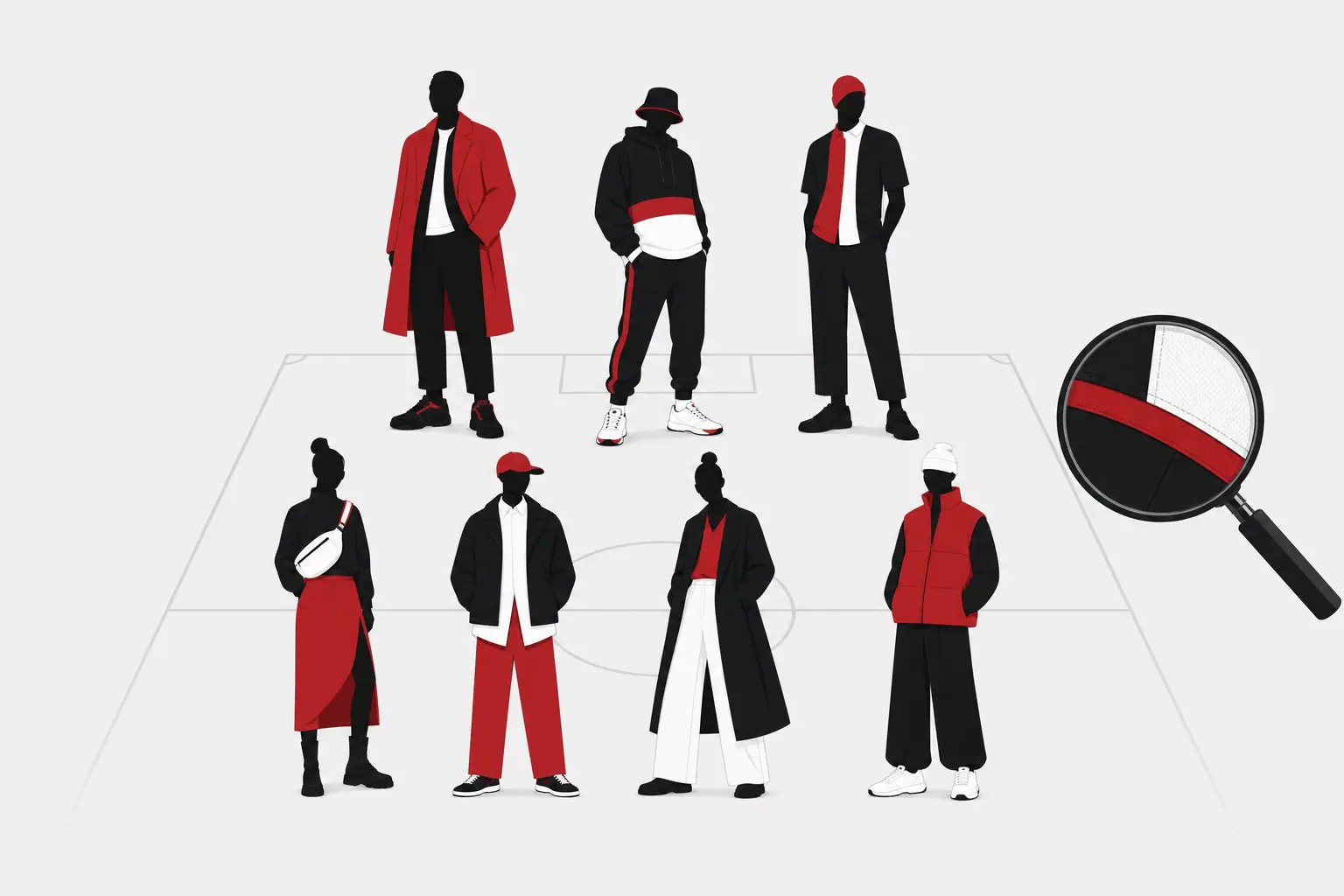
When BTS hit the World Cup final halftime stage in New Jersey, the performance was only half the conversation. The other half was the outfits, because in 2026, a major pop moment instantly becomes a scavenger hunt: fans zoom in, ID pieces, trade screenshots, and turn styling into its own stream of content.
BTS leaned into that behaviour with seven distinct looks that still read as “one team,” tied together by red, white, and black, colours associated with South Korea’s national football identity. The details mattered too, including nods to the “Red Devils,” because fans notice symbolism as quickly as they notice brands.
Table of contents
- Why BTS’s styling became a parallel storyline to the halftime show
- How HARDSTYLE built “One Team” energy with seven different looks
- What the brand and designer mix signals about modern celebrity fashion
- What this means for marketers
Why BTS’s styling became a parallel storyline to the halftime show
A halftime show is designed for mass audiences, but fandoms experience it like a group project. They are not just watching. They are collecting receipts, mapping references, and turning small details into shareable micro-stories.
That is why a breakdown of every item BTS wore has real momentum. It gives fans the language for what they felt in the moment, and it gives the wider internet a way to participate even if they did not catch every detail live. The company outlined the full look breakdown in an official post, reflecting how much demand there is for specifics, not just vibes.
What makes this particularly sticky is the contrast: the seven members wore different silhouettes and brands, yet the palette and references kept the group identity intact. That balance is exactly what fandoms like to decode.
TIRTIR’s BTS THE CITY New York drop ties a setting duo to Weverse pre-orders and a pop-up, reflecting how fandom events shape commerce behavior.
Editorial TeamContentGrip
How HARDSTYLE built “One Team” energy with seven different looks
The styling was handled by HARDSTYLE (Peri Rosenzweig and Nick Royal), a duo known for working with major rap and pop stars and for pulling from elements that can feel taboo, alongside sportswear. That creative tension showed up here: football jerseys and tracksuits sat next to motorcycle jackets, leather pants, fringe, patches, and hardware.
A few member-specific choices underline how intentional the “different but unified” approach was:
- RM wore a custom Lueder track jacket and pants, a brand that draws from Berlin club culture and football. The red piping echoed Korea’s team colours.
- Jin wore an all-red custom look by J E Cai, a designer label built around modular garments. J E Cai also provided fringe scarves and patches, including embroidery with “BTS” or members’ names.
- Suga paired a Palace long-sleeve polo with leather pants by Helsinki-based VAIN, plus a patch depicting Chiwoo Cheonwang, a symbol linked to the Red Devils.
- J-Hope wore a custom football jersey by Protocol Index with washed denim pants from John Lawrence Sullivan, and styling that included two belts layered.
- Jimin went “all white” with a custom jersey by Agro Studio and a one-off belt by Eden Tan finished with chrome taken from a scrapyard, featuring the word “HALFTIME.”
- V wore a red-black-white archive Dirk Bikkembergs motorcycle jacket with red leather pants (custom J E Cai), plus a red Celine ring.
- Jungkook wore a similarly styled custom motorcycle jacket by Courtney McWilliams, a designer known for creating outfits for Travis Scott.
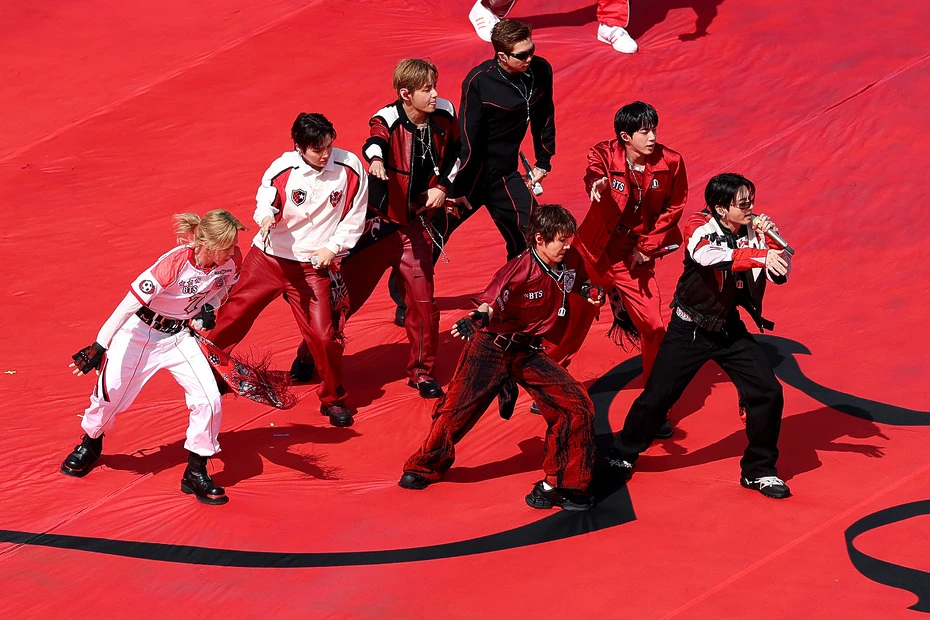
Even without a single matching “set,” the colour story and football references did the work of making the group look cohesive on a stadium stage.
What the brand and designer mix signals about modern celebrity fashion
This was not a straightforward luxury-only lineup. The look list moves across:
- archive fashion (Dirk Bikkembergs),
- streetwear (Palace),
- bespoke and custom work (multiple pieces made specifically for the show),
- and concept-driven designer labels (like J E Cai’s modular system).
For fans, that mix is part of the appeal. It invites deeper research: “Who is this designer?” “What does that symbol mean?” “Is that piece one-of-one?” That is how styling turns into a long tail of discovery content, beyond the initial broadcast moment.
It also signals how global pop styling is increasingly fluent in multiple subcultures at once: football terrace energy (“bloke-core”), club references (Berlin and fast BPM “raver” cues), and performance-ready pop-star leather and hardware. The result is a look narrative that fans can read in chapters rather than a single mood board.
What this means for marketers
Big entertainment moments now come with an unofficial second screen, built by the audience. BTS’s halftime styling shows what happens when a brand or team plans for that behaviour instead of treating it as a side effect.
- Treat “item identification” as a content format, not a footnote
Fans do not just want a recap. They want specifics they can screenshot and share. Detailed look breakdowns meet that demand and extend the conversation. - Use symbolism that communities already recognise
The red, white, and black palette and references to the Red Devils work because they connect performance styling to a national football identity that viewers already understand. - Let individuality drive rewatch value
Seven different looks give people a reason to rewatch and focus on a single member’s styling choices. That is repeat attention without needing extra runtime. - Mix “known” and “discoverable” labels to widen participation
Recognisable names (like Palace) create instant anchors, while lesser-known designers and custom pieces create curiosity. Curiosity is what powers comment threads and follow-up posts. - Build for the long tail, not just the live moment
A halftime show is finite. The analysis, breakdowns, and fandom-led decoding can run for days, and can stay relevant again when tour visuals and future styling callbacks appear.
The broader signal is that fandoms increasingly engage with pop culture like collectors and researchers, not passive viewers. When styling is designed with that reality in mind, it becomes a durable piece of the campaign ecosystem: not separate from the performance, but part of how the performance lives online afterwards. And for marketers, it is a reminder that the most effective “distribution” often looks like people doing joyful homework together in public.
This article is created by humans with AI assistance, powered by ContentGrow. Ready to automate your content marketing?Book a discovery call today.
Thanks for booking a call with ContentGrow. We provide scalable and tailored content creation services for B2B brands and publishers worldwide.Let’s chat a bit about your content needs and see if ContentGrow is the right solution for you!IMPORTANT: To confirm a meeting, we need you to provide your

Calendly