

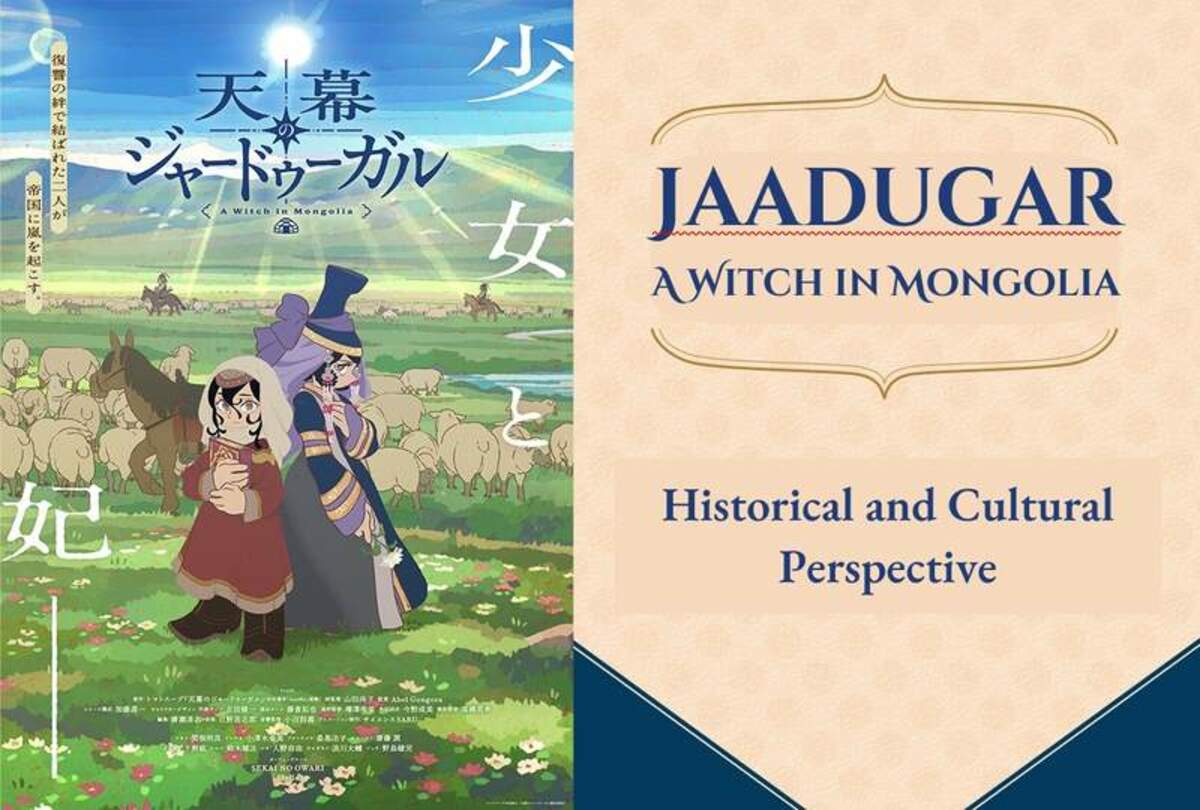
“Jaadugar: A Witch in Mongolia” is a manga series by the brilliant Tomato Soup, serialized since 2021 on Akita Shoten’s web comic site Souffle. With its anime adaptation hitting screens in June 2026, the series has exploded in popularity, earning rave reviews for its impeccable production and the raw power of the original story. What’s truly fascinating is the demographic of its praise: it’s not just anime fans—university professors and literary critics, people who rarely touch the medium, are hailing it for its meticulous attention to detail.
Word on the street is that the production team didn’t cut any corners. To capture the complex history of the Mongol Empire and the Islamic world, they brought in specialized scholars to ensure that everything—down to the cultural nuances—would feel authentic even to locals. Of course, historical accuracy alone doesn’t make an anime “fun,” right? So, what exactly is the secret sauce behind this show’s massive appeal?
In this article, we’ll explore the allure of the series while unpacking the history and culture that define its world. Whether you’re already a die-hard fan looking for more insight or a newcomer wondering if the “historical” tag makes it a tough watch, we’re here to break down the barriers.
Series Overview and the Essential Players
First, let’s look at the big picture. Since the manga is still ongoing, nobody knows exactly how the final curtain will fall. However, looking at Tomato Soup’s track record, she tends to stick closely to historical facts, using her “wings of imagination” to fill in the gaps between documented events. This means that even if you know your history, the story won’t feel “spoiled”—it actually makes the experience richer.
The story kicks off in 13th-century Iran. A young slave girl named Sitara is taken in by a wealthy family—the household of a late scholar. Her new mistress is the widow Fatima, who has a son named Muhammad, a boy about Sitara’s age. Through Muhammad, Sitara discovers the “value of knowledge.” However, he eventually leaves for the capital to pursue higher education.
Eight years pass. The Mongols descend upon Sitara’s city like a storm. Her mistress Fatima is killed, and Sitara is captured, dragged across the plains to the Mongol capital of Karakorum. When she learns that the capital where Muhammad lived has also fallen, a white-hot flame of vengeance ignites within her.
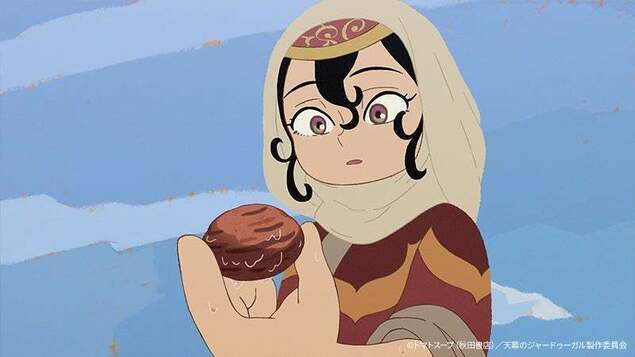
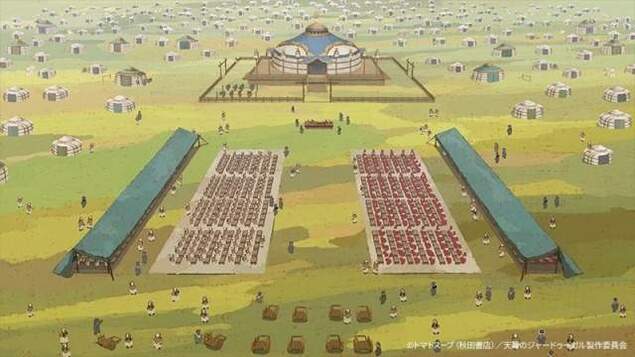
Despite her hatred, Sitara slowly adapts to the Mongol lifestyle, living in tents and moving with the seasons.
In 1227, Genghis Khan passes away. Following the “Kurultai” (a grand assembly) in 1229, his third son, Ogedei, is crowned as the new King (Khan), or rather, the Emperor (Khagan). This transition triggers a tectonic shift in the political landscape. One of Ogedei’s queens, Doregene, harbored a deep-seated hatred for the Mongols, having come from a conquered tribe. Sitara and this queen join forces, swearing an oath of revenge to tear the Empire down from the inside… that is the core of this epic.
While Sitara is an original character, the historical figures Fatima (whose name Sitara assumes in the story) and Queen Doregene really did play pivotal roles in the Mongol power struggles. In a world where Genghis Khan’s descendants were building a massive empire governed by a rigid patriarchal society, these “witches” suddenly appeared at the center of power. Whether you’re a history buff or a total novice, the tension of this power dynamic is absolutely gripping.
Key Characters to Keep You in the Loop
She takes the name of her former mistress, Fatima, to elevate her social standing. She is secretly working in tandem with Doregene.
The King of the Mongolian plains. Born around 1162 (though some. He unified the fragmented Mongol tribes in a single generation. Died on August 25, 1227.(Note: Circled numbers indicate the order of succession for the Mongol leadership.)
Jochi:Eldest son. In the series, his mother is Genghis’s primary empress, Borte.
Chagatai:Second son. Mother: Borte.
Ogedei:Third son. Mother: Borte. → BecomesOgedei Khagan ②.
Tolui: Youngest son. Mother: Borte. → He receives theInheritance of Genghis Khan’s personal property and assets.
Boraqchin:The primary empress of Ogedei. In the series, she is described as a consort “inherited” from Genghis Khan and is referred to as the Grand Khatun.
Doregene: Ogedei’s sixth queen. She harbors a visceral hatred for the Mongols.
Güyük:The son of Ogedei and Doregene. → Becomes ③.
Sorgaghtani Beki: The primary empress of Tolui. Originally from the Keraite tribe and a Nestorian Christian, she is a rare figure who deeply respects scholarship. She asks her husband Tolui to obtain a manuscript of “The Elements” and keeps Sitara (now posing as Fatima) by her side as an instructor.
Möngke:Eldest son of Tolui and Sorgaghtani. → Becomes ④.
Kublai: Second son of Tolui and Sorgaghtani. → Becomes ⑤.
Hulagu:Third son of Tolui and Sorgaghtani.
Ariq Böke: Youngest son of Tolui and Sorgaghtani. → Becomes ⑥.
Is History Just Too Complicated?
We’ve just scratched the surface, and already the information density is off the charts. If you haven’t read or watched the series yet, you might be feeling a bit overwhelmed. Just looking at the character list raises a dozen questions! So, let’s clear up some of those confusing points about these historical customs.
Did you catch that weird detail about Boraqchin in the House of Ogedei? It says she was “inherited” from Genghis. How can a son marry his father’s wife? Is that even allowed?
This stems from a historical custom often found among nomadic pastoralist tribes known as “Levirate Marriage.”
According to common historical definitions, this usually involves a widow marrying her late husband’s brother. From the woman’s perspective: “My husband died, so I remarried his younger brother.”
While this might clash with modern sensibilities regarding “chastity,” it served a vital purpose in a patriarchal, polygamous society. It ensured that the “bonds between families” created by the first marriage remained intact in the next generation. A wife was seen as a “pillar of the alliance” between clans, and the next head of the family inherited that “asset” to maintain the social structure.
There were also major benefits for the women. In a nomadic, migratory lifestyle, no matter how much charisma or wealth a woman had, survival was nearly impossible without physical protection. Unlike settled farming communities with village infrastructure, nomads relied solely on the family unit. Levirate marriage guaranteed a woman’s status and safety within the communal fold even after her husband’s death.
In Boraqchin’s case, it was a father-to-son Succession, but the logic remains the same. Historically, Boraqchin was indeed Ogedei’s senior empress and was significantly older than him. Interestingly, her exact origins are unknown to history. Since the Mongols didn’t originally use a writing system, much of their early history remains shrouded in mystery.
The Youngest Inherits the House, the “Kurultai” Chooses the Leader
In farming societies (like old Japan or Europe), the eldest son usually gets everything. But in Mongol society, “Ultimogeniture”—inheritance by the youngest child—was the standard. Let’s look at why.
If Genghis Khan was the first King of the plains, Ogedei was the second. This is what we learn in textbooks. However, Ogedei inherited the “Leadership of The Alliance”—meaning the military command of the entire Mongol nation and the management of communal assets. Meanwhile, Genghis Khan’s private fortune (the “House of Genghis” wealth) went to the youngest son, Tolui. For many, this feels backwards!
In this system, as older sons reached adulthood, they would leave the family home with a portion of the livestock to start their own lives. The youngest son stayed behind to care for the aging parents, and in exchange, he inherited the family’s remaining property. Since “wealth” meant livestock (movable assets) rather than fixed land, this system was incredibly practical. It also prevented the burden of the eldest son’s wife having to take care of all her husband’s younger siblings!
Also, notice how Ogedei became the leader through a “Kurultai.”
A Kurultai is essentially a vote to decide who leads the federation. While family property was settled by custom, the leader of The Alliance had to be chosen based on merit and consensus. The nomadic tribes valued strength and competence; if the leader wasn’t capable, the tribes wouldn’t stay unified, and they wouldn’t be able to stand against the empires of the South (like the Jin and Song dynasties).
The “Juicy” Side of Political Intrigue
Because of her education, Sitara was able to enter the inner circle of power as Sorgaghtani’s tutor. There, she discovered the fragile balance of power between Genghis Khan’s descendants.
This “political grittiness” is where the show really shines. It’s the kind of high-stakes drama that’s impossible to look away from. Who is allied with whom? Was that “natural death” actually an assassination? It turns you into a detective trying to solve a puzzle of blood and betrayal.
Ultimately, the core of this series is the struggle for the Mongol throne. Historical political drama mixed with the strategic brilliance of “witches”—call it a guilty pleasure or a deep dive into power dynamics, but one thing is certain: watching these empires crumble from within is absolutely thrilling!
Series Information
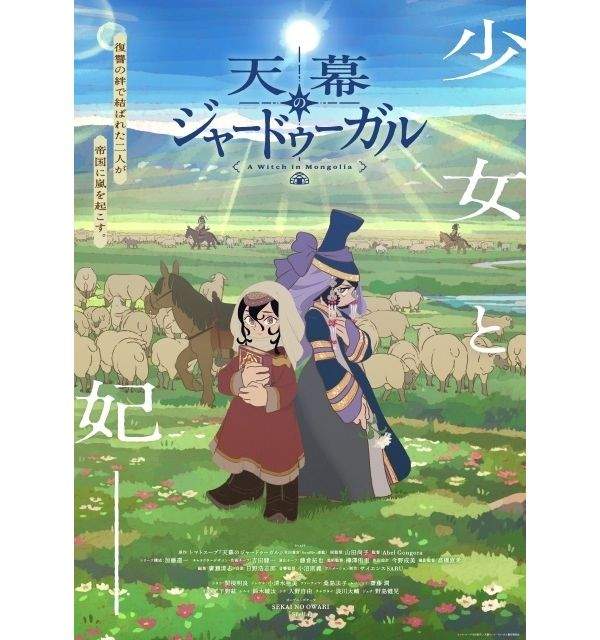
A young girl and a queen.Bound by a pact of vengeance, two women stir a storm that will shake the world’s strongest empire.
After losing her mother and being torn from her homeland, a young girl named Sitara is rescued by Fatima, the kind-hearted mistress of a scholarly family.”If you study and become wise, you’ll know exactly what to do no matter what hardships come your way.”Moved by the words of Fatima’s son, Muhammad, Sitara discovers the potential and importance of “knowledge,” deepening her education in hopes of one day catching up to him.
Meanwhile, the “Mongol Empire,” led by Emperor Genghis Khan, is expanding its reach daily.The tide of history eventually swallows Sitara’s city.Stripped of everything by the Empire’s fourth prince, Tolui, and taken captive, Sitara resolves to use her only remaining weapon—her “wisdom”—to infiltrate the royal family and collapse the Empire from the inside.Taking on the name “Fatima,” inherited from her mistress.
While harboring the flames of revenge, Sitara begins serving the Empire. One day, she has a fateful encounter with Doregene, the sixth wife of the third prince, Ogedei. Doregene also carries a horrific past and hides a deep-seated hatred for the Empire in her heart.Sitara and Doregene.When these two, who were never meant to meet, join hands, the gears of destiny begin to turn.
Sitara: Akira Sekine
Doregene: Ami Koshimizu
Fatima: Houko Kuwashima
Muhammad: Jun Saito
Ogedei: Hiro Shimono
Tolui: Ryota Suzuki
Shira: Miyu Irino
Chagatai: Daisuke Namikawa
Jochi: Kenji Nojima
Sorgaghtani: Misaki Kuno
Moge: Ayaka Asai
Kilghistani: Mayumi Shintani
Genghis Khan: Tamawashi-zeki
Mongol Soldier: Tamashoho-zeki
Dayir: Akira Ishida
Khulan: Inori Minase
Kurtugan: Shōya Chiba
Boraqchin: Kujira
*Some parts of this text have been translated using machine translation
