

People & CulturePop culture Inspired
How the Language of Youth Protest Has Evolved With Pop Culture
The evolution of protesting language is what unites the youth globally right now: the memes, new slogans, lyrics, and songs sit in sharp contrast with the history of language used in the protests; however, regardless of the era, it has played a big role.
Molshree12 Aug 2026
09:34IST
New Update
This International Youth Day of 2026, with the theme ‘Different Contexts, Common Aspirations’, could never have been more apt. From India to the U.S., the youth have taken to the streets in large numbers. While the contexts and reasons behind these protests may differ, youth across countries have increasingly taken to the streets to question policies, institutions and those in power.
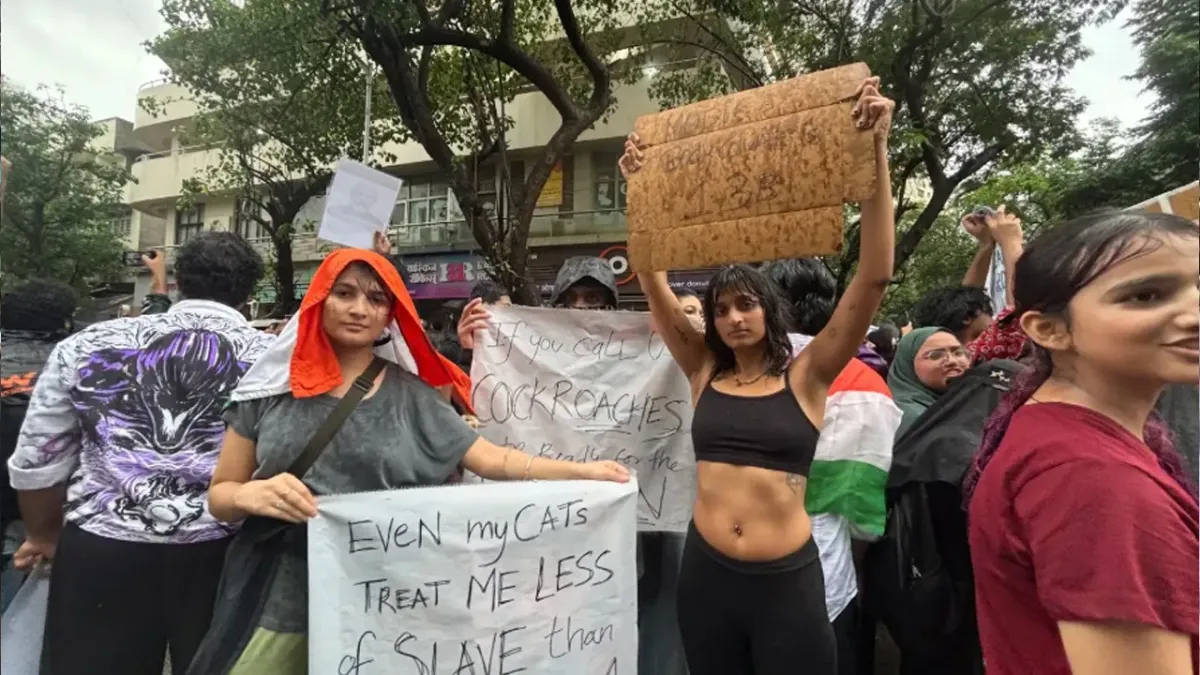
However, there has been one important unifying thread of the youth which binds India, the U.S and even other countries together – the changed language of dissent. In India, recent youth agitations have brought this ‘meme language’ to the centre stage, with internet slang, Bollywood references, viral audio and ironic humour appearing alongside conventional slogans.
This pop-culture shift among the youth is visible not only on social media, where the new dissenting language might have erupted, but also on the ground. The ongoing testimony of this is the Jharkhand agitations by the youth.
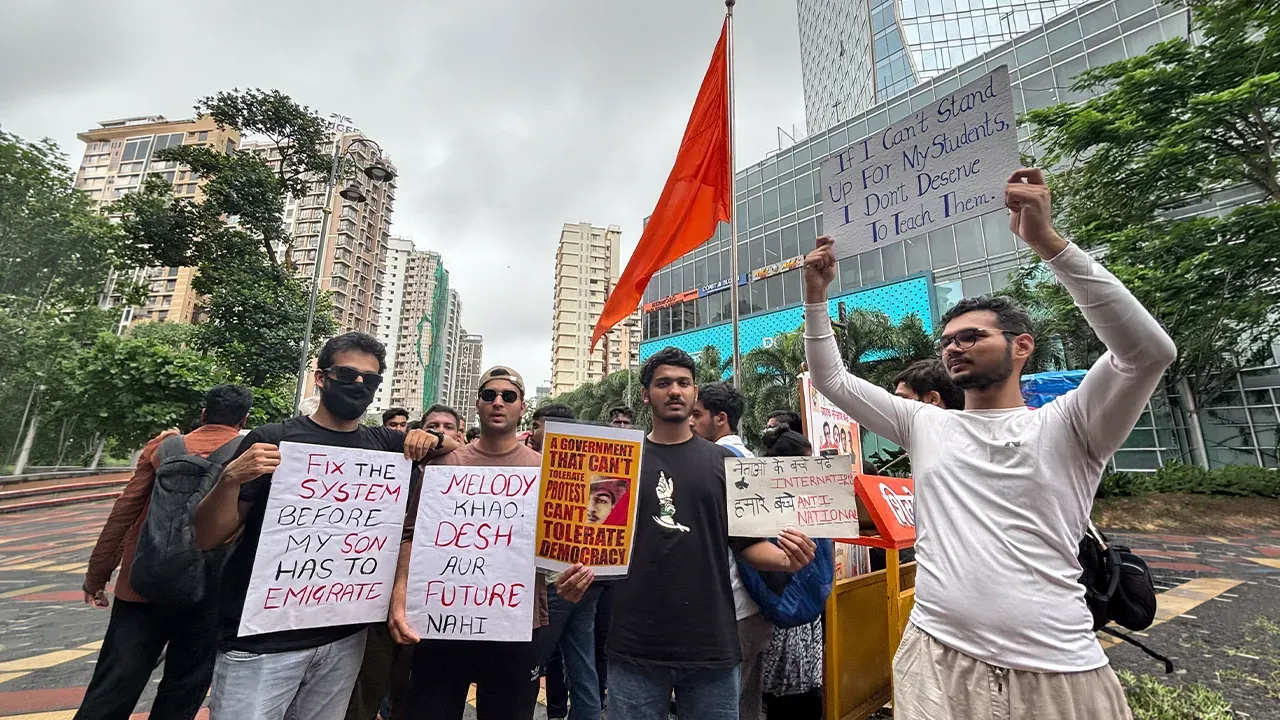
For Indian youth, not only does the demand for educational reforms remain the same, but so does the meme language. From colourful and creative posters to sarcastic jibes that only those part of internet culture and subcultures can understand.
History of youth’s protesting language
Historically, not only in India, but language has had to play an important part in the agitations that have driven the course of wars, led to regimes’ fall and also brought deaths for many. Take, for instance, World War II: Nazi propaganda relied on language, and by calling Jews “rats,” “parasites” (Parasiten), “vermin” (Ungeziefer), or “subhumans” (Untermenschen), the messaging was clear: to dehumanise them so that it becomes easy to eliminate them.
During the French Revolution, pamphlets, satire and deliberately irreverent language helped challenge the sacred image surrounding Louis XVI, Marie Antoinette and the monarchy.
Back in India, mass gatherings and agitations among youth have been common, but with certain elements permanently attached to their language. Some of the slogans like ‘Halla Bol’, ‘Nahi chalegi..’, ‘Zindabad/murdabad’ have been used by the student unions and youth as much as by people from across age groups in the rallies and the mass gatherings.
Traditionally, the language has been a blend of the rhythmic, the emotional, and the culturally resonant, rooted in the freedom struggle, with the essence of both Hindustani/Urdu and regional vernaculars. Slogans like ‘Inquilab Zindabad’, coined by the Urdu poet and freedom fighter Maulana Hasrat Mohani in 1921 and popularised by Bhagat Singh – who died in his youth – have remained popular to date.
These phrases survived because protest language has always done more than communicate a demand; it creates a shared vocabulary among those participating in a movement
The new youth language
Alongside the historically relevant slogans and calls, a new visual and linguistic vocabulary of protest has also emerged worldwide. In the recent ‘No Kings rallies’ which were held in March across all 50 U.S. states, including places like Puerto Rico, American Samoa, and even cities outside the U.S. like London, Paris, and Berlin, one thing was common: a satirical take, images generated by AI, placards containing animations, cartoons, and memes.
Cut to the recent past in India, specifically the state of Jharkhand; the same language continues. Bollywood movie references sit at the core of this language. ‘Tumse na ho payega’, from Gangs of Wasseypur, has appeared during the Jharkhand protests.”
Even in the nationwide protests that emerged largely after July 20 in solidarity with the youth’s ‘Sansad Chalo’ march and the crackdown, Bollywood references, dialogues, and songs could be seen on the ground and from the reports that emerged from the country.
However, this has not been the end. This time, the country’s youth, mainly Gen Z, not only formed a new language but also used the spoken vocabulary on the streets. Phrases like ‘Kuchhu Pucchu’, ‘Vaaste Guna Huiya ‘ emerged as popular internet Gen Z slang that were visible across the streets.
Even though slang like ‘Vaaste Guna Huiya’ has been adapted from the Western hype phrase/meme, meaning, “Can I get a hoo-yeah?” where Indian youth added ‘vaaste’ to it and even though, together, it means nothing, the language was out in the open to be seen and heard. Its apparent meaninglessness is also what makes it representative of internet-native humour: understanding the reference matters more than its literal meaning. Similarly, English phrases have become the go-to language for Gen Z to describe their day-to-day feelings. Phrases like ‘Non-chalant’, ‘Bare minimum’ were rhetorically used to take jibes at the political leaders.
This evolving vocabulary does not stop at slogans, memes and dialogues; music and viral audio have become part of it too. The singer-poet Manzar Bhopali, who gained popularity for his “Mujhko apni bank ki kitaab dijiye, desh ki tabahi ka hisaab dijiye”(Give me the details of your bank account and answers for the nation’s destruction), was adapted by youngsters for use in protest videos.
Moreover, songs like ‘I am a good girl, officer’, which had been trending on social media, were mostly shot on grounds, with the police officers, against whom the youngsters were protesting or holding a march, have been beyond comprehension as to how such jibes still work as the language and be part of agitation. Alongside, sarcasm has also been displayed through soft tunes with songs like ‘Police waaley babu’.
The refurbished songs like ‘Mere mehboob qayamat hogi’, sung by Kishore Kumar with added expressions like ‘ooh’ and ‘aha’, not only gave the song its “viral moment” again but, more strikingly, were shot with security personnel in the background.
On how it works as a language of agitation is a question that the culture and linguistic experts might take time to research before making statements, but the language made its statement already, as all of it led to an outcome ultimately that the youth was demanding – the resignation of the Union Education Minister, Dharmendra Pradhan.
It did not end there, as the language also reached the parliament, where political leaders in the House of Lok Sabha referred to the memes and the language, rather than using it to make their respective claims. Congress MP Deepender Singh Hooda used the slang “vaaste gune huiya” in Parliament.
Social media for the unified language
Before reaching the grounds, these memes, jokes, and music have been part of social media language, used not only by internet content creators but also as a medium for users to communicate with each other.
Reportedly, Meta has its largest market in India, which owns Instagram, Facebook and WhatsApp, and the new language has always been circulating over these platforms in India before being taken to the streets, thereby indicating how the platforms have been major bases for the flourishing of such language of the youth which has grown up with the internet and a few of these social media applications.
This time, however, the evolution of language is not meant to be comprehended by all. Historically, because policymakers have not been accustomed to the language, it seems intriguing and confusing to many, including policymakers.
Having said that, the new language does not clearly demarcate the ‘rights’ and the ‘wrongs’. As much as it continues with the old, persisting abusive language the country is used to, it has not been able to keep at bay the homophobic and misogynistic expressions, whether through memes, songs or slogans, highlighting how, even as the language has changed, it mirrors the dark reflection of society alongside. By showing same-sex people together, as a joke, misogynistic humour, as a jibe, still does not stand on moral grounds, and has been flagged by culture commentators, mostly on social media.
But for now, the youth’s language has certainly changed, as it has elsewhere in the world, becoming one of the things uniting youth globally, and from being an internet subculture, it has now become a popular culture of the streets. A new culture is born.
National Youth Dayyouth businessNGOs for youthYouth protestsyouth protesting languageGlobal youth protesting language
