

Posted in: Comics, Heritage Sponsored, Vintage Paper | Tagged: Ace Periodicals, Harry Lucey
The 1st Black Spider & Fort Knox in Super-Mystery Comics #3 at Auction
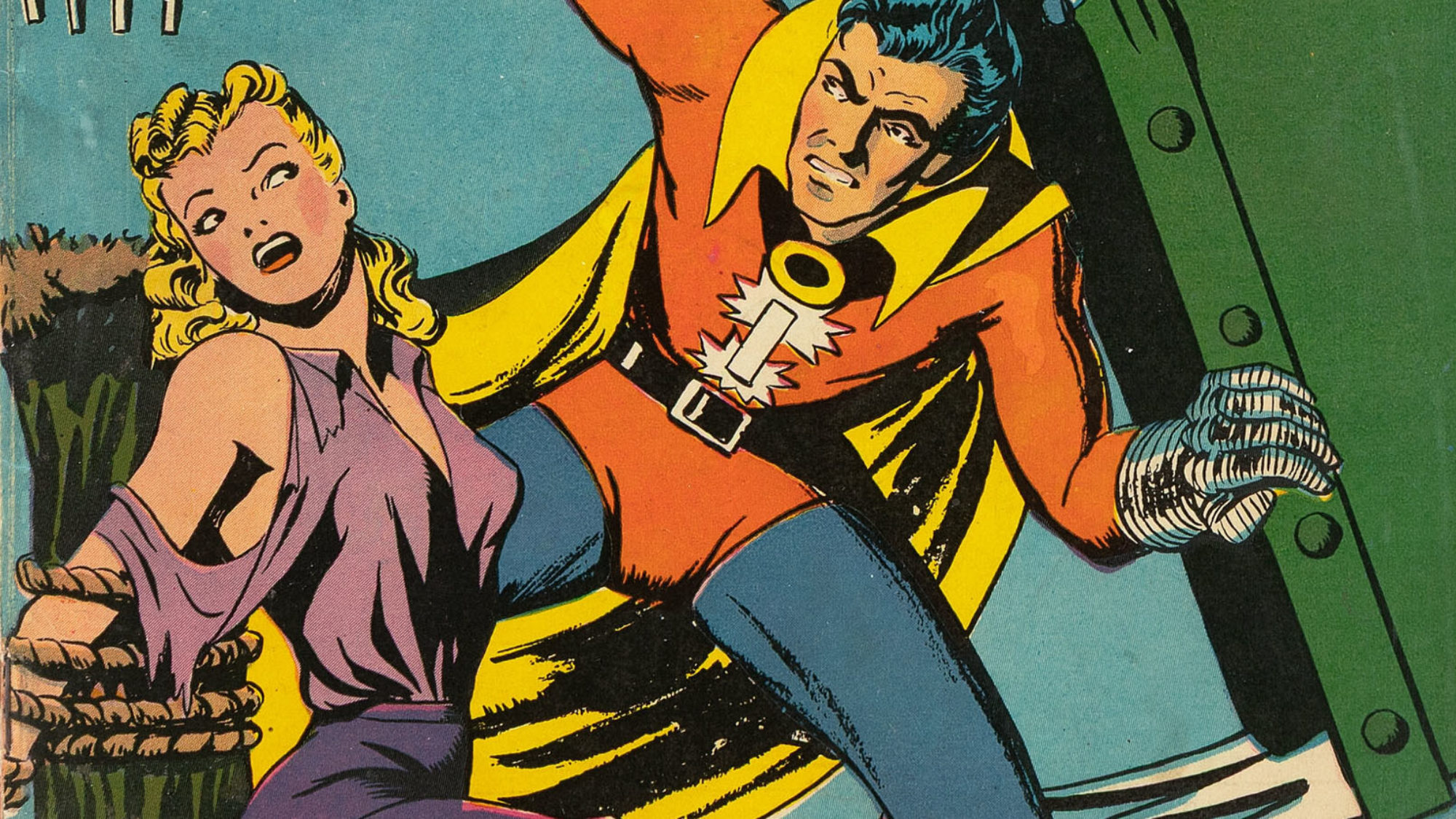
Super-Mystery Comics #3 features a magnetic battle over a Fort Knox-style gold vault, and a district attorney who uses trained spiders.
Article Summary
- Super-Mystery Comics #3 turns America’s new Fort Knox mystique into a magnetic gold-vault robbery led by Duke Drago.
- Harry Lucey’s 13-page Magno story shows the future Archie master in early Golden Age action with machines and menace.
- Super-Mystery Comics #3 debuts the Black Spider, a district attorney vigilante who fights gangsters with trained spiders.
- An early Ace Comics key, Super-Mystery Comics #3 is scarce on the CGC Census and prized for its pulp-style firsts.
A billion-dollar robbery in Super-Mystery Comics #3 begins with a villain named Duke Drago pointing to a map of a secret United States Mint gold cache. The story makes its inspirations pretty clear. This underground store of gold, Drago explains, is “like the one in Kentucky.” In August 1940, that was an obvious Fort Knox reference. The United States Bullion Depository was completed in December 1936, its first gold arrived by railroad in January 1937, and the initial shipments were finished that June, according to the United States Mint’s history of Fort Knox, which made the facility fully operational only about three years before this issue reached newsstands. Fort Knox was already becoming a symbol of unfathomable riches and impossible security. Super-Mystery Comics #3 turns that new gold fortress into the target of a supervillain’s crime.
That lead Magno feature is handled by Harry Lucey, the only artist firmly credited on an interior story here. Lucey is in the early moments of his career at this stage, and he would become far better known for his work on Archie, where physical comedy and an expressive, cartoony style were required. This 13-page Magno feature catches him in a very different mode, with aircraft, electrical force, machinery, bondage peril, and superheroics.
The First Black Spider
The issue’s other most interesting feature is the first appearance of the Black Spider. Ralph Nelson is a district attorney prosecuting gangster Sol Risko for murder. Nelson has the gun needed to convict him, but Risko’s mob steals the evidence and kills the special deputy carrying it. The law still knows who committed the crime, but it can no longer prove the case. Nelson’s answer is to become the Black Spider, a character in the classic pulp mold. His headquarters is a cave called the Web, complete with lab equipment and poisonous spiders he has trained himself to handle. Wearing a black hat, mask, and web-like cape, he carries the spiders in a special container and uses them as weapons of fear and distraction. Ace’s The Black Spider continued through ten consecutive issues of Super-Mystery Comics, from volume 1 #3 through volume 2 #6, cover-dated October 1940 through February 1942.
This issue also includes a Sky Smith aviation adventure, the volcanic hero Vulcan, Q-13 espionage, an illustrated Forty-Niner text story, and the final appearance of Corporal Flint of the Royal Mounted Police. Ace had entered comics in 1940 after years in the pulp market, with material that was obviously influential in shaping how it approached comics. There are only 16 copies of this issue on the CGC Census, with only two higher than CGC 5.5. One of those is a GCG 6.5, and the other, the census-topping CGC 9.6 may not have hit the public market in decades. For bidders interested in a scarce early Ace key that’s nearly impossible to get in higher grades, there’s a Super-Mystery Comics #3 (Ace, 1940) CGC FN- 5.5 White pages up for auction at the 2026 August 13 Golden Age Century Comics Showcase Auction V #40377.
Enjoyed this? Please share on social media!

Stay up-to-date and support the site by following Bleeding Cool on Google News today!
