

At the 2026 Enugu Gaming Conference, industry leaders, regulators, technology experts and operators confronted a defining question: Can Nigeria move from merely consuming gaming technology to building, securing and owning the infrastructure that powers its digital gaming economy? Nseobong Okon-Ekong reports
For two days, the International Conference Centre in Enugu became something of a laboratory for the future of Nigeria’s gaming industry. The conversations were not about the familiar language of jackpots, odds and winning tickets. They went deeper—into code, capital, cybersecurity, regulation, data, trust, player protection and the difficult business of building technology that Nigerians can confidently call their own.
Under the theme, ‘Code, Capital and Compliance: Unlocking Nigeria’s iGaming Tech Opportunity’, the 2026 Enugu Gaming Conference brought together regulators, operators, technology specialists, developers, investors and other stakeholders for a conversation that increasingly felt less like an industry gathering and more like a strategic interrogation of where Nigerian gaming goes next.
The central question was difficult, even uncomfortable: Can Nigeria own its iGaming technology? It was a question that exposed both the enormous possibilities before the industry and the gaps that must be closed if those possibilities are to become reality.
For Ejiofor Agada, Planning Committee Lead of the Enugu Gaming Conference, the evolution of the event reflects a deliberate ambition. The conference, he explained, began with a simple conviction—that the Nigerian gaming industry was important enough to deserve a platform that speaks directly to its realities, opportunities, challenges and future.
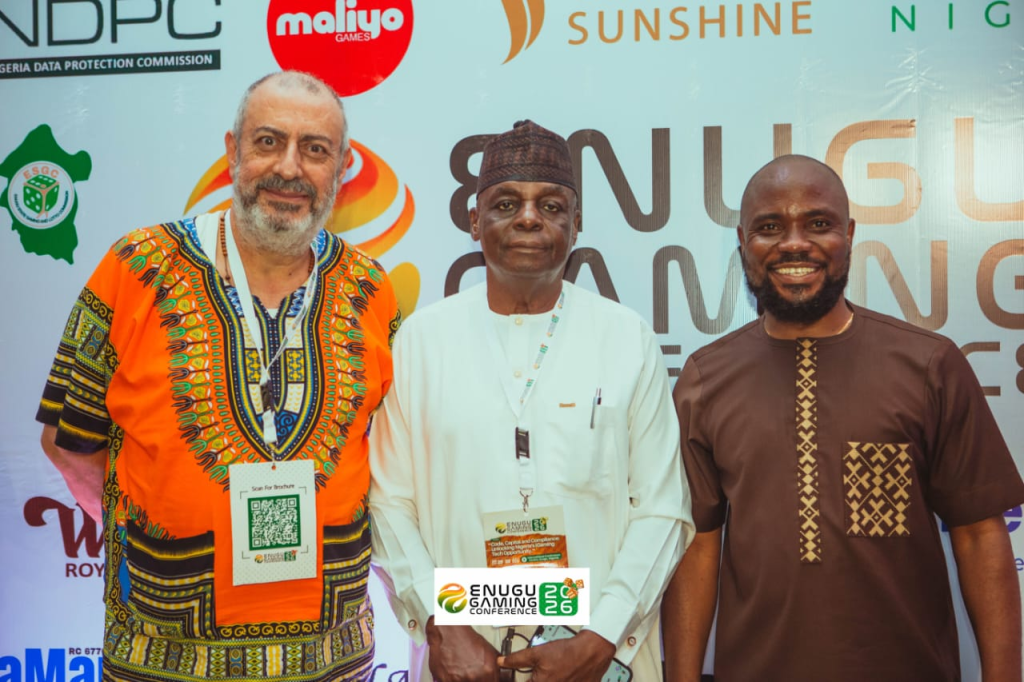
That idea has grown. Today, the Enugu Gaming Conference is positioning itself as a serious Nigeria-focused gaming platform, attracting some of the finest minds in the sector while deliberately opening its doors to respected experts from outside the country.
The distinction is important. Agada says international participation is not intended to dilute the Nigerian identity of the conference, but to enrich it. The ambition is to build a platform that is “credible, Nigeria-centric, impactful, commercially relevant and globally respected”, without pretending to be anything other than what it is.
The message is unmistakable: Nigeria must learn from the world, but it must also develop the confidence and capacity to contribute to the global gaming conversation. And that conversation has become increasingly urgent.
The battle over who owns the technology
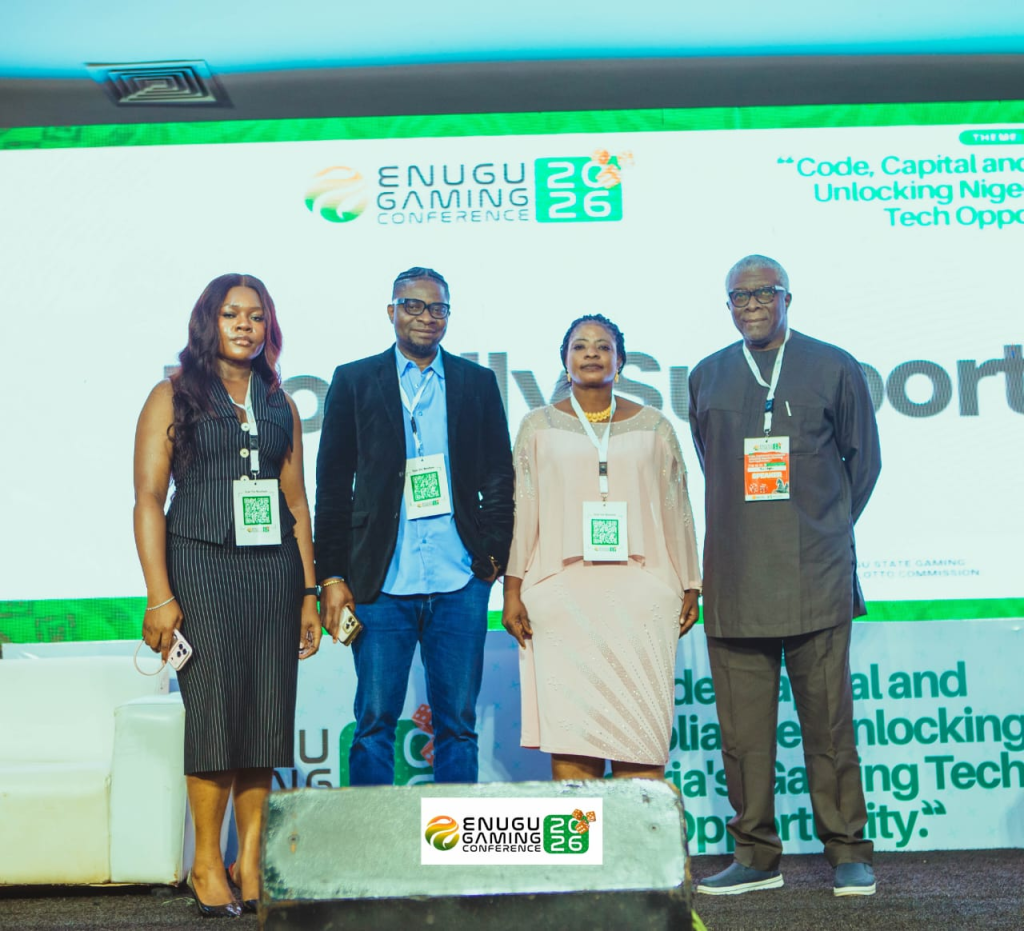
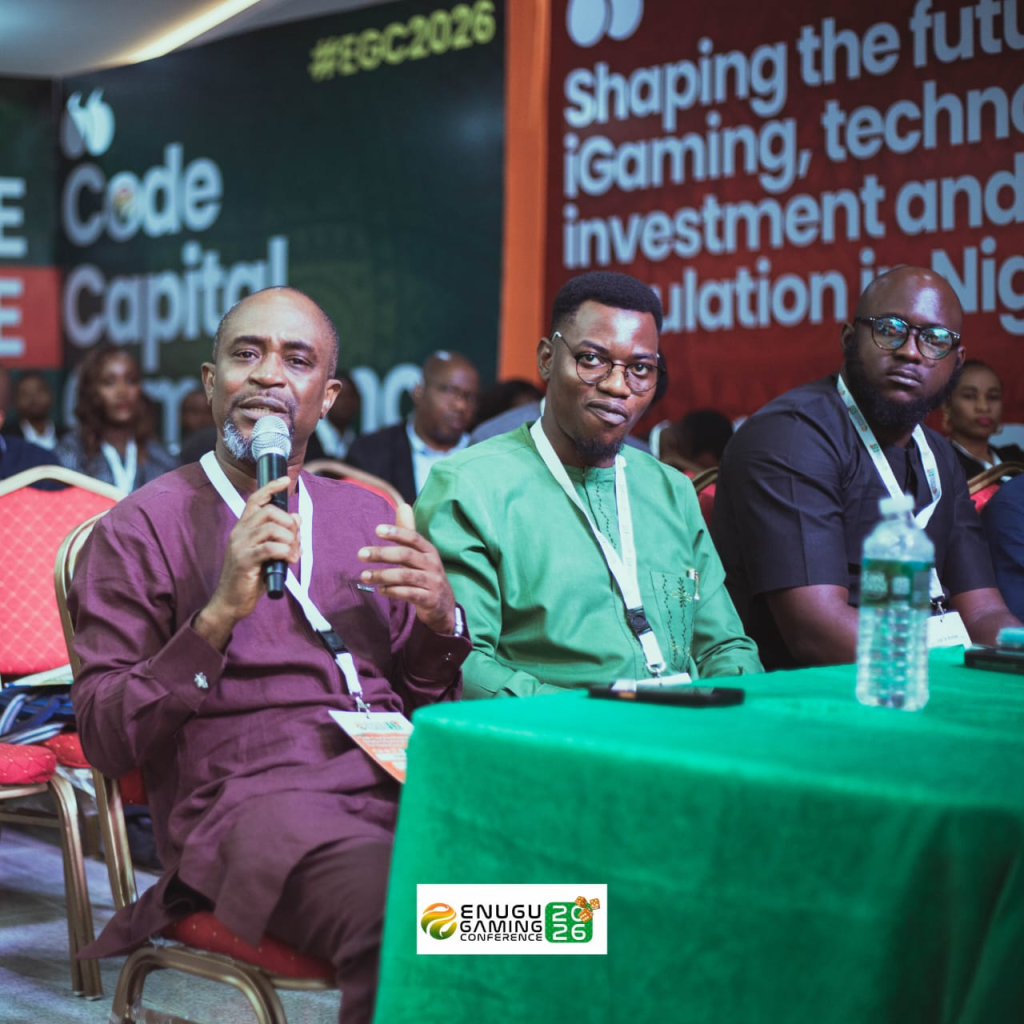
Perhaps nowhere was the urgency more apparent than during the opening panel session, ‘Building the Stack: Can Nigeria Own its iGaming Technology?’
The question sounded technological. The answers, however, were profoundly human. They touched on trust, competence, data protection, accountability, cross-border payments and the willingness of operators to put their businesses—and their customers—in the hands of Nigerian-built systems.
Oluchi Amadi, a cybersecurity expert, brought the discussion down to one of the most fundamental rele but unsettling: If Nigeria cannot keep its data safe, can it truly claim to own the technology?
The scale of the challenge is considerable.
Amadi pointed to the enormous volume of data generated by millions of people participating in gaming activities and warned against the uncertainty that can arise when operators and regulators are unclear about who bears responsibility for protecting sensitive player information.
In an industry where technology increasingly sits at the heart of transactions, she argued, cybersecurity cannot be an afterthought. Too often, security is considered near the end of a technology rollout, when the system has already been designed and built.
That approach, she suggested, is no longer sufficient. Security must be embedded from the beginning. It must be part of the architecture, continuously monitored and constantly strengthened.
For Nigeria to truly own its iGaming technology, its engineers cannot simply write the code. They must be capable of building, securing and governing the entire technological engine. That is the difference between using technology and owning it.
But technology ownership is not simply a question of whether Nigeria has enough programmers. Derrick Kentebe, Executive Chairman of YangaGames, believes the country has the talent required to take advantage of the opportunity.
The more difficult issue is trust. Nigerian operators, he argued, are increasingly willing to give local developers opportunities. But technical ability alone will not convince them to entrust critical gaming infrastructure to a local company. Integrity matters. So does the ability to deliver. And accountability matters just as much.
The local developer, Kentebe suggested, must demonstrate that it can do more than write software. It must prove that it understands the operational demands of the gaming industry and can deliver systems that operators can depend on.
In effect, the challenge is no longer simply: Can you build it? The more consequential questions are: Can you deliver it? Can you secure it? Can you maintain it? Can we trust you with our business and our customers?
Those questions may determine whether Nigeria’s technology companies remain suppliers on the periphery of the gaming ecosystem or become architects of its future.
Olaitan Olarewaju, a Business Development Manager, introduced another complication. Gaming technology does not stop at national borders. Neither does money. Financial settlements in the gaming industry often cross jurisdictions, creating a web of international protocols and regulatory requirements that local technology developers cannot ignore.
Nigeria may build its own systems, but those systems must be capable of operating within a global financial and technological environment. For Olarewaju, the answer may therefore lie in greater cooperation among African countries.
Rather than each country developing isolated rules and technological frameworks, African jurisdictions could work together to develop standards capable of surviving the rapid evolution of digital gaming and cross-border transactions.
The implication is significant. Nigeria’s iGaming opportunity may be much larger than the Nigerian market itself.
A Nigerian-built gaming infrastructure that can satisfy Nigerian regulation, meet international standards and operate seamlessly across African markets could become an exportable technology. That is where code begins to meet capital.
The missing link between code and business
Kelani Opeyemi, Co-Founder and Managing Director, pushed the conversation further by identifying what he described as one of the barriers preventing Nigeria from building its own iGaming infrastructure.
Programming can be learned. But programming knowledge alone does not automatically produce a sophisticated gaming platform. The real challenge, he argued, is knowing how to connect the different pieces—algorithms, codes, systems and commercial requirements—into a functioning whole. His question lingered over the conference: “The problem is, do we have expertise to connect the broken dots?”
There was an even bigger question behind it: What would make an operator choose a Nigerian-built system? That is perhaps the ultimate test of local innovation. It is not enough to build something because Nigeria wants to build something.
The product must be good enough to compete. It must be secure enough to inspire confidence. It must be reliable enough to carry the weight of a commercial operation. And it must be innovative enough to give operators a reason to abandon established foreign systems. The opportunity, therefore, is not simply to substitute imported technology with local technology. It is to build something better.
Regulation: The other half of the equation
If technology represented one side of the conference’s central argument, regulation represented the other. Arinze Arum, Executive Secretary/CEO of the Enugu State Gaming and Lotto Commission, did not attempt to paint an artificially rosy picture of the industry.
“I will not stand here and pretend everything is well in the Nigerian gaming industry,” he declared. “It is not.”
His concerns extend beyond technology.
Despite the Supreme Court’s pronouncement affirming the constitutional jurisdiction of states over gaming, he argued that the old instinct towards centralised control has not completely disappeared.
Instead, he suggested, it sometimes returns through conversations around “harmonisation” and other pressures on operators dealing directly with state regulators.
For Enugu, however, the answer is confidence in its regulatory framework. Arum told operators holding valid Enugu State licences that they should regard themselves as being on equal footing with operators anywhere else in the world.
It was more than a regulatory statement. It was a declaration of intent. Enugu wants its gaming ecosystem to operate according to rules that are transparent, verifiable and capable of standing alongside international standards.
One manifestation of that ambition is the state’s digital verification system. Anyone seeking to verify or validate a licensed gaming operator in Enugu State can do so online, in real time and without intervention.
That may appear like a small technological innovation, but its implications are considerable. In an industry where legitimacy, compliance and trust are fundamental, the ability to verify a licence instantly can become a powerful tool for regulators, operators, investors and consumers.
It is regulation meeting technology in practical form. And it reinforces Arum’s broader philosophy that the conversations at Enugu are not intended simply to generate applause. They are designed to produce answers.
The significance of the conference may ultimately extend beyond Enugu State. The issues debated—technology ownership, data protection, cybersecurity, local development, cross-border financial settlements, regulatory certainty, responsible gaming and consumer protection—are national questions.
The framework being discussed may therefore not merely guide Enugu. It could help define the direction of gaming regulation and technology development across Nigeria. That is what makes the conference particularly relevant at this point in the industry’s evolution.
Nigeria’s gaming industry has reached a stage where growth alone is no longer enough. The next phase demands infrastructure. It demands credible institutions. It demands local technological capacity. It demands data protection. And above all, it demands trust.
Celebrating those building the industry
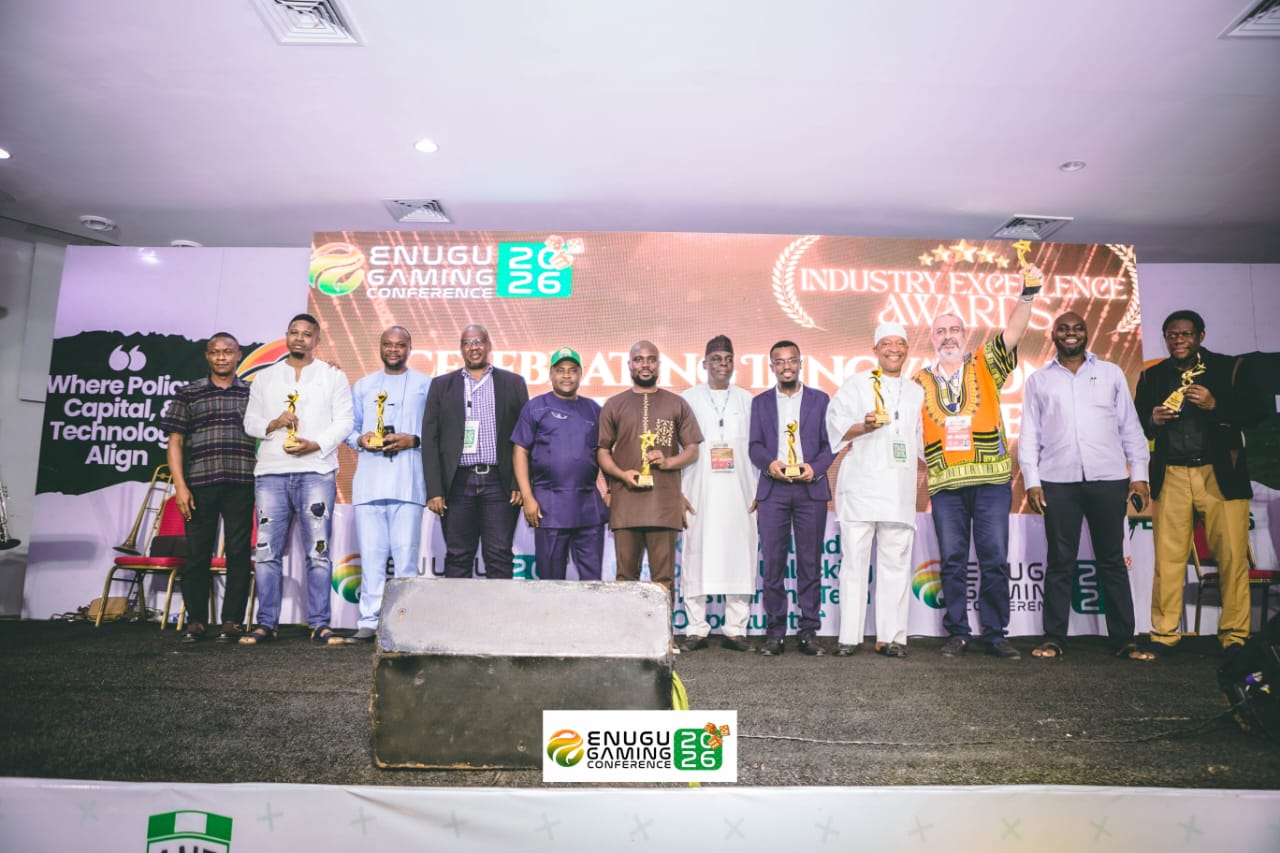
The conference also offered a moment to recognise individuals and institutions contributing to the development of the sector through the Enugu Gaming Conference Awards. Among the most notable recognitions was the Gaming Industry Excellence Award, presented to GAMINGWEEK, founded by Nseobong Okon-Ekong and published in THISDAY Newspapers.
The recognition marked the second consecutive year that GAMINGWEEK has received the honour from the Enugu Gaming Conference—an acknowledgement of its sustained contribution to gaming journalism and industry discourse. Okon-Ekong was present to receive the trophy, presented by Peter Igho, pioneer director-general of the Nigeria Lottery Regulatory Commission and a respected veteran broadcaster.
The Emerging Gaming Brand Award went to Peter Oluka, founder and Editor-in-Chief of Tech Economy. GambleAwareng received the Responsible Gaming and Consumer Protection Award, with its Executive Director, Gabriel Akpabio, proudly stepping onto the award podium to receive the recognition.
The Gaming Industry Leadership Award went to Jeremiah Maangi, whose work has increasingly attracted recognition across the African gaming landscape. R&S Lotto was named Outstanding Gaming Operator of the Year, while the Enugu State Gaming and Lotto Commission received the Regulatory Excellence and Compliance Award.
The awards provided a celebratory punctuation to a conference whose larger mood was deliberately serious.
Perhaps the most important thing that happened in Enugu was not an award, a speech or even a panel session. It was the emergence of a more demanding ambition. For years, the conversation around technology in Nigeria has often been framed around adoption: how quickly Nigerians can embrace new platforms, access new services and participate in the digital economy. The Enugu conversation moved the question forward.
What if Nigeria could build the platforms? What if Nigerian developers could create the infrastructure? What if African regulators could develop standards that match the realities of cross-border digital commerce? What if cybersecurity were embedded at the beginning rather than bolted on at the end?What if operators could trust locally built systems enough to deploy them at scale? And what if the technology powering Africa’s gaming future was not merely consumed by Africans but designed, secured and governed by Africans?
Those questions give the 2026 Enugu Gaming Conference its significance. The future of gaming will not be decided solely by who has the biggest operators, the loudest brands or the largest number of players. Increasingly, it will be determined by who controls the code, who can mobilise the capital, and who can establish the compliance frameworks necessary to make the entire ecosystem trustworthy.
That is the opportunity and the challenge that Enugu placed before Nigeria. The conference may have lasted only two days. But the questions it raised are likely to occupy the industry for much longer.
