


Rohin Ramesh
| 19 minutes ago
Views: 69
Your browser does not support the audio element.
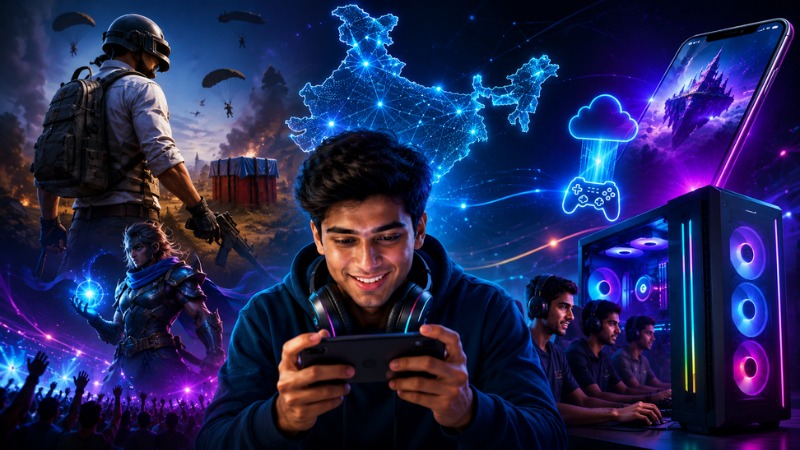
India’s gaming market has long been defined by one staggering statistic, billions of downloads every year. But the next chapter of growth is no longer being written by installs alone. Instead, the industry is undergoing a structural shift where player engagement, recurring monetisation, localisation and technology-led experiences are emerging as the real growth engines.
With non-real-money gaming (NRMG) revenue projected to more than double to $2.4 billion by 2029, experts believe India is finally evolving from a volume-driven market into one built around loyal communities, premium experiences and sustainable player spending.
The era of engagement-led monetisation
The days when success was measured purely by download numbers are fading. While India continues to generate nearly eight billion game downloads annually, publishers are increasingly focusing on retaining players, and giving them reasons to spend over time.
According toVishal Parekh, Chief Operating Officer, CyberPowerPC India, players are no longer spending money simply because they have downloaded a game. “The biggest shift is that players today are spending on experiences they stay invested in, rather than simply downloading more games,” he says.
Parekh points to live-service titles offering regular content updates, progression systems, competitive gameplay and active communities as the biggest drivers of monetisation. “The Naavik India State of Play 2026 report reflects this evolution well. While India continues to see nearly 8 billion game downloads annually, in-app purchase revenue has more than doubled over the last five years, signalling that the market is maturing beyond pure user acquisition.”
Advertising, he says, will remain an important revenue stream in India’s mobile-first ecosystem, “but sustained player engagement is increasingly driving monetisation.”
Sagar Nair, Head of Incubation, LVL Zero Incubator, agrees that India’s gaming economy has entered a healthier phase. “Success is increasingly being measured by engagement and lifetime value rather than sheer download numbers.”
For years, India excelled at acquiring users at scale, but monetisation remained elusive. That equation is now changing as players increasingly spend on games that consistently deliver fresh content, progression systems, social experiences and competitive gameplay.
While advertising continues to play a significant role, Nair believes in-app purchases are becoming increasingly meaningful as player maturity grows. “Battle Royale titles have demonstrated that Indian players are willing to spend when they see long-term value through cosmetics, battle passes, or live events.”
Offering another perspective,Rohit Agarwal, Founder & Director, Alpha Zegus, says the market is no longer monetising purely through scale. “Downloads have remained broadly stable since 2020, but in-app purchase revenue has more than doubled, which means existing players are spending more deeply and more consistently.”
According to Agarwal, the market is steadily moving towards a hybrid model where advertising continues to monetise free-to-play audiences, while battle passes, subscriptions, cosmetics, progression systems and limited-time content convert a smaller, but increasingly valuable, segment into repeat-paying users.
“Not every player needs to pay, but the product must create enough long-term engagement for high-intent users to spend repeatedly,” Agarwal says.
Mohak Arora, Sports Analytics Expert at Parimatch, also points to a clear monetisation shift. According to him, while mobile gamer numbers are projected to rise steadily, he notes that much of the revenue growth will come from in-app purchases and advertising. “The growing creator economy and new gaming creators coming up on social media are giving games more visibility, while community gaming will further increase in-app purchases.”
Technology is making gaming disappear
If monetisation is evolving, so is the gaming experience itself.
Experts believe technologies such as 5G, cloud gaming and AI will fundamentally reshape how Indians play games over the coming years, not by replacing existing platforms, but by removing friction.
“We’re moving towards a future where technology becomes almost invisible, and that’s a good thing,” says Parekh.
Players, he argues, will spend less time worrying about loading screens, lag or hardware limitations, and more time enjoying gameplay itself.
“5G will make online gaming smoother and more responsive, cloud gaming will help more people access high-quality titles instantly, and AI will make games feel more dynamic through smarter gameplay, personalized experiences and faster content updates.”
However, he is quick to point out that premium hardware will remain indispensable for competitive gamers. “I don’t see these technologies replacing powerful PCs or devices. I see them working together.”
Nair shares a similar outlook, believing the next phase of growth will depend less on hardware limitations and more on the quality of experiences developers can create.
Improved connectivity, cloud infrastructure and AI, he says, will enable larger multiplayer worlds, faster content creation, better localisation and smarter live operations.
Importantly, he expects India’s developers to increasingly build games across PC, console and mobile platforms rather than focusing exclusively on smartphones.
Agarwal believes AI could ultimately have the biggest impact. “Local AI may have the most immediate impact,” he says.
From adaptive difficulty and smarter NPCs to personalised onboarding, regional-language dialogue, automated moderation and efficient LiveOps, AI will allow publishers to personalise experiences across India’s highly diverse player base.
Meanwhile, Arora highlights the practical benefits that consumers are already beginning to experience. He credits 5G with enabling smoother gameplay for demanding titles while reducing lag during peak gaming hours. Cloud gaming, he adds, allows premium games to run without relying on expensive hardware while also conserving device storage and battery life. Local AI integration, meanwhile, is helping improve rendering quality by predicting load spikes and minimising drops in frame rates.
Investors are backing communities
As India’s gaming market matures, investment strategies are changing too.
Rather than chasing whichever genre is currently trending, investors are increasingly looking for games capable of building long-term communities and recurring engagement.
Parekh believes venture funds should prioritise experiences over categories. While shooter games currently account for nearly 43% of India’s in-app purchase revenue, he believes localisation, creator ecosystems, live-service mechanics and user-generated content platforms represent equally compelling long-term opportunities.
“India’s gaming market is no longer defined by downloads alone. It’s increasingly being shaped by engagement, community and player lifetime value,” comments Parekh.
Nair opines, “Investors should look beyond individual genres and focus on products that can build long-term communities and global audiences.”
He sees competitive multiplayer games, strategy titles, simulation experiences and creator-led ecosystems as particularly attractive, while also highlighting the emergence of Indian studios developing premium PC and console titles for global audiences. From an investment standpoint, he believes these studios have the potential to build globally scalable intellectual property.
Agarwal sees an equally diverse opportunity landscape. While shooters remain India’s largest monetisation category, he points to the rapid growth of strategy games, MOBAs and card battlers, all of which offer stronger retention and long-term LiveOps potential.
He also sees promise in simulation, social-world experiences and culturally localised casual games, citing Roblox’s creator ecosystem alongside Indian successes such as Ludo King and Cricket League.
“The winning studios will be those that can build communities and sustain LiveOps for years,” says Agarwal.
Arora believes shooters will continue attracting investor interest because of the powerful communities built around esports tournaments, live events and celebrity participation.
Following regulatory changes impacting real-money gaming, he also expects strategy games to gain further traction among players seeking competitive, long-term progression experiences, while puzzle games continue to attract audiences through accessible and relaxing gameplay.
India’s gaming economy grows up
India’s gaming industry is entering a defining phase. For years, the country’s biggest advantage was scale, millions of players downloading games at an unmatched pace. Today, the opportunity lies elsewhere: in keeping those players engaged, encouraging them to spend, and building communities that endure long after the initial download.
As AI transforms game development, 5G and cloud technologies make premium experiences more accessible, and investors increasingly back studios with global ambitions rather than short-term growth hacks, India’s gaming ecosystem is evolving into a far more mature market.
The industry’s future, it appears, will no longer be measured by how many people install a game, but by how many choose to stay, play and invest in it.
Show More
exclusives05-Aug-2026Vishal ParekhMohak AroraRohit AgarwalSagar Nairgaming industryRohin Ramesh
similar newsFastrack isn’t selling perfumes, it is building a youth culture brand: Manish Gupta
similar newsFrom GenAI campaigns to hyper-personalisation: ICICI Lombard’s marketing playbook
similar newsHyperlocal, high performance: Inside India’s new festive influencer playbook
similar newsWhat’s a TVS Rider doing in the Marvel Universe? Aniruddha Haldar on the strategic narrative
similar newsBeyond the scroll: Can micro dramas become India’s next OTT success story?
similar newsThe future of marketing belongs to brands that build participation, not just reach: Ritesh Sud
similar newsTechnology alone is not a competitive advantage anymore: Yuvraj Sarda, Volvo CE India
similar newsTrendspotting: Ramayana trailer & missing Hanuman; Latent’s bonus episode FOMO
similar news20+ sponsors locked in two weeks before launch: Akshay Agrawal on KBC 18’s ad sales momentum
similar newsUdyan Ghai on Apollo Tyres’ sports marketing bet and emotional connection push