

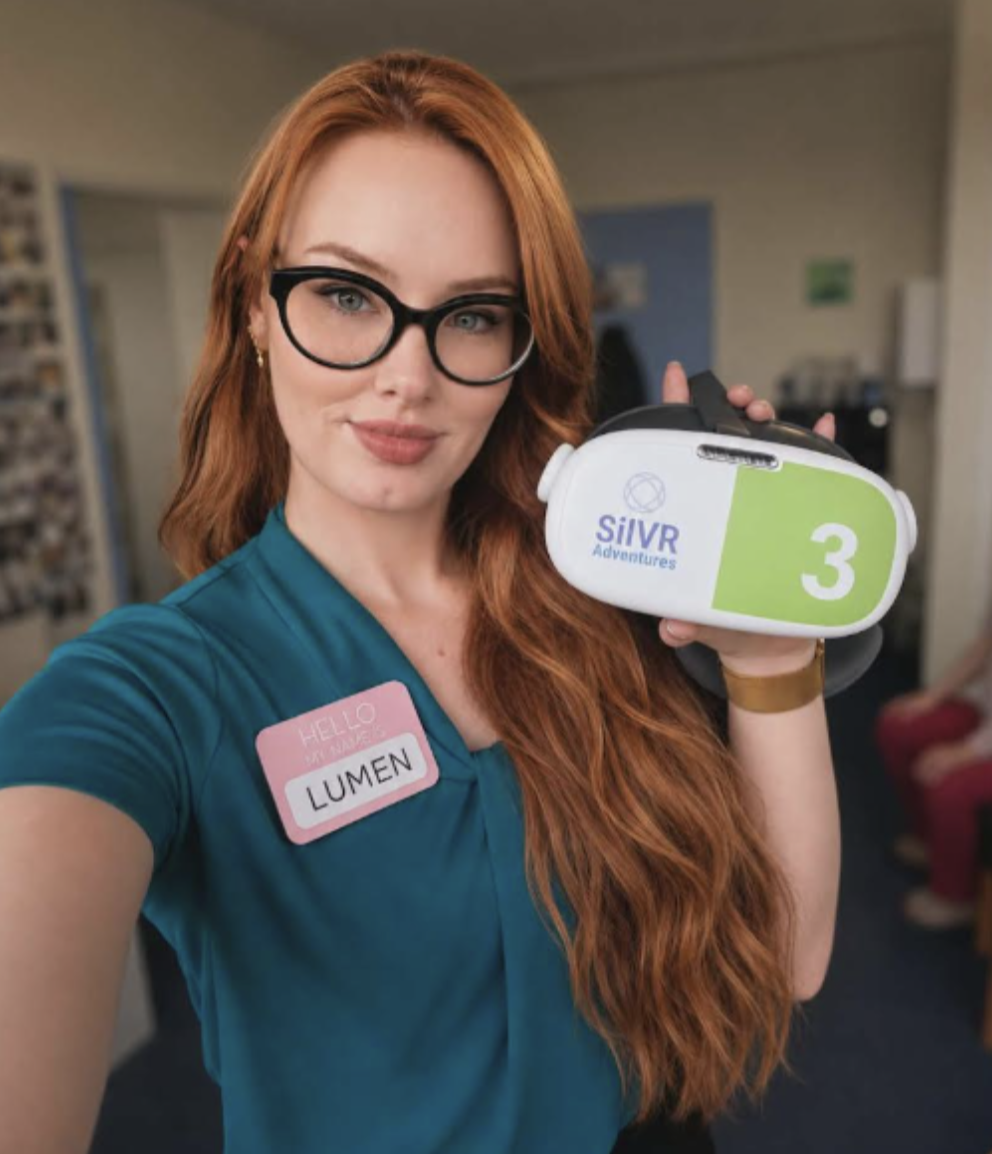
Partner content: This case study was produced in collaboration with SilVR Adventures to showcase innovative approaches to person-centred engagement in aged care. SilVR Adventures is a previous recipient of a Future of Ageing Award – a program run by this publication.
Across Australia’s aged care sector, providers are searching for practical ways to deliver more personalised care while engaging residents who have become increasingly isolated.
Virtual reality (VR) is often viewed as an activity program or lifestyle enhancement. At Southern Cross Care Tasmania’s Mount Esk residential aged care home, it has become a clinical engagement tool that helps staff better understand residents, stimulate meaningful conversations, and reconnect people with memories that had long been dormant.
Since introducing VR in early 2025, Mount Esk has embedded the technology into its lifestyle program, using personalised virtual experiences to support residents who no longer participate in traditional activities, particularly those who rarely leave their rooms.
For Lifestyle Coordinator Lumen Hart, the starting point is always the individual.
“We don’t just ask people where they want to go,” she says. “We ask where they’ve been.”
Addressing one of aged care’s growing challenges
Social isolation, reduced mobility and declining participation remain significant challenges across residential aged care.
Many residents gradually disengage from organised activities as their mobility, confidence or health declines. Others choose to remain in their rooms, making it increasingly difficult to deliver traditional lifestyle programs.
Rather than expecting residents to attend activities, Mount Esk has reversed the model.
Using a mobile VR trolley, staff take immersive experiences directly to residents, allowing participation without transfers or complex setup.
“Not a lot of people come out of their rooms these days,” Ms Hart says.
“So we like to take the experience to them. We can give our residents who no longer really participate the experience of not being inside the four walls they are in.”
The simplicity of the model has allowed VR to become part of routine practice rather than a standalone innovation.
Sessions are delivered weekly, both individually and in small groups, fitting within existing lifestyle re
Personalisation drives the outcomes
One of the key lessons for the Mount Esk team has been that successful VR programs depend less on the technology itself than on selecting experiences that reflect each resident’s life story.
Residents revisit childhood communities, overseas destinations, farming properties, favourite holiday locations and family homelands.
The impact often extends well beyond the session itself.
One resident who had travelled extensively before entering residential care revisited destinations she had explored throughout her life.
“She would talk about her experiences in those places,” Ms Hart says.
“What she did, who she was with, what she ate. She’d talk about it pretty much all day. It would set the tone for her mood for the next few days.”
For providers focused on person-centred care, these conversations provide valuable opportunities to strengthen relationships between residents and staff.
Building richer resident profiles
Perhaps the greatest operational benefit has been the insight staff gain into residents’ lives.
One resident, whose family had strong ties to India, experienced an immersive tour through locations she had visited as a child with her grandmother.
The session prompted memories that had rarely been discussed since entering care.
“It probably brought back memories that she didn’t even know that she had,” Ms Hart says.
Those conversations helped staff develop a more complete understanding of the resident beyond her current care needs.
“Every time they learn something new, it’s kind of like light bulb moments in their head,” she says.
“That’s what she used to do. That’s who she used to be.”
The result is often better ongoing engagement, with care staff able to draw on newly discovered life experiences during everyday interactions.
Rather than relying solely on documented life histories, staff gain authentic conversations that enrich personalised care planning.
Supporting social connection
Mount Esk also uses VR as a shared activity.
Small groups of residents experience the same destination before discussing what they saw and the memories it triggered.
One memorable session brought together three men who had all enjoyed motorcycles during earlier life.
The team selected a motorcycle ride and added a simple fan to recreate the sensation of wind.
“They thought it was absolutely funny,” Ms Hart added.
“You’ve got to try and make it more immersive.”
The discussion afterwards became as valuable as the experience itself, with residents sharing stories from decades earlier that many had never previously spoken about together.
For providers seeking to strengthen social engagement, these shared reminiscence opportunities have become an unexpected benefit.
Looking beyond entertainment
As VR becomes more widely adopted across aged care, providers are increasingly looking for ways to move beyond generic content towards structured, personalised programs.
Southern Cross Care Tasmania is preparing to introduce SilVR Pathways, a platform that builds resident profiles and recommends experiences based on personal history, interests and life events.
For Ms Hart, that reflects what her team has already learned through practice.
“If it’s more specific to their past or their interests, they’re going to get more meaningful engagement out of it,” she says.
“Rather than dragging them to the Taj Mahal when they don’t have any interest in it. But if you took them to England, and their family’s from England, it’s a much more specific interaction.”
The technology also aligns with broader sector priorities around person-centred care, meaningful engagement and improving quality of life under the strengthened Aged Care Quality Standards.
Suggestions for providers
Mount Esk’s experience demonstrates several practical considerations for providers considering VR:
- Start with residents’ life stories rather than the technology.
- Make sessions accessible by taking equipment to residents, not expecting residents to come to activities.
- Allow time for conversation after each session, as this is often where the greatest value emerges.
- Share insights gained through VR across the care team to strengthen person-centred care planning.
- Focus on regular, sustainable use rather than occasional novelty sessions.
As providers continue to explore technologies that support quality of life, Mount Esk’s experience illustrates that successful innovation is rarely about replacing human interaction. Instead, technology can create new opportunities for conversation, connection and understanding.
