

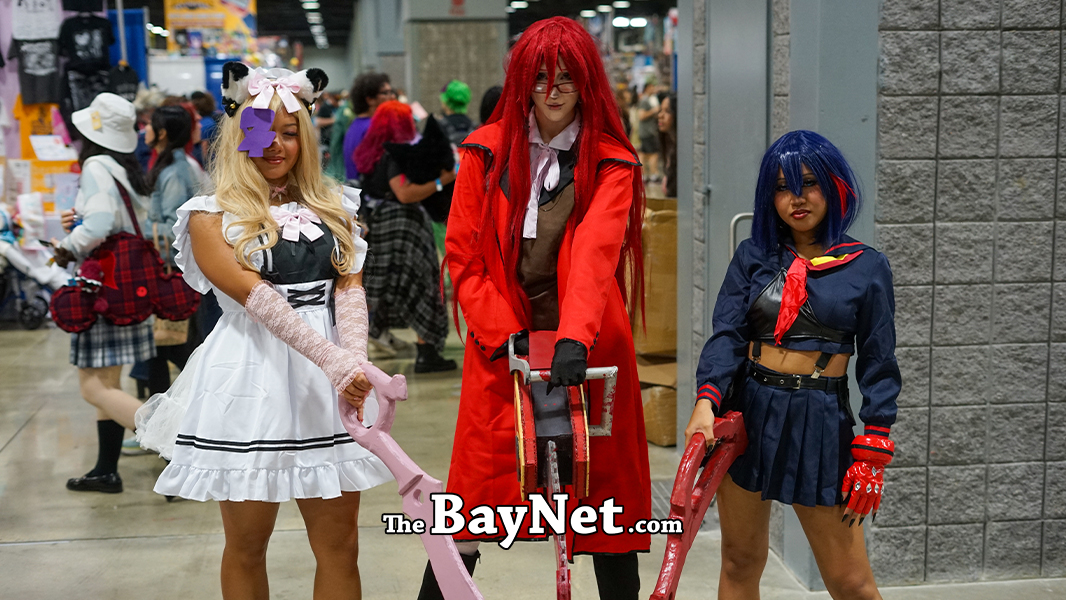
D.C.— For three days, the Walter E. Washington Convention Center became a place where superheroes, anime characters and video game legends could walk the same crowded hallways
Goku stood beside Spider-Man.
Kratos crossed paths with L from “Death Note.”
Rogue and Gambit represented the X-Men, while characters from “Demon Slayer,” “JoJo’s Bizarre Adventure” and Star Wars moved through a building filled with fans eager to celebrate the stories they love.
Otakon returned to Washington from July 31 to Aug. 2, bringing together fans of anime, manga, Asian music, movies, gaming, cosplay and other forms of pop culture. Founded in 1994, the annual convention has grown into a three-day gathering run by volunteers under the nonprofit organization Otakorp Inc. The convention relocated from Baltimore to the Walter E. Washington Convention Center in 2017.
While the costumes and merchandise may be the most visible parts of Otakon, the convention’s strongest feature may be the sense of community created when thousands of people with similar interests occupy the same space.
For many fans, interests in anime, gaming and manga are often experienced through a television screen, online community or personal collection. At Otakon, those interests are brought into the open without the need for explanation or judgment.
More Than A Costume
Cosplay remained one of the defining parts of the weekend convention.
Some attendees wore familiar costumes that could be recognized immediately. Others arrived in elaborate handmade outfits featuring detailed armor, weapons, wigs and accessories.
One of the more surprising parts of the convention was the range of ages represented.
Anime conventions are sometimes viewed as spaces primarily for teenagers and young adults, but Otakon’s crowd included longtime fans who have spent decades developing both their knowledge and their costume-making skills. Several of the most detailed and polished costumes belonged to older attendees, demonstrating how fandom can grow with a person rather than disappear with age.
One attendee dressed as Spider-Man told The BayNet that his family has attended Otakon since the 1990s. He described watching the convention expand over the years as a remarkable experience and said he hopes future generations of his family continue the tradition.
That multigenerational connection could be seen throughout the convention center as longtime fans introduced younger visitors to characters, games and traditions they had enjoyed for years.
A Look Back At Gaming History
The video game arcade was among the most memorable attractions.
The gaming area combined modern titles with retro machines, allowing visitors to move between different eras of gaming in the same room.
Classic games such as Contra and the original Street Fighter offered older players a dose of nostalgia while giving younger visitors an opportunity to experience gaming before online play, downloadable content and cinematic graphics became standard.
The room was more than a collection of machines.
It became a place where people could share memories, teach one another old controls and discover that a game does not need modern graphics to remain challenging or entertaining.
Bringing Online Culture Into The Real World
The vendor and exhibition areas offered another major attraction.
Tables and booths were filled with manga, artwork, clothing, collectibles, accessories and merchandise connected to popular series and characters. Items that fans may normally only encounter online were available to examine and purchase in person.
The selection ranged from “Demon Slayer” merchandise to Pokémon pillows, independent artwork and collectibles representing decades of anime and gaming culture.
Otakon’s official programming also included concerts, guest appearances, panels, workshops, an artist alley, tabletop gaming, a manga library, cosplay events and cultural exhibits. The convention describes itself as an event created “by fans for fans,” with volunteers helping organize a schedule designed to celebrate both <a href="https://comicvibe.com/the-bull-case-for-sphere-entertainment-sphr-could-change-following-mixed-q2-results-and-aggressive-expansion-plans/” title=”The Bull Case For Sphere Entertainment (SPHR) Could Change Following Mixed Q2 Results And Aggressive Expansion Plans”>entertainment and Asian culture.
Crowded, But Manageable
The three-day convention drew a large crowd, with busy hallways and long streams of attendees moving between attractions.
Despite the number of people, the size and layout of the Walter E. Washington Convention Center made the event relatively easy to navigate. Different activities were spread throughout the building, giving visitors room to explore the arcade, vendors, exhibits and cosplay areas without the event feeling confined to one space.
That accessibility mattered because Otakon offers far more than most visitors could experience in a single day.
Some attendees focused on panels and guest appearances. Others came primarily for gaming, shopping or cosplay. Many simply walked through the convention center, taking in the creativity and atmosphere.
More Than Three Decades of Fandom
Otakon began in 1994 as a celebration of Asian pop culture and its growing North American fan community. More than three decades later, its purpose remains largely the same.
Technology has changed.
The games have changed.
New series and characters have joined the classics.
But the reason people return has remained consistent.
Otakon gives fans a place to share the things they enjoy with people who understand why those things matter.
For one weekend in Washington, fandom was not something hidden behind a screen or limited to a small circle of friends.
It filled an entire convention center.
Got a tip or photo? Text us at 888-871-NEWS (6397) or email news@thebaynet.com.
Join The BayNet Membership for exclusive perks and zero ads.
Don’t miss a story—sign up for our newsletter!
