

Photo-Illustration: Vulture; Photos: Getty
This story is featured in Buffering, Vulture’s newsletter about the entertainment industry. Sign up at vulture.com/buffering!
There’s a remarkable bit of TV history on display inside the Culver City office of Jeopardy! executive producer Michael Davies: the actual game board used in the very first 1964 episode of the iconic series. It’s a great conversation starter, but for Davies, it doubles as a reminder of the show’s durability. “What’s so remarkable about Jeopardy! is that the format has not changed in 62 years, and were we to change the Monday-through-Friday original recipe, we would be insane,” he says. “The preservation of that is everything.”
Davies is respectful, even reverent, in honoring the DNA of Jeopardy!, noting that he began his Hollywood career working for series creator Merv Griffin in the 1990s. “I had personal conversations with Merv about Jeopardy!,” he says. “I wish I’d spoken to him more about it because I would love more of his guidance on a daily basis.” But Davies and his bosses at Sony Pictures Television are also adamant that in order to survive another six decades, the Ken Jennings–hosted show can’t remain frozen in amber — or be limited to a single half-hour that can be watched only on weeknights on local TV stations. It’s not that the mothership is faltering: During its just-concluded 42nd season, the syndicated version of Jeopardy! averaged 8.3 million nightly viewers, growing its audience 2 percent versus last season. Per same-day Nielsen ratings, it was the No. 1 entertainment series not just in syndication but in all of linear TV, including prime time, Sony says.
Yet as strong as Jeopardy! remains on broadcast, rapid changes to the television business have demonstrated how quickly viewing habits can shift and why studios and platforms need to constantly rethink how they connect with audiences. So even while protecting and preserving the integrity of the main show remains job one for Davies, since taking over as executive producer five years ago, he and Sony have been methodically working to transform the answers-and-questions show into a multi-title, multi-platform franchise, one able to reach audiences wherever they watch video — and even in places they don’t:
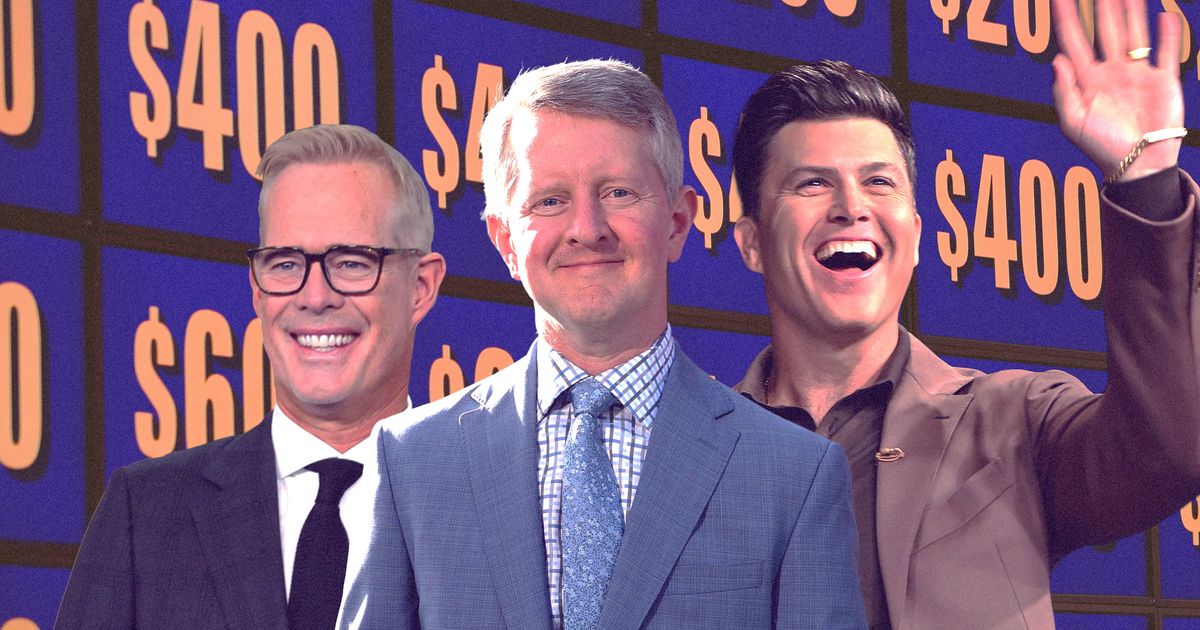
➽ With this week’s debut of ESPN Jeopardy!,hosted by Joe Buck and streaming on Hulu and the ESPN app, Sony and Davies will have launched their fourth spinoff series in as many years. The parade of offshoots began in September 2022 with the premiere of Celebrity Jeopardy! on ABC, followed in 2023 by Jeopardy! Masters on the same network. Next came the Colin Jost–hosted Pop Culture Jeopardy!, which debuted on Amazon’s Prime Video at the end of 2024 (and switched to Netflix this past May for season two).
➽ Last fall, in-season episodes of weeknightsyndicated Jeopardy! (along with the companion Sony game show Wheel of Fortune) began streaming for the first time, with new installments premiering on both Hulu and Peacock the day after airing on local TV stations.
➽ March saw the arrival of Jeopardy! YouTube Edition, a special for the Google streamer hosted by Jennings and featuring creators such as Monét X Change. While not a full-fledged spinoff, the episode signaled the studio’s desire to bulk up its presence on the world’s biggest video platform. (Another YouTube special is planned for the fall.)
➽ And in late 2024, Sony launched the Jeopardy! Bar League, teaming up with bar-triizzes across the country. As of this month, the program is operating in 350 bars, giving the show a regular IRL presence
To longtime fans and outside observers, this furious pace of expansion may seem like another example of the entertainment industry’s longtime addiction to sequels and brand extensions. Davies doesn’t deny there’s a profit motive; Sony is not the BBC, after all. But he makes a passionate, and persuasive, case for why the changes had to happen. “While rumors of its demise are highly exaggerated, broadcast television is hardly in the ascendancy,” he says. “To protect Jeopardy!,we have to make it thrive in a new media environment, which includes making it work in streaming and experientially. The previous version of the show didn’t need to expand. Now, with the threat to broadcast, you’ve got to be in all these different areas. Yes, it’s commercial, but it’s modernize or die.”
This effort to futureproof Jeopardy! by turning it into a 21st-century content universe was not the first thing Suzanne Prete, president of game shows at Sony Pictures Television, had in mind when she recruited Davies for the executive-producer role. She initially hired him to stabilize the show following the sudden departure of his predecessor, Mike Richards, whose ham-handed attempt to install himself as host following the death of Alex Trebek triggered weekslong controversy and hand-wringing over whether the studio might have permanently tarnished the brand. “I convinced him by saying ‘Hey, just come over in the interim. I need you,’” Prete recalls.
But Davies, who says he “respected” but did not regularly watch Jeopardy! before he joined the company, quickly found himself becoming a superfan, and the short-term situationship grew into a long-term commitment. Sony had already been thinking of ways to expand and update one of its crown jewels, and in Davies, Prete found an executive with a strong entrepreneurial streak. She signed him to a multiyear deal in early 2022 (though Sony already had a preexisting relationship with Davies via his Embassy Row production company), and she says the two immediately began tackling one central question: “How do we makeJeopardy!a franchise and provide a way for our fans and new viewers to engage with the brand beyond linear, especially at a time when we see linear declining?”
To figure that out, Davies channeled his other passion besides producing TV shows: sports. He made his name in American TV by bringing Who Wants to Be a Millionaire to the United States in the late 1990s and overseeing the launch of Andy Cohen’s Watch What Happens Live in 2009, but Davies spent a good chunk of the 2010s turning his love of soccer into a successful sports-media business through the Men in Blazers podcast. Between that experience and his role as executive producer of the NFL Network’s daily Good Morning Football program, Davies says, “I started to understand the way sports keep themselves in the conversation day after day. And I felt Jeopardy! could benefit a lot from that.”
To that end, one of Davies’s first moves after arriving at Jeopardy! was to have the show start publishing daily box scores from each night’s telecast, detailing how much each player buzzed in, how many questions they got right and wrong, and other intensely nerdy statistics — or “Jeopardata.” Even though it was designed to reach only a small segment of the overall audience, the launch acknowledged how seriously fans and players took the game and hinted at where Davies and Sony wanted to take the show. Just as sports leagues have multiple teams and divisions as well as an array of broadcast partners, the thinking was that Jeopardy! could better serve its fan base and reach new audiences by methodically rolling out novel iterations of the core game while making the brand accessible on more platforms.
As Sony undertook this expansion, it helped that the studio had a preexisting relationship with a willing buyer ready to bet on funding more Jeopardy!: Disney. The company’s ABC-owned station group has aired the quizzer in big cities such as New York and Los Angeles for decades and had a vested interest in keeping the show vital. And at the prime-time level, Disney unscripted chief Rob Mills is a well-known advocate for game shows who worked with Sony on Jeopardy! The Greatest of All Timein 2020. That project was a massive ratings success, and Mills made it clear at the time that he was very interested in more iterations. So when Sony let it be known that it was ready to make Celebrity Jeopardy! and Masters circa 2020, ABC was happy to offer green lights.
Disney Entertainment Television chairman Debra OConnell says that during the Davies era, the show has become “a really important component of syndication, prime time, and streaming” for her company. “It’s been a great partnership with Sony,” she adds, explaining that new iterations such as Celebrity Jeopardy! have not only delivered reliably strong prime-time ratings but also been a boon for the weekday version that airs on ABC-owned stations. “It has actually helped propel syndication because it gives people another reason to watch,” she says. “They want to see a different take on their favorite game show.”
Withthe two prime-time spinoffs established at ABC, Sony has more recently been focusing on building Jeopardy!’s streaming profile by making versions of the show for digital audiences with Pop Cultureand now ESPN Jeopardy! The studiosees these streaming originals as a way to reach younger viewers who don’t have regular access to linear or aren’t fans of the original. And it’s working: Pop Culture skews notably younger than the weekday series, according to Davies. Similarly, Prete says this spring’s YouTube edition managed to reach a completely different audience than any other incarnation to date. “More than 80 percent of the viewers were under the age of 34, and 86 percent had never engaged with our Jeopardy! brand,” she says. “That tells me there’s a version of the show for everybody.”
Reaching those younger viewers is also why, last fall, Sony decided to make Jeopardy! available for next-day streaming, partnering with Disney’s Hulu and NBCUniversal’s Peacock. While local stations had previously balked at any sort of infringement on their exclusive broadcast rights, most now accept that there has to be a shared window for just about anything on television. And for Disney’s OConnell, next-day streaming offers “an opportunity to continue to keep Jeopardy!in the Zeitgeist” by making it more accessible to younger viewers who primarily watch TV via streaming.
None of the parties involved has offered any detailed metrics on how Jeopardy! has performed in next-day streaming, but Prete says she’s “extremely encouraged by the upward trend of both time spent viewing our shows and the engagement.” She has also been working with Disney and Peacock to figure out the best way to make sure streaming audiences find the show and establish a regular viewing pattern. “On linear, Jeopardy!is appointment television. Our viewers sit down with their dinners and their families and they watch,” she says. “On streaming, we are still figuring out what habit viewing looks like, and it’s not going to be cut-and-paste from linear. But we’re going to get there.”
With all this brand expansion, Davies and Sony also seem mindful of not overdoing things. “There’s a huge balancing act,” the producer says. “I am temporarily in charge of something that existed long before I came here and will exist long after, and my job is to preserve it and build it.” It helps that so far, all the new incarnations of Jeopardy! do not seem to be dividing the show’s audience into smaller pieces — just the opposite. As noted, the syndicated show grew its ratings this past season even though it was available for next-day streaming. And Prete says most viewers watching the prime-time and streaming versions are not those who tune in to the main series. “What we’ve found is that all these different iterations of Jeopardy!have their own unique audience, and the overlap with our syndicated version is crazy small,” she says.
Still, having built so much over the past four years, Davies does finally seem ready to slow down a bit. While he does have one more big extension he’d like to tackle — a live version of Jeopardy! in prime time, likely built around a Masters-style tournament — he says he doesn’t foresee any major new spinoff series. “I think we’ve reached the end of the subject-matter genre extensions,” he says. “And if we’re not at the limit, we’re probably close to the limit.” Prete concurs, saying that “right now where we see opportunity is live events. That’s where we’re focused.”
The Jeopardy!Bar League is one way to do that, but Prete also hints at the possibility of a Jeopardy!convention or in-person gathering similar to ones organized by Bravo and Hallmark. “I would love to have an event that embraces the fans and our contestants who have become stars in their own right,” she says. But as with the recent spinoffs, Prete insists any new idea will have to meet a high bar before moving forward. “We’ve seen other shows oversaturate their brands,” she says. “We have to be extremely thoughtful and judicious.”
Why the Jeopardy! Mantra Became ‘Modernize or Die’
