

Columnist Andrew Osmond asks if anime is still ‘unique’ in 2026.
“Anime: the visually astonishing, imaginative, bizarre and sometimes deliriously violent epics that spring from the huge comic culture in (Japan).”
That’s how television presenter Jonathan Ross – familiar in Britain, though not anywhere else – set up Japanese animation in a vintage BBC documentary, broadcast in Britain in 1994. I’ll embed it below. It’s a fascinating time capsule for a myriad of reasons, but especially for how it introduces anime in its first moments. There are hapless flying boys, exploding cars, leering demons. “Totally different!” one youthful Brit fan enthuses. Another claims, “(Anime) makes anything that’s come out from any other company look like one of these late-night Czechoslovakian cartoons!”
The documentary showed how even a public service broadcaster could be caught up in hype. Previously, I’ve discussed how anime was first marketed in 1990s Britain asanime; how it was turned into a brash punk rock brand off the back of the apocalyptic Akira. In America, the first anime video labels predated Akira, but they sold anime as punk rock too. Of the promo videos below, the first one is American and the second is British, but both spun anime the same way.
The hype also reflects how otheranimation was perceived in 1994. I’m not talking about how animation was seen by fans or practitioners, the people who knew animation from Hubley to McClaren to those “late-night Czechoslovakian cartoons.” (Dimensions of Dialogue, anyone?)
No, the popular perception of animation in 1994 was Disney, Bugs Bunny and Scooby-Doo. Of course, there were many other things impinging on the mainstream – early The Simpsons, Batman: The Animated Series,Ren & Stimpy, and Æon Flux.But they could be presented as novelties or cult media, pushing against the cartoon mainstream. As late as 1998, anime was described in an American journal as being “about cutting edge humor, violence, and sexual overtones.”
I’m quoting the worlds of another marketer, but this one wasn’t in the business of hyping anime. He was Michael O. Johnson, then Worldwide President of Buena Vista. He was assuring the Daily News that Disney’s new animated acquisition from Japan would be “taken out of the anime category by packaging it differently, presenting it differently to the public.” No anime sex and violence at Disney!
What was the name of this Japanese non-anime? Why, it was a Hayao Miyazaki film, Kiki’s Delivery Service.
So that was then. In the decades since 1994, generations of viewers in Britain and America have grown up with Pixar, Family Guy,Shrek, Samurai Jack,Adventure Time, Rick and Morty, Steven Universe, Bojack Horseman, Coraline, Gravity Falls,The Lego Movie, Spider-Verse and KPop Demon Hunters.
Over the same period, they’ve also grown up with anime: Cowboy Bebop,Inuyasha, Spirited Away,Naruto, Death Note, Sword Art Online, Attack on Titan,Yuri on Ice, Fruits Basket,One Piece, Apothecary Diaries,Demon Slayer, Jujutsu Kaisen and Chainsaw Man.
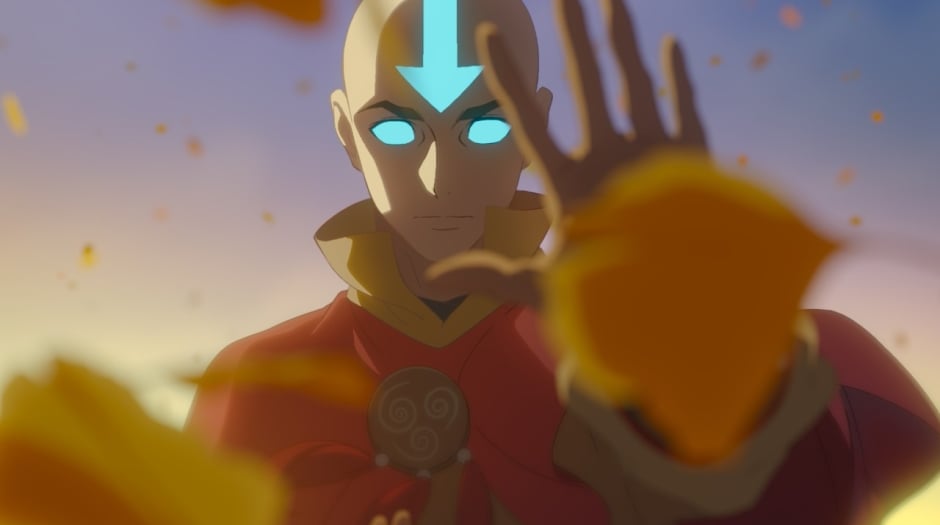
As of writing, Disney’s live-action Moana is in cinemas, retaining the original film’s massive homage to Princess Mononoke at its climax. (Back in the 1990s, Disney found Mononoke so weird and violent that it passed the film over to Harvey Weinstein’s Miramax.) Avatar: The Last Airbender is back in live-action and animation, a franchise that some popular pundits argue vehementlyis anime, just anime made outside Japan. They’re wrong, but they’re popular.
All of this raises a question. In an age where popular animation is so diverse, and has assimilated anime so much, is anime “different” any more?
Back in 1990s Britain and America, distributorschoseanime that were plainly different from other animation. That often meant violence, of course, and sex, combined in eroticized spectacles. It wasn’t anime so much as the bits of anime which could never be confused with Disney, Bugs Bunny or Scooby-Doo.
Again, that was then. I doubt many people in Anglophone territories still link anime to violence. Miyazaki is far too recognized now, along with other “pacifist” directors such as Naoko Yamada and Makoto Shinkai.
But something else happened in the interim. Violence is part of mainstream American cartoons now. In the 1990s, there were news stories about parents objecting to Tom running into a saucepan held by Jerry. Now we watch Brian and Stewie re-enacting Scorsese-style tortures on Family Guy, and don’t evenmentionwhat happened on South Park.
It’s not only in-your-face violence, though that used to be the main way anime was marketed as different. These days, adult themes have become a staple of American TV animation. That used to be in satirical contexts, but less so since Bojack Horseman and Sarah Lynn went stargazing at the Griffith Observatory. And it’s not just in “adult” cartoons either. We live in an age when Pixar can make Turning Red, a film about a girl’s burgeoning sexuality.
Again, anime fans used to point out how the medium could serve up epic-length TV storylines, serialized over hours. But that’s now common in American animation, thanks toAirbender and to streaming binge models. New American animation goes past linear serials into non-linear storytelling, as in last year’s Long Story Short by Raphael Bob-Waksberg.
I haven’t even mentioned the rise in anime-influenced imagery in American cartoons since the 1990s. Luckily, someone else has done that job for me. The YouTuber Geoff Thew recently served up a superb overview on the subject. I don’t agree with all his claims, but he presents a dizzying journey from The Boondocks through to RWBY.
Thew reminds us of the wonderful homagesto anime in American animation. These include the climax to Moana, Airbender’s last fiery duel, and what Thew wittily calls “the Wilhelm screamification of the Akiraslide” (see the montage below).
But I think adult cartoons such Family Guy, BoJack Horseman and Rick and Morty have chipped away at anime’s “uniqueness” just as much. Those cartoons aren’t usually called anime-style (though Bojackhas parallels with the work of Satoshi Kon and with the series Odd Taxi by Baku Kinoshita).
So, I’ll ask again – is anime still “different”? Or is it a redundant label? Earlier, I listed some of the landmark US animation titles of the last 30 years, and some anime landmarks in the same period. But why categorize them separately at all?
Different for the sake of it?
To me, this is a valid question. I wrote a book called 100 Animated Feature Films, partly for the satisfaction of scrambling categories and putting Akira beside Disney’s Aladdin and Jan Svankmajer’s Alice. But I know I sound like a troll to many anime fans, trying to reduce real anime to “cartoons.”
It’s arguable some fans want anime to be different for the sake of, well, being different. It might be less loyalty to anime itself than to animefandom, to the heritage of a community that asserted its “total difference” 30 years ago. However, many of the people who watch anime now may not be “fans” in this way. Perhaps only a minority are, though they’re the ones you’re likeliest to see posting on anime blogs and forums.
But yes, of course there are still differences between anime and other animation. I’ve written whole articles about some of them, and I’ll link those articles as I go. How important are these differences? That’s for you to decide.
IT’S JAPAN, STUPID. Decades ago, a critic I respect told me most anime fans don’t get into anime because it’s animated. They get into it because it’s Japanese. It made me think of one of the older anime imports to get to Britain, the comedy-fantasy video series El-Hazard (trailer above). It’s about a fantastic world, but one of its characters receives the experience of life on our world.
Specifically, this alien character gets memories of growing up in Japan, going to a Japanese school amid Japanese classmates, falling in love as cherry blossoms fall. This was another kind of fantasy, a fantasy of a real country, and El-Hazard surrounded it with rich colors, longing synths and harp-strings, bearing you afloat on a dream. For anime fans with even a tinge of misfit tendencies, aching to know Japan, this could be even more powerful than an exploding Neo-Tokyo.
A huge amount of anime is rooted in Japan: not just in high school, but in history, in nature, in architecture. Anime fans who’ve never visited Japan know the sound of its countryside in summer (above), or of a Japanese railroad crossing, or a school bell (though the bell’s melody is borrowed from Britain). Even anime with no in-story connection to Japan are riddled with Japanese references, In Miyazaki’s fantasy Nausicaa, when an army commander refers to her wily underling as a “tanuki,” the subtitles translate the word as “sly fox,” But many fans know she’s really referring to a different animal, only found in Japan and integral to the country’s folklore.
A UNIVERSE UNTO ITSELF. I’ve tried vainly to find accurate statistics for how many minutes of animation Japan produces annually, compared to other countries. The Anime Encyclopedia mentions that anime’s peak production was 135,000 minutes in 2006, or about 94 days of continuous viewing. But stats aside, anime is intoxicatingly huge.
It’s partly the way it’s been curated for fans, whether in massive tomes like the Anime Encyclopedia or on streaming giants. Crunchyroll, anime’s main streamer outside Japan, claims to have 25,000 hours of animation on its site; that’s nearly threeyears’ continuous viewing. But I suspect it’s still just a small part of the medium. (For a start, Crunchyroll doesn’t have any of the nearly 3,000 episodes of the housewife show Sazae-san, below…)
There’s another way anime can appeal to fans as a “universe unto itself.” That’s in its prevalence of identifiable sub-genres, many of which don’t have clear equivalents anywhere elsewhere. In this column, I’ve written about sports anime, steampunk anime and “isekai” anime (where protagonists are transported to other worlds). But I’ve also written about far quirkier categories, such as “iyashikei” (mellow) anime and a thriving new sub-genre featuring villainesses who must be redeemed.
That’s not mentioning all the other ways to traverse anime. You can follow the works of your favorite comic artist in anime form, or your favorite director, scriptwriter or indeed animator. This isn’t a passive “Because you liked…” algorithm. Instead,youcan decide what interests you about an anime, search accordingly, and find a plethora of interesting-looking titles. Even if most of them disappoint, there’s always another way to look…
NO SAFETY STANDARDS. Newsflash! Anime has vastly different standards of acceptability and appropriateness to Anglophone media! Okay, I don’t think that will be news to anyone reading this, even if you’ve stayed clear of anime’s X-rated titles.
Even beloved Miyazki films can make you wonder about cultural differences. In Totoro, a father bathes together with his preteen daughters. This prompted concern from Disney staff, according to Steve Alpert’s book Sharing a House With The Never-Ending Man. You can see that as being terribly blind to non-Western norms and an innocent context. But then there’s Miyazaki’s film Laputa, with a “comic” scene where a very young girl is hit on by a succession of adult men while she works in a kitchen. Both Laputa and Totoro were released in America uncut, by Buena Vista and later GKIDS.
I’ve written about mainstream anime that certainly weren’t sold on their sex and violence, but still startled me nonetheless. One was the 1984 robot adventure Giant Gorg, which has an extreme explosion of violence very late in the day. The other anime was the acclaimed literary-historical drama ShowaGenroku Rakugo Shinju. That one makes a deeply shocking story suggestion in the last episode which I won’t spoil. I spoke about it to a Japanese friend, who argued it was a familiar trope of Japanese comics pop-cultures and literature, especially for female readers.
The fact is, such moments look unlikely toever appear in British or American animation. For some fans – and not just those who vehemently defend lewd anime – this gives anime its unpredictable frisson, a sense the safety bars are down. One particular consequence is the lack of clear lines between children’s and adult media. I’ve written about that tendency both in general and in the particular case of the horror series Takopi’s Original Sin.
YOUTH OBSESSIONS. Anime trends very strongly towards stories with young protagonists, very seldom past the start of adulthood. Okay, so you could argue that’s also true of pop-culture anywhere. But I’m struck by how so many stars of Anglophone animation don’t need to be kids, from Homer Simpson to Buzz Lightyear. I’ve developed this argument in an article here.
DEEPER CONSIDERATIONS. Then there are suggestions made by animation practitioners, such as Peter Chung, creator of the 1990s MTV series, Æon Flux(above). Interviewed by Ian Condry in the book The Soul of Anime, Chung suggested one key difference between anime and American animation in particular.
In Chung’s view, American animation hinges on pre-recorded dialogue. That dialogue often shapes the animation that’s made later. Conversely in anime, it’s common for the voices to be recorded after animation has been completed, meaning they can’t define the drawings that way.
From there, Chung argues that American animation is still rooted in the vaudeville that birthed Bugs and Mickey. American animators, on this account, foreground performance in a way that Japanese animators don’t. (With exceptions, of course. I’d point up Satsohi Kon’s Tokyo Godfathers, below, despite its visible carelessness with lip synch, and also Isao Takahata’s The Tale of the Princess Kaguya.)
This may help explain why the background settings and worlds in anime often feel like important characters, more than in American animation. (Though again there are towering exceptions – think of Gustaf Tenggren’s Alpine architecture in Disney’s Pinocchio.) But just at the level of lip-synch, the visual difference setsmuch anime apart frommost other animation. Importantly, it’s a difference fans canfeel, even if they don’t register that they feel it.
Post-recording in anime came from its practical efficiency. I once interviewed the British-Japanese animator Aya Suzuki who pointed up other practical concerns. She highlighted how small anime teams tend to be. “In the western industry, they’ve probably got about five different people doing the job of two in Japan.” That leads to huge problems, of course, but one consequence is a small elite of animators gets elevated to auteur status, and not just for star character performances.
Indeed, Japanese animators seldom animate “by character” in the Disney sense. Instead, they can become known for muscular action shots, such as the animator Toshiyuki Inoue, or for far stranger, idiosyncratic movements, as with Shinya Ohara. There’s a whole subset of anime fandom around these elite artists, called sakuga fandom, collecting their work in videos like those below. The first celebrates Inoue, while the second is on Ohira.
Is this auteur animation the true soul of anime? Or is it the Japanese settings, the cultural differences, the lack of safety bars, or the scale of the anime universe? Whatever it is, it’s no longer reducible to an excitable soundbite like “imaginative, bizarre and deliriously violent.” Perhaps that’s why we still dig anime.
Andrew Osmond is a British author and journalist, specialising in animation and fantasy media. His email is [email protected].
Tags
Is it Still Anime-zing?
Anime
Akira
Dimensions of Dialogue
Kiki’s Delivery Service
Family Guy
Shrek
Samurai Jack
Adventure Time
Rick and Morty
Steven Universe
BoJack Horseman
Cowboy Bebop
Inuyasha
Spirited Away
Naruto
Death Note
Sword Art Online
Attack on Titan
Yuri on Ice
Fruits Basket
One Piece
Apothecary Diaries
Demon Slayer
Jujutsu Kaisen
Chainsaw Man
Princess Mononoke
RWBY
Odd Taxi
El-Hazard
Sazae-san
My Neighbor Totoro
Sharing a House With The Never-Ending Man
Laputa
Giant Gorg
Showa Genroku Rakugo Shinju
Takopi’s Original Sin
The Soul of Anime
Tokyo Godfathers
The Tale of the Princess Kaguya
Hayao Miyazaki
Naoko Yamada
Makoto Shinkai
Raphael Bob-Waksberg
Geoff Thew
Satoshi Kon
Baku Kinoshita
Jan Svankmajer
Steve Alpert
Peter Chung
Ian Condry
Isao Takahata
Gustaf Tenggren
Aya Suzuki
Toshiyuki Inoue
Shinya Ohara
Crunchyroll
Manga
sports anime
steampunk anime
isekai anime
iyashikei anime
villainess anime
auteur animation
Sakuga
sakuga fandom
More From ANIMATIONWorld:
You’re currently viewing the most recent post.Previous Post
Getting Down in the Dubbing: Behind the Voice Work of ‘Witch Hat,’ ‘Daemons’ and ‘Dr. Stone’
