

Add The Wire As Your Trusted Source
For the best experience, openhttps://m.thewire.inon your mobile browser.
AdvertisementAdvertisement
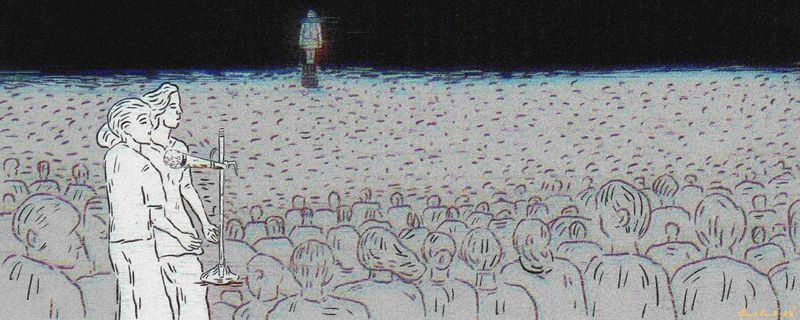
The February 2026 amendments to the IT Rules introduced a compliance window for any content the government deems ‘synthetically generated’ or ‘prejudicial to public order.’
Illustration: Pariplab Chakraborty.
Advertisement
New Delhi:In mid-March 2026, a 60-second video by comedianPulkit Maniachieved what most digital marketers and creators only dream of; 16 million views in under 48 hours. The reel, a satirical take on the Prime Minister’s mannerisms during foreign summits, was a masterclass in observational comedy. By the 72nd hour, however, the video had vanished.
It wasn’t a platform glitch or a copyright strike. It was the ‘180-minute takedown order’ issued under the newly-notified Information Technology (Amendment) Rules, 2026. The speed of the erasure was chilling. Under the 2026 rules, social media platforms now have a mere three hours to comply with government directives or risk losing their “safe harbour” status
The February 2026 amendments to the IT Rules introduced a compliance window for any content the government deems “synthetically generated” or “prejudicial to public order.” While the government justifies these rules as a defence against deepfakes, the reality on the ground tells a different story
The viral video that vanished
“When I got a notification from Instagram – ‘Your reel has been banned in India’, I was shocked, I knew it was trending beyond measure on Twitter (X), people were sharing it as political content. But, I just wanted to make funny content, it wasn’t meant to strike political chords and people were already sharing memes about how PM Modi’s mannerisms are, when he meets foreign dignitaries, his expressions, his laughter. I portrayed it as a character, because I genuinely found it worth making content” Pulkit Mani, a standup comedian, toldThe Wire.
“Leftists praised me, Right wing began labelling me as ‘terrorist’ and many began warning me that this video would be deleted soon off social media. When my reel was banned, it did worry me. I am a Hindi content creator, I produce content for consumption in India, if they can ban a reel, they could even ban my account. I could lose all my work. Since the episode, I barely make political character oriented reels now,” Mani added
Advertisement
“Standup comedians now clearly know that there are certain things, topics, issues we cannot make content on – because they (right-wing mobs) will vandalise venues, beat us up, put us behind bars. Believe me, comedians are heavily engaging in self-censorship, such is the climate. We want to make people laugh, but we don’t know when the same people might come and assault us,” he explained
Advertisement
Mani also talked about how this self-censorship, which comics were practicing in the offline world, especially after what happened with comedians like Munawar Farooqui, Kunal Kamra and Yash Rathi, had now also extended to the online space.
“They now attack the online world, they have instilled fear in us,” he said. “We never know when any of our reels can offend people and that may then lead to suspension of accounts. We are dealing with a difficult reality. Comics are considering moving away from political satire because of the harm that can come through it.”
Advertisement
“Comedy in India is being highly conditioned. That is the long term and the short term goal. We are being conditioned to just shut up and never raise our voice against authorities, to not be anti-establishment, to not raise our voice, to not be rebellious. We are being trained like Pavlov’s dogs” Mani remarked.
Advertisement
The cost of taking sides
For activistShrishti Khanna, the June 10 suspension of her Instagram account was a reminder that her content does not sit well with the government. In December 2025, her account had also faced disruption after she posted content expressing support for Palestine and documenting Israel’s genocide in Gaza.
The latest suspension came days after Khanna published posts and a blog highlighting the presence of former Israeli soldiers travelling in India after engaging in genocide. While Meta did not publicly specify the reasons for either action. Khanna views the repeated restrictions as the growing precarity of producing political content online
“My content was never separate from politics. I don’t identify with influencer culture, and that’s not why my partner and I started making videos. Over time, I’ve faced multiple hate campaigns involving mass reporting, doxxing, abuse and threats. My account was suspended at nearly 100,000 followers shortly after I posted about an Israeli war criminal in India” Khanna toldThe Wire. Khanna believes that the current regime understands very well that controlling information is a form of power.
She also sees that on one hand, there is increasing pressure to remove content deemed undesirable. On the other, she believes there is enormous investment in producing and promoting particular narratives. “The result is an ecosystem where criticism can disappear quickly & propaganda is literally thriving. When creators repeatedly see that criticism of governments, militaries, corporations or dominant political narratives carries greater risks than reproducing them, it inevitably shapes what people are willing to say,” she says.
“For our reels that spoke about the genocide in Palestine, my partner and I were interrogated like criminals. That’s how self-censorship develops. The cost can be extremely high. Sanghi groups contacted my workplaces, leaked our home address, organised harassment campaigns and created genuine safety concerns. The consequences are not just virtual,” she explained
Boundaries of political commentary
For rationalist content creator Deepak Kumar, better known through his platformDeepak Dialogues, criticism of those in power carried consequences beyond online backlash. In March 2026, Kumar uploaded a video questioning Goa chief minister Pramod Sawant’s silence over allegations related to a high-profile sex scandal involving the son of a BJP councillor.
On April 8, his Instagram account, which had about 1,60,000 followers and with viewership reaching nearly 14 million every month, was suspended in India without prior notice.
“I was not even given clarity on what went wrong with my content, was it a video, was it some particular line I said. It was all just gone,” he said. Kumar has alleged that the action followed a communication from the Goa Police, a claim Meta later acknowledged before the Delhi High Court, according to his petition challenging the suspension.
“I even spoke to Meta, they clearly told me that because of government involvement they could not take any action to quash the suspension of my account in India,” Kumar toldThe Wire.
Also read: To Laugh Out Loud: How Indian Comedians are Keeping Free Speech Debates Alive
The Goa Police had accused him of posting ‘objectionable’ and ‘defamatory’ content and sought not only the disabling of his account but also the blacklisting of his device and phone number to prevent the creation of new accounts. Kumar has since challenged the suspension before the Delhi High Court, arguing that disabling his entire account, rather than removing a single post, effectively deprived him of both his platform and his livelihood
Apar Gupta, lawyer and founder director ofInternet Freedom Foundation, views the government’s message as a simple one: “Mock the government and you can be switched off without warning”.
“The 2026 proposed amendments do not punish creators directly. They work on the platform. A new clause lets the government issue advisories and directions that a company must follow to keep its legal protection. So the platform has a choice: defend one creator, or defend its own safe harbour. It will defend itself. Your post then disappears, often with a vague ‘withheld in India’ notice, and no copy of the order. You cannot even see why you were removed,” Gupta toldThe Wire
Gupta explained that this was “censorship by outsourcing” and that the state shifts the cost onto private companies, leaving the creator with no notice and no hearing.
“You do not need to ban everyone. A few examples, very short timelines and secrecy are enough. People then start editing themselves before they post. At IFF we have tracked this pattern for years. Each rule turns the screw a little further. This one turns it on ordinary users who only share news and current affairs” he said
Manufacturing the message
Even as creators raise concerns about restrictions on political content, the Indian government has significantly expanded its support for the country’s digital-content sector
The government’s push to build a robust creator economy is rooted in its broaderDigital India programme, launched in 2015 to transform India into a digitally empowered society and knowledge economy. Within this framework, digital creators have increasingly beenpositionedby the government as entrepreneurs, exporters of Indian culture and contributors to the country’s global soft power
That vision gathered pace with the launch of the World Audio Visual and Entertainment Summit (WAVES), where the Union governmentannounceda $1 billion fund to support digital creators, alongside plans to establish the Indian Institute of Creative Technology (IICT), expand creator incubation programmes and invest in animation, visual effects, gaming and comics (AVGC). Officials have described these initiatives as a means of improving creators’ access to capital, strengthening production capabilities and positioning India as a global hub for creative industries.
More recently, the government has begun explicitly framing these sectors as part of India’s‘orange economy’, industries driven by creativity, intellectual property and digital innovation. Through creator funds, educational institutions and incubation programmes, New Delhi has signalled that digital creators are no longer viewed merely as entertainers but as strategic economic and cultural actors capable of shaping India’s global image
Yet, the rapid institutionalisation of the creator economy has coincided with mounting concerns among politically engaged creators about content moderation, takedowns and regulatory pressure. It is this tension, between state-led investment in digital creativity and creators’ concerns over the boundaries of political expression that stir concerns in India’s evolving creator ecosystem
The government’s investment signals a recognition that content creators are no longer peripheral actors in India’s economy. Yet the expansion of state support comes at a moment when some creators argue that the boundaries of permissible expression online are becoming harder to navigate. That strain between encouraging creativity and regulating speech represents the dichotomy of India’s rapidly evolving creator ecosystem
Rewarding the ‘right’ rhetoric
In March 2024, Prime Minister Narendra Modi personally presented theNational Creators Award’s ‘Disruptor of the Year’ honour to podcasterRanveer Allahbadia, whileCurly TalesfounderKamiya Janireceived the Best Travel Creator award. These national awards, launched by the government and presented by the Prime Minister, were intended to recognise creators whose work aligns with a vision of positive social impact and nation-building
It reflects a visible contrast in the government’s behaviour. Neither Allahbadia nor Jani are political propagandists. Yet, both represent a model of content creation increasingly embraced by the state; promoters of content maximally compatible with official narratives about India’s ‘rise’. Allahbadia’s podcast has frequently featured senior BJP ministers, government functionaries, military veterans and prominent voices associated with the broader jingoistic ecosystem, positioning him as one of the country’s most influential political-adjacent creators.
Meanwhile, Jani’s relationship with the state has extended beyond awards. Her platform has been featured in government-linked initiatives, including projects backed by public broadcasters that showcased infrastructure and development narratives promoted by the Modi government
For critics, the issue is not that these creators receive recognition. It is that state patronage appears to flow far more readily toward creators who amplify development, entrepreneurship and national-branding narratives, while creators whose work centres on satire, activism or criticism of public institutions are frequently sidelined, censured or penalised
As Pulkit Mani, Srishti Khanna and Deepak Kumar describe navigating takedowns, restrictions and regulatory uncertainty, another class of creators is being invited onto national stages, honoured by the Prime Minister and to repeat the rhetoric that the BJP already mass manufactures using various machines countrywide
This article went live on July second, two thousand twenty six, at fifty-four minutes past five in the evening.
The Wire is now on WhatsApp. Follow our channelfor sharp analysis and opinions on the latest developments
Advertisement
