

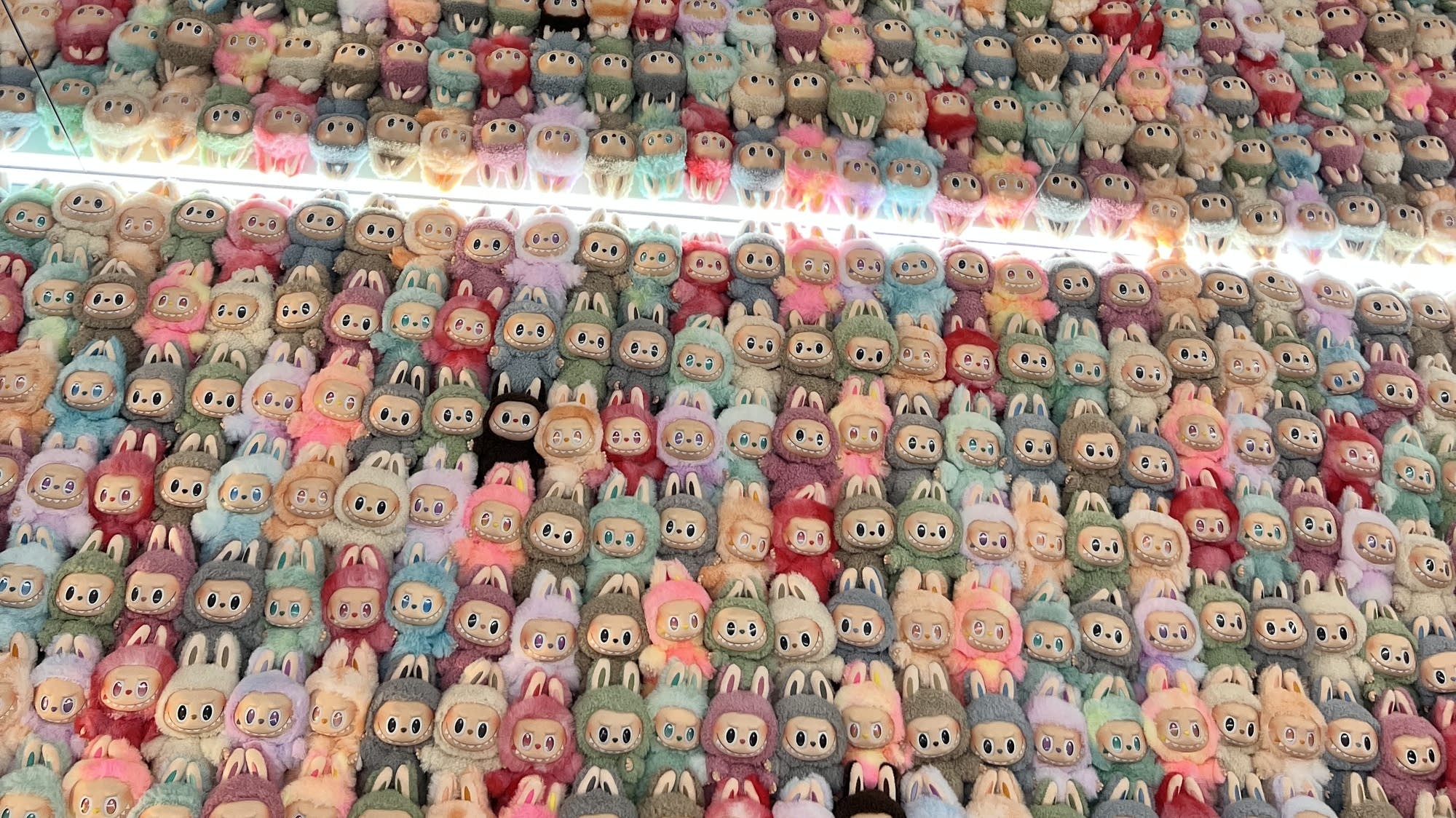
From collectibles to puzzles, “kidulting” is is fueling growth in the toy market.
To the uninitiated, a Labubu is kind of a hard thing to explain. The figurine — a creature with pointy ears and mischievous grin — is part bag charm, part collectible, part fashion trend.
“I saw it online and I was like, ‘Oh my god. What is this?’ Almost was, like, is this supposed to be something cute?” said 27-year-old collector Douglas Estelle. “You know what I mean. I was like, ‘Oh my god it’s, like, adorable.’”
Estelle spent $100 to get into Pop Mart’s “The Monsters 10th Anniversary World Tour” in New York City. The exhibit is full of Labubu sketches, videos and rare collectibles.
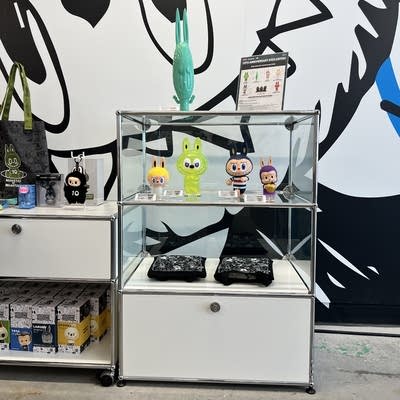
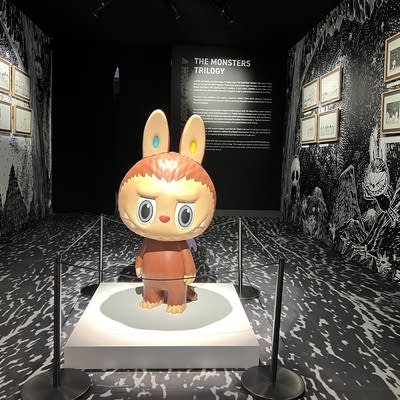
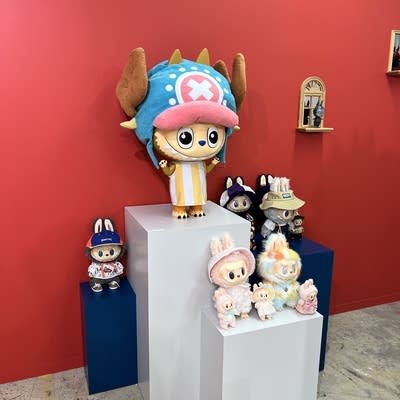
“I have all the pendants, all the plushes. I love the plushes, they’re like my everything,” said Estelle, who’s spent more than $2,000 collecting a few hundred Labubu dolls, including oversized versions, which can stand as tall as five feet. “Labubu is always there for me. I love her so much.”
Despite worries about the rising cost of living, people are pouring money into discretionary spending like toys. Consumers 18 and older accounted for 35% of the toy industry’s growth in the first four months of this year, according to a recent report by market research firm Circana. Toys have become so popular for adults that the industry has come up with a new term for it: kidulting.
“I did not coin this phrase, by the way,” said Brian Spaid, a marketing professor at Marquette University who researches collecting. “This is really about people giving themselves permission to kinda get in touch with their inner child, go back to their childhood, enjoy the things that they enjoyed as kids.”
Popular categories include puzzles, collectibles and plushies like NeeDoh, Jellycat and Book Nook kits. People are craving toys that are low-tech and tangible after spending their work days hunched over a computer screen and hunched over their phones, wondering if AI is going to take their job or if their lunch salad was tainted with a parasite. Toys offer an escape.
“It’s kind of like you can turn off your brain. You don’t need to think about anything or worry about anything, it’s just, where does that piece go,” Spaid said.
People also collect to find community and experience nostalgia — something the old, classic brands are trying to capitalize on. Lego just revealed a 12,000 piece replica of Barcelona’s Sagrada Familia, priced at just under $799.99. Build-A-Bear Workshop has an “After Dark” collection, which includes a silver fox wearing a T-shirt that says “ZADDY.” And it’s become a bit of a thing to throw bachelorette parties at the American Girl cafe, which serves cocktails.
“We are no longer exclusively focused on offering products to children,” said Brian Baker, a senior vice president at Hasbro, which recently released Blooms by Play-Doh, a floral arrangement modeling kit for adults. “Our play-to-win strategy, you know, one of the key tenets is aging up.”
Hasbro has done a lot of research. The company goes into peoples’ homes to see what they buy and collect. It has a FunLab, where they observe adults interacting with their products. They’re looking to create customers for life.
“It’s probably one of the strongest business strategies we could put in place,” said Baker. “You know, as you grow up with our brands, as you grow up with Play-Doh, there is a product there for you that meets your needs at that moment in time.”
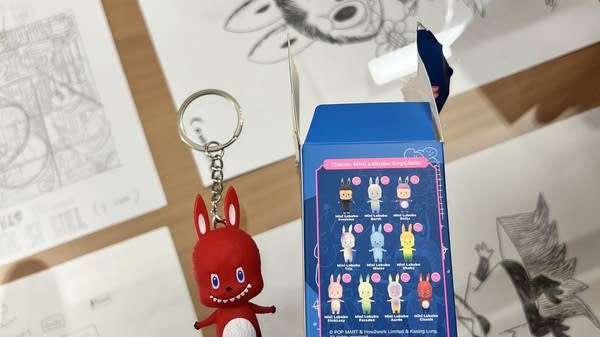
Back at the Labubu exhibit, Estelle opened a blind box, a mystery package with a mini Labubu keychain inside.
“Oh, it’s the red one! So cute,” he said.
It wasn’t the color he wanted, but that’s supposed to be part of the fun. He can always buy another one and try again.
How one entrepreneur is riding a wave in popularity for line dancing
Culture
The “Great Wealth Transfer” may be smaller than expected
Economy
Families are crashing honeymoon hot spots
Culture
