

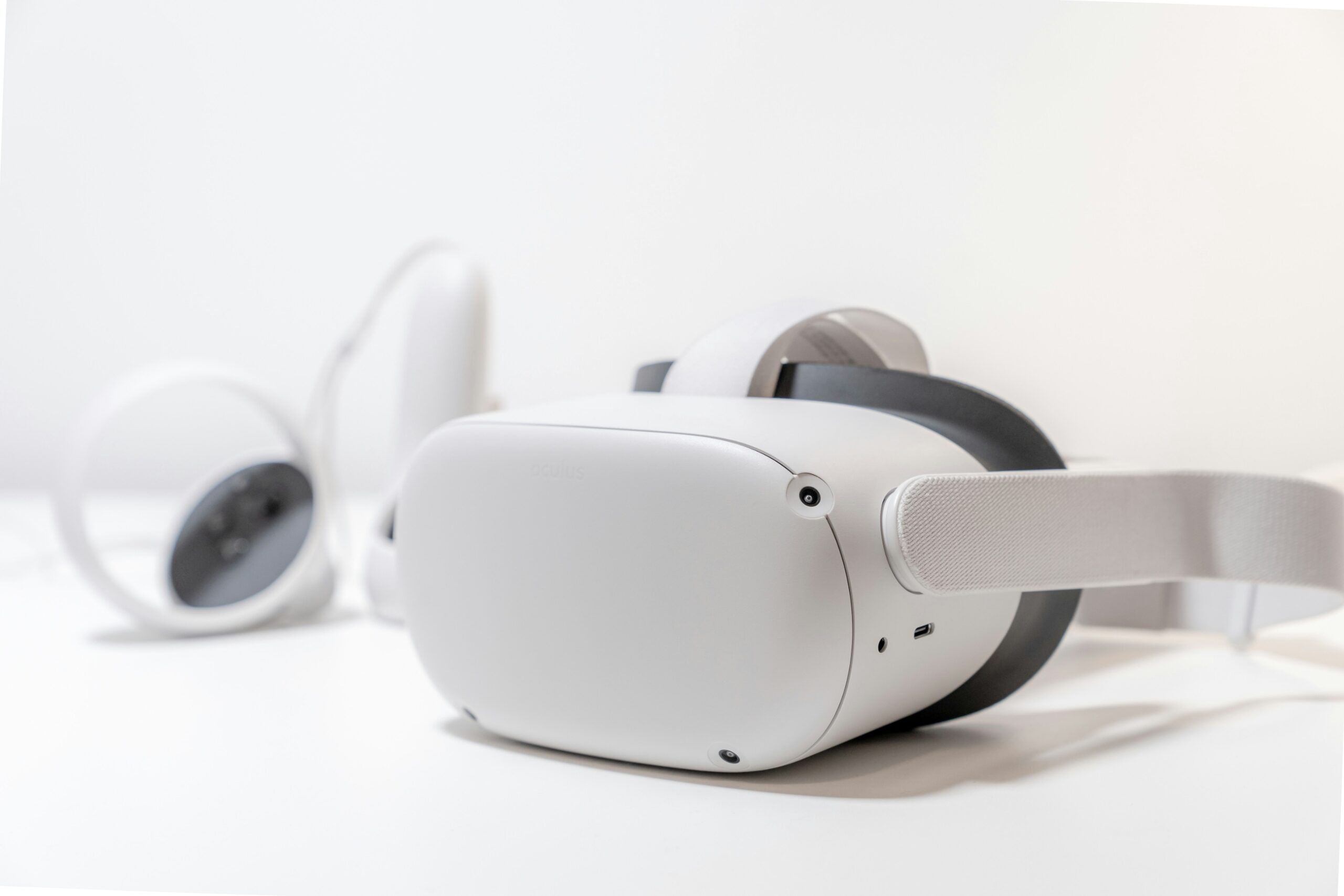
Qualcomm has notified hardware partners that it will raise chip prices by a double-digit percentage for every product shipped after September 1, 2026 — and for the standalone virtual reality market, that notice landed differently than it did for the smartphone industry. Every major standalone VR headset on the market or in development runs on a Qualcomm Snapdragon processor. There is no second supplier to call, according to a customer letter reviewed by Bloomberg.
When Qualcomm raises prices, the entire standalone XR industry absorbs the increase. There is no alternative.
The Bloomberg-reviewed customer letter, sent to hardware partners on July 24, 2026, stated that Qualcomm had exhausted its ability to absorb escalating supplier costs and had already attempted — without success — to source components from alternative vendors before reaching this decision. Qualcomm has issued no public confirmation or denial; the double-digit figure and the September 1 deadline both come from that single Bloomberg-reviewed communication, subsequently corroborated by Road to VR, Android Authority, Android Central, Igor’s Lab, and VR.org.
This distinction matters editorially: the magnitude of the hike — whether it is 10 percent, 15 percent, or higher — has not been broken out by product line or tier. Hardware partners calculating their exposure are working from the same incomplete picture.
The timing gives device makers roughly five weeks to work out their response before the new pricing takes effect. For OEMs already finalizing holiday-season product lines, that is not a comfortable window.
Standalone VR Runs on Qualcomm — and Nothing Else
Qualcomm’s dominance in the standalone VR processor market is total. The Meta Quest line, Pico’s headsets (including the forthcoming Project Swan compute-puck device), Samsung’s Galaxy XR — which launched in October 2025 at $1,799 — and every Android XR smart glasses platform in development all run on Qualcomm Snapdragon systems-on-chip, as Samsung’s own specifications confirm. The Snapdragon XR2 Gen 1 powered the Quest 2, Pico 4, and Vive XR Elite; the XR2 Gen 2 debuted in the Meta Quest 3 and Quest 3S; the XR2+ Gen 2 followed for the Samsung Galaxy XR. Valve’s Steam Frame, the standalone SteamOS headset confirmed for a summer 2026 release, uses a Snapdragon 8 Gen 3 chip with 16GB of LPDDR5X RAM, as VR.org’s tracking data confirms.
Apple’s Vision Pro runs on Apple’s own silicon and is manufactured through a separate supply chain. Every other major standalone headset is in the same position: one supplier, one price list, no negotiating leverage, Road to VR’s Scott Hayden noted.
For the smartphone market, Qualcomm’s dominant position is painful but not absolute — some OEMs can turn to MediaTek for mid-range processors, and a handful of brands develop proprietary chips. For standalone XR, that flexibility does not exist. As VR.org’s analysis observed, Quest 3 and 3S run Qualcomm silicon — as do Samsung’s Galaxy XR, Ray-Ban Meta glasses, Valve’s Steam Frame, Pico’s headsets, and effectively every Android-based standalone shipping today. Snapdragon is not the leading platform in this category; it is the category.
Why Qualcomm Ran Out of Room: The AI Buildout’s Effect on Chip Supply
Qualcomm’s announcement does not exist in isolation. The AI data center construction boom has consumed semiconductor supply at every layer of the manufacturing chain, and the costs have been cascading down toward consumer electronics for months.
The primary bottleneck sits at TSMC, the Taiwan-based foundry that fabricates Qualcomm’s chips alongside those of Apple, Nvidia, and most of the industry’s leading names. TSMC controls over 90 percent of advanced-node semiconductor manufacturing capacity at sub-5nm process nodes, a structural concentration that has no short-term remedy. Nikkei Asia reported on July 21 that TSMC is currently in negotiations with major customers to raise wafer prices by an additional 5 to 10 percent in 2027, a round of increases that will add another step to the cost staircase already in motion. Those negotiations are separate from and in addition to the Qualcomm hike taking effect September 1.
The memory crisis compounds the foundry problem. Samsung, SK Hynix, and Micron — three companies that collectively supply more than 95 percent of the world’s DRAM — have systematically reallocated production capacity away from consumer-grade mobile memory and toward high-bandwidth memory (HBM) chips, the specialized stacked-memory architecture that sits directly inside AI accelerators like Nvidia’s GPUs. HBM is not a different quantity of the same product; it is a fundamentally different fabrication output, and converting a production line to HBM means pulling it away from the LPDDR5X chips that go into every VR headset, smartphone, and laptop, as TechTimes’ coverage of the Google Pixel 11 memory crisis explains.
The pricing results have been dramatic. TrendForce projected that average selling prices for LPDDR4X mobile memory would climb 70 to 75 percent quarter-over-quarter in Q2 2026, with LPDDR5X prices rising 78 to 83 percent in the same period. Gartner’s April 2026 full-year forecast put total DRAM price growth for 2026 at <a href="https://tech-insider.org/memory-chip-shortage-2026-ai-consumer-electronics/” rel=”nofollow noopener” target=”_blank”>125 percent. Google’s Vice President of Devices and Services, Shakil Barkat, confirmed the scale of the shift when announcing Pixel 11 price increases: Morgan Stanley data showed the cost of 1GB of mobile RAM rising from approximately $2.80 in 2025 to approximately $12 in 2026 — roughly a fourfold increase in a single year.
One technology executive quoted in Bloomberg’s supply-chain investigation described the situation plainly: the industry does not have line-of-sight on when memory supply will be able to catch up with demand. Intel CEO Lip-Bu Tan was more specific: Bloomberg reported that he spoke to two key players in memory who told him, “There’s no relief until 2028.”
Qualcomm’s double-digit chip price hike, then, reflects costs that have already been cascading through every layer above it. It is a pass-through of pressures that have been building since at least early 2025.
What the Hike Means for Every Headset in the Market
For the broader smartphone market, the increase is painful in relative terms. Android OEMs — Samsung, Xiaomi, OnePlus, Motorola, and others — have limited leverage given Qualcomm’s dominance, and some margin compression is already reflected in their public guidance. Samsung raised prices across its Galaxy Z Fold 8 lineup; the Galaxy S26 launched $100 more expensive than its predecessor, with Samsung attributing the increase to RAM costs. Google confirmed at a Made by Google event that all Pixel devices, including the upcoming Pixel 11, will cost more than their predecessors — a direct consequence of the same memory cost crisis now compounded by the Qualcomm chip hike.
For the standalone VR industry, the exposure is structurally sharper. The XR market is already expensive relative to what mainstream buyers are willing to pay, and most manufacturers have spent years pricing aggressively to expand adoption, often accepting thin or negative hardware margins in exchange for ecosystem growth. The math for every one of those strategies was set in a dramatically cheaper supply environment, as VR.org’s analysis documents.
The Quest 3S launched at $299 because Meta was willing to sell hardware near cost to build an install base. That logic assumed cheap silicon and cheap memory. Both of those assumptions are now gone, and the Qualcomm September 1 hike removes the last piece.
Valve’s Steam Frame Faces the Clearest Exposure
No product illustrates the timing problem more sharply than the Steam Frame. Valve’s standalone SteamOS headset — featuring dual 2160×2160 LCD displays with pancake lenses, inside-out tracking, a bundled 6GHz Wi-Fi 6E dongle for wireless PC streaming, and a Snapdragon 8 Gen 3 chip paired with 16GB of LPDDR5X RAM — was originally planned for early 2026. Memory price volatility pushed the timeline; the hardware has now cleared US customs and the FCC embargo on the headset’s motion controllers was lifted in June 2026, but Valve has not announced an official price or a reservation date.
The cautionary comparison is the Steam Machine, Valve’s gaming console companion product. It launched June 30, 2026, at $1,049 — well above analyst estimates from earlier in the year — with Valve explicitly citing DRAM contract price increases of more than 170 percent year-over-year as a primary driver of the higher price. The Steam Frame carries 16GB of LPDDR5X into that same environment, alongside a Snapdragon 8 Gen 3 chip that will now carry a double-digit cost premium for any unit shipped after September 1.
Analyst estimates for the Steam Frame currently run from $899 to $1,199, according to VR.org’s component-cost modeling. Road to VR’s coverage identified three realistic scenarios: Valve could absorb the increased cost and accept lower margins; revise its internal price target upward before announcing; or announce a price and raise it shortly after launch. Whatever Valve decides, the component costs for a Snapdragon 8 Gen 3 headset launching after September 1 are higher than they were before the Qualcomm notification.
The same math applies to every Qualcomm-dependent headset still in development, including unannounced devices from Meta for late 2026 and the growing roster of Android XR smart glasses makers preparing products for the holiday season.
Pico, Smart Glasses, and the Full Scope of the Impact
The impact extends beyond the headline VR headsets. Pico — whose devices, including the Pico 4 Ultra, are owned by China-based ByteDance — is also fully dependent on Qualcomm’s Snapdragon XR lineup, as is the forthcoming Project Swan, Road to VR confirmed. Xiaomi, also headquartered in China, is a major Qualcomm customer for its smartphone line. Meta’s Ray-Ban smart glasses and the Android XR smart glasses platforms from multiple manufacturers all run Snapdragon silicon. So does a broad range of tablets, wearables, automotive infotainment systems, and Windows-on-ARM laptops.
Qualcomm’s reach across the consumer electronics stack means this is not solely a VR story. It is a consumer electronics story that happens to hit the VR market with unusual force because the VR market has no exit, as Digital Trends’ analysis notes.
Qualcomm’s stock rose on the news. Investors read the announcement as a revenue-positive signal — a company demonstrating it can raise prices without losing customers. That reading is correct in the short term. Qualcomm’s OEM partners have nowhere to go. For consumers, the implication runs the other way.
When Will Chip and Memory Prices Go Down?
The short answer, based on available evidence, is not soon. The structural driver of the current crisis — AI infrastructure demand consuming memory production capacity that would otherwise serve consumer electronics — shows no sign of reversing. Memory manufacturers have signed multi-year supply agreements with hyperscalers like Microsoft, Google, Amazon, and Meta for priority HBM allocation, which means the reallocation of wafer capacity away from consumer DRAM is not a temporary adjustment. It is a sustained strategic choice, as Bloomberg’s supply-chain investigation documents.
TSMC’s confirmed discussions around 2027 foundry price increases add another confirmed layer. Morgan Stanley analyst Charlie Chan wrote in July that TSMC could raise leading-edge wafer pricing by a further 5 to 10 percent in 2027. The cost staircase the Qualcomm September 1 hike represents has at least one more confirmed step above it.
IDC projects the average selling price of a global smartphone will reach a record $523 in 2026, a 14 percent year-over-year jump, per TechTimes’ earlier reporting on the memory crisis. The same firm projects global smartphone shipments will fall 12.9 percent to approximately 1.12 billion units — demand destruction driven by prices that have pushed beyond what large segments of the market are willing to pay. The VR market, where price sensitivity is higher and installed base is smaller, is likely to feel that dynamic with greater intensity.
For anyone holding out for a price drop on a current VR headset before 2027 as the basis for a purchase decision, the weight of evidence points toward a different strategy: the floor in this market is more likely to rise than fall in the next 12 months.
Frequently Asked Questions
Will VR headset prices actually go up because of Qualcomm?
Almost certainly yes, at some point and for some products. Every standalone VR headset on the market — Meta Quest, Samsung Galaxy XR, Pico, and Valve’s forthcoming Steam Frame — uses a Qualcomm Snapdragon processor. There is no competing chip supplier for standalone XR, which means every maker absorbs Qualcomm’s double-digit price increase with no option to switch. Whether that translates to higher retail prices immediately, a delayed hike with the next product generation, or reduced promotional offers will vary by manufacturer. What will not vary is the higher cost Qualcomm’s OEM partners will pay for chips shipped after September 1, as Road to VR’s analysis confirms.
Is now a good time to buy a VR headset or Android phone?
Based on the available supply-chain data, buying now — before September 1 — puts you in front of the Qualcomm chip cost increase. It does not protect you from any retail price increases that have already occurred due to the DRAM and NAND flash crisis that has been building since early 2025. DRAM prices have risen roughly fourfold in 12 months by some metrics; that pressure is already in current retail prices. What September 1 adds is a Qualcomm chip premium on top of existing component costs. Current hardware at current prices reflects the memory crisis but not yet the Snapdragon price hike; hardware launched or repriced after September 1 will reflect both, as TrendForce’s LPDDR pricing data and Bloomberg’s reporting on the customer letter make clear.
What is causing the semiconductor memory shortage in 2026?
The root cause is a deliberate strategic reallocation of memory production by Samsung, SK Hynix, and Micron — three companies that supply more than 95 percent of the world’s DRAM — toward high-bandwidth memory (HBM) for AI data centers. HBM is more profitable and more in demand than the LPDDR5X used in phones and VR headsets. Converting a production line to HBM removes it from consumer electronics supply. Tech giants including Microsoft, Google, Amazon, and Meta have signed multi-year priority supply agreements for HBM, locking in that allocation. The result is a structural undersupply of consumer DRAM that does not resolve as soon as new capacity comes online, because new capacity is also being built for HBM, as TechTimes’ coverage of the Pixel 11 memory crisis explains.
Will TSMC price increases continue beyond 2026?
Yes, based on current reporting. Nikkei Asia reported on July 21 that TSMC is in active negotiations with major customers — including Apple, Nvidia, and AMD — over price increases of 5 to 10 percent for 2027 across both advanced and mature process nodes. Morgan Stanley’s semiconductor analyst Charlie Chan wrote in July that further increases in 2027 are likely given the value TSMC provides as the only viable provider at leading-edge nodes. The Qualcomm hike taking effect September 1 is a downstream consequence of TSMC’s current cost structure; the TSMC 2027 increase would represent a further upstream pressure arriving on top of it. Intel CEO Lip-Bu Tan has stated he sees no relief in the broader semiconductor supply situation until 2028.
ⓒ 2026 TECHTIMES.com All rights reserved. Do not reproduce without permission.
