

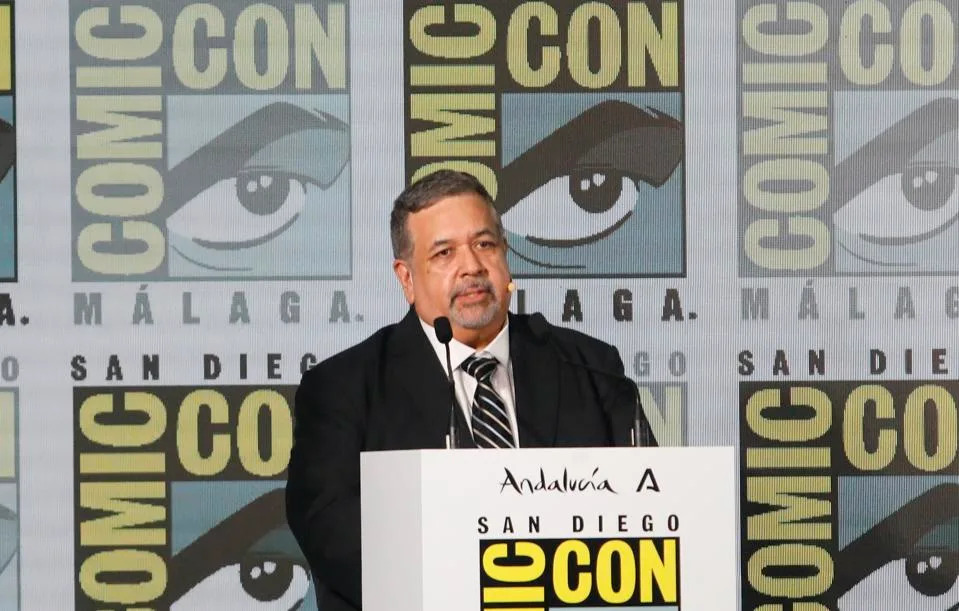
As San Diego Comic-Con 2026 wound down on Sunday, the organizers dropped a bombshell at the annual “Comic-Con Talkback Panel,” a forum for attendees to ask questions and vent grievances about the show. As fan after fan raised issues about getting into Hall H, the fabled 7,500 seat auditorium where the biggest studios make their biggest announcements during the show, Comic-Con Chief Communication and Strategy Officer David Glanzer made a seemingly offhand remark that raised eyebrows around the room.
“In 2010, we outgrew this facility [the San Diego Convention Center],” said Glanzer at the public forum. “You see that we have outside activations. These are primarily for companies who are inside the building who want to expand their space because we don’t have space inside for them to expand.
“We turned Hall H [part of the main show floor] into a theatre because the biggest room in this facility is just 4,200 seats,” he continued. “We decided we would forego the revenue from Hall H to create a bigger theatre. Now, we did that some years back and maybe we need to explore getting rid of Hall H and going back to revenue generating, because right now we can only allow X amount of people within the building and can only allow x amount of exhibitors within the building.” [emphasis added]
He added that sponsorship revenues tied to signage on the hotels and nearby buildings were down this year,reducing the operating budget that Comic-Con needs to implement certain improvements like outdoor wi-fi, which would improve the frustrating line management issues that have plagued Hall H for years.
Both Glanzer and Comic-Con Chair Robin Donlan made public pleas for a corporate sponsor for the wi-fi.
“It’s a challenging situation because we don’t have enough space, and solving that problem is going to take time, money and effort,” said Glanzer. “I promise you that we have people working on all these things and I wish we had the reto be very creative in how we utilize our re
Comic-Con is typically guarded and strategic in its communications. Publicly musing about the demise of a signature part of Comic-Con — the main draw for a lot of fans and big studios – represents a significant escalation in the Con’s battle to garner more public support and sponsorship for an event that has been bulging at the seams for well over a decade with no relief in sight.
Irrespective of these issues, Comic-Con signed an agreement to stay in San Diego through 2030just before the start of this year’s convention. At the talkback forum, Donlan confirmed the rumored shift in dates for 2028 to accommodate the Los Angeles Olympics. “We took the dates we were offered,” she said.
This article was originally published onForbes.com
