

HBO has been one of the most dependable production hubs for quality miniseries going back to the ’80s, so it stands to reason that HBO Max would have maybe the strongest catalog of single-season TV shows of any streaming service. Of the hundreds of limited series available on HBO Max, many are worth watching, and dozens could reasonably be called great. The self-contained, open-and-shut format pairs especially well with HBO’s knack for high-production, star-studded, cinematic storytelling — and that’s not even getting into the available shows that were produced in-house by Max.
The following list compiles the 10 very best miniseries that you can watch right now on HBO Max; as it happens, they all originally aired on HBO in the U.S., though there are certainly plenty of great miniseries on the streamer that hail from other networks. As great as documentaries like “Planet Earth” and Spike Lee’s “When the Levees Broke” are, this ranking focuses exclusively on scripted miniseries. You will find, though, that several of the shows ranked here are fact-based, and that even the ones with wholly fictional stories have plenty to say about the past and present of the world we live in.
10. We Are Who We Are
Created by Luca Guadagnino, Paolo Giordano, Francesca Manieri, and Sean Conway, and directed entirely by Guadagnino, “We Are Who We Are” sees the acclaimed Italian filmmaker bring his signature languid, textured style to a coming-of-age story told across eight episodes.
Jordan Kristine Seamón and Jack Dylan Grazer star as Caitlin Poythress and Fraser Wilson, two 14-year-old Americans who become friends while living with their parents on a U.S. military base near the Italian coastal town of Chioggia, about 16 miles south of Venice. Over one fateful summer in 2016, they investigate their identities and emotions while grappling with their first romantic experiences and hanging out with the town’s various fun-seeking teenagers; in parallel, their parents field numerous emotional crises of their own.
The gorgeous Italian setting is only one of “We Are Who We Are”‘s many strengths. The series explores its characters’ inner lives with such unhurried richness that it feels like an adaptation of a great novel — even though the story is entirely original. There’s a tenderness and a sense of understanding to Caitlin and Fraser’s adventures that feels vanishingly rare for a teen show, but the series also knows to modulate its tone to include raucous comedy and prickly melodrama when they come in handy. Add in a cast of phenomenal performers, and a truly stunning score by Devonté Hynes a.k.a. Blood Orange, and you’ve got yourself one of the finest HBO miniseries.
9. Years and Years
One of the most perceptive and thought-provoking sci-fi works to take stock of the contemporary world is “Years and Years,” a 2019 miniseries created and written by British TV powerhouse Russell T Davies. Set between 2019 and 2034, the show follows the lives of a Manchester family as they’re dramatically transformed by a series of political, social, and technological shakeups; meanwhile, charismatic and ruthless businesswoman Vivienne Rook (Emma Thompson) ascends to totalitarian power in the British government, mirroring a global-scale trend towards authoritarianism and warmongering in numerous countries.
Much of the show’s enthralling nature stems from watching it jump, ahem, years and years ahead in the timeline with every passing episode, each time introducing new dystopian possibilities that feel both plausible and unsettling. While Davies occasionally pushes events to “Black Mirror”-style extremes, “Years and Years” proved remarkably prescient about many developments in the 2020s. Even setting aside those parallels, the series excels as a gripping family drama with compelling suspense and richly drawn characters. At heart, it’s the story of a family trying to stick together while being all but ripped apart by the clashing tides of an increasingly nightmarish world, and Davies tells that story so perfectly that it’s impossible not to be moved by it — even as the darkly hilarious, all-too-real satirical jabs keep flowing.
8. Watchmen
HBO’s “Watchmen” is not a straight adaptation of the legendary Alan Moore and Dave Gibbons superhero comic series. Instead, understanding that the power of itsearlessly to its time, the Damon Lindelof-created 2019 show proposes a story about the world of “Watchmen” three decades later
Set in Tulsa, Oklahoma, the series explores a city still haunted by its history of racist violence while confronting a Rorschach-inspired white supremacist cult. In response, the city’s police officers conceal their identities behind masks while adopting increasingly unconventional tactics. Against that backdrop, Detective Angela Abar (Regina King) becomes entangled in a conspiracy involving several characters from the original “Watchmen.”
More than any other screen adaptation of “Watchmen,” this nine-episode miniseries understands and honors the core themes of Moore and Gibbons’ vision, which rattled the ’80s comics world with its deeply cynical yet deeply humanist perspective on the cultural phenomenon of superheroes. On HBO’s “Watchmen,” nothing is so simple as law versus crime or good versus evil; with its layered character-centric writing, bold formal experimentation, and loopy sci-fantasy extravagance, the show masterfully expresses the frayed state of a world in which the real problems remain much too complex to be adequately addressed by caped vigilantes.
7. Mildred Pierce
One of the finest works in the oeuvre of the great Todd Haynes, “Mildred Pierce” transfers every nook and cranny of the eponymous 1941 James M. Cain novel to the small screen, using its five-plus hours to capture tiny details that couldn’t possibly have fit into a feature film. Yet, thanks to Haynes’ unflagging flair for hypnotic rhythm and visual splendor, this 2011 miniseries is also as cinematic as anything ever released by HBO, beginning with its formidable central casting. Kate Winslet stars as Mildred Pierce, a middle-class housewife in 1930s California who separates from her husband Bert (Brían F. O’Byrne) and sets out to provide for herself and her two children by opening a restaurant.
Haynes’ conception of the material is lived-in yet sharply perceptive, much like his film work. Along with co-screenwriter Jon Raymond, he captures the melodramatic flurry of Mildred’s life — from her doomed dalliance with Monty Beragon (Guy Pearce) to her tempestuous relationship with eldest daughter Veda (Evan Rachel Wood) — without once losing sight of what her story reveals about the social standing of American women during the Great Depression. It’s a phenomenal character study accomplished with the unique investigative tools of cinema, yet stretched to the broad-gauge length of television. And the fantastic cast — also featuring Melissa Leo, Mare Winningham, Miriam Shor, and Hope Davis — ensures that every moment across the five episodes is deeply fel.
6. Sharp Objects
On the surface, “Sharp Objects” may look like another run-of-the-mill dark and gritty crime thriller with a prestige sheen; its premise, which sees alcoholic journalist Camille Preaker — performed by one of TVLine’s Performer’s of the week, Amy Adams — return to her hometown of Wind Gap, Missouri, to cover a wave of teen girls’ murders, might have veered toward sensationalism and mindless schlock in different hands. But creator Marti Noxon and director Jean-Marc Vallée, adapting the excellent debut novel by Gillian Flynn, find in Camille’s homecoming one of the most searing, stomach-churning psychological horror stories ever committed to television.
A morbid, sweat-stained Southern Gothic that would have done Flannery O’Connor proud, the show is as interested in the murders as it is in Camille’s mental unraveling, as her tense re-acclimation to her old home resurrects memories of lifelong abuse at the hands of her wealthy mother, Adora (Patricia Clarkson). In between drinks, Camille devotes her time to probing the case and its effect on the community while sussing out the extent to which Adora is repeating her reign of terror with Camille’s teenage half-sister, Amma (Eliza Scanlen), as its latest target. Vallée captures it all with a restless, often handheld camera and a free-associative editing style that makes ghastly poetry out of fragments of past and present, slowly layering gut-punch moments on the way to a conclusion that truly deserves to be called breathtaking.
5. Chernobyl
2019 was a banner year for HBO: In addition to “Years and Years,” and “Watchmen,” they also released “Chernobyl,” one of the best historical TV shows of all time. Written by Craig Mazin and directed by Johan Renck, the five-part miniseries dramatizes the 1986 Chernobyl nuclear disaster in Soviet Ukraine through the perspectives of multiple fictionalized real-life figures as well as several composite characters. Each episode looks at the disaster and its aftermath through a different lens, adding up to a kaleidoscopic portrait of a devastating accident aggravated by executive negligence and political mismanagement.
Although the series takes significant artistic license, it is nonetheless a sweepingly detailed account of history as observed by the humans caught in its thrall, featuring some of the most incredible writing, direction, and acting in the entire HBO canon. Jared Harris, Emily Watson, Jessie Buckley, Stellan Skarsgård, and other heavyweight names round out a cast of performers perfectly attuned to the terror, guilt, corruption, secrecy, and grief surrounding the disaster. And while “Chernobyl” can be a punishing watch — especially early on, as it chronicles, austerely yet excruciatingly, the suffering wrought by the explosion and the radiation leak — the message it ultimately puts forth about the power of truth and the importance of political transparency is an inspiring, timeless one.
4. Band of Brothers
One of the best TV shows created by famous movie directors, 2001’s “Band of Brothers” is a Steven Spielberg and Tom Hanks co-creation that finds the duo returning to the subject of World War II three years after “Saving Private Ryan.” Based on the eponymous book by Stephen E. Ambrose, the series follows Easy Company of the U.S. Army’s 101st Airborne Division as it takes part in major World War II campaigns like D-Day and Operation Market Garden.
With help from extensive research, “Band of Brothers” parlays its account of Easy Company’s operations into a wide-ranging chronicle of World War II and its arduous on-the-ground reality. The show’s characters, most of them based on real-life soldiers, are portrayed as flawed, vulnerable human beings whose sense of duty and devotion to their missions doesn’t make it any less taxing to face death and destruction day after day.
Give or take some storytelling liberties, no other audiovisual production before “Band of Brothers” had captured the unglamorous, nightmarish grind of being a World War II soldier quite as thoroughly or unflinchingly; the show effectively changed the face of television with its sheer scope and rigor, becoming a definitive benchmark for the war drama genre. To this day, it remains a stunning watch, featuring all-timer cinematography, acting, and sound design in service of an invaluable project of historical inventory.
3. I May Destroy You
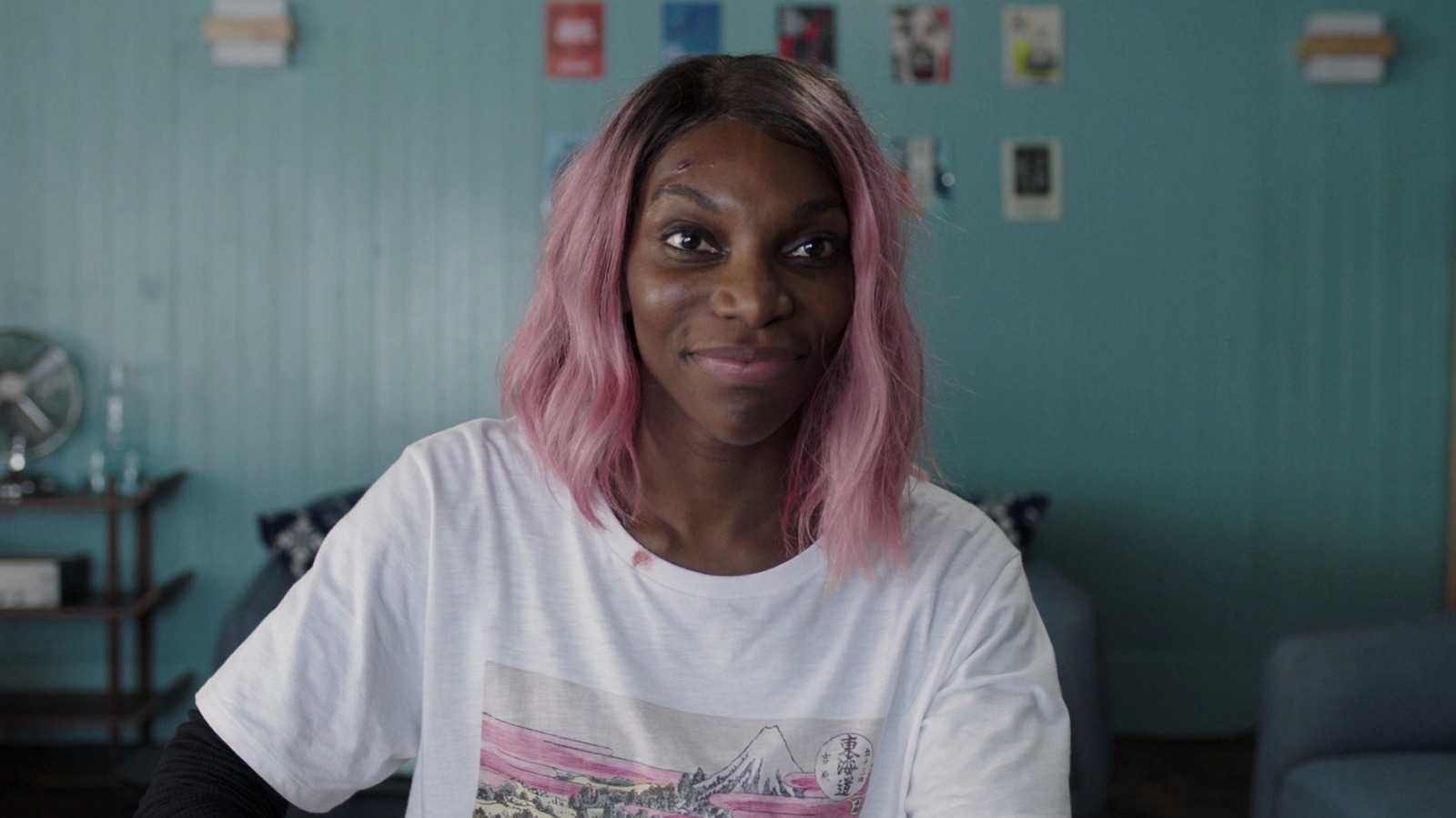
TVLine’s 2020 Performer of the Year, Michaela Coel is the creator, writer, co-director, and star of “I May Destroy You,” an HBO and BBC co-production that could well be argued as both networks’ single most essential work of the 2020s. Set in London and carefully perched on the edge between dark comedy and harrowing psychological drama, the series follows Arabella Essiedu (Coel), an internet celebrity who became a cultural sensation with her debut novel and is currently duking it out with the deadline for her eagerly awaited follow-up. While out drinking with friends to decompress one night, Arabella gets roofied and sexually assaulted in a bar bathroom; in the ensuing weeks of piecing together what happened, she experiences a psychological crisis while struggling erratically to move on.
In addition to Arabella, “I May Destroy You” focuses on several other people in her life, notably her best friends Terry (Weruche Opia) and Kwame (Paapa Essiedu); together, the show’s various character portraits coalesce into an epic mural of millennial anxiety. Sexual assault and its prickly emotional aftermath are among the show’s chief subjects, but it also tackles social media dysfunction, economic instability, the complexities and indignities of modern dating, and many other urgent themes of our era — all broached by Coel with a ruthless, meticulous intelligence and a tireless sensitivity that wouldn’t really be accurately described by any word other than genius.
2. Olive Kitteridge
Television shares with literature the ability to pore over the minute details of life, and there’s an argument to be made that no show has ever delivered on that ability more brilliantly than “Olive Kitteridge.” The 2014 HBO miniseries adapts the Pulitzer Prize-winning novel by Elizabeth Strout and carries itself rather like a novel in its own right: Instead of following a single narrowly defined “plot,” we’re placed in the company of surly Maine schoolteacher Olive Kitteridge (Frances McDormand) across four visitations over the course of 25 years, each one taking the measure of her quiet, anguish-filled existence at a different point.
Writer Jane Anderson and director Lisa Cholodenko render the series’ world so profoundly, with such earthy vividness in every moment, that watching it feels like crossing a threshold into something less like television and more akin to memories forming in real time. McDormand and her co-stars — Richard Jenkins, Bill Murray, Zoe Kazan, Cory Michael Smith, Ann Dowd, Rosemarie DeWitt, John Gallagher Jr., Peter Mullan, Rachel Brosnahan, and Brady Corbet among them — don’t so much play the people of Crosby, Maine as become them, capturing tiny vibrations of feeling that add unfathomable dimension to the show’s quarter-century narrative. By the end of the four episodes, it feels as though you’ve lived a whole life alongside Olive, and what hard-earned wisdom she has gained — or failed to — becomes your own.
1. Angels in America
The 1991 play “Angels in America” by Tony Kushner is one of the great works in the history of American theater, and in 2003, it got a suitably monumental screen adaptation that still ranks as the greatest HBO miniseries of all time. Written by Kushner himself and directed by Mike Nichols, the TV version of “Angels in America” is divided into the same two acts as the play, with each act being told in three episodes, adding up to just under six hours. Like the play, it follows a group of characters affected by the AIDS epidemic in 1980s New York City, whose experiences range from the acutely political to the spiritual and metaphysical.
Written at a time when the wounds of the epidemic were still fresh, “Angels in America” is a defining text of U.S. life in the Reagan years, and the show enlivens its innumerable ideas, insights, and mournful laments with a level of formal and aesthetic brio that has scarcely been seen elsewhere in television history. Nichols’ impassioned interplay between operatic surrealism and scorching kitchen-sink intimacy arguably marks his peak as a director, and not a single actor in the cast — including Meryl Streep, Al Pacino, and Emma Thompson at the top of the billing — gives anything less than a career-best performance. It’s a masterpiece that reconfigured everybody’s understanding of the television medium in 2003, and still has the power to do that when seen today.
