

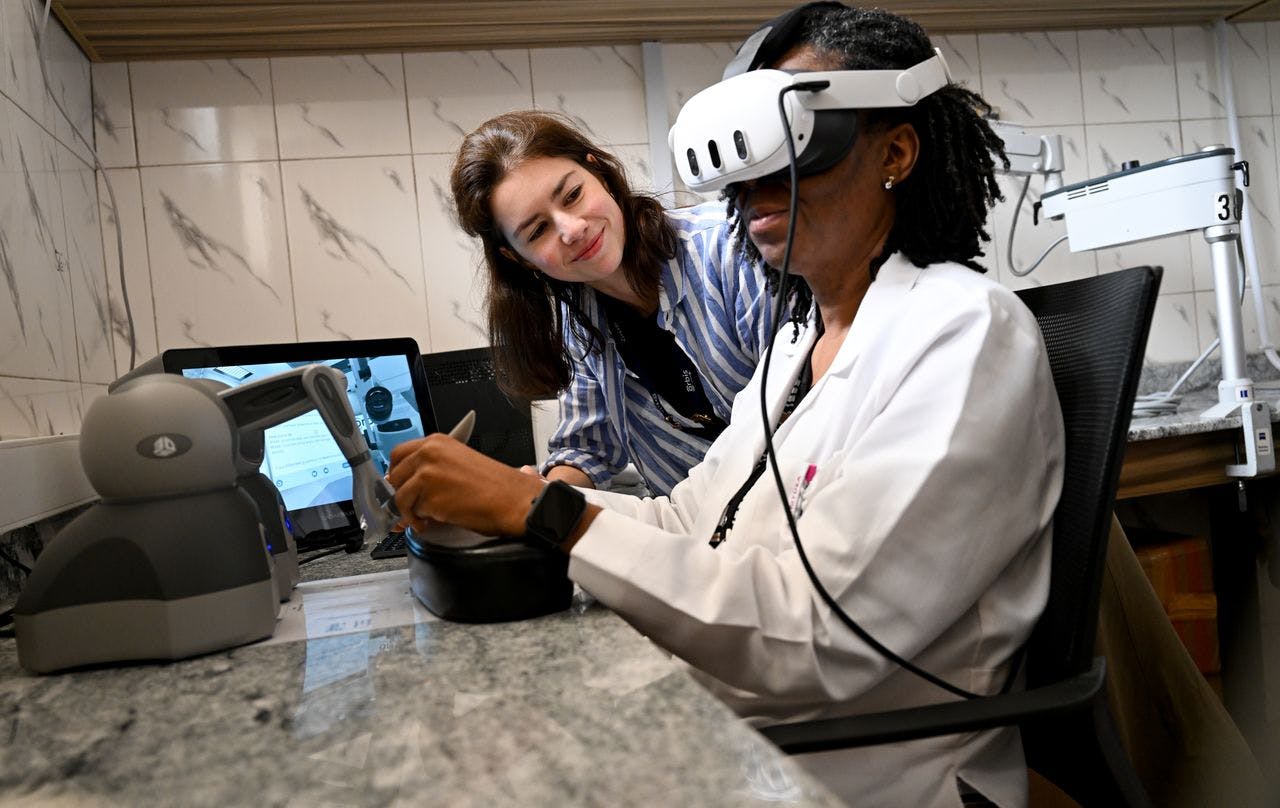
- Fundamental XR and Orbis International reported strong first-half 2026 results from their VR-based ophthalmic surgical training initiative across Africa
- The program now reaches 22 institutions in nine countries, delivering more than 2,700 training sessions to nearly 400 users worldwide.
Fundamental XR announced that its virtual reality-based ophthalmic surgical training collaboration with Orbis International has demonstrated strong adoption and measurable outcomes during the first half of 2026, with participating institutions reporting increased trainee engagement and improved surgical preparedness.
The initiative uses Fundamental XR’s immersive surgical simulation platform to help early-stage ophthalmologists develop technical skills before entering the operating room. Five simulator kits have been deployed across four African countries—Rwanda, Ethiopia, Zambia, and Ghana—supporting ophthalmic training in settings where access to surgical mentorship and hands-on re
Ghana program drives structured simulation training
Among participating sites, Korle Bu Teaching Hospital (KBTH) in Ghana has emerged as one of Orbis’ highest-volume users of the VR platform. According to the organizations, 13 first-year ophthalmology residents collectively logged more than 230 hours of simulation training during the first half of the year, averaging more than 14 hours of practice and completing more than 40 manual small-incision cataract surgery (MSICS) simulations per resident.
Hospital faculty attribute the participation to a structured curriculum that makes simulator training a mandatory prerequisite before residents progress to wet lab instruction. Residents rotate through dedicated clinic and laboratory blocks during working hours, allowing the institution to maximize use of a single simulator while ensuring trainees achieve defined simulation milestones before performing live surgical cases.
The structured approach also has fostered a competitive learning environment focused on continuous improvement, according to the organizations. Adolf Ollennu, Orbis Ghana country director, presented the program’s results at the 2030 IN SIGHT Live meeting.
Beyond resident education, faculty at KBTH reported operational efficiencies associated with the program. Because trainees develop familiarity with basic surgical steps through simulation, wet lab instruction has shifted toward higher-level mentoring rather than introductory teaching. Faculty also reported fewer errors during wet lab sessions, contributing to reduced tissue waste and more efficient use of consumables, including sutures and viscoelastic materials.
Feedback from trainees at the Rwanda International Institute of Ophthalmology (RIIO), another Orbis partner institution, also reflected perceived improvements in surgical performance following simulator use.
Participants reported that the training helped reinforce proper surgical technique, improved recall of procedural steps during surgery, and provided immediate feedback that identified errors for future correction.
Program expands internationally
According to Fundamental XR and Orbis, the virtual reality training initiative now spans 22 partner institutions across nine countries. The program has delivered more than 2,700 training sessions, more than 1,100 hours of simulated surgical practice, and trained nearly 400 users worldwide.
The organizations said participating institutions are also using the technology for external educational workshops. The initiative has received recognition including India’s Digital Health Excellence Award and a Brandon Hall Group Gold Award.
Fundamental XR and Orbis said they plan to continue expanding the program as they seek to improve access to high-quality ophthalmic surgical training in underserved regions through immersive simulation and structured educational curricula.
