

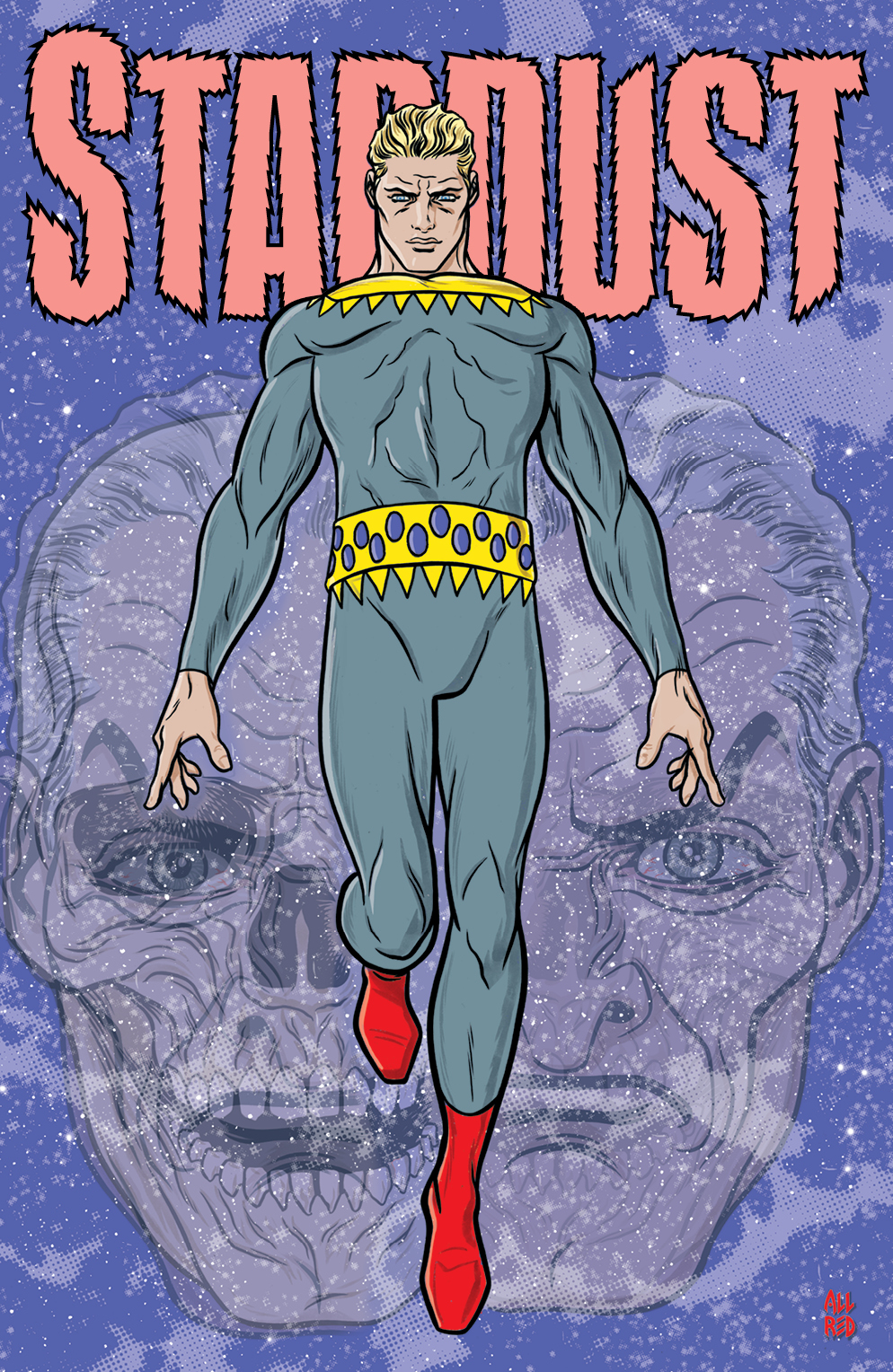
A comics anthology featuring AI-generated writing has been withdrawn from this year’s Eisner Award ballot following controversy over the work’s nomination for the one of the comic world’s highest honors.
Stardust the Super Wizard Anthology, based on cartoonist Fletcher Hanks’s eponymous superhero from the early 1940s, and now in the public domain, had been nominated in the Eisners’ Best Anthology category. Nominations were announced on May 14 by Comic-Con, which hosts the Eisners.
Stardust was edited by Van Jensen and funded through the crowdfunding platform Zoop in 2023, raising more than $39,000 from 614 backers. The use of generative AI in the anthology was confined to one of its contributions: a one-page story by writer Michael Todasco, in the guise of what he subsequently dubbed his “AI persona” Alex Irons.
The inclusion of an AI story had been noticed by several backers of the project when it was first released in 2025, and the anthology’s inclusion on the Eisner ballot sparked immediate controversy within the comics press as well as the Eisner Awards judging panel. On May 18, Comic-Con announced that Jensen had withdrawn the anthology from inclusion, and it would not be appearing on the Eisner ballot.
“In light of the recent disclosure that Artificial Intelligence was included in a work submitted for Eisner Award consideration, the judges have indicated that had they been aware of this information, they would not have voted for its inclusion,” a spokesperson for Comic-Con told PWin a statement. “The editor of the anthology in question has also rescinded this submission for inclusion. Therefore, the submission has been removed from the list of nominees and will not appear on the ballot.”
The statement continued: “It is clear that the ever evolving landscape of technology, as it relates to art, will benefit from further review and discussion. For this reason, San Diego Comic Convention will undertake that effort and will produce a policy that better reflects its long-standing efforts in the protection of artists and creators alike.”
The Stardust anthology was conceived by Jensen in 2022, when he put out a call for contributors on social media. Among the first to reach out was Todasco, then a part-time writing student at Johns Hopkins University and senior director of innovation at PayPal.
Todasco pitched, and went on to generate, a story that was wholly an AI creation. After training AI software on the original Stardust stories by Hanks, Todasco used the results to generate both the script and artwork for a one-page comic. This was followed in the finished anthology by a second page, not AI-generated, with dialogue containing the anthology’s only reference to the use of AI: “That last story was clearly the work of artificial intelligence… But these humans clearly haven’t learned that no AI abomination can match the narrative beauty and genius of biological life?”
The inclusion of an AI-generated chapter was not mentioned in any of the public-facing Zoop campaign materials, and it became clear to backers only after the book was published. Nor were the other contributors informed of Todasco’s piece in advance, seeing it for the first time in a PDF copy of the book Jensen sent out to contributors before publication—a decision Jensen now calls “my biggest screwup in the whole process.”
According to multiple Eisnere anthology’s AI artwork prior to its nomination. Jensen admits that it was not mentioned in his official submission letter, but says that he mentioned it in a separate note provided to the Eisner committee afterward. Two Eisner officials contacted for this story told PW that they could not recall seeing such a note
Though the Eisner judges broadly agreed that the book would not have been nominated had the use of AI been clear, there was some disagreement over whether the nomination should be rescinded after the fact—both for the effect it would have on other contributors to the book, and because there is no official Eisner policy on AI. Several Eisner officials said this increased attention to AI was partly a result of new leadership: this year was the Eisners’ first under new administrator Laura Jones, following the retirement of longtime administrator Jackie Estrada last year.
Todasco is now a visiting fellow at the James Silberrad Brown Center for Artificial Intelligence at San Diego State University. Having created his Alex Irons persona for the Stardust anthology, he has since published 19 AI-generated prose books under this name which are available for purchase.
Todasco said that he is not concerned about whether his use of AI in the Stardust piece constituted a misuse of other creators’ intellectual property, since the materials on which the AI was trained were in the public domain. He is more ambivalent about whether AI constitutes real art at all.
“[The books] ‘Alex Irons’ has written are not things that I would actually read,” he told PW. “I follow and read certain creators because I have a relationship built with them over time.”
Todasco and Jensen both noted that Todasco did not receive a page rate for his contribution to Stardust, and that, should the book earn royalties, Todasco’s share will be donated to charity, which Todasco says he also does for his Alex Irons books.
Van Jensen, on the other hand, has moved firmly into the opposite camp in his view on AI. “During that period [of working on the book], my personal view of AI changed,” Jensen told PW. “I think the greatest danger is that AI tools will make it so easy to generate mediocre art that we’ll be flooded with that, and it will become hard if not impossible for audiences to find real art from real artists. There’s also the very real fact that AI tools have been built on the back of human writers and artists and filmmakers and musicians whose work has been stolen. Mine included.” He added that, had he started working on the anthology a year later, he would not have accepted Tadasco’s pitch.
In the wake of the Eisner statement and Jensen’s withdrawal of the nomination, several of the anthology’s other contributors expressed disappointment. At the same time, several noted that news of the nomination was already generating a backlash among fans, and that leaving the nomination in place may itself have placed contributors in an even more unpleasant position.
“No one loves being tagged as part of ‘The AI Book,’ ” said anthology contributor Jeff Parker, “but I’m glad it’s showing loudly how unwelcome generative AI is in the comics field.”
Several judges on the Eisner panel expressed approval for the awards’ statement while noting that the Eisners will likely announce an official AI policy in the near future.
“It’s sufficient for the moment,” Eisner judge Regine Sawyer said. “The key word is ‘moment.’ But something more concrete very soon should be drafted, and I’m sure that it will be.”
